








The price dilemma
If you are a buyer of steel pipes for oil, natural gas or pipeline infrastructure projects, you will almost certainly ask such a key question: Why is API 5L PSL2 10-20% more expensive than PSL1, and the two products look almost the same to the naked eye? It’s a fair question—one that stumps many procurement teams focused on upfront budget constraints. However, the answer lies not in surface appearance, but in the strict internal quality requirements of the API 5L specification for PSL2: mandatory heat treatment (normalization for Grade B–X52, or thermomechanical rolling for high-strength grades X60 and above) and uncompromising material control. What seems to be expensive is not price increase, but an investment in structural integrity, safety and long-term project reliability for steel pipes. For critical applications where failure is not an option, this “extra” cost is non-negotiable—and the API 5L standard enforces it for a reason.
What is PSL2? More Than Just a Number
In order to understand why controlled heat treatment is mandatory for API 5L PSL2—with normalization commonly applied for Grade B to X52 and thermomechanical rolling (TMR) as the standard route for X60 and above—we need to define the product specification level (PSL) at the core of the API 5L standard, which is the global benchmark for steel pipes used to transport hydrocarbons, water and other important fluids. Published and maintained by the American Petroleum Institute (API), the API 5L specification categorizes steel line pipes into two primary quality tiers, each with distinct manufacturing and testing mandates.
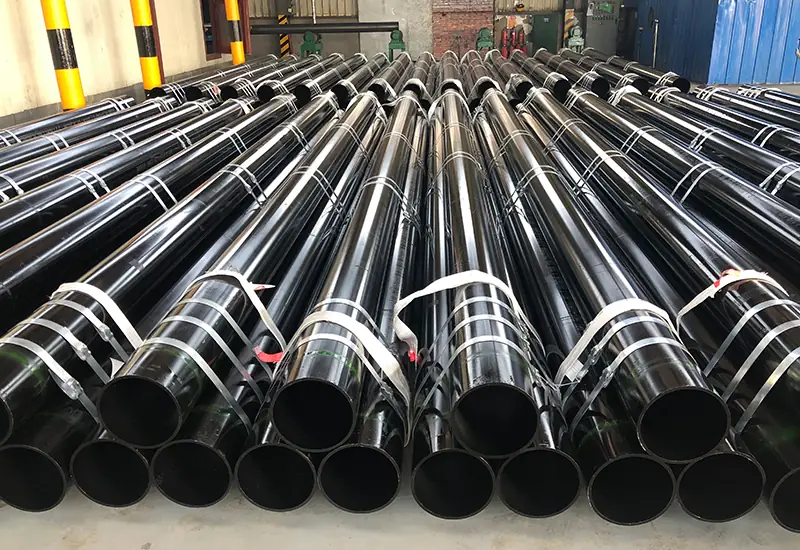
- PSL1 grade (standard quality): The entry-level grade of API 5L steel pipes, which is produced in rolled state and has basic manufacturing controls. Imagine PSL1 as an “unpolished rough stone” – it meets the minimum requirements of API 5L for chemical composition and mechanical properties, but it skips advanced heat treatment and strict testing. PSL1 is suitable for low-risk, non-critical applications, in which the operating pressure, extreme temperature or pressure are minimal.
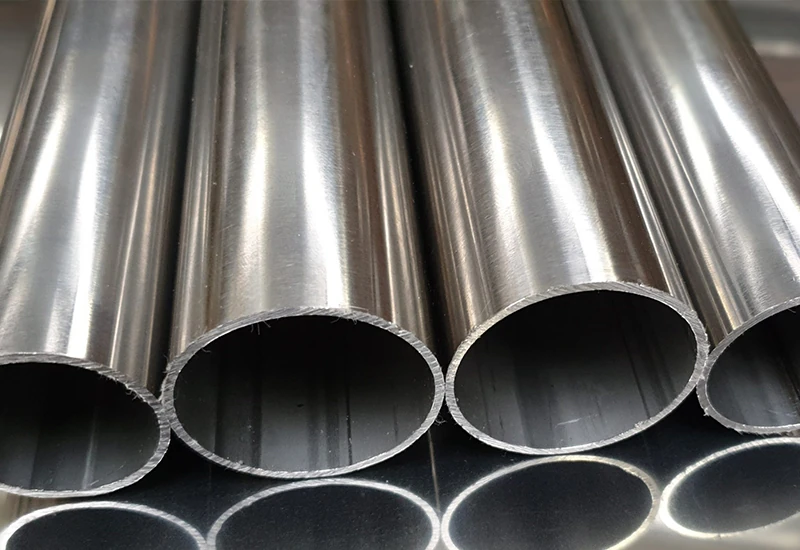
- PSL2 (strict quality): The high-quality layer of API 5L steel pipes, which is specially designed for key pipeline infrastructure. Different from PSL1, PSL2 is not only a label, but also a manufacturing standard, which requires heat treatment (normalization or thermomechanical rolling) and comprehensive quality testing. PSL2 is regarded as a “precision cut diamond”: every step of production has been optimized to eliminate structural defects and improve performance. One non-negotiable requirement of API 5L PSL2 is the Charpy V-notch (CVN) impact test, which measures the toughness of pipelines under sudden loading or low temperature-PSL1 grade steel pipes do not need to pass this test (source: World Steel Association – Line Pipe Quality Standards).
PSL2 is not upgraded for the brand; It is a API 5L mandate for projects where steel line pipes face harsh conditions—subzero temperatures, high operating pressure, offshore installation, or cross-country pipeline networks where a single failure could cause catastrophic environmental, financial, or human loss.
Core Difference: Mandatory Heat Treatment in API 5L PSL2 (Normalization for Grade B–X52, TMR for X60+)
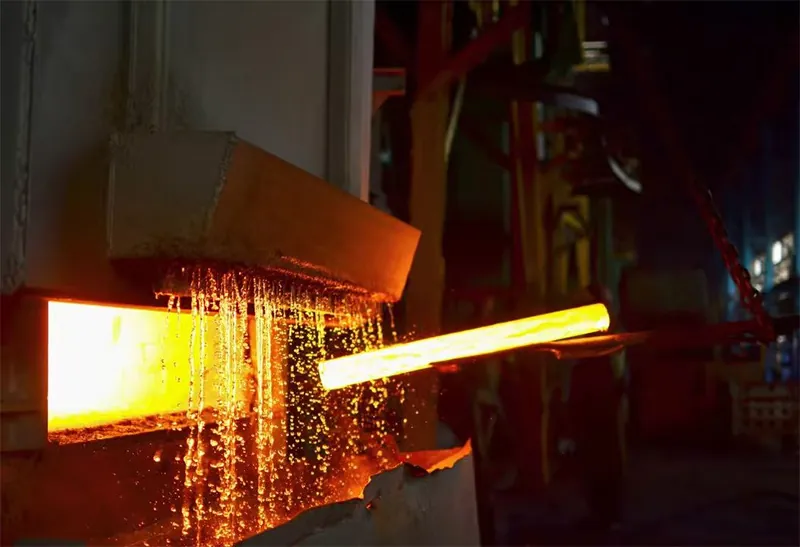
The most influential difference between API 5L PSL1 and PSL2 steel pipes is the mandatory application of controlled heat treatment.For lower grades (Grade B to X52), normalization (+N) is commonly applied, while for high-strength grades (X60 and above), thermomechanical rolling (TMR) is the standard and preferred manufacturing route. This heat treatment is not optional – it is written into the API 5L PSL2 specification to change the microstructure integrity of steel pipes. Understanding its working principle can reveal why it is non-negotiable in key applications.
What is Normalization for API 5L Steel Line Pipes?
Normalization is a controlled heat treatment process for carbon steel and low alloy steel pipeline pipes, which follows three accurate normalization steps (according to API 5L guidelines).
- Heating: The API 5L PSL2 pipe is uniformly heated to a temperature of 900 °C to 950 °C (above the steel’s upper critical temperature), ensuring the entire cross-section of the pipe wall reaches the target temperature—no cold spots, no overheating.
- Soaking: Keep the tube at this temperature for a predetermined time (based on wall thickness: 1 hour every 25 mm thick) to homogenize the microstructure of the steel and dissolve any coarse grain formed during rolling.
- Air Cooling: The pipe is cooled in still or slightly agitated air at ambient temperature (no rapid quenching, no artificial cooling). This slow and controlled cooling makes the steel form a fine and uniform ferrite-pearlite microstructure, which is the best structure for API 5L steel pipe which requires high toughness and ductility.
Why Normalization is Non-Negotiable for API 5L PSL2 Steel Line Pipes
For API 5L PSL2 steel pipes, normalizing has solved two key structural problems: coarse grain structure and residual stress, both of which will lead to brittle fracture, which is the biggest risk for pipeline infrastructure.
1. Refine the Grain Structure to Obtain Excellent Toughness
Rough and uneven grain structure is formed in the hot rolling process of rolled API 5L PSL1 steel pipes and tube. Coarse particles mean low toughness: when exposed to sudden pressure changes, low temperatures or external shocks, pipes are prone to cracking and brittle fracture. Normalization decomposes these coarse particles into a fine and uniform microstructure-this refinement directly improves the CVN impact test performance of the pipeline, which is a mandatory requirement of API 5L PSL2. A standardized API 5L PSL2 pipeline can withstand sub-zero temperatures (0°C to -20°C) and sudden load without rupture, which is incomparable to PSL1 steel pipeline.
2. Eliminating Residual Welding/Rolling Stress
All steel pipes have residual stress in the manufacturing process-from hot rolling, forming to welding pipe joints. For PSL1 API 5L pipeline, this stress still remains in the steel, forming a weak points and expanding with time under the operating pressure. Normalization can eliminate 80-90% residual stress by homogenizing the microstructure of steel, and ensure the structural stability and stress corrosion cracking (SCC) resistance of API 5L PSL2 pipeline, which is the main cause of pipeline failures in the oil and gas industry.
3. Improve Weldability and Consistency
The key API 5L pipeline projects requires on-site welding of steel pipes. Normalized PSL2 steel has a uniform chemical and microstructure components, which makes welding predictable and defect-free. As-rolled PSL1 steel, by contrast, has inconsistent hardness and grain structure, leading to welding flaws (e.g., Cold cracking, porosity), which will damage the integrity of the pipeline. For API 5L PSL2, normalization ensures every section of the pipe—from the inner wall to the outer surface—has the same mechanical properties, a must for large-scale, high-pressure pipeline networks.
In short: normalization turns API 5L PSL2 steel line pipes from a basic structural material into a precision-engineered component built for critical service. PSL1 skipped this step. As a result, the pipeline is cheaper in the early stage, but it is more risky for projects that need the highest quality standards of API 5L.
Why is “Traceability” Important for API 5L PSL2 Steel Line Pipe
In API 5L PSL2 specification, mandatory normalization is combined with strict requirements on material traceability and chemical purity, which is another layer of quality control, which distinguishes it from PSL1 and ensures that the heat treatment process can provide the expected results for steel pipes.
Compromised Chemical Purity
API 5L PSL2 sets far stricter limits on harmful impurities in steel line pipes than PSL1, with sulfur (S) and phosphorus (P) capped at≤ 0.015% each (source: API Official Website – API 5L Specification). It is known that these two elements will cause “hot brittleness” (brittleness during welding) and cold brittleness (fracture at low temperatures) in steel. By limiting s and p, API 5L PSL2 ensures normalized steel line pipes retain their toughness and weldability—critical for both manufacturing and on-site installation. The impurity limit of PSL1API 5L steel pipes is more relaxed (s ≤ 0.035%, p ≤ 0.035%), which is acceptable for low-risk applications, but not for key applications.
Complete Traceability and Certification
A real API 5L PSL2 pipeline is not only a physical product, but also a complete document, which can trace every step of its production, including heat treatment. API 5L specification requires that all PSL2 steel pipes must be accompanied by a Material Test Certificate (MTC) conforming to EN 10204 3.1, which must be clearly stated:
- The heat treatment process (e.g., “Normalized (+N) per API 5L PSL2”)
- Temperature/time for heating and cooling
- Results of CVN impact test (all values must meet the minimum requirements of API 5L
- Chemical composition analysis (to verify the content of sulfur and phosphorus
- Non-destructive testing (NDT) results
The MTC legally and technically ensures that the pipeline is a real API 5L PSL2 product and has effective normalization. PSL1 API 5L steel pipes has a basic minimum file record, no heat treatment records, no CVN test results, and relaxed nondestructive testing requirements. For project owners and engineers, this traceability is non-negotiable: it ensures compliance with API 5L standards and provides responsibility for each steel tube in the pipeline.
Comparison Table 1: API 5L PSL1 and PSL2 Steel Pipe (Comprehensive Specifications)
The following table extracts the main differences between API 5L PSL1 and PSL2 steel pipes in manufacturing, testing and performance, with emphasis on defining the mandatory heat treatment and quality controls of PSL2 (consistent with the latest version of API 5L standards):
| Criteria | API 5L PSL1 Steel Line Pipes | API 5L PSL2 Steel Line Pipes |
| Heat Treatment | Optional (As-rolled only) | Mandatory (Normalization/TMR) |
| Charpy V-Notch (CVN) Impact Test | No requirement | Mandatory (per API 5L temperature/ pressure specs) |
| Non-Destructive Testing (NDT) | Standard (basic ultrasonic/ visual) | Strict (100% ultrasonic + radiographic testing) |
| Welding Repairs (Pipe Body) | Allowed (with basic inspection) | Prohibited (no body weld repairs) |
| Sulfur (S) Limit | ≤0.035% | ≤ 0.015% |
| Phosphorus (P) Limit | ≤0.035% | ≤ 0.015% |
| MTC Certification | Basic (API 5L minimum) | EN 10204 3.1 (full traceability) |
| Brittle Fracture Resistance | Low (coarse grain structure) | High (fine grain + stress relief) |
| Critical Application Suitability | No | Yes (oil/gas, offshore, low-temp, high-pressure) |
Comparison Table 2: API 5L Steel Line Pipes – PSL1 vs. PSL2 Core Mandates
| Core Mandate | API 5L PSL1 | API 5L PSL2 |
| Impact Test (CVN) | ❌ | ✅ |
| Mandatory Normalization | ❌ | ✅ |
| 100% NDT Testing | ❌ | ✅ |
| Pipe Body Weld Repairs | ✅ | ❌ |
| EN 10204 3.1 MTC | ❌ | ✅ |
| S/P ≤ 0.015% | ❌ | ✅ |
| Low-Temp Toughness | ❌ | ✅ |
Frequently Asked Questions
In order to solve the most common questions raised by the purchasing team, engineers and project leaders about API 5L PSL2 steel pipes and compulsory normalization, we have compiled this FAQ according to the official API 5L guide and industry best practices.
Question 1: Can API 5L PSL2 steel pipes be produced without normalization?
A: Yes — for high-strength grades (X60 and above), normalization is not mandatory, as thermomechanical rolling (TMR) is the standard manufacturing route.However, for lower grades (Grade B to X52), normalization is commonly applied to meet PSL2 toughness and microstructure requirements.In all cases, PSL2 pipes must undergo an approved heat treatment route that satisfies CVN impact and mechanical property requirements.
Question 2: Is normalizing the only heat treatment option for API 5L PSL2?
A: Normalizing (+n) is the most common and cost-effective choice for carbon steel API 5L PSL2 steel pipes. Thermomechanical rolling (TMR) is the standard and preferred manufacturing route for high-strength PSL2 grades (X60 and above), because it combines rolling and heat treatment in one step, but it still meets the requirements of toughness and microstructure of API 5L PSL2. Quenching and tempering (Q&T) is used for ultra-high-strength PSL2 pipeline, but it is not a mandatory benchmark-normalizing is the minimum requirement.
Question 3: Apart from heat treatment, why is API 5L PSL2 more expensive than psl1?
A: It also includes: 100% nondestructive testing, strict chemical purity controls (low s/p), compulsory CVN testing, EN 10204 3.1 certification, and the prohibition of welding repair of pipe body (which requires perfect initial production). All these steps add to manufacturing cost—but they eliminate the risk of pipeline failure for critical steel line pipe applications.
Question 4: Can API 5L PSL1 steel pipes be normalized to meet PSL2 standards?
A: In most cases, the chemical composition limits (higher s/p) and basic manufacturing controls of PSL1 API 5L steel pipe are relatively loose. Even if they are normalized, they may not pass the CVN impact test and chemical purity requirements of API 5L PSL2-API 5L standard requires PSL2 pipes to be designed for heat treatment from the beginning.
Question 5: Which applications need API 5L PSL2 steel line pipe (vs. PSL1)?
A: API 5L PSL2 is mandatory for steel pipeline applications where failure will bring great risk: transnational oil/gas pipelines, offshore pipeline systems, and low temperature environments (for example, Northern Canada, Siberia), high-pressure transmission (≥ 70 bar) and pipelines for transporting harmful fluids (e.g., Crude oil, liquid natural gas). PSL1 is suitable for low-pressure water pipelines, non-critical industrial pipelines and on-site storage pipelines, and the failure risk of these applications is very small.
Conclusion
The core problem of this paper-why is heat treatment (normalizing) mandatory requirement of API 5L PSL2 pipeline specification? —has a simple, unwavering answer: safety. API 5L is the global gold standard for steel line pipes, and the PSL2 tier was created exclusively for critical pipeline infrastructure where a single failure could have catastrophic consequences. Mandatory controlled heat treatment—with normalization applied to lower grades (Grade B–X52) and thermomechanical rolling (TMR) used for high-strength grades (X60 and above)—is not a ‘nice-to-have’ feature. It is the foundation of PSL2’s superior toughness, structural stability, and resistance to brittle fracture. It refines the steel’s grain structure, relieves residual stress, and ensures API 5L PSL2 steel line pipes perform under the harshest operational conditions—something as-rolled PSL1 pipes can not do.
The 10-20% premium for API 5L PSL2 is not a cost, but an investment in the compliance, long-term reliability and risk mitigation of the project. Using PSL1 steel pipes in key applications may save the upfront cost, but it will make the project owners face expensive maintenance, environmental damage, regulatory fines and even personnel losses, and these risks far exceed the initial savings.When sourcing API 5L steel line pipes for your next critical infrastructure project, the choice is clear: genuine PSL2 with mandatory normalization, full traceability, and EN 10204 3.1 certification is the only option that aligns with API 5L standards and industry best practices. Allland supplies genuine API 5L PSL2 pipes with complete heat treatment records, third-party tested CVN results, and full traceability—every pipe is manufactured to the latest API 5L official standards, with no compromises on quality. Don’t risk your project, your team or your reputation, use non-genuine PSL2 pipeline. Obtain the quotation of certified API 5L PSL2 steel pipes and tube, and force normalization.

ASTM A53 vs. API 5L: A Guide to Selection and Application
In the field of industrial piping, ASTM A53 and API 5L are two key standards that are widely used, but have very different positions. ASTM...

Introduction:Technology differences determine success or failure, and selection needs to be “precise”
In oil and gas transmission, municipal infrastructure and other major projects, the reasonable choice of steel pipe welding process directly affects the project...
Steel Density Analysis: Core Differences between Mild and Medium Carbon Steels and Industrial Applications
The density of steel is one of the key parameters that determine its physical properties and industrial applications. Theoretical state of steel density...
3LPE coated steel pipe: a solid barrier in the field of industrial corrosion protection
In the harsh environment of oil and gas, chemical industry, urban pipe network, etc., the long-term reliability and corrosion resistance of pipeline system...
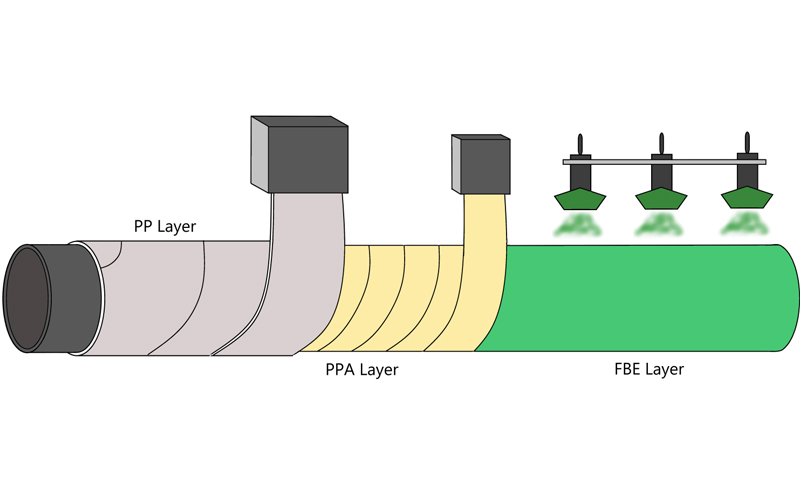
3LPP coated pipe: anti-corrosion guard in high temperature and high pressure environment
In some challenging special environments such as deep-sea oil and gas exploration and high-temperature crude oil transportation, traditional anti-corrosion coatings face significant challenges,...
FBE steel pipe: the technological armor of the steel defense line
I In the icy waters beneath the Norwegian Sea pipeline, a section of FBE Lined Carbon Steel Pipe has been in service for 25...