






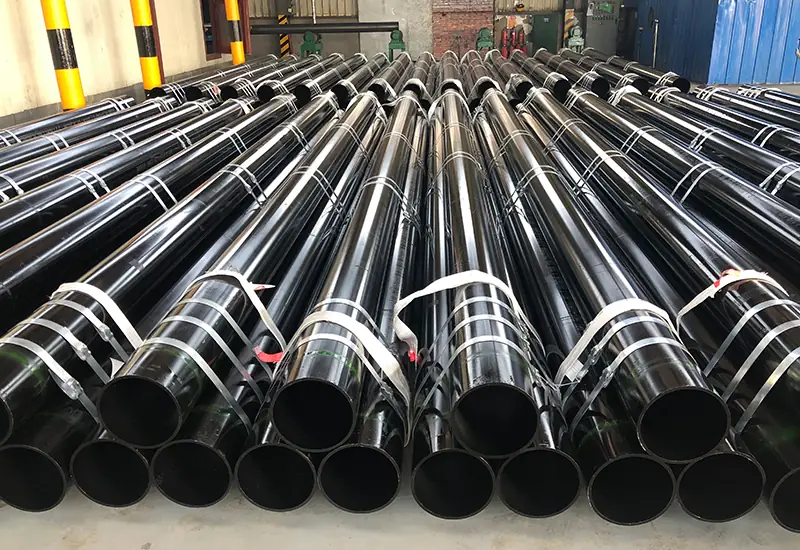
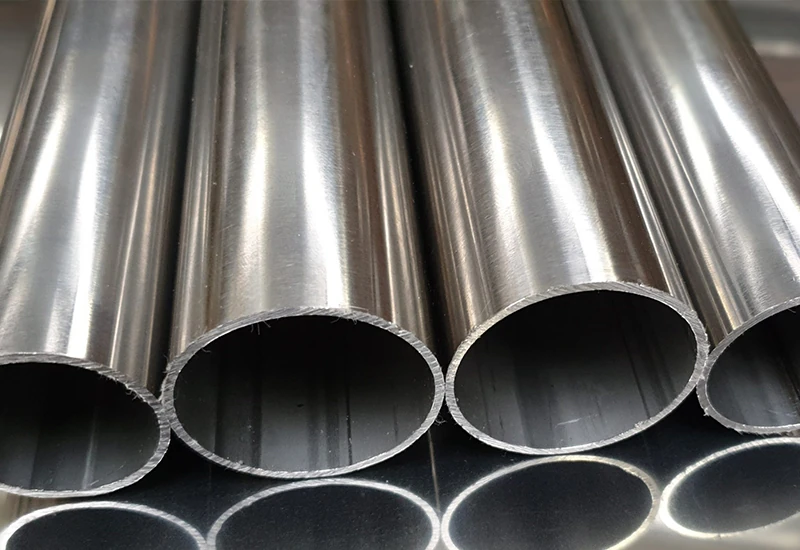

Large-diameter pipelines are very important for infrastructure and industrial projects such as oil/gas transmission, water supply and offshore construction. As a professional steel pipe manufacturer, we know that choosing a suitable large-diameter pipe needs to know its manufacturing processes, size ranges and advantages. The size of pipeline directly affects the manufacturing difficulty and application adaptability. This paper expounds the definitions, production challenges, key manufacturing technologies and applications of large-diameter pipelines, and provides accurate insights for those who are choosing pipeline size.
1. What is the “large diameter”?
The consensus in the industry defines large-diameter pipe as 16 inches (406 mm) or 24 inches (610 mm) and above. Critical applications such as oil/gas or large water conservancy projects usually use a threshold of 24 inches, which stems from manufacturing challenges. Larger diameters demand more precision and massive equipment, making this distinction practical for pipe size selection.
Because of the huge equipment and precision required for structural integrity, it is challenging to manufacture large diameter pipelines. Unlike smaller pipes, large diameter pipe requires heavy-duty molds, high-pressure presses, and specialized welding tools to handle thick steel plates. With the increase of diameter, it becomes more and more difficult to achieve uniform wall thickness, uniform shape and strong joints. For example, a 60-inch (1524 mm) pipeline requires a press to exert thousands of tons of force to bend plates evenly. Raw materials are bigger and heavier, and strict quality control is needed. Cooperation with an experienced manufacturer is very important to overcoming these obstacles and ensure the reliability of large-diameter pipelines.
2. The Limitation of seamless pipe for large diameter applications
Seamless pipes are strong, but they are not practical for large-diameter pipe above 24 inches (610 mm). This process is made by punching and rolling steel billets, and it is very small for larger pipe sizes-thermal expansion (seamless pipes with smaller heating and stretching) is very expensive, and it will make the walls thinner and reduce the strength.
Hot expansion is used to make larger seamless pipes: heating a smaller seamless pipe and expanding it with a mandrel or hydraulic pressure. Although this can produce pipes as long as 24 inches (610 mm), it has one main disadvantage: the extra heating step leads to the increase of production costs, and controlling wall thickness uniformity is more challenging compared to welded pipes-it is not suitable for high pressure use. A seamless pipe expanded from 18 inches to 24 inches may lose 15-20% of their wall thickness, thus reducing their ability to withstand extreme pressure or loads.
Welded pipes (LSAW and SSAW) are the industry standard for large diameter pipe exceeding 24 inches. By bending steel plate/coil and forming the weld seams, the cost and thickness problems of thermal expansion are avoided. A reputable manufacturer will recommend welded steel pipes for these applications because they are more cost-effective and durable.
3. Process 1: LSAW–For High Pressure & Heavy Wall Large Diameter Pipe
Longitudinal submerged arc welding (LSAW) is an ideal choice for high-pressure, thick wall and large diameter pipelines. Used for oil/gas transportation and offshore structures, the manufacturing process can ensure uniform wall thickness, strong weld and structural integrity, which is very important for thick-walled applications.
Steel pipe manufacturers commonly use the JCOE method for LSAW: pressing a flat steel plate into J-shape, then C-shape, and finally O-shape (a full cylinder). Before the expansion of the pipeline, the weld seam is welded by submerged arc welding to form a joint as strong as the parent metal to ensure uniform diameter, roundness and stress relief. The LSAW pipe produced by this process has smooth surface, uniform wall thickness and high strength, and is an ideal choice for thick-walled and large-diameter pipe.
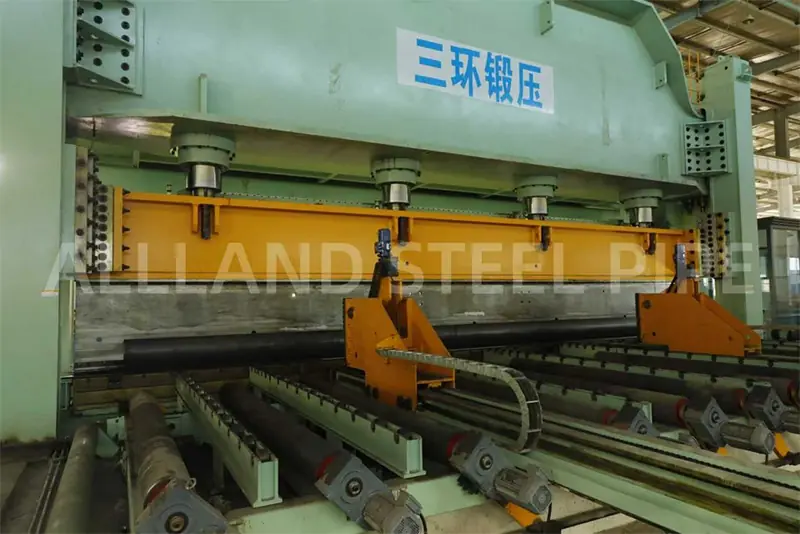
LSAW large diameter pipes range from 16 inches (406 mm) to 60 inches (1524 mm), and the wall thickness is up to more than 4 inches (60 mm in some cases) -its main advantage in high pressure applications (e.g., oil/gas transmission lines typically operating above 1,000 psi).
4. Process 2: SSAW-the size champion of large diameter pipe
Spiral submerged arc welding (SSAW) is the “size champion” of super-large diameter pipeline, which exceeds the capacity of LSAW. Ideal for water transmission, wastewater treatment, and offshore piling, it handles massive pipe size needs cost-effectively.
SSAW is different from LSAW in that it uses a continuous steel coil instead of flat plates. The coil is unfolded, bent into a spiral with overlapping edges and welded by submerged arc welding to form a continuous spiral seam. One of the main advantages of steel pipe manufacturers is the flexibility of pipe size: adjusting the feed angle of the coil allows the use of any SSAW large-diameter pipe with the same coil width, eliminating special tools and reducing costs and delivery times.
SSAW large-diameter pipes range from 8 inches (219 mm) to 120 inches (3048 mm), and the wall thickness ranges from 0.3 inches to 2 inches. It is designed for cost-effectiveness and scalability, and is very suitable for low- to medium-pressure, large-scale projects (e.g., cross-country water pipelines). Unlike LSAW, it is not ideal choice for thick-walled or ultra-high-pressure applications.
SSAW is cheaper than LSAW, using continuous coils and less specialized tools. Lighter in weight and easier to transport/install, thus reducing the project costs. According to API 5L, ASTM A252 and ASTM A671/A672, a famous steel pipe manufacturer will recommend the appropriate SSAW pipe size according to your budget and needs.
5. Comparison Table: Size & Application of Large Diameter Pipe Manufacturing Processes
The following table compares seamless, LSAW and SSAW technologies for large-diameter pipes, and helps you to choose a reliable manufacturer by coordinating the pipe size, advantages and applications.
| Manufacturing Process | Diameter Range (Inches) | Wall Thickness Range (Inches) | Key Advantages | Limitations | Typical Applications | Relevant Standards |
| Seamless (Hot-Expanded) | Up to 24” (Standard); Up to 36” (Max with Hot Expansion) | 0.25” – 2” (Thins with Expansion) | No welds, high strength for small diameters | High cost, wall thinning, limited to ≤24” (practical), not ideal for heavy wall | Small to medium diameter high-pressure applications (e.g., small oil/gas lines) | API 5L, ASTM A106 |
| LSAW (JCOE) | 16” – 60” | 0.5” – 4”+ (Heavy Wall Available) | Heavy wall capability, high pressure resistance, uniform quality | Higher cost than SSAW, limited maximum diameter (vs. SSAW) | High-pressure oil/gas transmission, offshore structures, heavy-duty industrial pipelines | API 5L, ASTM A252, ASTM A671/A672 |
| SSAW (Spiral) | 8” – 120”+ | 0.3” – 2” | Extremely large diameter, cost-effective, scalable production | Not ideal for heavy wall or ultra-high pressure applications | Water transmission, wastewater treatment, offshore piling, large-scale municipal projects | API 5L, ASTM A252, ASTM A671/A672 |
6. Key advantages of large diameter steel pipe
Large diameter steel pipe has unique advantages, which makes it indispensable. Because of its manufacturing processes, pipeline size and steel characteristics, these advantages are better than smaller pipelines or alternative materials such as plastic or concrete.
Large diameter steel pipe is extremely durable, withstanding extreme temperatures, pressure, corrosion, UV radiation, and heavy loads. Large-diameter pipelines installed correctly in water delivery system can be used for more than 50 years, which is a cost-effective long-term investment and far more reliable than small pipelines or alternative materials such as plastic or concrete.
Its large pipeline size can realize high flow and transport a large amount of fluid/mud at low speed to reduce friction and energy costs, which is very important for large-scale projects. The pipelines of LSAW and SSAW have smooth interiors, which minimize turbulence and improve efficiency.
A reputable manufacturer can customize large diameter pipes according to your project, including pipe size, wall thickness, and steel grade. High pressure tubing adopts thick wall LSAW; Low-pressure waterline uses economical and efficient SSAW to ensure that performance or cost will not be affected.
Finally, large diameter steel pipe is eco-friendly and sustainable. Steel is 100% recyclable, which reduces waste and saves resources. At the same time, its long service life minimizes environmental impact from frequent replacement. As a sustainable infrastructure option, it is superior to non-recyclable plastics and high-energy concrete.
7. Large diameter pipeline application Scenarios
Large-diameter pipelines meet various industrial, municipal and infrastructure needs, and LSAW/SSAW is selected according to the pipeline size, wall thickness and steel grade. As a leading steel pipe manufacturer, we provide reliable large-diameter pipe for all critical applications.
- Oil/natural gas transportation: LSAW large-diameter pipeline (thick wall and high pressure resistance) is the first choice for long-distance high-pressure pipeline (≥ 10,000 psi). SSAW is used for low pressure gas gathering/distribution pipeline. Both of them conform to API 5L standards.
- Water delivery: SSAW large-diameter pipeline (cost-effective, 120 “+capacity) is used for transnational water delivery pipelines. Based on the requirements of pressure and pipe size, LSAW/SSAW is suitable for municipal water distribution, wastewater treatment and rainwater management.
- Offshore Applications: LSAW large-diameter pipe (thick wall and high strength) is used for offshore oil pipelines and platforms. SSAW is an ideal choice for offshore piling (wind turbines, ports) and conforms to ASTM A252 marine durability standard.
Large-diameter pipe are used in power plants, chemical plants and mines. In power plants, LSAW pipeline (according to ASTM A 671/A672) handles high pressure and high temperature steam, water and fuel. Chemical plants use special steel-grade large-diameter pipelines to transport corrosive chemicals, while mines rely on economical and efficient SSAW pipelines to transport mud, all of which are tailor-made by reliable manufacturer to match the pipeline size and application requirements.
8. Conclusion: Choosing the right large diameter pipeline for your Project
Choosing a suitable large diameter pipeline needs to understand its definition (≥ 16/24 inches), manufacturing technology and pipeline size ranges. Seamless tube is limited to ≤ 24 inches; For larger diameters, welded LSAW/SSAW is the first choice.
Match the process to your project: LSAW is suitable for high pressure/thick wall requirements, and SSAW is suitable for super-large diameter/cost-effectiveness. An experienced manufacturer can ensure that the pipe size and wall thickness are appropriate, and conform to API 5L, ASTM A252 and ASTM A 671/A672.
At Allland, we specialize in high-quality large diameter pipe (LSAW/SSAW up to 3000 mm). Our experts help you choose the appropriate pipe size and type-thick-walled LSAW or cost-effective SSAW-to provide reliable and reliable and high-performance products that meet industry standards.Need pipes larger than 24 inches? Allland specializes in the production of large diameter LSAW and SSAW pipes with a diameter of 3000 mm Download our size list or contact us immediately to discuss your project requirements. Whether you are working in oil and gas pipeline, a municipal water supply system or an offshore wind farm, we have the large-diameter pipeline solution you need.

ASTM A53 vs. API 5L: A Guide to Selection and Application
In the field of industrial piping, ASTM A53 and API 5L are two key standards that are widely used, but have very different positions. ASTM...

Introduction:Technology differences determine success or failure, and selection needs to be “precise”
In oil and gas transmission, municipal infrastructure and other major projects, the reasonable choice of steel pipe welding process directly affects the project...
Steel Density Analysis: Core Differences between Mild and Medium Carbon Steels and Industrial Applications
The density of steel is one of the key parameters that determine its physical properties and industrial applications. Theoretical state of steel density...
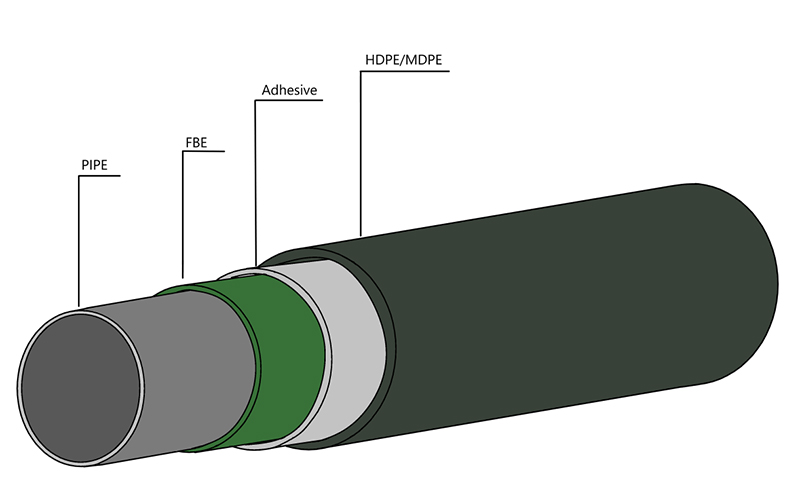
3LPE coated steel pipe: a solid barrier in the field of industrial corrosion protection
In the harsh environment of oil and gas, chemical industry, urban pipe network, etc., the long-term reliability and corrosion resistance of pipeline system...
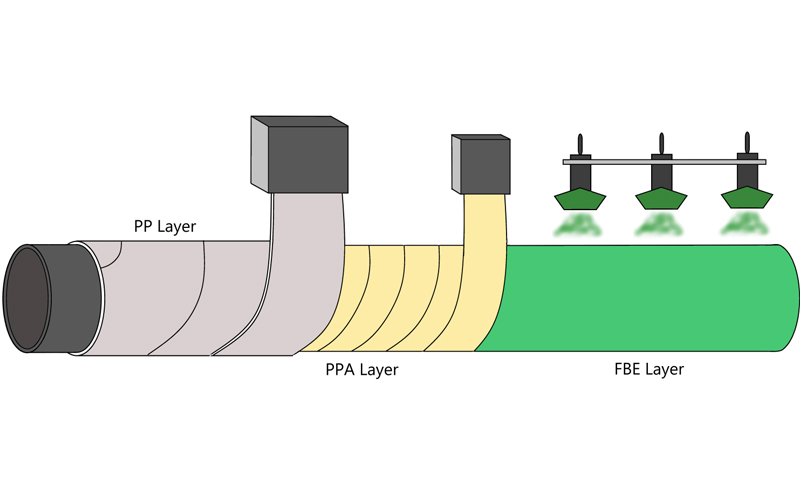
3LPP coated pipe: anti-corrosion guard in high temperature and high pressure environment
In some challenging special environments such as deep-sea oil and gas exploration and high-temperature crude oil transportation, traditional anti-corrosion coatings face significant challenges,...
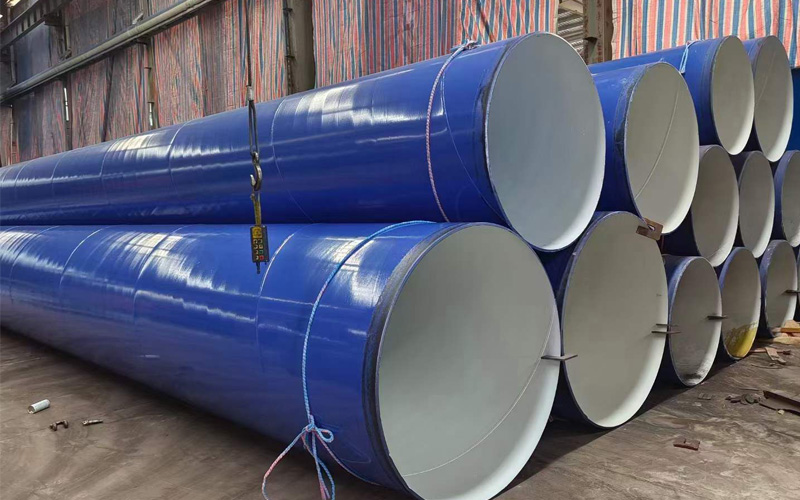
FBE steel pipe: the technological armor of the steel defense line
I In the icy waters beneath the Norwegian Sea pipeline, a section of FBE Lined Carbon Steel Pipe has been in service for 25...