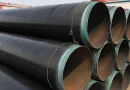





LSAW STEEL PIPE- JCOE PROCESS
Outside Diameter:Φ406mm – 1524mm (16″ – 60″ )
Wall Thickness:6.0 – 60mm (1/4″ – 3″ )
Quality Standards:API、ISO、EN、ASTM、DIN、JIS、GB、CSA、GOST
Length:3 – 12.5m ( 10”- 40”)
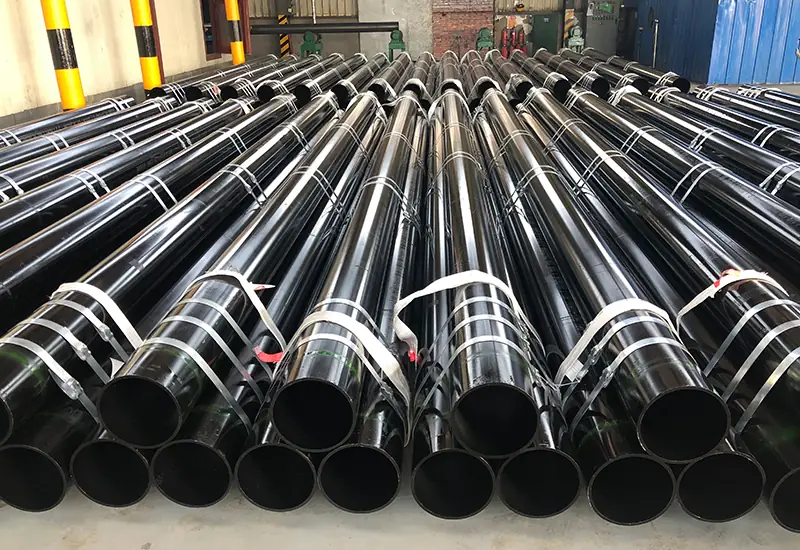
Coating:Bare, Black painted,FBE, 3LPE, 3LPP, or as per client requirements
description
Specification
Premium LSAW Steel Pipe Manufacturer (JCOE Process)
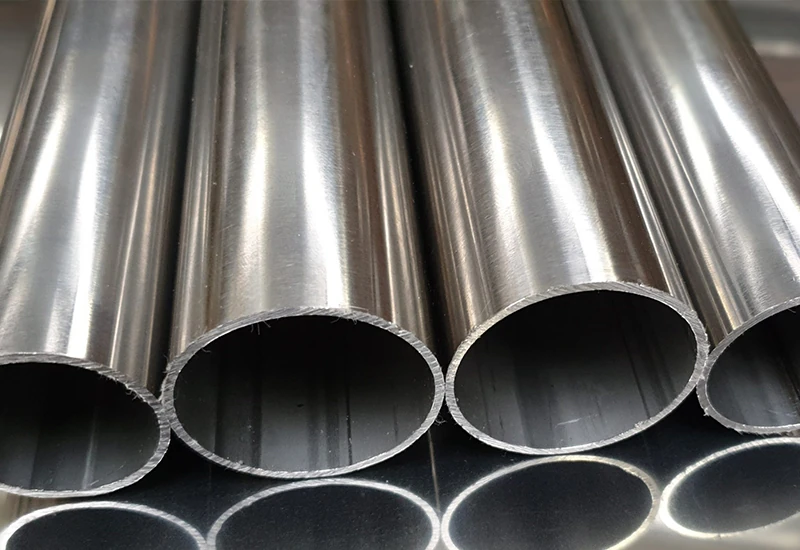
Allland Steel specializes in manufacturing high-quality LSAW (Longitudinal Submerged Arc Welding) steel pipes for the global market. We utilize advanced JCOE forming technology to produce large-diameter pipes ranging from 406mm to 1524mm (16″ – 60″), with heavy wall thickness capabilities up to 60mm.
Our LSAW pipes are strictly manufactured in accordance with international standards including API 5L (PSL1/PSL2) . Featuring excellent roundness and high weld integrity, Allland’s pipes offer superior dimensional accuracy and reliable weld integrity. We provide customized lengths up to 18m and professional anti-corrosion coatings (3LPE, FBE) to ensure a 50-year service life.
Product Name: LSAW Steel Pipe, SAWL Steel Pipe, DSAW Steel Pipe
Specifications:
Standard and Steel Grade:
| Standard | Steel Grade |
| API SPEC 5L | Gr.B, X42, X46, X52, X56, X60, X65, X70, PSL1 / PSL2 |
| ASTM A252 | GR.1, GR.2, GR.3 |
| ASTM A53 /ASTM A500 | GR.A, GR.B |
| ASTM A671 / ASTM A672 | CA55, CB60, CB65, CB70, CC60, CC65, CC70 |
| EN10219 / EN10217 | S235JR/J0/J2, 275JR/J0/J2S, S355JR/J0/J2/J2G3/G4 |
| AS/NZ 1163 / AS/NZS 1579 | C250, C350, C350L0 |
| JIS G3444 / JIS G3457 | STK290, STK400, TK500, STK540, STPG370, STPG410 |
| DIN17100 | ST37, ST44, ST52 |
| GB/T 9711-2023 | L245, L290, L320, L360, L390, L415, L450, L485, L555 |
| GB/T 3091 | Q195, Q215, Q235, Q355 |
| ISO 3183 | L245, L290, L360, L415, L485 |
| GOST 20295 | K34, K38, K42, K50, K52, K55, K60 |
| EN 10210 | S235JRH, S275J0H, S355J2H, S355NH, S420NH |
| SY/T 5037 | Q235B, Q355B |
Ends: Bevelled ends / Plain ends/ Welded with Flange
Surface Treatment: Bare, Black Painting, Varnished, Galvanized, Anti-corrosion coating (FEB,3LPE,3LPP), etc.
| DIAMETER | NOMINAL WALL THICKNESS | ||||||||||||||||
| mm | inch | 6.0 | 7.0 | 8.0 | 9.0 | 10.0 | 11.0 | 12.0 | 13.0 | 14.0 | 15.0 | 16.0 | 18.0 | 20.0 | 22.0 | 25.0 | 30.0 |
| Unit length weight (kg/m) | |||||||||||||||||
| 406.4 | 16.0 | 59.3 | 69.0 | 78.6 | 88.2 | 97.8 | 107.3 | 116.7 | |||||||||
| 426.0 | 62.1 | 72.3 | 82.5 | 92.6 | 102.6 | 112.6 | 122.5 | ||||||||||
| 457.0 | 18.0 | 66.7 | 77.7 | 88.6 | 99.4 | 110.2 | 121.0 | 131.7 | |||||||||
| 478.0 | 69.8 | 81.3 | 92.7 | 104.1 | 115.4 | 126.7 | 137.9 | ||||||||||
| 508.0 | 20.0 | 74.3 | 86.5 | 98.7 | 110.8 | 122.8 | 134.8 | 146.8 | 158.7 | 170.6 | |||||||
| 529.0 | 77.4 | 90.1 | 102.8 | 115.4 | 128.0 | 140.5 | 153.0 | 165.4 | 177.8 | ||||||||
| 559.0 | 22.0 | 81.8 | 95.3 | 108.7 | 122.1 | 135.4 | 148.7 | 161.9 | 175.0 | 188.2 | |||||||
| 610.0 | 24.0 | 89.4 | 104.1 | 118.8 | 133.4 | 148.0 | 162.5 | 177.0 | 191.4 | 205.8 | 220.1 | 234.4 | |||||
| 630.0 | 92.3 | 107.5 | 122.7 | 137.8 | 152.9 | 167.9 | 182.9 | 198.8 | 212.7 | 227.5 | 242.3 | ||||||
| 660.0 | 26.0 | 96.8 | 112.7 | 128.6 | 144.5 | 160.3 | 176.1 | 191.8 | 207.4 | 223.0 | 238.6 | 254.1 | 285.0 | 315.6 | |||
| 711.0 | 28.0 | 104.3 | 121.5 | 138.7 | 155.8 | 172.9 | 189.9 | 206.9 | 223.8 | 240.7 | 257.5 | 274.2 | 307.6 | 340.8 | |||
| 720.0 | 105.7 | 123.1 | 140.5 | 157.8 | 175.1 | 192.4 | 209.5 | 226.7 | 243.8 | 260.8 | 277.8 | 311.6 | 345.2 | ||||
| 762.0 | 30.0 | 111.9 | 130.3 | 148.8 | 167.1 | 185.5 | 203.7 | 222.0 | 240.1 | 258.3 | 276.3 | 294.4 | 330.2 | 366.0 | |||
| 813.0 | 32.0 | 119.4 | 139.1 | 158.8 | 178.5 | 198.0 | 217.6 | 237.1 | 256.5 | 275.9 | 295.2 | 314.5 | 352.9 | 391.1 | |||
| 820.0 | 120.5 | 140.4 | 160.2 | 180.0 | 199.8 | 219.5 | 239.1 | 258.7 | 278.3 | 297.8 | 317.3 | 356.0 | 394.6 | ||||
| 864.0 | 34.0 | 147.9 | 168.9 | 189.8 | 210.6 | 231.4 | 252.1 | 272.8 | 293.5 | 314.1 | 334.6 | 375.5 | 416.3 | ||||
| 914.0 | 36.0 | 178.8 | 200.9 | 222.9 | 245.0 | 266.9 | 288.9 | 310.7 | 332.6 | 354.3 | 397.7 | 440.9 | |||||
| 920.0 | 179.9 | 202.2 | 224.4 | 246.6 | 268.7 | 290.8 | 312.8 | 334.8 | 356.7 | 400.4 | 443.9 | ||||||
| 965.0 | 38.0 | 188.8 | 212.2 | 235.5 | 258.8 | 282.0 | 305.2 | 328.3 | 351.4 | 374.5 | 420.4 | 466.1 | |||||
| 1016.0 | 40.0 | 198.9 | 223.5 | 248.1 | 272.6 | 297.1 | 321.6 | 346.0 | 370.3 | 394.6 | 443.0 | 491.2 | 539.3 | ||||
| 1020.0 | 199.7 | 224.4 | 249.1 | 273.7 | 298.3 | 322.8 | 347.3 | 371.8 | 396.2 | 444.8 | 493.2 | 541.4 | |||||
| 1067.0 | 42.0 | 208.9 | 234.8 | 260.7 | 286.5 | 312.2 | 337.9 | 363.6 | 389.2 | 414.7 | 465.7 | 516.4 | 566.9 | ||||
| 1118.0 | 44.0 | 219.0 | 246.2 | 273.3 | 300.3 | 327.3 | 354.3 | 381.2 | 408.0 | 434.8 | 488.3 | 541.5 | 594.6 | ||||
| 1168.0 | 46.0 | 228.9 | 257.2 | 285.6 | 313.9 | 342.1 | 370.3 | 398.4 | 426.5 | 454.6 | 510.5 | 566.2 | 621.7 | ||||
| 1219.0 | 48.0 | 238.9 | 268.6 | 298.2 | 327.7 | 357.2 | 386.6 | 416.0 | 445.4 | 474.7 | 553.1 | 591.3 | 649.4 | ||||
| 1220.0 | 239.1 | 268.8 | 298.4 | 327.8 | 357.5 | 387.0 | 416.4 | 445.8 | 475.1 | 535.6 | 591.8 | 649.9 | |||||
| 1321.0 | 52.0 | 291.2 | 323.3 | 327.8 | 387.4 | 419.3 | 451.3 | 483.1 | 514.9 | 578.4 | 641.7 | 704.7 | |||||
| 1420.0 | 347.7 | 355.4 | 416.7 | 451.1 | 485.4 | 519.7 | 554.0 | 622.3 | 690.5 | 758.4 | 860.0 | 1028.3 | |||||
| 1422.0 | 56.0 | 348.2 | 382.2 | 417.3 | 451.7 | 486.1 | 520.5 | 554.8 | 623.3 | 691.5 | 759.6 | 861.3 | 1029.8 | ||||
| 1524.0 | 60.0 | 373.4 | 410.4 | 447.5 | 484.4 | 521.3 | 558.2 | 595.0 | 668.5 | 741.8 | 814.9 | 924.1 | 1105.3 | ||||
| 1620.0 | 397.0 | 436.5 | 457.8 | 515.2 | 554.5 | 593.7 | 623.9 | 711.1 | 789.1 | 867.0 | 983.3 | 1176.3 | |||||
production process

Detailed LSAW Manufacturing Process (JCOE)
Allland production line strictly follows the JCOE forming process, which ensures superior roundness and straightness compared to traditional methods. The key stages include:
Quality Assurance (QA/QC)
At Allland Steel, quality is our top priority. Our LSAW pipes undergo a comprehensive inspection process strictly in accordance with API 5L, ASTM, and ISO standards to guarantee zero defects.
application
Due to its high bearing capacity and wide range of specifications, our LSAW pipes are widely used in:
advantages
packing
Large diameter LSAW pipe transportation need to pay attention to anti-deformation and anti-corrosion, the use of special bracket fixed in transport and good end protection. The main mode of sea transportation is container transportation (suitable for short pipes), bulk carrier transportation (economic but complicated loading and unloading) and special pipeline carriers (safe and efficient but high cost). Container transportation is suitable for small quantities over short distances, bulk carriers are suitable for large quantities but require high protection of pipe ends, and special pipeline ships are suitable for long-distance, high-volume transportation, which can maximize the protection of pipe quality.

FAQ
A: The main difference lies in the weld seam and application. LSAW (Longitudinal Submerged Arc Welding) has a single straight weld seam and uses the JCOE forming process, offering superior high-pressure resistance and dimensional accuracy. It is preferred for critical oil & gas transmission and offshore structures. SSAW (Spiral Submerged Arc Welding) has a spiral weld seam and is a cost-effective solution for water transmission and general piling. Allland supplies both types to meet different project budgets.
A: It depends on the size and budget. For diameters below 24 inches, Seamless pipe is common. However, for large diameters (above 24″ / 610mm), LSAW pipe is the better choice. It offers a significantly lower cost and faster production time than seamless pipe while maintaining comparable strength and reliability for high-pressure applications.
A: Allland Steel can produce heavy wall thickness LSAW pipes up to 60mm. We use high-strength steel plates and the powerful JCOE forming process to ensure that even thick-walled pipes maintain excellent roundness and weld quality, suitable for deep-sea pipelines and heavy-duty piling.
A: Yes. We specialize in manufacturing API 5L PSL2 pipes (grades up to X70/X80) that meet NACE MR0175 / ISO 15156 standards for sour service environments (H2S corrosion resistance). We provide full Mill Test Certificates (MTC) proving the chemical composition and mechanical properties.
A: While the standard length is 11.8m or 12m, we can customize pipe lengths up to 18 meters. Longer pipes reduce the number of girth welds required on-site, saving installation time and costs for your project.
A: To extend the service life of the pipes (up to 50 years), we offer various external and internal coatings, including 3LPE (3-Layer Polyethylene), 3LPP, FBE (Fusion Bonded Epoxy), and hot-dipped galvanizing, all applied in our own coating facility.
| DIAMETER | NOMINAL WALL THICKNESS | ||||||||||||||||
| mm | inch | 6.0 | 7.0 | 8.0 | 9.0 | 10.0 | 11.0 | 12.0 | 13.0 | 14.0 | 15.0 | 16.0 | 18.0 | 20.0 | 22.0 | 25.0 | 30.0 |
| Unit length weight (kg/m) | |||||||||||||||||
| 406.4 | 16.0 | 59.3 | 69.0 | 78.6 | 88.2 | 97.8 | 107.3 | 116.7 | |||||||||
| 426.0 | 62.1 | 72.3 | 82.5 | 92.6 | 102.6 | 112.6 | 122.5 | ||||||||||
| 457.0 | 18.0 | 66.7 | 77.7 | 88.6 | 99.4 | 110.2 | 121.0 | 131.7 | |||||||||
| 478.0 | 69.8 | 81.3 | 92.7 | 104.1 | 115.4 | 126.7 | 137.9 | ||||||||||
| 508.0 | 20.0 | 74.3 | 86.5 | 98.7 | 110.8 | 122.8 | 134.8 | 146.8 | 158.7 | 170.6 | |||||||
| 529.0 | 77.4 | 90.1 | 102.8 | 115.4 | 128.0 | 140.5 | 153.0 | 165.4 | 177.8 | ||||||||
| 559.0 | 22.0 | 81.8 | 95.3 | 108.7 | 122.1 | 135.4 | 148.7 | 161.9 | 175.0 | 188.2 | |||||||
| 610.0 | 24.0 | 89.4 | 104.1 | 118.8 | 133.4 | 148.0 | 162.5 | 177.0 | 191.4 | 205.8 | 220.1 | 234.4 | |||||
| 630.0 | 92.3 | 107.5 | 122.7 | 137.8 | 152.9 | 167.9 | 182.9 | 198.8 | 212.7 | 227.5 | 242.3 | ||||||
| 660.0 | 26.0 | 96.8 | 112.7 | 128.6 | 144.5 | 160.3 | 176.1 | 191.8 | 207.4 | 223.0 | 238.6 | 254.1 | 285.0 | 315.6 | |||
| 711.0 | 28.0 | 104.3 | 121.5 | 138.7 | 155.8 | 172.9 | 189.9 | 206.9 | 223.8 | 240.7 | 257.5 | 274.2 | 307.6 | 340.8 | |||
| 720.0 | 105.7 | 123.1 | 140.5 | 157.8 | 175.1 | 192.4 | 209.5 | 226.7 | 243.8 | 260.8 | 277.8 | 311.6 | 345.2 | ||||
| 762.0 | 30.0 | 111.9 | 130.3 | 148.8 | 167.1 | 185.5 | 203.7 | 222.0 | 240.1 | 258.3 | 276.3 | 294.4 | 330.2 | 366.0 | |||
| 813.0 | 32.0 | 119.4 | 139.1 | 158.8 | 178.5 | 198.0 | 217.6 | 237.1 | 256.5 | 275.9 | 295.2 | 314.5 | 352.9 | 391.1 | |||
| 820.0 | 120.5 | 140.4 | 160.2 | 180.0 | 199.8 | 219.5 | 239.1 | 258.7 | 278.3 | 297.8 | 317.3 | 356.0 | 394.6 | ||||
| 864.0 | 34.0 | 147.9 | 168.9 | 189.8 | 210.6 | 231.4 | 252.1 | 272.8 | 293.5 | 314.1 | 334.6 | 375.5 | 416.3 | ||||
| 914.0 | 36.0 | 178.8 | 200.9 | 222.9 | 245.0 | 266.9 | 288.9 | 310.7 | 332.6 | 354.3 | 397.7 | 440.9 | |||||
| 920.0 | 179.9 | 202.2 | 224.4 | 246.6 | 268.7 | 290.8 | 312.8 | 334.8 | 356.7 | 400.4 | 443.9 | ||||||
| 965.0 | 38.0 | 188.8 | 212.2 | 235.5 | 258.8 | 282.0 | 305.2 | 328.3 | 351.4 | 374.5 | 420.4 | 466.1 | |||||
| 1016.0 | 40.0 | 198.9 | 223.5 | 248.1 | 272.6 | 297.1 | 321.6 | 346.0 | 370.3 | 394.6 | 443.0 | 491.2 | 539.3 | ||||
| 1020.0 | 199.7 | 224.4 | 249.1 | 273.7 | 298.3 | 322.8 | 347.3 | 371.8 | 396.2 | 444.8 | 493.2 | 541.4 | |||||
| 1067.0 | 42.0 | 208.9 | 234.8 | 260.7 | 286.5 | 312.2 | 337.9 | 363.6 | 389.2 | 414.7 | 465.7 | 516.4 | 566.9 | ||||
| 1118.0 | 44.0 | 219.0 | 246.2 | 273.3 | 300.3 | 327.3 | 354.3 | 381.2 | 408.0 | 434.8 | 488.3 | 541.5 | 594.6 | ||||
| 1168.0 | 46.0 | 228.9 | 257.2 | 285.6 | 313.9 | 342.1 | 370.3 | 398.4 | 426.5 | 454.6 | 510.5 | 566.2 | 621.7 | ||||
| 1219.0 | 48.0 | 238.9 | 268.6 | 298.2 | 327.7 | 357.2 | 386.6 | 416.0 | 445.4 | 474.7 | 553.1 | 591.3 | 649.4 | ||||
| 1220.0 | 239.1 | 268.8 | 298.4 | 327.8 | 357.5 | 387.0 | 416.4 | 445.8 | 475.1 | 535.6 | 591.8 | 649.9 | |||||
| 1321.0 | 52.0 | 291.2 | 323.3 | 327.8 | 387.4 | 419.3 | 451.3 | 483.1 | 514.9 | 578.4 | 641.7 | 704.7 | |||||
| 1420.0 | 347.7 | 355.4 | 416.7 | 451.1 | 485.4 | 519.7 | 554.0 | 622.3 | 690.5 | 758.4 | 860.0 | 1028.3 | |||||
| 1422.0 | 56.0 | 348.2 | 382.2 | 417.3 | 451.7 | 486.1 | 520.5 | 554.8 | 623.3 | 691.5 | 759.6 | 861.3 | 1029.8 | ||||
| 1524.0 | 60.0 | 373.4 | 410.4 | 447.5 | 484.4 | 521.3 | 558.2 | 595.0 | 668.5 | 741.8 | 814.9 | 924.1 | 1105.3 | ||||
| 1620.0 | 397.0 | 436.5 | 457.8 | 515.2 | 554.5 | 593.7 | 623.9 | 711.1 | 789.1 | 867.0 | 983.3 | 1176.3 | |||||
Detailed LSAW Manufacturing Process (JCOE)
Allland production line strictly follows the JCOE forming process, which ensures superior roundness and straightness compared to traditional methods. The key stages include:
At Allland Steel, quality is our top priority. Our LSAW pipes undergo a comprehensive inspection process strictly in accordance with API 5L, ASTM, and ISO standards to guarantee zero defects.
Due to its high bearing capacity and wide range of specifications, our LSAW pipes are widely used in:
Large diameter LSAW pipe transportation need to pay attention to anti-deformation and anti-corrosion, the use of special bracket fixed in transport and good end protection. The main mode of sea transportation is container transportation (suitable for short pipes), bulk carrier transportation (economic but complicated loading and unloading) and special pipeline carriers (safe and efficient but high cost). Container transportation is suitable for small quantities over short distances, bulk carriers are suitable for large quantities but require high protection of pipe ends, and special pipeline ships are suitable for long-distance, high-volume transportation, which can maximize the protection of pipe quality.
A: The main difference lies in the weld seam and application. LSAW (Longitudinal Submerged Arc Welding) has a single straight weld seam and uses the JCOE forming process, offering superior high-pressure resistance and dimensional accuracy. It is preferred for critical oil & gas transmission and offshore structures. SSAW (Spiral Submerged Arc Welding) has a spiral weld seam and is a cost-effective solution for water transmission and general piling. Allland supplies both types to meet different project budgets.
A: It depends on the size and budget. For diameters below 24 inches, Seamless pipe is common. However, for large diameters (above 24″ / 610mm), LSAW pipe is the better choice. It offers a significantly lower cost and faster production time than seamless pipe while maintaining comparable strength and reliability for high-pressure applications.
A: Allland Steel can produce heavy wall thickness LSAW pipes up to 60mm. We use high-strength steel plates and the powerful JCOE forming process to ensure that even thick-walled pipes maintain excellent roundness and weld quality, suitable for deep-sea pipelines and heavy-duty piling.
A: Yes. We specialize in manufacturing API 5L PSL2 pipes (grades up to X70/X80) that meet NACE MR0175 / ISO 15156 standards for sour service environments (H2S corrosion resistance). We provide full Mill Test Certificates (MTC) proving the chemical composition and mechanical properties.
A: While the standard length is 11.8m or 12m, we can customize pipe lengths up to 18 meters. Longer pipes reduce the number of girth welds required on-site, saving installation time and costs for your project.
A: To extend the service life of the pipes (up to 50 years), we offer various external and internal coatings, including 3LPE (3-Layer Polyethylene), 3LPP, FBE (Fusion Bonded Epoxy), and hot-dipped galvanizing, all applied in our own coating facility.
Provide us with your project details (like application, specifications, quantity). Our experienced team will respond with a tailored solution and competitive quote within 24 business hours.
Grooved-increasing-tee-1-300x300.jpg)

We remain steadfast in our mission, driving innovation to deliver exceptional products and services for clients, empower employees with trans-formative growth opportunities, and create sustainable value for society.