






7FAQ
Basic Specifications of Spiral Welded Steel Pipe
| Item | Specification |
| Product Name | Spiral Welded Steel Pipe / SSAW Steel Pipe |
| Manufacturing Process | Spiral Forming + Submerged Arc Welding (SAW) |
| Welding Type | Double Submerged Arc Welding (DSAW) |
| Standard | API 5L, ASTM A252, AWWA C200, EN 10217, GB/T 9711 |
| Outer Diameter | 219 mm – 3500 mm (customized sizes available) |
| Wall Thickness | 6 mm – 30 mm (depending on application and standard) |
| Pipe Length | 6 m, 12 m, or customized length |
| Steel Grade | Q235, Q355, ASTM A36, API 5L Grade B, X42, X52, X60, X65, X70 |
| Pipe Type | SSAW Pipe / Spiral Submerged Arc Welded Pipe |
| Surface Treatment | Bare, Painting, 3PE, 3LPE, 3PP, FBE, Epoxy Coating |
| Pipe Ends | Plain End, Beveled End, Customized End Preparation |
How Are Spiral Welded Steel Pipes Manufactured?
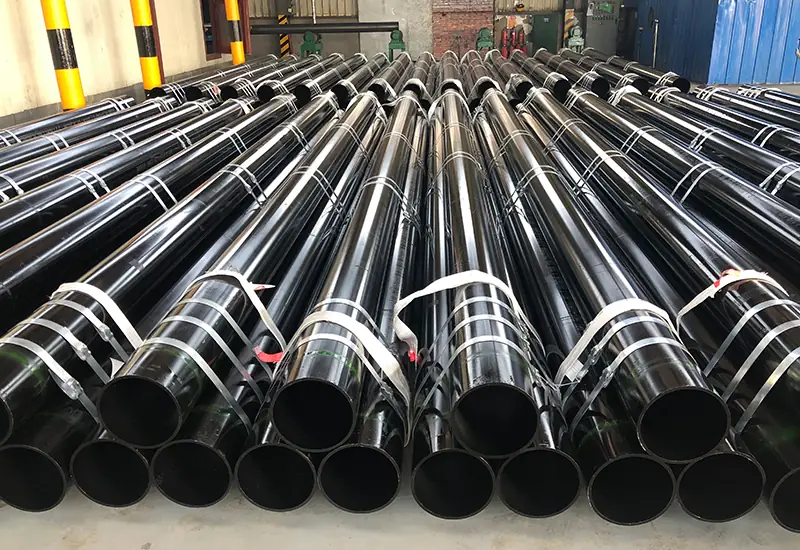
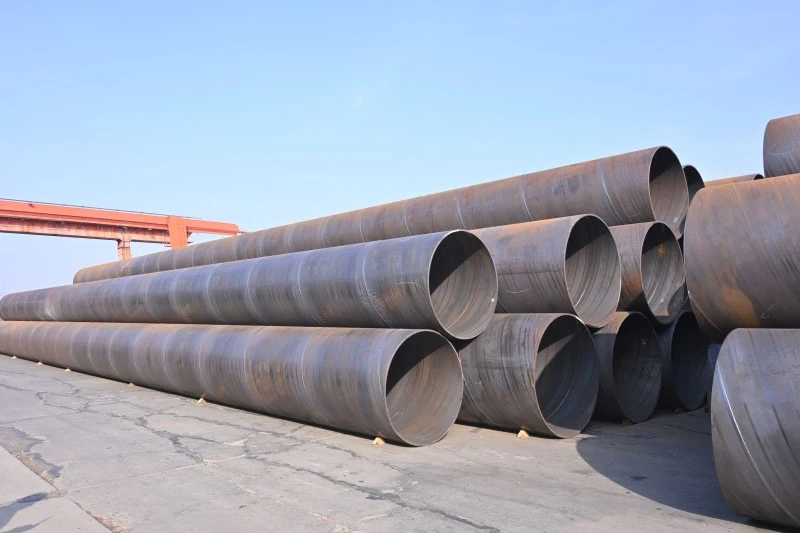
Spiral welded steel pipes, also known as SSAW (Spiral Submerged Arc Welded) pipes, are manufactured through a continuous forming and welding process that converts steel coils into large-diameter pipes. Compared with longitudinal welded pipes, the spiral forming process allows manufacturers to produce pipes with a wider range of diameters using different steel coil widths.
A professional spiral welded steel pipe manufacturer typically follows a complete production process including raw material inspection, coil preparation, spiral forming, submerged arc welding, pipe expansion, inspection and coating.
Double Submerged Arc Welding (DSAW)
After spiral forming, the pipe seam is welded using Submerged Arc Welding (SAW) technology.
Most high-quality SSAW pipes use double-sided submerged arc welding, including:
Internal Welding
The inside seam is welded first to provide strong penetration and structural stability.
External Welding
The outside seam is welded afterward to complete the joint and improve overall weld strength.
Spiral Welded Steel Pipe Standards and Specifications
API 5L Spiral Welded Steel Pipe
API 5L is one of the most widely used standards for steel pipelines in the oil and gas industry. It specifies requirements for welded and seamless steel pipes used in pipeline transportation systems.
Common Grades:
| Grade | Minimum Yield Strength | Typical Application |
| API 5L Grade B | 245 MPa | General pipeline transportation |
| X42 | 290 MPa | Medium-strength pipelines |
| X52 | 360 MPa | Oil and gas transmission |
| X60 | 415 MPa | High-pressure pipelines |
| X65 | 450 MPa | Long-distance pipelines |
| X70 | 485 MPa | High-strength pipeline systems |
ASTM A252 Spiral Welded Steel Pipe
ASTM A252 is a standard specifically developed for welded steel pipe piles used in structural and foundation applications.
ASTM A252 Grades:
| Grade | Yield Strength | Tensile Strength |
| Grade 1 | 205 MPa | 345 MPa |
| Grade 2 | 240 MPa | 414 MPa |
| Grade 3 | 310 MPa | 455 MPa |
AWWA C200 Spiral Welded Steel Pipe
AWWA C200 is widely used for welded steel water pipe systems.
EN 10217 Welded Steel Pipe
EN 10217 is a European standard covering welded steel pipes for pressure applications.
| Grade | Equivalent Grade | Application |
| P235TR1 | Carbon steel | General pressure applications |
| P235GH | High-temperature service | Boiler and pressure systems |
| P265GH | Higher strength pressure steel | Industrial applications |
Applications of Spiral Welded Steel Pipe
Compared with other welded steel pipes, spiral welded steel pipes are particularly suitable for applications requiring large-diameter pipelines, long-distance transportation and heavy-duty structural support.
- Oil and Gas Transmission
- Water Supply Pipeline
- Structural Piling
- Municipal Engineering
Spiral Welded Steel Pipe vs LSAW Pipe
| Item | SSAW Pipe | LSAW Pipe |
| Welding Direction | Spiral | Longitudinal |
| Raw Material | Steel Coil | Steel Plate |
| Diameter Range | Large | Large |
| Production Efficiency | Higher | Lower |
| Cost | Lower | Higher |
| Application | Water/Oil/Gas | High-pressure pipelines |
Coating Options Provided by Spiral Welded Steel Pipe Manufacturers
Anti-corrosion coating is an essential part of spiral welded steel pipe manufacturing, especially for pipes used in underground, offshore, water transmission and oil & gas pipeline projects. A professional spiral welded steel pipe manufacturer should provide various coating solutions according to project requirements, operating conditions and service environment.
| Coating Type | Main Advantage | Typical Applications |
| 3PE / 3LPE | Excellent underground corrosion protection | Oil, gas and buried pipelines |
| FBE | Strong adhesion and chemical resistance | Water and industrial pipelines |
| 3PP | High temperature resistance | Offshore and high-temperature pipelines |
| Epoxy Coating | Smooth surface and corrosion protection | Water and chemical pipelines |
| Cement Mortar Lining | Internal corrosion protection | Drinking water systems |
FAQ
Q1: What is a spiral welded steel pipe?
A spiral welded steel pipe, also known as an SSAW pipe, is manufactured by forming steel coils into a spiral shape and welding the helical seam through submerged arc welding (SAW) technology. It is widely used for large-diameter pipelines, including oil & gas, water transmission and structural applications.
Q2: What is the difference between SSAW and LSAW pipe?
The main difference is the welding direction and production method. SSAW pipes are produced by spiral welding steel coils, while LSAW pipes are manufactured by longitudinal welding steel plates. SSAW pipes are commonly used for large-diameter pipelines, while LSAW pipes are preferred for projects requiring higher dimensional accuracy and strength.
Q3: Are spiral welded steel pipes suitable for oil and gas pipelines?
Yes. API 5L SSAW pipes are widely used for oil and gas transmission pipelines. With proper welding control, testing and anti-corrosion coatings such as 3PE or FBE, spiral welded steel pipes can provide reliable performance for long-distance pipeline systems.

ASTM A53 vs. API 5L: A Guide to Selection and Application
In the field of industrial piping, ASTM A53 and API 5L are two key standards that are widely used, but have very different positions. ASTM...

Introduction:Technology differences determine success or failure, and selection needs to be “precise”
In oil and gas transmission, municipal infrastructure and other major projects, the reasonable choice of steel pipe welding process directly affects the project...
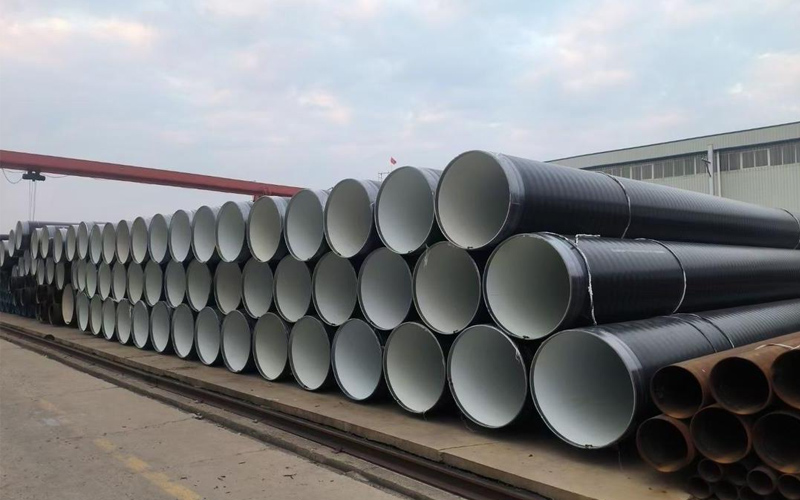
Steel Density Analysis: Core Differences between Mild and Medium Carbon Steels and Industrial Applications
The density of steel is one of the key parameters that determine its physical properties and industrial applications. Theoretical state of steel density...
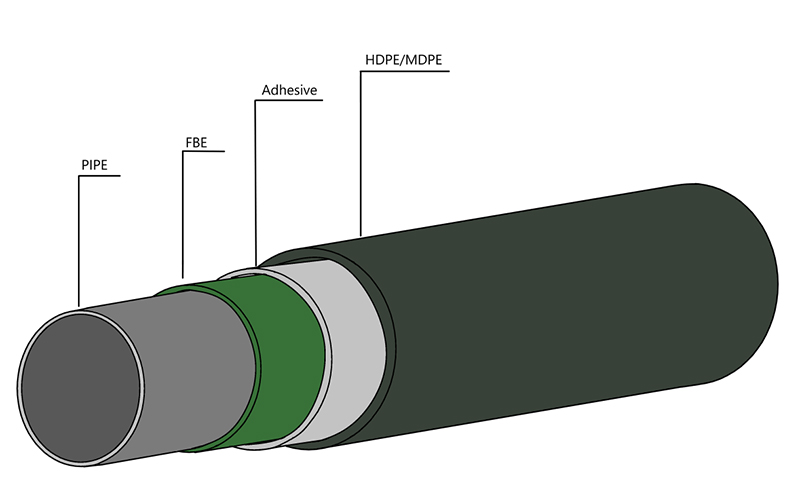
3LPE coated steel pipe: a solid barrier in the field of industrial corrosion protection
In the harsh environment of oil and gas, chemical industry, urban pipe network, etc., the long-term reliability and corrosion resistance of pipeline system...
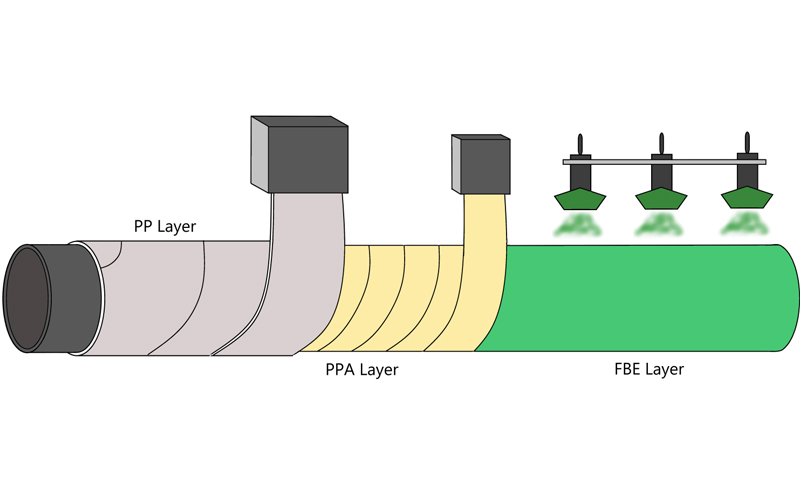
3LPP coated pipe: anti-corrosion guard in high temperature and high pressure environment
In some challenging special environments such as deep-sea oil and gas exploration and high-temperature crude oil transportation, traditional anti-corrosion coatings face significant challenges,...
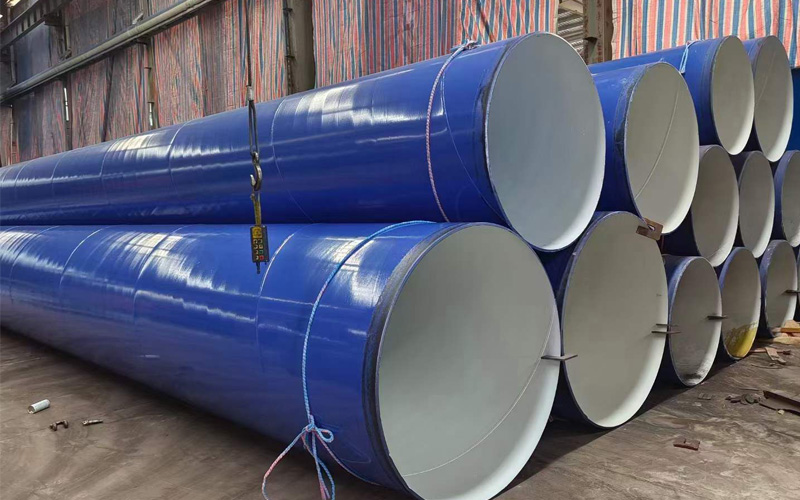
FBE steel pipe: the technological armor of the steel defense line
I In the icy waters beneath the Norwegian Sea pipeline, a section of FBE Lined Carbon Steel Pipe has been in service for 25...