In the global energy and infrastructure industry, pipelines, as the “blood vessels” of fluid transportation systems, are responsible for transporting oil, natural gas, water and other important fluids for a long distance, from remote oil fields to urban centers, from deep-sea platforms to rural communities. Without high-quality pipelines, it will be impossible for the world energy supply chain and water infrastructure to operate seamlessly. In this paper, the core of line pipe will be discussed in depth, focusing on the globally recognized API 5L standard, the different types of welded pipe and manufacturing processes, grades of key material and basic considerations in selection, and insights will be obtained from the professional knowledge of trusted steel pipe manufacturer and authoritative industry data.
1. Definition: What exactly is a pipeline?
Simple concept: the “blood vessels” for liquid transportation
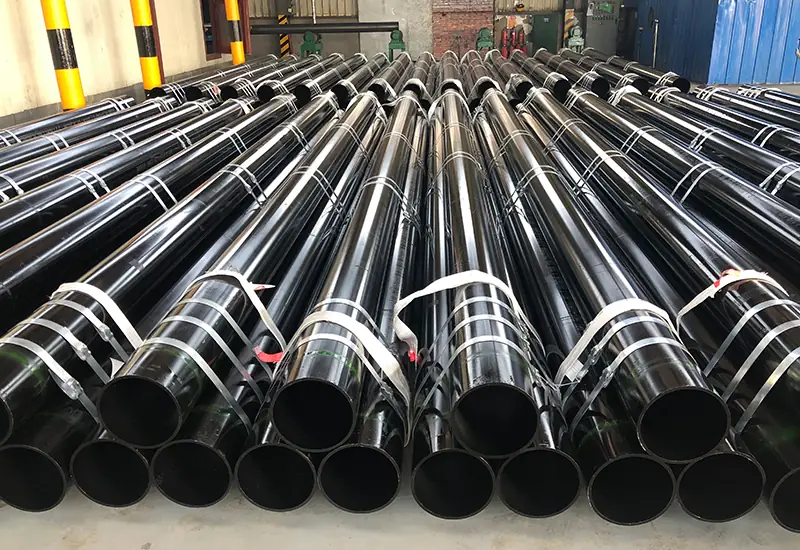
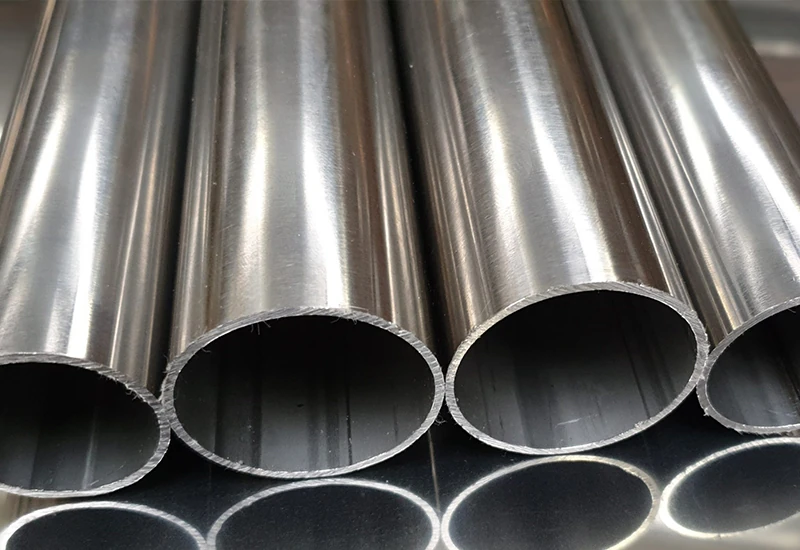
Pipeline steel pipe is a special type of steel pipe, which is specially designed for the long-distance transportation of fluids, including crude oil, refined petroleum products, natural gas, water and even mud. Unlike ordinary steel pipes used in building or industrial pipelines, line pipe must be able to withstand extreme conditions, such as high internal pressure, corrosive environment and mechanical stress caused by soil movement or transportation. Its design gives priority to durability, leakage prevention and long service life, because failures can lead to catastrophic environmental damage, security risks and huge economic losses.
Pipeline and OCTG: Main Differences
A common source of confusion in the industry is distinguishing between line pipe and OCTG (Oil Country Tubular Goods). Although both of them are used in the oil and gas industries, their uses, designs and standards are quite different.
Line Pipe: Focusing on transportation-transporting fluids (oil, natural gas and water) from production sites to distribution points. It is mainly managed by the API 5L standard, and there are two kinds of pipeline structures: seamless and welded. A reputable manufacturerwill give priority to the uniform wall thickness and weld integrity of line pipe to ensure long-distance reliability.
OCTG: Focusing on drilling and well construction-including casing (supports the borehole wall) and tubing (transporting fluids from the wellbore to the surface). OCTG follows API 5CT and other standards, and is designed to withstand extreme downhole conditions, rather than long-distance transportation. Unlike line pipe, OCTG usually needs a special threading and connecting systems.
According to the report of the International Association of Oil and Gas Producers (IOGP), pipeline steel and OCTG occupy different market segments of the oilfield steel market. The demand for pipeline steel is driven by pipeline expansion projects, and the demand for OCTG is related to drilling activity (IOGP, 2024).
2. The “Bible” of pipeline: API 5L standard.
When it comes to line pipe, the API 5L standard is the global gold standard—often referred to as the “bible” of line pipe manufacturing and certification. API 5L, formulated by American Petroleum Institute (API), specifies the technical requirements for seamless and welded pipes used for oil, natural gas and water transportation, covering everything from material composition and mechanical properties to manufacturing technology and test methods. Every reputable steel pipe manufacturer follows the API 5L standards to ensure that its products meet international quality and safety requirements, so as to enter the global market.
API 5L Levels: PSL1 vs. PSL2
API 5L divides pipeline steel pipes into two main product specification levels (PSL): PSL1 and PSL 2, and each level is customized according to different application requirements.
PSL1: The basic quality grade, suitable for general applications in medium pressure and non-corrosive environment. PSL1 has more flexible requirements for material composition and testing, making it a cost-effective choice for projects with lower requirements. Most of the standard welded pipe products produced by steel pipe manufacturer will at least meet PSL1 standards.
PSL 2: Enhanced quality level, specially designed for harsh conditions. PSL2 requires stricter material controls, additional tests and better welding quality to ensure higher durability and reliability. For key projects, a experienced manufacturer will produce API 5L PSL2 line pipe to reduce the failure risks.
For a detailed comparison of PSL1 and PSL 2, refer to our dedicated article: API 5L PSL1 vs. PSL 2: Key Differences for Line Pipe Selection.
API 5L vs. ISO 3183: Why API 5L Reigns Supreme
While ISO 3183 is another international standard for line pipe, API 5L is the dominant standard in the oil and gas industry. ISO 3183 is more commonly used for water pipelines and non-energy applications, whereas API 5L is specifically optimized for the high-pressure, corrosive, and high-stress conditions of oil and gas transportation. Most major energy companies and pipeline projects in the world require line pipe to meet API 5L standards, which makes it the first choice for reputable manufacturers and buyers.
3. Manufacturing Types: How is Line Pipe Made? (Key Focus)
Line pipes are manufactured by four main processes, each of which has unique advantages, disadvantages and ideal applications. A leading pipe producer will provide a series of steel pipes of this types to meet different project requirements, and pay special attention to large-diameter projects of LSAW and SSAW, where cost-effectiveness and performance are crucial.
LSAW pipe (Longitudinal Submerged Arc Welded)
LSAW pipe is a kind of welded pipe that is made by bending a single steel plate into a cylinder and welding the longitudinal seam with submerged arc welding (SAW). Submerged arc welding process includes welding under flux layer, which protects the weld from atmospheric pollution and ensures high welding quality and strength. The longitudinal submerged arc welded pipe is ideal choice for large diameter (over 16 inches) and high pressure applications.
SSAW pipe (Spiral Submerged Arc Welded)
SSAW pipe is another popular type of welded pipe, which is made by spirally winding a steel strip into a cylinder and welding the joint with submerged arc welding. The spiral seam distributes stress evenly, making it highly resistant to external pressure—ideal for ultra-large-diameter (36 inches and above) and long-distance transportation projects. SSAW tubes provide significant cost advantages for large diameter applications. Allland’s SSAW pipe production line is optimized for large-scale projects, providing reliable and high-quality API 5L SSAW pipes meeting strict standards, thus consolidating its position as a top experienced manufacturer.
Seamless (SMLS) Pipe
Seamless pipe is manufactured by heating a steel billet and piercing it to form a hollow cylinder, with no weld seam. This design eliminates the risk of welding failure, making it ideal choice for high pressure (more than 10,000 psi) and small diameter (less than 16 inches) applications. The production cost of seamless pipe is higher than that of welded pipe, but it is essential for applications where weld could be a weak point. Credible steel pipe manufacturer will produce seamless steel pipe that meets API 5L standards.
ERW (Electric Resistance Welded) Pipe
ERW pipe is a cost-effective type of welded pipe, which is made by rolling a steel strip into a cylinder and welding joints by resistance welding. ERW pipe is ideal for medium-to-low pressure applications and small-to-medium diameters. A reliable manufacturer will ensure that ERW steel pipes meet API 5L PSL1 standards, and strictly control the welding integrity.
Manufacturing steps (general process of welded pipe)
Although the specific steps vary from type to type, the general manufacturing process for welded pipe (adopted by every well-known manufacturer) includes.
Raw material Preparation: Select high-quality steel plates or steel strips that meets the material requirements of API 5L.
Cutting and Cleaning: Cut the steel into the required dimensions and clean the surface to remove rust, oil stains and debris.
Bending/Forming: For LSAW, bend the steel plate into a cylindrical shape; For SSAW, spirally wound steel strip; For ERW, the metal strip is rolled into a cylinder.
Welding: Submerged arc welding (LSAW, SSAW) or resistance welding (ERW) is used to connect the weld.
Heat Treatment: Heat the pipeline to eliminate internal stress and ensure that it meets API 5L standards.
Testing and Inspection: Conduct non-destructive and pressure testing to ensure quality—critical steps for a reputable manufacturer.
Coating and Surface Treatment: Apply anti-corrosion coatings, and carry out surface treatment on the pipe end to facilitate installation.
4. Understanding Grades: What Does “X52” Mean?
The grades of pipeline refers to the yield strength of the material, that is, the stress that the pipeline can bear before it begins to permanently deform. API 5L defines the most common grades, which is very important for choosing the correct pipeline. A knowledgeable steel pipe manufacturer will help buyers to choose the appropriate grade according to the pressure requirements.
What is yield strength?
Yield strength (psi or MPa) determines the ability of the pipeline to withstand internal pressure. A higher yield strength means that the pipeline can withstand higher pressures, allow thinner wall thicknesses and save cost. API 5L grades are standardized, so a Grade X52 pipe from one experienced manufacturer will have the same yield strength as one from another, if both meet API 5L standards.
Common API 5L Grades
The most widely used API 5L grades include Grade B and Series X (X42, X52, X60, X70), where the “X” is followed by a number representing minimum yield strength, and the unit is kilopounds per square inch (ksi). The following is a detailed chart of common API 5L levels.
API Grade
Minimum Yield Strength (psi)
Minimum Yield Strength (MPa)
Typical Applications
Grade B
35,000
241
Low-pressure water pipelines, non-critical onshore oil pipelines
X42
42,000
290
Medium-pressure oil and gas pipelines
X52
52,000
359
Long-distance oil and gas pipelines, shallow offshore pipelines
X60
60,000
414
High-pressure natural gas pipelines, medium-depth offshore pipelines
X70
70,000
483
Ultra-high-pressure gas pipelines, deep-sea offshore pipelines
Table 1: Common API 5L Grades Chart–Yield Strength and Applications (Source: API 5L 46th Edition, 2024).
Key Grade Selection Tip
When choosing API 5L level, balance pressure requirements and cost. High-grade ones are stronger but more expensive, and low-grade ones are more affordable. Trustworthy manufacturer will recommend the best grade. X52 is the most widely used grade for long-distance pipelines and the first choice for welding pipeline applications.
5. Coatings & Ends: Protecting and Preparing Line Pipe for Installation
The performance of pipeline depends on its coatings (for corrosion protection) and end connections (for installation). A reputable manufacturer will offer a range of coatings and end types to suit different needs, ensuring API 5L compliance.
Coatings: Anti-Corrosion Protection
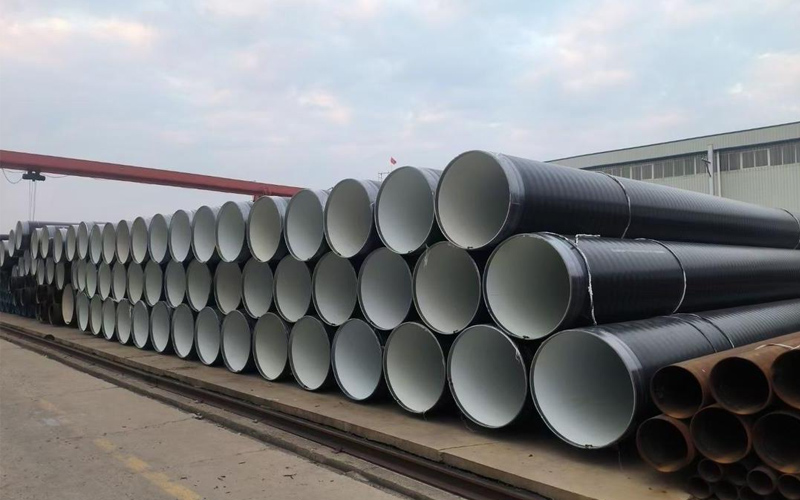
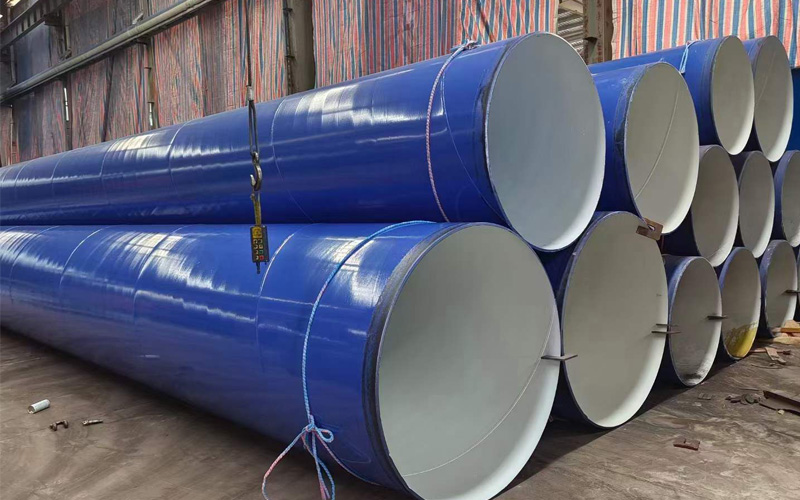
Most line pipe is installed underground or underwater, making corrosion protection critical. The most common anti-corrosion coatings for API 5L line pipe include.
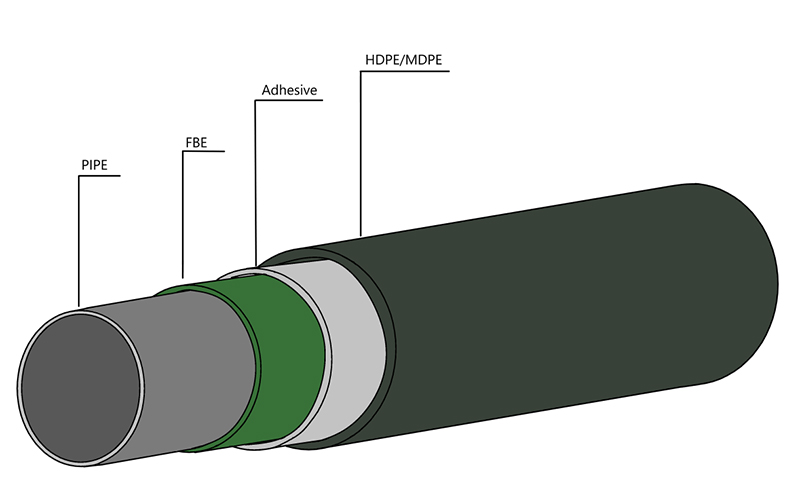
3PE (Three-Layer Polyethylene): The most widely used coating for underground and offshore line pipe, providing excellent corrosion and impact resistance.
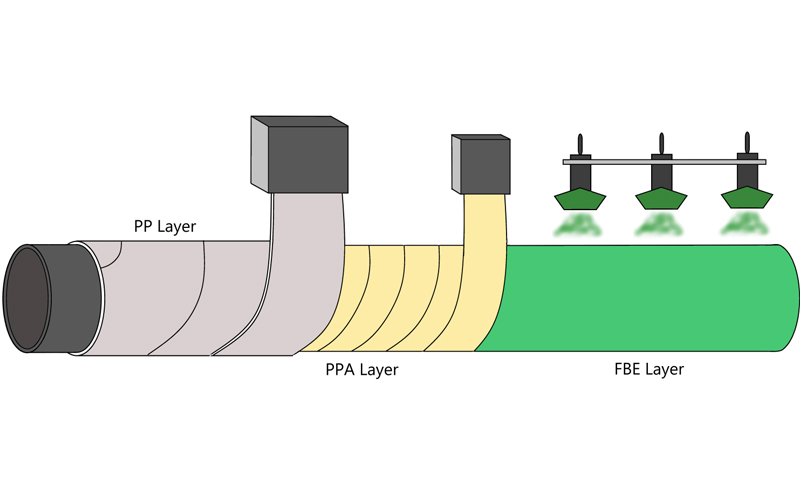
FBE (Fusion-Bonded Epoxy): A cost-effective, single-layer coating for onshore pipelines, suitable for high-temperature applications.
Black Paint (Asphalt Paint): An economical choice in a low corrosive environment. A leading pipe producer may suggest that it be used for non-critical projects.
Proper anti-corrosion coatings can prolong the service life of pipelines from 20 years to more than 50 years, thus reducing maintenance costs and failure risks (API, 2024).
End Connections: Prepare for welding and installation
The design of pipeline ends is conducive to safe connection, and its type depends on the diameter, pressure and installation method. The most common terminations of API 5L pipelines include:
Bevel Ends: The most common type of welded pipe, especially LSAW pipes and SSAW pipe. The angled ends form a larger welding area, ensuring a firm connection-as a leading pipe manufacturer, this is a typical feature of Allland’s high-quality processing.
Threaded Ends: Used for small diameter conduit, which can be connected quickly without welding.
Flanged Ends: Used for large diameter, high pressure pipelines or applications requiring disassembly.
6. FAQ: Frequently Asked Questions about Pipeline, API 5L and Welded Pipe
In order to help clarify key concepts, according to the professional knowledge of reputable manufacturer and API 5L standards, we sorted out the answers to common questions of buyers.
Question1: What is the difference between API 5L and other line pipe standards?
Answer 1: API 5L is the only optimized standard for oil and natural gas transportation, and it has strict requirements for strength, welding quality and corrosion resistance. Most energy companies require API 5L compliance, making it the industry benchmark for steel pipe manufacturers.
Question 2: Are welded pipe as reliable as seamless pipe?
Answer 2: Yes, welded pipes are also reliable when they are manufactured by a reputable manufacturer and meet API 5L standards. Welded pipeline has been strictly tested, and LSAW/SSAW pipeline is ideal choice for high pressure and large diameter projects.
Question3: How can I choose between LSAW and SSAW pipe?
Answer 3: For 16-36 inch, high pressure projects, choose LSAW; SSAW is used for long-distance projects of more than 36 inches. As a leading pipe manufacturer, large-diameter projects of LSAW or SSAW are recommended for Allland.
Question 4: What is the best coating for underground pipe?
Answer 4: The 3PE coating is most suitable for underground use. A trusted pipe manufacturer will recommend suitable coatings according to soil conditions and engineering life.
Question5: How can I ensure that steel pipe manufacturer provide high-quality API 5L pipeline steel pipe?
Answer 5: Verify API 5L certification, third-party inspection and inspection report. Allland is a trusted pipe manufacturer, holds API 5L certification and providing complete transparency.
7. Conclusion
Pipeline is the pillar of global energy and water infrastructure, and its performance is determined by manufacturing type, API 5L grade and PSL grade. API 5L is the global gold standard to ensure the quality across steel pipe manufacturers, and welded pipe (LSAW/SSAW) is most cost-effective for large diameter projects.
When selecting line pipe, select the correct manufacturing type, API 5L grade and PSL grade, and cooperate with a reputable manufacturer who comply with API 5L standards.Looking for reliable API 5L line pipes? Allland supplies of LSAW, SSAW and SMLS is transported to the whole world through pipelines. As a reliable manufacturer, we focus on high quality welded pipe for large-diameter projects. Contact us immediately to get a quotation.
Provide us with your project details (like application, specifications, quantity). Our experienced team will respond with a tailored solution and competitive quote within 24 business hours.
In oil and gas transmission, municipal infrastructure and other major projects, the reasonable choice of steel pipe welding process directly affects the project...
The density of steel is one of the key parameters that determine its physical properties and industrial applications. Theoretical state of steel density...
In the harsh environment of oil and gas, chemical industry, urban pipe network, etc., the long-term reliability and corrosion resistance of pipeline system...
In some challenging special environments such as deep-sea oil and gas exploration and high-temperature crude oil transportation, traditional anti-corrosion coatings face significant challenges,...