







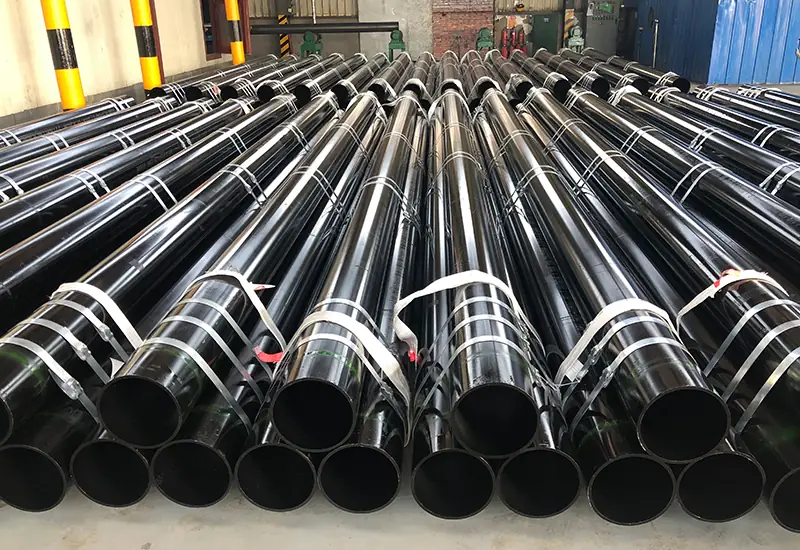
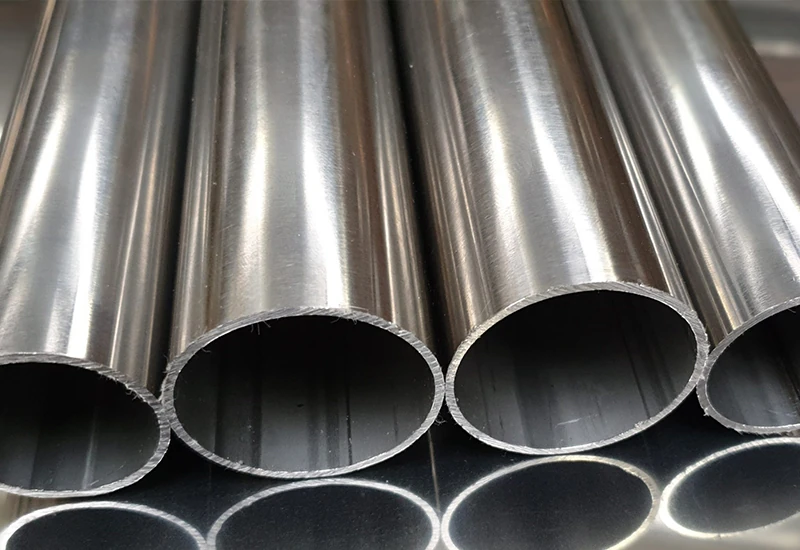

In port construction, coastal development or soft soil areas, geotechnical engineers often face a key dilemma: choosing cost-effective concrete piles or invest in steel pipe piles? At first glance, concrete piles seem to be an economical choice, and the initial material costs is low. However, when transportation damage, complicated installation processes, splicing risks and potential project delay are considered, concrete piles are usually the more expensive option in the long run. This paper makes a deep comparison between steel pipe piles (mainly SSAW pipe) and concrete piles, focuses on their performance in deep foundation pit engineering, and explains why SSAW pipes conforming to ASTM A252 standards have become the first choice for large-scale and high-demand engineering projects.
1. The Limitation of concrete piles in deep foundation engineering
Because of its mature production technology and low initial cost, concrete piles have been used in shallow foundation engineering for a long time. However, when they are applied to deep foundations, especially in complex environments such as soft soil or marine areas, their inherent characteristics expose obvious limitations.
- Heavy & Brittle Nature: Concrete piles have high self-weight—typically 2.4 to 2.5 tons per cubic meter—making transportation and on-site hoisting extremely challenging. In remote areas or coastal areas with underdeveloped traffic, the cost of transporting large-diameter concrete piles can account for 30% to 40% of the total cost of piles. In addition, concrete itself is very brittle; During driving, the impact forces can easily lead to cracking or even breaking. Statistics show that during the installation in soft soil area, the cracking rate of concrete piles can reach 15% to 20%, which requires extra maintenance or replacement, which further increases costs and delays the construction period.
- Depth limitation and unreliable splicing: Due to the limitation of production and transportation, it is difficult to manufacture concrete piles with extra long lengths. When the foundation depth exceeds 50m, concrete piles must be spliced on site. Traditional splicing methods, such as flange connection or grouting splicing, all have inherent defects-flange connections is easy to corrode in wet environment, and the bonding strength of grouting splicing is uneven, which leads to the decrease of overall bearing capacity. A study by the American Concrete Institute (ACI) found that the splicing efficiency of concrete piles decreased by 40% when the depth exceeds 80 meters, and the splicing failure rate increased significantly under long-term bearing conditions.
2. The core advantages of steel pipe pile (SSAW steel pipe)
Steel pipe piles, especially SSAW pipe (spiral submerged arc welded pipes), overcomes the limitations of concrete piles with their superior material properties and structural design, and show incomparable advantages in deep foundation pit engineering.
2.1 High carrying capacity
Steel has high tensile strength (400-600 MPa), whereas concrete has negligible tensile strength (brittle), making steel far superior for resisting bending and lateral forces. This means that steel pipe pile with a smaller diameter can obtain the same or higher bearing capacity as the concrete pile. For example, a SSAW pipes with a diameter of 800 mm and wall thickness of 16 mm can bear vertical load as high as 2,500 kN, while a concrete piles with the same diameter can only bear loads of about 800 to 1,000 kN. The high bearing capacity of steel pipe piles reduces the number of piles needed for a project, optimizing the foundation layout and saving construction space, which is an important advantage in densely populated cities or offshore construction areas.
2.2 It has unlimited depth potential for reliable welding
Unlike concrete piles, steel pipe piling can be easily welded on-site to achieve any required depth. The welding process of SSAW pipe adopts submerged arc welding technology to ensure that the weld structure is dense and the strength is high, and the weld strength reaching 95% – 100% of the base metal. When building a foundation with a depth of 100 meters, two 50-meter-long SSAW pipe segments can be welded on site, and the joint strength is completely compatible with that of the main pipe, thus eliminating the reliability risks of concrete pile splicing. This advantage makes steel pipe pile the only feasible solution for ultra-deep foundation engineering over 150 meters.
2.3 Excellent seismic performance
Steel exhibits excellent elasticity and ductility, allowing it to bend without breaking under seismic loads. In earthquake-prone areas, steel pipe piling can absorb and dissipate seismic energy through plastic deformation, protecting the upper structure from damage. In an earthquake of magnitude 7 or above, the structural damage rate of steel pipe piles is reduced by 60% to 70% compared with that of concrete piles. This kind of seismic performance is very important for infrastructure projects in the earthquake zones, such as bridges and coastal defense projects.
2.4 Efficient construction Speed
“Time is money” in engineering projects, and steel pipe piling significantly shortens the construction period with its lightweight and easy installation characteristics. SSAW pipe has a self-weight of only 0.6 to 0.8 tons per meter (for an 800 mm diameter pipe), which is much lower than that of concrete piles, reducing the requirements for hoisting equipment and improving hoisting efficiency. In addition, the driving speed of steel pipe piles is 2 to 3 times that of concrete piles. On average, 15 to 20 steel pipe piles can be installed every day, while only 5 to 8 concrete piles can be installed. A practical case in Cixi City, China, showed that using steel pipe piling instead of traditional concrete piles reduced the support construction period by 75% and saved nearly 11 million yuan in costs.
3. Why is SSAW steel pipe the best choice for steel pipe pile driving?
In the field of steel pipe piling, two main types of pipes are usually used: SSAW pipe and LSAW (longitudinal submerged arc welding pipe). Longitudinal submerged arc welded pipe has advantages in axial strength, and SSAW welded pipe is more suitable for deep foundation engineering because of its unique structural design and cost-effectiveness.
3.1 Superior Hoop Stiffness from Spiral Weld Seams
The spiral weld distribution enhances the pipe’s geometric stability and resistance to crack propagation. This structural feature enables SSAW pipe to bear higher lateral pressure from soil or water, making it ideal choice for marine buildings, retaining walls and other projects with high lateral load requirements.
3.2 Cost advantages and standard compliance
Compared with longitudinal submerged arc welded pipe, the production cost of SSAW welded pipe is lower by 20% to 25%. This is because SSAW pipe is manufactured from steel coils, which have higher material utilization rates (up to 95%) than the steel plates used for LSAW Pipe (material utilization rate of about 80%). In addition, SSAW steel pipe are produced in auto production lines, with an annual production capacity of 500,000 tons per single line, further reducing production costs.
The production of SSAW pipe for steel pipe piling must conform to ASTM A252 standard, which specifies the technical requirements for welded steel pipes for piling and other structural applications. ASTM Grade A252 and Grade 3 are the most commonly used grades in deep foundation engineering: the minimum yield strength of Grade 2 is 245 MPa, which is suitable for general deep foundations; Grade 3 has a minimum yield strength of 310 MPa, making it suitable for high-load, ultra-deep foundation projects. These grades ensure that SSAW pipe has stable mechanical properties and corrosion resistance, meeting the stringent requirements of large-scale engineering projects.
4. Performance Comparison: Steel Pipe Piles vs. Concrete Piles
| Dimension of performance | Concrete piles | Steel pipe piles (SSAW pipes) |
| Cost | The initial cost is low, but the total cost is high (15% -20% higher than that of steel pipe piles in deep projects) due to transportation, maintenance and delay costs | The upfront cost is high, but due to high efficiency and low maintenance, the total cost of deep projects is reduced by 20% -30% |
| Installation Speed | Slow: 5-8 piles per day, influenced by splicing and weight | Fast: 15-20 piles a day, easy to weld and lift |
| Depth Potential | Limited: the maximum reliable depth is 80; After exceeding 50 meters, the risk of splicing increases significantly | Unlimited: it Can be welded to any depth (in fact, more than 200 meters) and the joint is reliable |
| Danger of Cracking | High: 15% -20% cracking rate when installed; Brittle fracture under shock | Low: excellent ductility, no cracking under normal driving; Can be bent without breaking |
5. SSAW pipe pile application Scenarios
Because of its superior performance, SSAW pipe conforming to ASTM A252 standard is widely used in various deep foundation projects, especially in complex environment.
5.1 Maritime Architecture
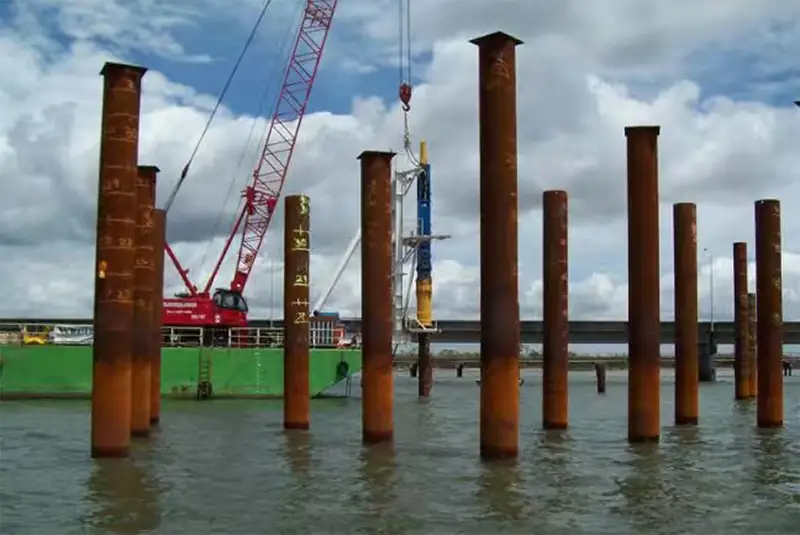
In marine projects such as docks, breakwaters, and offshore platforms, SSAW pipe piling excels in withstanding seawater corrosion, wave impact, and lateral pressure. The spiral welding seam of SSAW pipe enhances its ability to resist alternating ocean loads, and steel can be treated with anti-corrosion coatings (such as epoxy resin) to extend its service life to more than 50 years.
5.2 Bridge building
Cross-sea bridges and long-span bridges need a deep and stable foundations to support huge superstructure loads. SSAW pipe piles are widely used in bridge piers because of their high bearing capacity and good seismic performance. The Yushanmen Rail-Cum-Road Bridge, a world-class cross-sea bridge under construction in China, uses steel pipe piling in some of its deep foundation sections, ensuring the stability of the bridge piers in 60-meter-deep water and complex geological conditions.
5.3 Retaining Walls (Combi-walls)
In urban subway construction, foundation pit support, and coastal reclamation projects, SSAW pipe is often used to construct combi-walls (combined retaining walls) with steel sheet piles. The high hoop stiffness of SSAW pipe provides strong lateral support to prevent the foundation pit from collapsing, and the seamless connection between pipes ensures effective water stopping. This application not only shortens the construction period, but also reduces the impact on the environment, making it suitable for the requirements of green buildings in urban areas.
6. Frequently Asked Questions
Q 1: What is the service life of SSAW pipe piles in marine environment?
A 1: The service life of SSAW pipe piles depends on anti-corrosion treatment. With epoxy coating and cathodic protection, the service life of ASTM A252 SSAW pipe in marine environment can reach 50 to 70 years, which is equivalent to or even longer than that of concrete piles with anti-corrosion measures.
Q 2: Can SSAW pipe piling be reused?
A 2: That’s right. Steel pipe piling has high recyclability-after the service life of temporary works (such as temporary wharves and foundation pit support) is over, SSAW pipes can be pulled out, repaired and reused in other projects, which reduces the waste of resources and the project costs.
Q 3: Is ASTM A252 the only standard for SSAW pipe piles?
A 3: ASTM A252 is the most widely recognized international standard for steel pipe piles. In addition, there are regional standards such as EN 10219 in Europe and GB/t 9711 in China, but ASTM A252 Grade 2/3 has become the first choice for global engineering because of its strict quality control and universal applicability.
7. Conclusion
Due to the low upfront cost, concrete piles are still a feasible choice for shallow and low-load foundation projects. However, for deep foundation projects, especially those in complex environments such as soft soil, marine areas, or seismic zones, steel pipe piling—with SSAW pipe as the core—demonstrates unparalleled advantages in bearing capacity, depth potential, earthquake resistance, and construction efficiency. SSAW pipe conforming to ASTM A252 standard not only has reliable structural performance, but also has cost advantages compared with longitudinal submerged arc welding pipe, which is the best solution for large-scale engineering projects.Planning for deep foundation project? Allland supplies ASTM A252 SSAW piles have a diameter of 3000 mm, covering grade 2 and grade 3 specifications to meet different project requirements. Contact us to customize the steel pipe piling plan.

ASTM A53 vs. API 5L: A Guide to Selection and Application
In the field of industrial piping, ASTM A53 and API 5L are two key standards that are widely used, but have very different positions. ASTM...

Introduction:Technology differences determine success or failure, and selection needs to be “precise”
In oil and gas transmission, municipal infrastructure and other major projects, the reasonable choice of steel pipe welding process directly affects the project...
Steel Density Analysis: Core Differences between Mild and Medium Carbon Steels and Industrial Applications
The density of steel is one of the key parameters that determine its physical properties and industrial applications. Theoretical state of steel density...
3LPE coated steel pipe: a solid barrier in the field of industrial corrosion protection
In the harsh environment of oil and gas, chemical industry, urban pipe network, etc., the long-term reliability and corrosion resistance of pipeline system...
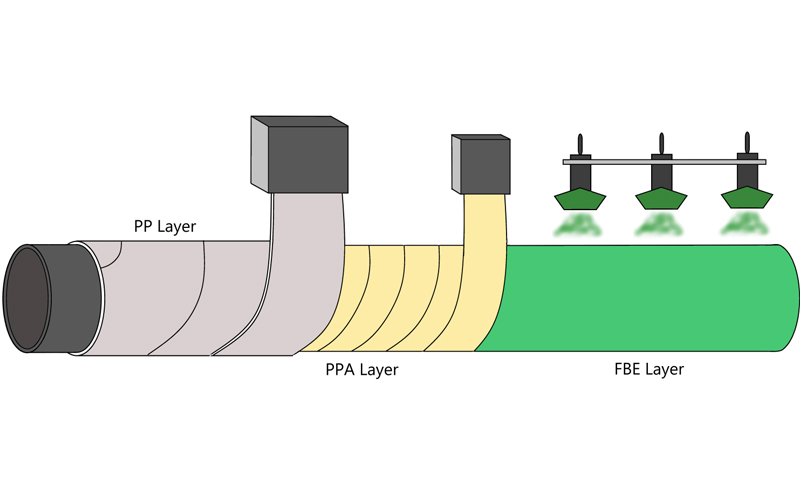
3LPP coated pipe: anti-corrosion guard in high temperature and high pressure environment
In some challenging special environments such as deep-sea oil and gas exploration and high-temperature crude oil transportation, traditional anti-corrosion coatings face significant challenges,...
FBE steel pipe: the technological armor of the steel defense line
I In the icy waters beneath the Norwegian Sea pipeline, a section of FBE Lined Carbon Steel Pipe has been in service for 25...