







Choosing a pipe joining method is one of the earliest decisions in a fire protection project. It affects installation costs, construction schedules, long-term maintenance, and even future system modifications. The decision between grooved mechanical joints and traditional welded connections involves a careful appraisal of labour markets, equipment accessibility, and the specific performance demands of the building structure. This article compares both approaches from the perspectives of installation, labour, long-term performance, and procurement to help engineers evaluate the overall project cost.
1. The Mechanics of Grooved-End Carbon Steel Pipe in Fire Protection
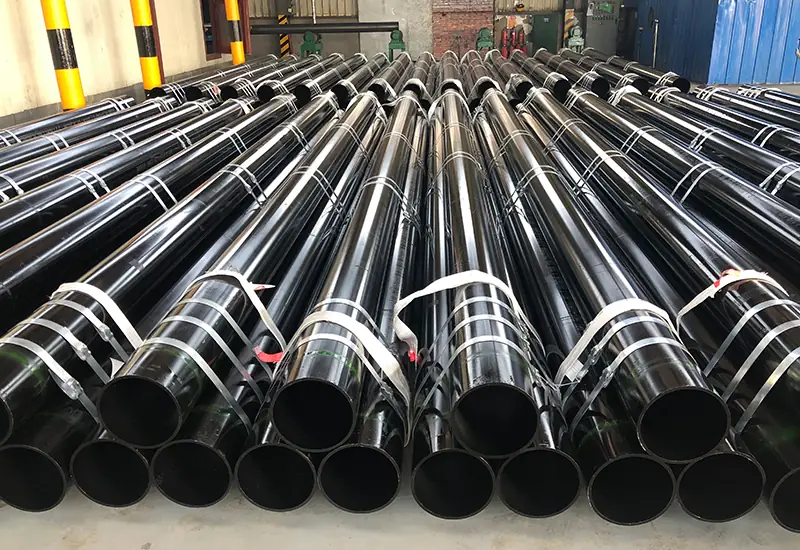
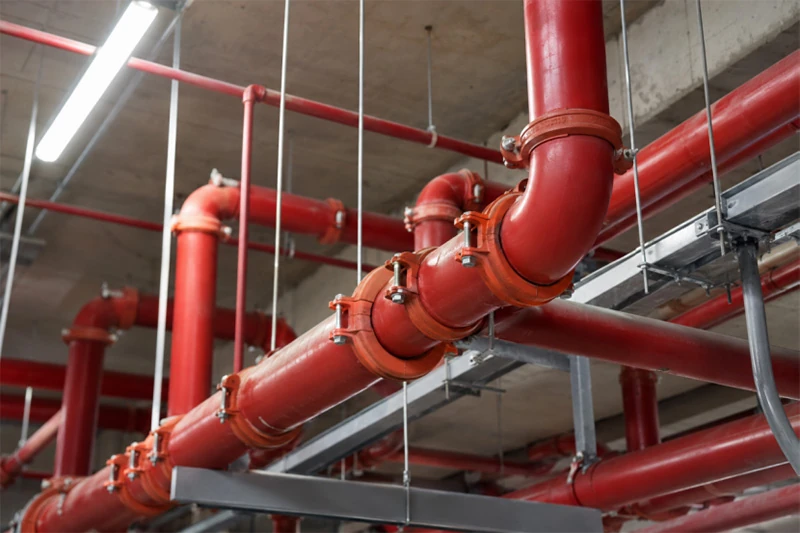
Grooved pipe joints rely on a simple mechanical locking system. On a length of carbon steel fire sprinkler pipe, a circular groove is formed near the end, either by a cold roll-forming process that displaces the metal or by a cut-grooving operation that removes a shallow channel. A flexible elastomeric gasket, shaped to accept the pipe ends, is then enclosed by a ductile-iron coupling housing. As the housing bolts are tightened, the coupling keys engage the grooves and compress the gasket against the pipe surface, creating a pressure-tight seal that allows limited axial and angular movement.
The reliability of this connection depends overwhelmingly on geometric precision. Even small deviations in groove profile, diameter, or alignment can compromise the gasket’s seating and lead to weeping under pressure or, in a fire event, joint separation. It is for this reason that factory-applied grooves are often preferred over field-grooving, as they are produced under controlled conditions and can be verified against master gauges before the pipe leaves the mill.
Such pre-machined pipe also removes the need to transport, calibrate, and maintain roll-grooving equipment across multiple floors of a building site. The assembly itself requires only simple hand tools—a socket wrench and a torque wrench—and no flame, no heavy power source, and no special ventilation. As a result, installers need less specialised training and can complete more joints each day.
2. Installation Speed Breakdown: Labour Cost Savings in Grooved Fire Sprinkler Systems
On large-diameter carbon steel piping, grooved systems are generally installed much faster than welded joints. Welding is a sequential, multi-pass process that demands certified tradespeople, constant quality surveillance, and a strict safety cordon. According to the U.S. Bureau of Labor Statistics, the mean hourly wage for welders, cutters, solderers, and brazers was $24.96 in May 2023, but the fully burdened cost for a certified pipe welder on a major project, inclusive of benefits, insurance, and per diem, frequently exceeds $80–100 per hour. (Data source: U.S. Bureau of Labor Statistics, “Occupational Employment and Wages, May 2023: 51-4121 Welders, Cutters, Solderers, and Brazers.”) A single butt weld on a 200 mm (8-inch) Schedule 40 pipe can easily consume two hours or more once beveling, pre-heating, weld deposition, and cool-down are accounted for.
A grooved system eliminates most of these labour and equipment costs. By using standardised fire sprinkler fittings —elbows, tees, reducing tees, and mechanical tees with integral gasket seats—a two-person pipefitting crew can make up an 8-inch joint in ten to twenty minutes without a single hot-work permit. The procedure is repeatable, predictable, and largely indifferent to weather conditions that would shut down open-arc welding.
| Cost Category | Welded Joint (8″ Sch. 40 Butt Weld) | Grooved Joint (8″ Sch. 40, Rigid Coupling) |
| Installation labour per joint (est.) | 1.5 – 2.5 hours | 0.2 – 0.4 hours |
| Trade qualification required | Certified pipe welder + helper | Two pipefitters (no weld cert. needed) |
| Primary equipment | Welding plant, rods, grinders, purge gas | Ratchet or torque wrench |
| Permit and safety overhead | Hot-work permit, dedicated fire watch | None; cold work permits concurrent trades |
| Post-installation correction | Grinding, field-applied coating repair | Not required; factory galvanizing remains intact |
These indirect savings become even more noticeable on busy construction sites where multiple trades are working at the same time. When the fire sprinkler installation can proceed without clearing adjacent areas for hot-work exclusion zones, the entire critical path benefits. Fitters can mount couplings and brackets while other trades are installing ductwork or cable trays nearby, a flexibility that is impossible with open-flame welding.
3. Structural Integrity under Seismic Load: Where Welded Fittings Outperform Grooved
Although the grooved approach reduces direct and indirect labour costs for the majority of projects, a balanced cost analysis must recognise those situations where the structural characteristics of a welded joint justify the premium. In high-rise buildings located in active seismic zones, in pump rooms subject to continuous mechanical vibration, and in exposed vertical mains serving combined standpipe systems, the design requirement may call for a fully rigid pipeline that behaves as a single structural element.
A full-penetration butt weld provides exactly this degree of continuity. When executed on a high-quality steel pipe for fire sprinkler system, the welded connection eliminates any potential for micro-movement at the joint. Over the 50-year design life of a major facility, this inherent rigidity helps prevent the gradual loosening or cold flow that could, in theory, affect an elastomeric seal under sustained, high-amplitude cyclic loading.
Meeting such a performance specification begins with the base material. For these demanding applications, the pipe itself is often specified as Schedule 40 or 80, with a sound, homogenous weld seam. In large-diameter fire sprinkler mains, longitudinal submerged arc welded (LSAW) pipe or seamless pipe is frequently selected because it offers the consistent ductility and roundness needed for an unimpeachable butt weld.
The choice, therefore, is not about declaring one method universally superior. The best choice depends on the actual operating conditions and design requirements. When the brief requires a monolithic backbone of piping, the welded joint remains an indispensable tool, and the total cost framework shifts from a pure labour-rate calculation to a valuation of long-term seismic resilience.
4. A Buyer’s Checklist for Sourcing Both Fire Pipes and Fittings from a Single Chinese Manufacturer
Beyond the installation methodology, a substantial portion of the total cost is governed by the supply chain. A common source of field delays and warranty claims is a dimensional mismatch between the pipe outside diameter and the groove dimensions of the fittings. When these components are sourced from separate suppliers working to marginally different tolerance bands, the small gap can lead to gasket blowouts or a slow, persistent leak that is expensive to trace once the system is full.
Consolidating the order with one technically competent welded steel pipe manufacturer helps prevent dimensional compatibility problems before the products leave the factory. The factory can cross-validate the pipe’s finished diameter against the exact groove specifications of the matching fittings before the consignment leaves the loading bay. When assessing a potential supplier for this integrated scope of work, the following checklist provides a structured framework for due diligence:
- Standards Verification: The pipe must be accompanied by full material test reports confirming compliance with ASTM A53, A135, or A795. The fitting housings, in turn, should be traceable to ASTM A536 ductile iron.
- Dimensional Compatibility Protocol: The mill should be able to demonstrate that its quality control team physically measures pipe O.D. against the fitting manufacturer’s groove-diameter tolerance chart, aiming for a deviation measured in tenths of a millimetre.
- Coating Consistency: Hot-dip galvanizing bath logs and zinc-layer weight records provide objective evidence that the anti-corrosion protection is uniform across both straight pipe and fittings.
- Factory Sourcing Convenience: A single point of contact for technical queries, shipping documents, and after-sales support reduces the administrative burden and the risk of finger-pointing between separate vendors.
This consolidated approach does more than simplify logistics. It gives the project owner a single audit trail that stretches from the coil feedstock to the final hydrostatic test certificate, which is an increasingly important consideration in projects financed by global lending institutions.
Conclusion
The total cost analysis of grooved versus welded connections for large-diameter carbon steel fire sprinkler lines does not yield a universal answer. It reveals a decision boundary that shifts with the weight assigned to different project variables. For a typical commercial office tower or retail complex, where construction speed, fire-watch elimination, and labour availability are paramount, the grooved assembly approach consistently delivers a lower total installed cost, often by a margin of twenty to thirty percent.
The standardised geometry and rapid assembly of modern fire sprinkler fittings have moved the industry firmly toward mechanical joining as the baseline choice. The cost of welding permits, certified labour, and on-site coating remediation simply cannot compete when measured against a wrench-tightened coupling that installs in minutes and requires no post-assembly treatment.
There remains, nonetheless, an essential place for the welded joint. In high-seismic infrastructure, very high-pressure pump rooms, or process-related lines where cyclic stress and thermal fluctuation are extreme, the superior rigidity of a sound butt weld constitutes a prudent engineering investment rather than an unnecessary expense.
From a procurement standpoint, much of the total cost leakage occurs not at the joint itself but upstream, in the fragmentation of the supply base. A strategic partnership with a capable welded steel pipe manufacturer that can also supply the complete fitting schedule brings the entire dimensional and quality-control process under one roof. This not only protects the integrity of the installed system but also compresses the timeline and reduces the commercial complexity of a large fire protection project. Ultimately, the lowest true cost is achieved not by choosing the cheapest component, but by engineering out the risks of mismatch, delay, and rework from the start.
Foire aux questions (FAQ)
Q: Is the grooved joining method approved for use in all fire protection systems?
A: Yes, grooved mechanical couplings are listed and approved by major testing laboratories such as UL and FM for fire protection services. Their application is governed by standards including NFPA 13, which specifies the permitted use of flexible and rigid couplings, as well as the associated hanger spacing requirements.
Q: How do maintenance requirements compare between grooved and welded systems?
A: A properly inspected welded system requires minimal joint-specific maintenance, though corrosion at weld seams can become a long-term concern. A grooved system benefits from periodic gasket inspections, but its real maintenance advantage is accessibility: a single coupling can be removed and replaced without flame cutting, allowing system flushing, modification, or expansion with very little downtime.
Q: Are there scenarios where welded fittings become the more economical choice?
A: Yes. In prefabricated modular skids or high-pressure pump rooms where dozens of tight-radius branch connections are required, completing automatic robotic welding in a controlled shop environment can occasionally yield lower total fabrication costs compared to field-assembling multiple mechanical couplings.

ASTM A53 vs. API 5L : Guide de sélection et d'application
Dans le domaine de la tuyauterie industrielle, l'ASTM A53 et l'API 5L sont deux normes clés largement utilisées, mais dont les positions sont très différentes. L'ASTM...

Introduction:Les différences technologiques déterminent le succès ou l'échec, et la sélection doit être “précise”
Dans le domaine du transport du pétrole et du gaz, des infrastructures municipales et d'autres projets majeurs, le choix raisonnable du processus de soudage des tuyaux en acier a une incidence directe sur le projet...
Analyse de la densité de l'acier : Différences fondamentales entre les aciers doux et moyens au carbone et applications industrielles
La densité de l'acier est l'un des paramètres clés qui déterminent ses propriétés physiques et ses applications industrielles. L'état théorique de la densité de l'acier...
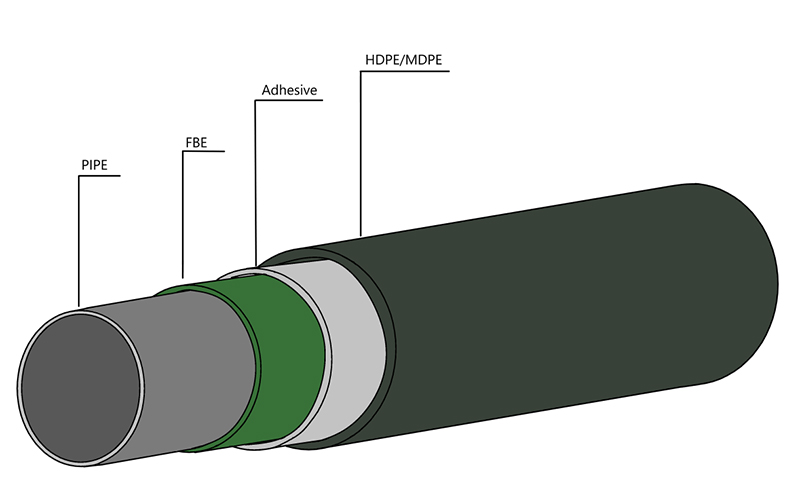
Tube d'acier revêtu de 3LPE : une barrière solide dans le domaine de la protection contre la corrosion industrielle
Dans l'environnement difficile du pétrole et du gaz, de l'industrie chimique, du réseau de canalisations urbaines, etc., la fiabilité à long terme et la résistance à la corrosion du système de canalisations...
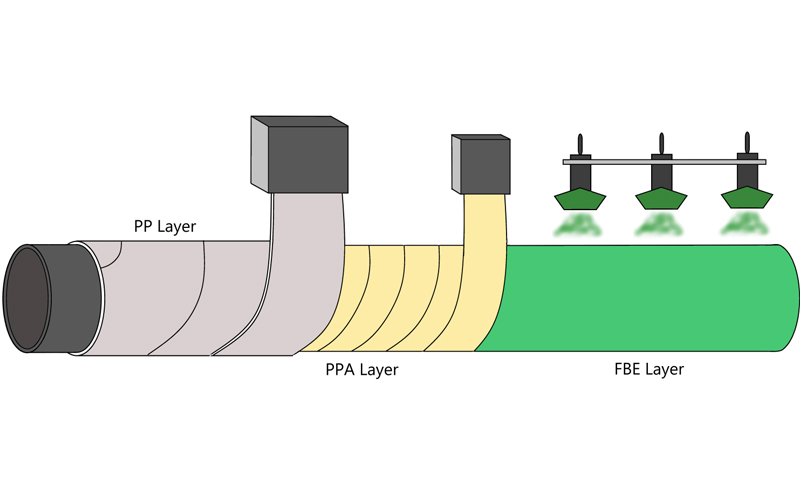
Tube revêtu de 3LPP : protection anticorrosion dans un environnement à haute température et à haute pression
Dans certains environnements spéciaux difficiles, tels que l'exploration pétrolière et gazière en eaux profondes et le transport de pétrole brut à haute température, les revêtements anticorrosion traditionnels sont confrontés à des défis importants,...
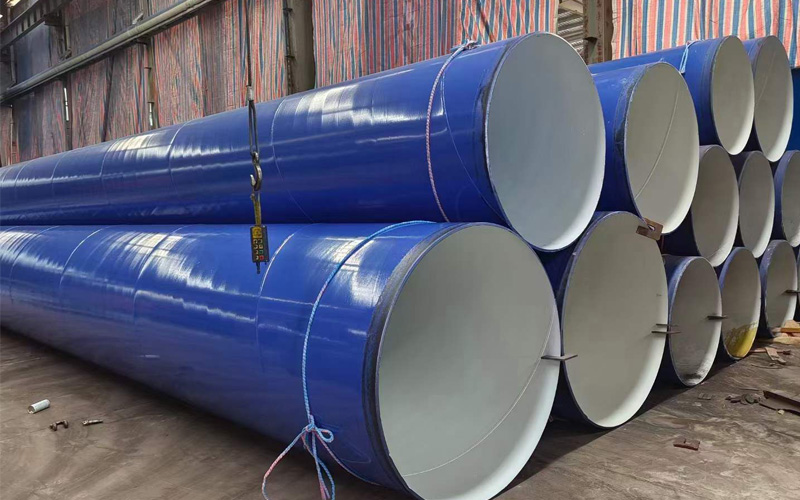
Tube d'acier FBE : l'armure technologique de la ligne de défense de l'acier
I Dans les eaux glacées du pipeline de la mer de Norvège, une section de tube en acier au carbone revêtu FBE est en service depuis 25...