






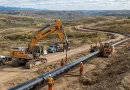
Onshore pipelines are a vital component of modern energy infrastructure. They facilitate the transport of industrial raw materials—such as crude oil and natural gas—by establishing reliable, long-distance transmission networks. Compared to other modes of transport, pipeline systems offer significant advantages for cross-regional distribution, enabling rapid and efficient delivery.
However, the construction of onshore pipelines involves numerous considerations, including material selection, manufacturing processes, anti-corrosion protection, installation conditions, and long-term operation. Selecting the appropriate steel pipe is crucial for pipeline projects, as the quality of the pipe directly impacts operational safety, service life, and maintenance costs.
As a professional steel pipe manufacturer, Allland Steel Pipe provides pipeline steel solutions including large-diameter welded steel pipes, LSAW pipes, and corrosion-resistant coated pipes for different onshore pipeline applications.
What Is an Onshore Pipeline System?
An onshore pipeline system refers to a network of pipelines laid on land to transport liquids or gases between production areas, processing facilities, storage sites, and destinations. Unlike offshore pipelines laid on the seabed, onshore pipelines are constructed in complex terrestrial environments, such as areas with soft soil, high-altitude regions, and locations crossing rivers or lakes.
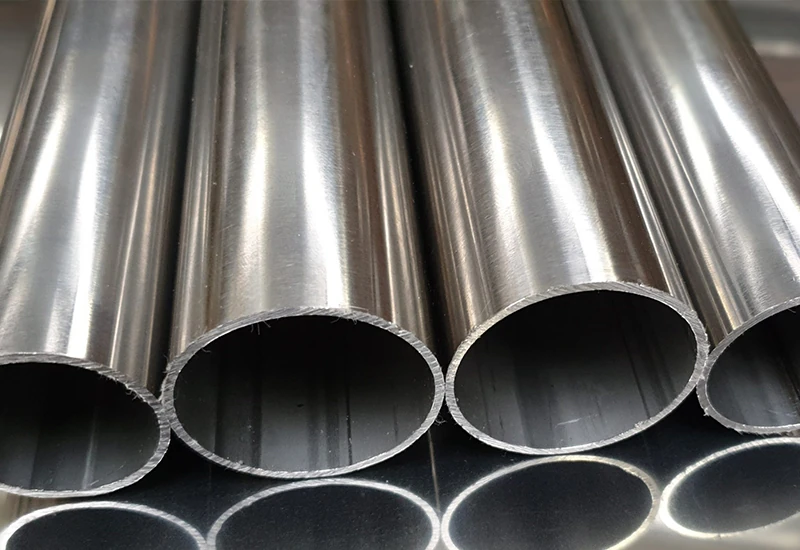
High carbon steel pipe is widely used in many oil and gas projects because carbon steel offers a combination of mechanical strength, weldability, and cost-effectiveness. Additionally, appropriate anti-corrosion coating systems and inspection procedures are required to enhance corrosion resistance and ensure the stable operation of the system.
The Role of Onshore Pipelines in Oil and Gas Transportation
The primary function of onshore pipelines is the safe, stable, and long-distance transport of energy. Oil pipelines are used to transport crude oil from production sites to refineries, while gas pipelines convey natural gas from processing facilities to distribution networks.
For projects involving long-distance transportation, the specifications of the steel pipes required for onshore pipeline construction must be selected in accordance with project requirements.
Key Components of Onshore Pipeline Systems
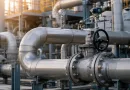
In addition to the pipeline itself, onshore pipeline systems comprise various auxiliary facilities that work in concert to ensure safe operation.
Key components include:
- Steel pipes and welded joints
- Valve stations
- Pump stations (compressor stations)
- Monitoring and control systems
- Anti-corrosion protection systems
- Inspection and maintenance facilities
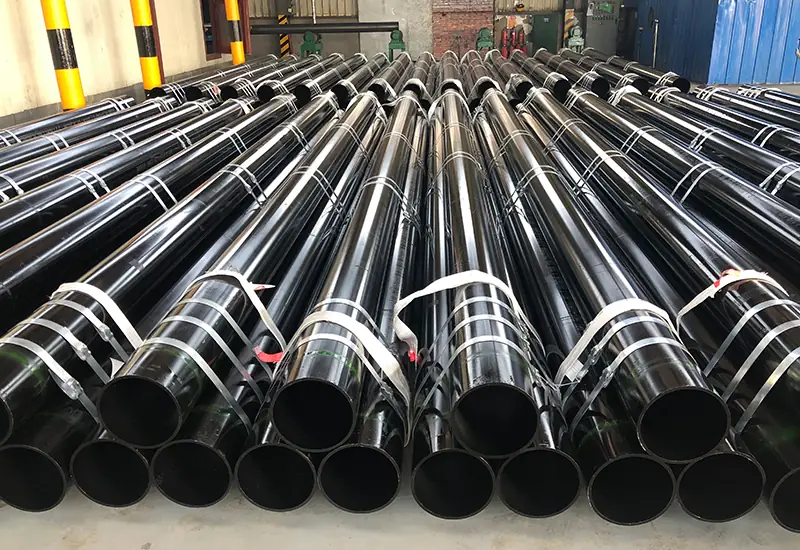
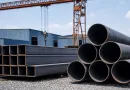
The pipeline itself is typically constructed using high-quality welded steel pipes. For large-diameter oil and gas transmission projects, Longitudinal Submerged Arc Welding (LSAW) steel pipes are commonly used due to their dimensional precision and excellent mechanical properties.
Materials Used for Onshore Pipeline Construction
Material selection is one of the most important steps in pipeline engineering. The selected steel grade must withstand internal pressure, external loads, temperature changes, and environmental factors during operation.
Modern onshore pipeline systems mainly use high-strength carbon steel pipe because it offers good mechanical performance and can be manufactured into large-diameter pipes suitable for long-distance transmission.
High-Strength Line Pipe for Long-Distance Transmission
Long-distance pipeline projects require steel pipes with sufficient strength and toughness to withstand high-pressure operating conditions.
High-strength line pipes are designed to offer high yield strength, as well as excellent impact resistance and weldability, while maintaining performance stability under pressure.
Large-diameter welded steel pipes are commonly used for main transmission pipelines, as they meet the demands of high-volume transport while ensuring structural reliability.
Common Steel Grades for Onshore Pipelines
The steel grades used for onshore pipelines depend on project design requirements, pressure conditions, and the transported medium.
Common pipeline steel grades include API 5L Grade B, X42, X52, X60, X65, and X70.
Higher-strength steel grades are typically selected for pipelines operating at high pressures or covering long distances.
LSAW, SSAW and ERW Pipe Manufacturing Methods
Different pipe manufacturing methods are used depending on pipeline diameter, application requirements, and project specifications.
LSAW Pipe Manufacturing
LSAW (Longitudinal Submerged Arc Welded) pipes are widely used for large-diameter pipeline projects. The longitudinal welding process provides good dimensional control and is suitable for applications requiring high strength and accuracy.
For many transmission pipeline projects, LSAW steel line pipes manufactured by professional pipe suppliers are selected because LSAW technology is suitable for producing thick-wall and large-diameter steel pipes.
SSAW Pipe Manufacturing
SSAW (Spiral Submerged Arc Welded) pipes are manufactured through spiral forming and welding processes. They are commonly used in water transportation, structural applications, and some pipeline projects.
ERW Pipe Manufacturing
ERW (Electric Resistance Welded) pipes are produced through electrical resistance welding and are often used for smaller diameter pipeline applications.
Each manufacturing method has different advantages, and the final selection depends on project specifications, operating conditions, and engineering requirements.
International Standards for Onshore Pipeline Projects
Pipeline projects usually involve strict requirements for material properties, manufacturing processes, welding procedures, inspection methods, and documentation.
Different regions and applications may adopt different standards depending on project requirements. However, API, ISO, ASME, DNV, and CSA standards are widely referenced in global oil, gas, and industrial pipeline projects.
API 5L and ISO 3183 Pipeline Standards
In the global oil and gas transportation sector, ISO 3183 and API 5L serve as the core standards for line pipe steel. They specify the requirements for line pipe, covering chemical composition, mechanical properties, manufacturing processes, testing methods, and acceptance criteria.
ASME B31.4 and ASME B31.8 Design Requirements
ASME B31.4 and ASME B31.8 are important engineering standards used for pipeline design and operation.
ASME B31.4 mainly focuses on liquid transportation pipelines, including systems for crude oil, petroleum products, and other liquid hydrocarbons.
ASME B31.8 applies to gas transmission and distribution pipelines, covering design requirements related to pressure, materials, installation, and operation.
DNV and CSA Standards for Special Pipeline Applications
Certain projects that operate over the long term in specialized or extreme environments require adherence to additional standards.
DNV standards are frequently applied to projects facing harsh environmental conditions, whereas CSA standards are commonly used for pipeline applications in specific regions.
For instance, pipelines laid in cold climates, remote areas, or complex terrain must account for factors such as low-temperature toughness, external loads, and corrosion resistance.
Corrosion Protection Solutions for Onshore Pipelines
Corrosion protection is one of the most important considerations during onshore pipeline construction. Since pipelines are usually installed underground, they may be exposed to moisture, soil chemicals, and other corrosive conditions.
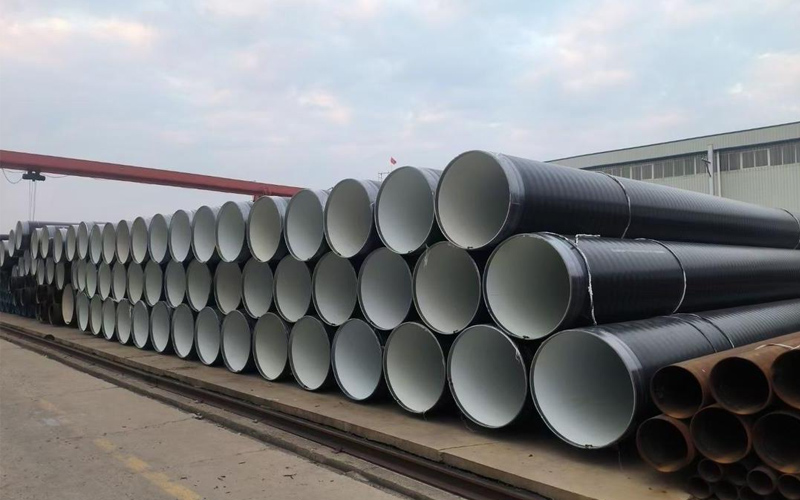
Common anti-corrosion solutions include FBE coating, 3LPE coating, 3LPP coating, and concrete weight coating.
Fusion Bonded Epoxy (FBE) Coating
FBE coating is a corrosion-protection technology widely used for steel pipelines. It creates a robust protective barrier between the steel surface and the surrounding environment and is frequently employed as the base layer in multi-layer anti-corrosion systems.
FBE coatings are characterized by strong adhesion and excellent corrosion resistance, making them suitable for buried pipelines.
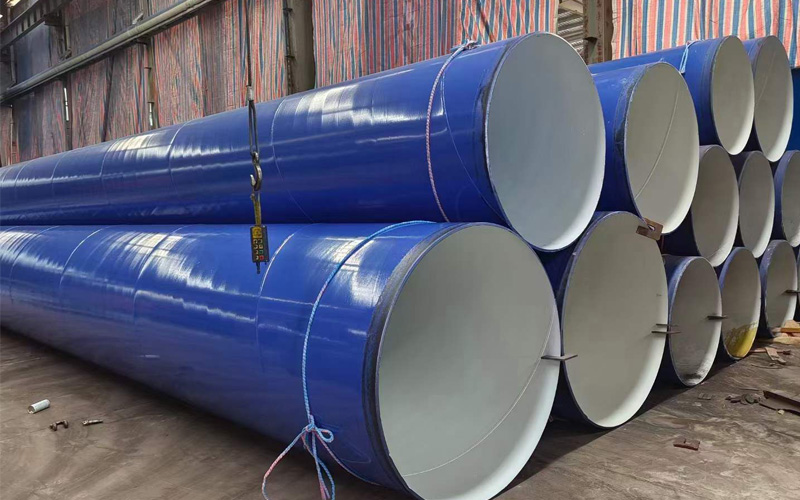
For projects requiring internal or external protection, FBE-coated pipeline solutions may be considered, depending on the pipeline design specifications.
Three-Layer Polyethylene (3LPE) Coating
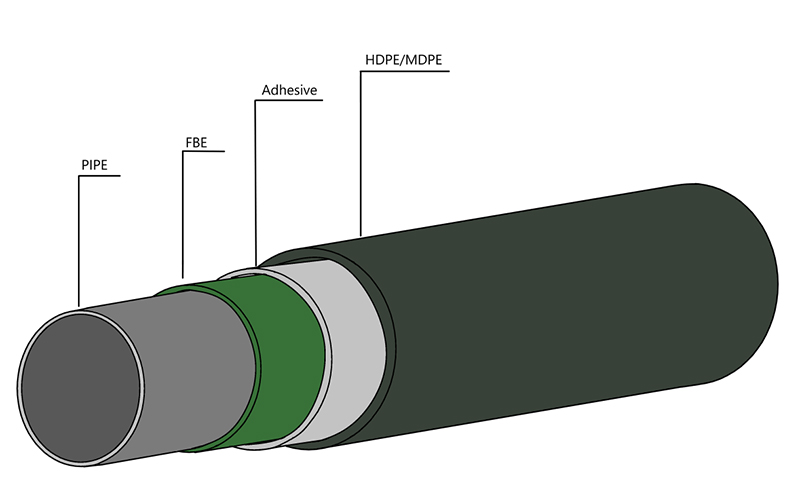
3LPE coating is one of the most common external coating systems for buried oil and gas pipelines.
A typical 3LPE structure includes:
- Fusion-bonded epoxy layer
- Adhesive layer
- Polyethylene outer layer
This multi-layer structure combines the excellent adhesion of epoxy with the mechanical protection of polyethylene.
For long-distance onshore pipelines, 3PE steel pipe systems are widely selected because they provide strong resistance against soil corrosion, mechanical damage, and environmental exposure.
Three-Layer Polypropylene (3LPP) Coating
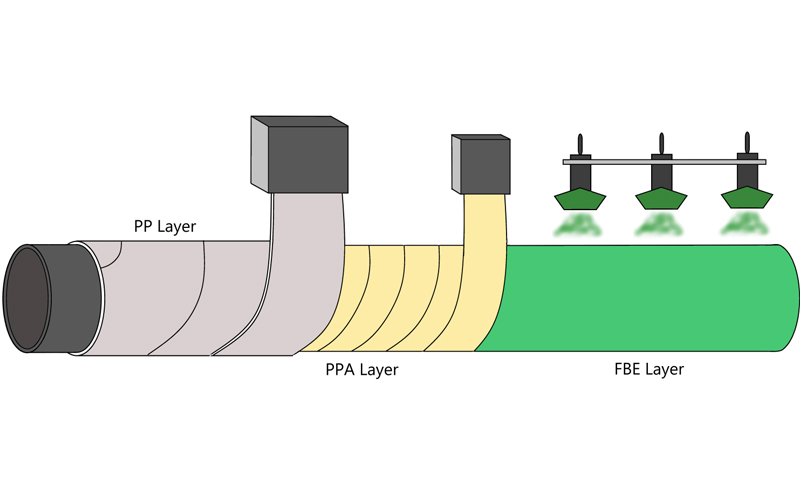
3LPP coating is similar to 3LPE but uses polypropylene as the outer protective layer.
Compared with polyethylene coating, polypropylene provides higher temperature resistance and is suitable for some demanding pipeline applications.
The selection between 3LPE and 3LPP depends on:
- Operating temperature
- Installation environment
- Mechanical protection requirements
- Project specifications
For large-scale projects, the coating system should be selected based on long-term operating conditions rather than cost alone.
Concrete Weight Coating (CWC) for Special Conditions
Concrete Weight Coating (CWC) system is mainly used when additional weight or mechanical protection is required.
Although it is more commonly associated with underwater pipeline applications, special onshore projects may also require additional protective layers under specific conditions.
The final coating selection should consider pipeline location, soil conditions, installation methods, and operational requirements.
Key Considerations in Onshore Pipeline Construction
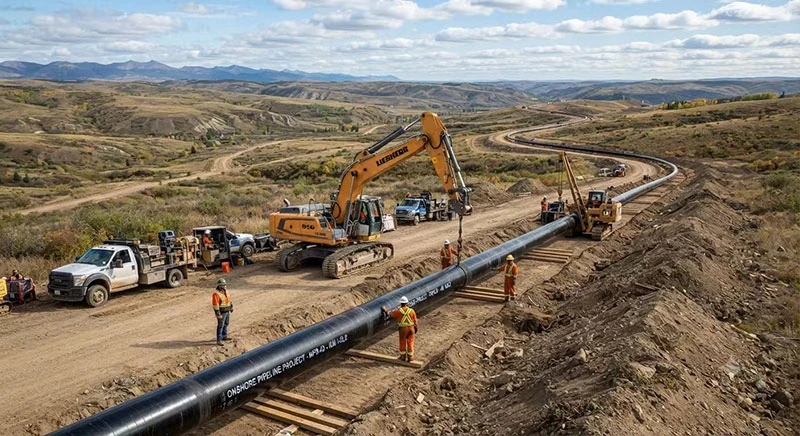
Successful pipeline construction requires coordination between engineering design, pipe manufacturing, transportation, installation, and quality control.
A pipeline project involves multiple stages, and each stage affects the final operating performance.
Pipeline Design for Different Terrains and Environments
Onshore pipelines may traverse a wide range of terrains and environments, including mountainous regions, deserts, and cold permafrost zones.
For instance, pipelines in desert regions must withstand temperature fluctuations and wind-blown sand erosion, while designs for Arctic regions must account for low temperatures and surface ground movement. Pipelines in mountainous areas require meticulous route planning and strict installation controls.
During the design process, engineers evaluate parameters such as pipe diameter, wall thickness, material grade, and anti-corrosion coating specifications.
Welding, Inspection and Quality Control Requirements
Welding quality directly affects pipeline safety. Since many onshore pipelines consist of thousands of welded pipe sections, each weld must meet strict inspection requirements.
Professional manufacturers use advanced production equipment and inspection systems to ensure consistent product quality.
For pipeline construction projects, choosing experienced steel pipe manufacturers helps ensure that pipe production meets engineering requirements.
Transportation and Installation Challenges
Transporting the custom-made steel pipes presents a significant challenge.
This involves considering external factors—such as distance, terrain, and weather—as well as internal factors, specifically the coordination between the supplier and the construction team.
Large-diameter pipeline projects require meticulous logistics planning, as the dimensions and weight of the pipes directly dictate the methods used for transportation and installation.
Applications of Onshore Pipeline Systems
Onshore pipeline systems are widely used in energy, water, and industrial transportation sectors.
Oil and Crude Oil Transmission Pipelines
These pipelines typically require:
- High-strength steel pipes
- Reliable welding performance
- Effective corrosion protection
- Long service life
Large-diameter welded steel pipes are commonly selected for major transmission projects.
Natural Gas Transmission Pipelines
While natural gas transmission often involves high-pressure operation, pipeline materials must meet strict requirements.
API 5L and ISO standards are commonly referenced for these projects, and manufacturers producing ISO 3183 API 5l steel pipe products can support international pipeline applications.
Water Transmission and Industrial Pipelines
Besides oil and gas, onshore pipelines are also used for:
- Water transportation
- Mining applications
- Industrial fluid systems
- Municipal infrastructure
Different applications require different pipe specifications and coating solutions.
Pipelines in Desert, Arctic and Harsh Environments
Some pipeline projects are constructed in extreme environments where additional engineering considerations are required.
Examples include:
- Desert oil pipelines
- Arctic gas pipelines
- Remote industrial pipelines
In these applications, material selection, coating systems, and installation planning become especially important.
Why Choose Our Onshore Pipeline Solutions
Selecting a reliable steel pipe supplier is crucial to the success of onshore pipeline projects. With our professional manufacturing expertise, we can meet your diverse requirements.
Wide Range of Specifications and Steel Grades
Different pipeline projects require different pipe sizes, wall thicknesses, and steel grades.
Allland Steel Pipe provides welded steel pipe solutions for various pipeline applications, including large-diameter line pipes and LSAW welded steel pipes.
The company supports different project requirements through flexible manufacturing capabilities.
Customized Coating Systems for Different Projects
Pipeline environments vary significantly, so coating solutions should be selected according to actual operating conditions.
Available solutions may include:
- FBE coating
- 3LPE coating
- 3LPP coating
Customized coating selection helps improve corrosion protection and support long-term pipeline operation.
Manufacturing According to Global Pipeline Standards
Allland Steel Pipe manufactures pipeline products according to recognized industry requirements, including API and ISO-related specifications.
As an experienced LSAW pipe manufacturer and steel line pipe supplier, the company focuses on producing reliable welded steel pipe products for oil, gas, and industrial pipeline applications.
Conclusion
Onshore pipelines serve as critical infrastructure for the overland transport of oil, natural gas, water, and industrial fluids. The success of a pipeline project hinges on numerous factors, including material selection, manufacturing processes, adherence to international standards, corrosion protection, and installation management.
High-quality steel pipe, suitable anti-corrosion coating systems, and rigorous quality control processes help ensure reliable operational performance across diverse environments.
For companies planning onshore pipeline projects, partnering with an experienced manufacturer provides robust support throughout the project’s entire lifecycle.
By combining advanced manufacturing capabilities with international pipeline standards, Allland Steel Pipe is dedicated to delivering reliable steel pipe solutions for onshore pipeline applications worldwide.

ASTM A53 vs. API 5L: A Guide to Selection and Application
In the field of industrial piping, ASTM A53 and API 5L are two key standards that are widely used, but have very different positions. ASTM...

Introduction:Technology differences determine success or failure, and selection needs to be “precise”
In oil and gas transmission, municipal infrastructure and other major projects, the reasonable choice of steel pipe welding process directly affects the project...
Steel Density Analysis: Core Differences between Mild and Medium Carbon Steels and Industrial Applications
The density of steel is one of the key parameters that determine its physical properties and industrial applications. Theoretical state of steel density...
3LPE coated steel pipe: a solid barrier in the field of industrial corrosion protection
In the harsh environment of oil and gas, chemical industry, urban pipe network, etc., the long-term reliability and corrosion resistance of pipeline system...
3LPP coated pipe: anti-corrosion guard in high temperature and high pressure environment
In some challenging special environments such as deep-sea oil and gas exploration and high-temperature crude oil transportation, traditional anti-corrosion coatings face significant challenges,...
FBE steel pipe: the technological armor of the steel defense line
I In the icy waters beneath the Norwegian Sea pipeline, a section of FBE Lined Carbon Steel Pipe has been in service for 25...