







Introduction
As a municipal engineer or project purchasing manager, it is a common challenge to purchase large-diameter pipelines for large-scale water conveyance or piling projects under a tight budget. A key solution to balance large-scale and effective cost control is the SSAW pipe.
SSAW pipe (spiral submerged arc welding pipe), also known as HSAW pipe, is the first choice for large-scale infrastructure because of its unique manufacturing advantages. This detailed guide will explain what SSAW pipe is, decompose its manufacturing process, and provide a clear and feasible cost and specification framework so that you can purchase the most cost-effective product to meet your project requirements.
What is a large diameter SSAW pipe?
Definition and manufacturing processes
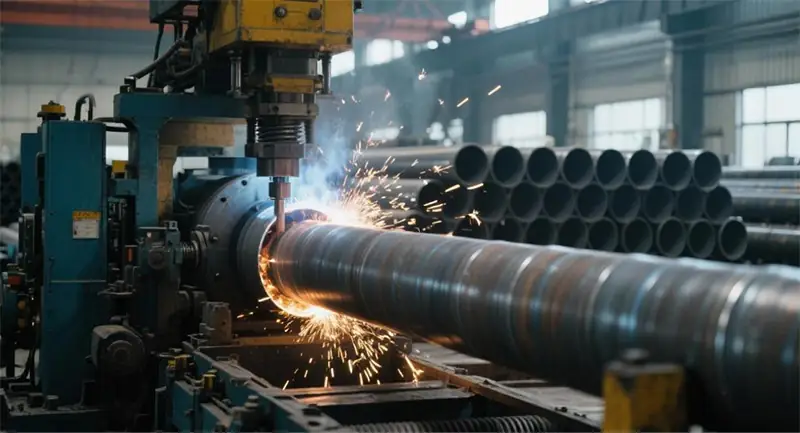
SSAW is the English abbreviation of spiral submerged arc welding. This specific process manufactures welded steel pipes with diameters typically starting from 20 inches (508 mm) and often exceeding 100 inches (2540 mm), characterized by a continuous helical seam.
Manufacturing technology is the basis of its cost advantage and flexibility.
1. Raw Material: the process takes hot rolled steel coil as the main raw material.
2. Forming: the coil is continuously fed and bent at an accurate “forming angle”. This is a key step: adjusting this angle can make a single width coil form a wide range of pipe diameters.
3. Welding: the internal and external spiral seams are welded simultaneously using the automated submerged arc welding (SAW) process, ensuring deep penetration and high integrity.
This inherent flexibility allows the factory to produce various large diameter pipe sizes from one coil, minimizing waste and leading to a buyer with a very competitive price point.
Buyer’s specification and cost guide
Technical specifications that determine the price
The governing standard to which the pipe is produced is the primary cost driver and a key differentiator in performance.
· ASTM A 252: This standard is applicable to steel pipe piles supported by foundations. It pays attention to structural strength, which makes it the most economical choice for piling applications.
· AWWA C 200: The Leading Standard for Water Transmission and Distribution Pipelines. Pipes under this standard are a common and cost-effective choice for municipal water projects.
· API 5 l: This standard is aimed at oil and natural gas pipelines, and has the most stringent requirements on chemical and mechanical properties, so the price is also high.
In addition, the steel grade (e.g., A 252 to 2, or API 5 X 70 to x 42) directly affect the material cost, and high strength grade requires more expensive alloys and processing.
SSAW and LSAW: a quantitative comparison
Table: SSAW vs. LSAW Pipe – A Buyer’s Comparison.
| Feature | SSAW Pipe (Spiral Weld) | LSAW Pipe (Longitudinal Weld) | Cost Implication for Buyer |
| Manufacturing Cost | Coil-based continuous production is cost-effective. | Higher reason is plate-based and mass-oriented production. | SSAW Pipeline Company usually provides the best cost value for water supply and piling works. |
| Diameter Flexibility | Very high. From a single coil width to a wide range. | Restricted by the width of the steel plate. | For customized or very large diameters, SSAW is very competitive. |
| Primary Applications | Water conveyance, piling, and structural applications. | High pressure oil and gas, the key offshore structures. | The application defines the required standard, which is a main driver of cost. |
Industry analysis shows that the price of SSAW pipe making process is 10-20% lower than that of LSAW pipe making process under the condition of equivalent diameter and wall thickness, mainly because of its higher utilization rate of raw material.
Source: Based on the analysis of welded steel pipe production industry reports from markets such as MarketResearch.com.
Main cost Drivers: size and coating
The final price of any large-diameter pipeline is in direct proportion to its total weight, which is determined by the outer diameter (OD) and the wall thickness (WT). Additionally, corrosion protection coatings like Fusion-Bonded Epoxy (FBE) or 3-Layer Polyethylene (3 LPE) add a significant per-ton surcharge but are a critical investment for the long-term lifecycle cost of the asset.
When is SSAW the Best Choice?
Scenario 1: Municipal Water Transmission Network. For large-diameter and long-distance water mains, AWWA C 200 SSAW pipe is an outstanding and usually the best choice because of its comprehensive advantages in size, performance and cost.
Scenario 2: Structural piling and foundation. ASTM A 252 SSAW pipes provide a cost-effective and robust solution for building foundations, bridges and other piling needs.
Scenario 3: Low to Medium Pressure Applications. For non-critical oil and gas streamline or mud transportation, an API 5 pipe can be a more economical alternative to LSAW if the project standards allows.
Conclusion
In a word, the large diameter SSAW pipe is a cost-effective and reliable solution for large-scale infrastructure projects. Its unique spiral-welded manufacturing process from steel coil provides exceptional production flexibility and significant economies of scale for large diameters. The key to a successful purchase is to align your project’s technical specifications—particularly the governing standard, steel grade, and dimensions—with the overall budget, ensuring you select the most appropriate and valuable SSAW Pipe for the application.
Frequently asked Questions
Question 1: What are the main price difference between 1: LSAW and SSAW steel pipe?
A: The main price difference is due to the manufacturing process. SSAW Steel Pipe Company uses steel coils in a highly continuous production process, thus reducing production costs.Under the same specifications, the price of SSAW steel pipe is usually 10-20% lower than that of longitudinal submerged arc welded (LSAW) steel pipe.
Question 2: Is the long spiral welding seam of 2: SSAW steel pipe reliable?
A: Yes, modern SSAW pipe is highly reliable. The submerged arc welding (LSAW) process is automatic, and produces high integrity weld. Strict quality control measures, including Non-Destructive Testing (NDT) like ultrasonic inspection, are mandated by standards like API 5 l and AWWA C 200 to ensure consistent weld quality and pipe integrity.
Source: American Water Works Association (AWWA) c 200 standard for welded steel pipe.
Question 3: What specs must I provide in order to get the exact price of SSAW steel pipe?
A: When you plan to buy SSAW steel pipe, in order to get an accurate quotation, you must provide the following main specifications.
Jurisdiction standard (e.g., American material test standard A 252, AWWA standard C 200, api gravity 5 liters.
Steel grades (e.g., Grade 3, x 52).
Outside Diameter (OD) and Wall Thickness (WT).
Length of each pipeline
Protective Coating requirements (e.g., bare, FBE, 3 LPE).

ASTM A53 vs. API 5L: A Guide to Selection and Application
In the field of industrial piping, ASTM A53 and API 5L are two key standards that are widely used, but have very different positions. ASTM...

Introduction:Technology differences determine success or failure, and selection needs to be “precise”
In oil and gas transmission, municipal infrastructure and other major projects, the reasonable choice of steel pipe welding process directly affects the project...
Steel Density Analysis: Core Differences between Mild and Medium Carbon Steels and Industrial Applications
The density of steel is one of the key parameters that determine its physical properties and industrial applications. Theoretical state of steel density...
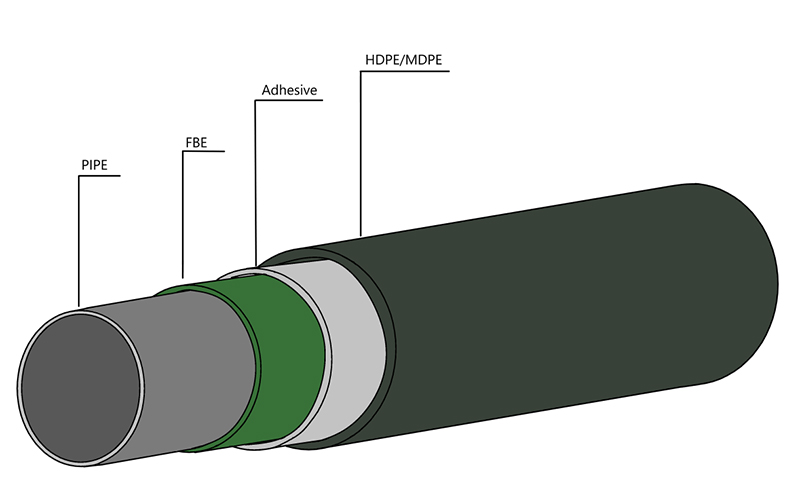
3LPE coated steel pipe: a solid barrier in the field of industrial corrosion protection
In the harsh environment of oil and gas, chemical industry, urban pipe network, etc., the long-term reliability and corrosion resistance of pipeline system...
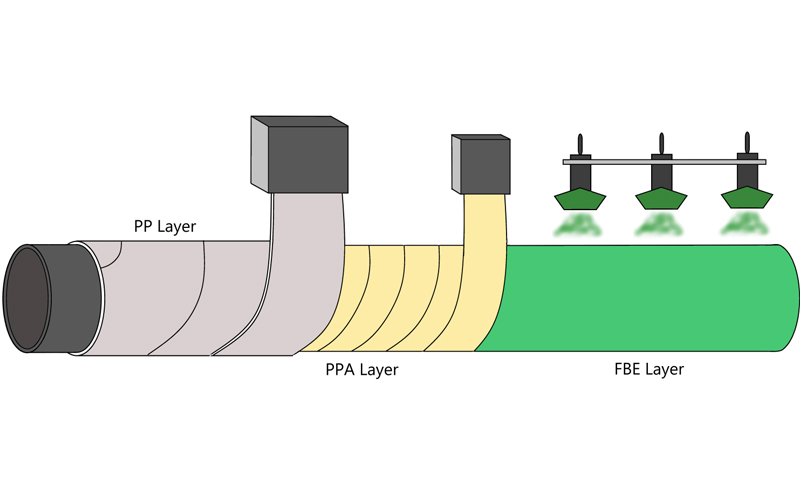
3LPP coated pipe: anti-corrosion guard in high temperature and high pressure environment
In some challenging special environments such as deep-sea oil and gas exploration and high-temperature crude oil transportation, traditional anti-corrosion coatings face significant challenges,...
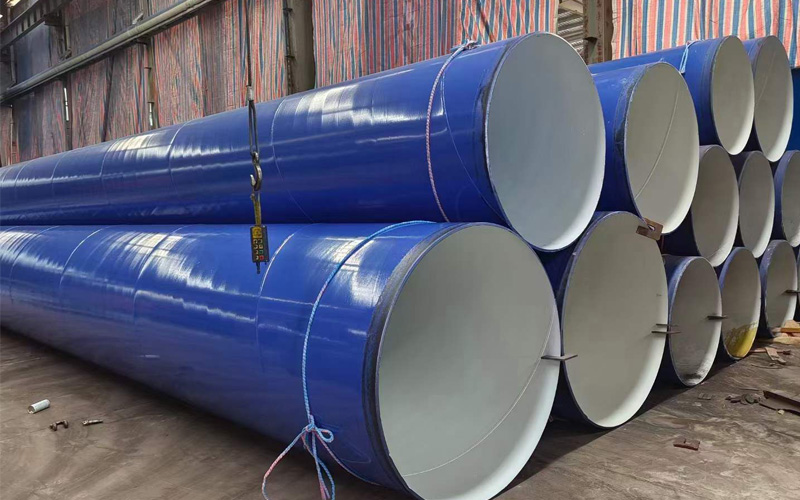
FBE steel pipe: the technological armor of the steel defense line
I In the icy waters beneath the Norwegian Sea pipeline, a section of FBE Lined Carbon Steel Pipe has been in service for 25...