



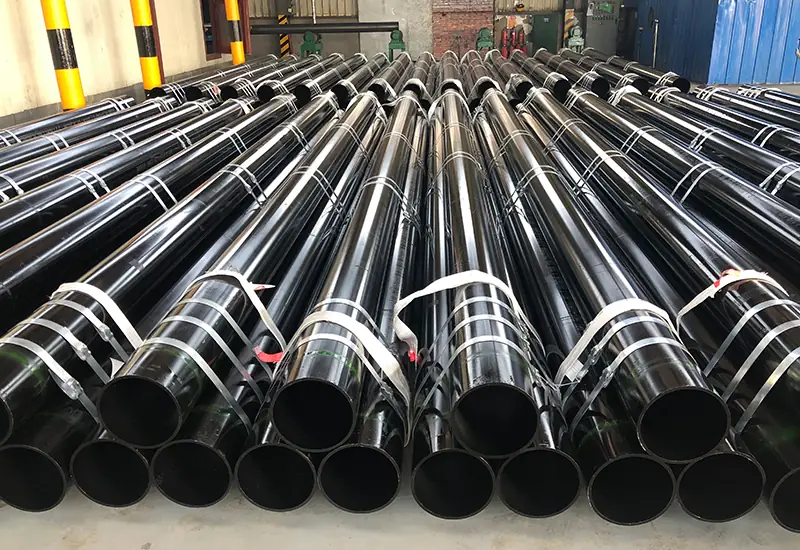
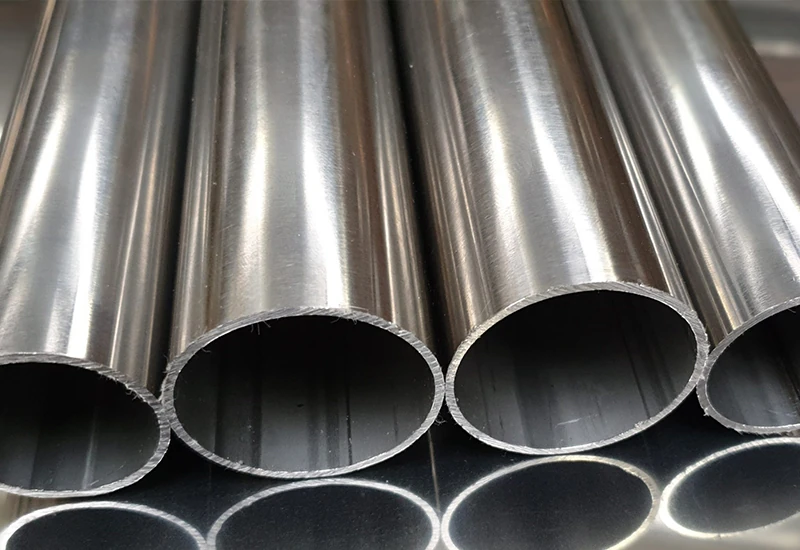

When purchasing structural steel pipe for construction, machinery or infrastructure projects, two European standards-EN 10219 and EN 10210-dominate the market. However, although they are similar in appearances, the prices of structural steel pipes produced by these two standards are quite different, which often makes buyers wonder which one to choose. The critical difference? A structural steel pipe conforming to the EN 10219 standard and a structural steel pipe conforming to the EN 10210 standard may look the same to the naked eye, but their internal properties, especially residual stress, are very different. Using the wrong standard can lead to catastrophic structural failures, security damage and costly project delays. This paper analyzes the core differences between EN 10219 and EN 10210, focusing on manufacturing processes, visual characteristics, application scenarios and the popular S355J2H grade, so as to help you make a wise decisions when choosing steel pipe for the projects. We’ll also clarify the differences between the standard pipeline sizes and technical specifications.
What is EN 10219? Cold Formed Welded Structural Hollow Sections
EN 10219 is defined as “Cold Formed Welded Structural Hollow Sections,” a standard specifically governing structural steel pipe produced through cold forming processes. This manufacturing method involves shaping steel coils or plates into hollow sections—such as square, rectangular, or circular tubes—at room temperature using rolling, bending, or pressing techniques, followed by high-frequency welding to seal the seam. The cold forming process does not need high temperature heating, compared with hot forming process, it has higher production efficiency and lower manufacturing costs.
A key feature of EN 10219 steel tube is residual stress, especially in the corner area. The cold working process will lead to plastic deformation, thus forming internal stresses in the material, especially near the R angle of the hollow profile. For the popular S355J2H class under EN 10219, the residual stress must be controlled within 150MPa by stress relief annealing after forming, such as EN 10219-1:2019 3. Another defining feature is the corner radius: structural steel pipe of EN 10219 usually have a maximum R angle of 3T, where T represents the wall thickness of the pipeline. This 3T radius is significantly larger, contributing to the appearance of rounded corners.
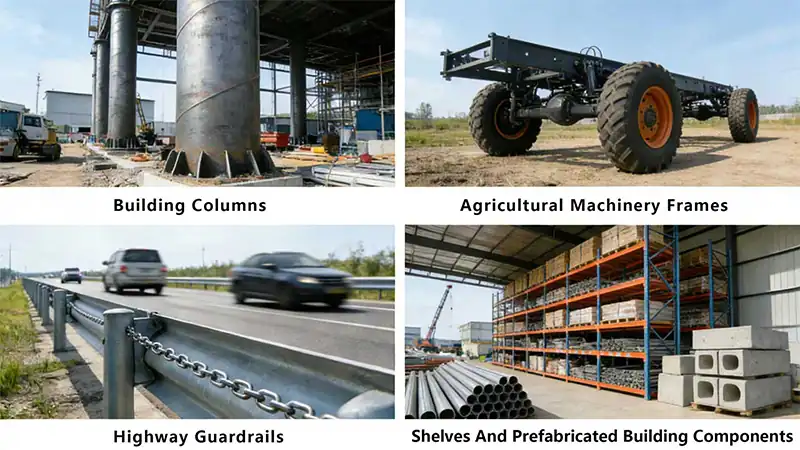
Because of its cost-effectiveness and acceptable static load performance, EN 10219 steel pipe-especially S355J2H grade-is widely used in stable and stress-free applications. Common use cases include building columns, agricultural machinery frames, highway guardrails, shelves and prefabricated building components. Its precise standard pipe sizes and smooth surface finish (a result of using cold-rolled steel as raw material) also make it ideal for architectural projects where aesthetics and dimensional accuracy matter.
What is EN 10210? Hot Finished Structural Hollow Sections
EN 10210, known as “Hot Finished Structural Hollow Sections,” regulates structural steel pipe produced via hot forming or cold forming followed by full heat treatment. The hot forming process includes heating the billets or slabs to above 850 degrees Celsius-beyond the Ar 3 phase transition point-and then forming it into hollow profile by rolling, extrusion or forging. Alternatively, some manufacturers use cold forming first, then subject the pipe to annealing or normalizing heat treatment to achieve the same metallurgical properties as hot-finished products.
One of the main advantages of EN 10210 steel pipe is that the residual stress is extremely small, even zero. High temperature processing and subsequent heat treatment eliminate internal stresses, resulting in a uniform grain structure and enhanced mechanical stability. For the S355J2H class under EN 10210, this stress-free characteristic ensures excellent low-temperature toughness, and the minimum impact energy is 27J at-20°C. The corner radius is another significant factor: the maximum R angle of EN 10210 structural steel pipe is 2T, and its corner is tighter and sharper than that of EN 10219.
EN 10210 steel pipe—particularly S355J2H—is designed for high-demand applications involving dynamic loads, extreme temperatures, or harsh environments. Its superior buckling strength and stress resistance make it suitable for bridges, crane booms, roller coaster supports, offshore wind turbine structures, and industrial machinery subjected to repeated loading. It is also the preferred choice for cold-climate projects, as the S355J2H grade maintains structural integrity at temperatures as low as -20°C. However, the complex manufacturing process and heat treatment result in a premium price tag compared to EN 10219.
The core differences between EN 10219 and EN 10210
In order to simplify the comparison, the following table lists the main differences between EN 10219 and EN 10210 structural steel pipe, with emphasis on factors affecting performance, cost and application. Both of these standards cover the S355J2H grade, but their technical requirements have customized steel pipe for different usage situations.
| Comparison Point | EN 10219 | EN 10210 |
| Manufacturing Process | Cold formed at room temperature, followed by welding; optional stress relief annealing | Hot finished (above 850°C) or cold formed + full heat treatment (annealing/normalizing) |
| Residual Stress | High stress in corner regions; controlled to ≤150MPa for S355J2H via annealing | Low/zero residual stress due to heat treatment; uniform grain structure |
| Corner Radius | Large radius, maximum 3T (3x wall thickness) | Tight radius, maximum 2T (2x wall thickness) |
| Buckling Strength | Lower, suitable for static loads | Higher, engineered for dynamic and heavy loads |
| Cost | Cost-effective, lower production costs | Premium price, due to heat treatment and complex processing |
| S355J2H Application | Static loads (building columns, guardrails, storage racks) | Dynamic loads (bridges, cranes, offshore wind, low-temperature environments) |
How to visually identify EN 10219 vs EN 10210?
In site inspections or warehouse inspection, you can distinguish the structural steel pipes of EN 10219 and EN 10210 with the naked eyes, without relying on technical documents. These visual cues help to verify whether you have used the correct standard for the project, thus avoiding security risks.
First, check the radius of corners. As mentioned above, EN 10219 steel pipe has a fillet with a radius of 3T, while EN 10210 steel pipe has a radius of 2T, which is tighter and sharper. For example, a 10 mm thick S355J2H structural steel pipe under EN 10219 will have a maximum corner radius of 30 mm, whereas the same thickness under EN 10210 will have a maximum radius of 20 mm. This difference is noticeable even without measuring tools, especially for square or rectangular sections.
Second, check the surface finish. EN 10219 steel pipe is made from cold-rolled steel, resulting in a smooth, consistent surface with minimal defects. In contrast, EN 10210 steel pipe often has a rougher surface with traces of oxide scale— a byproduct of the high-temperature heat treatment process. Although the oxide scale can be removed by surface treatments (such as shot peening), the inherent surface texture of hot-working tubes is different from that of cold-formed tubes. This surface difference is a reliable secondary identifier for S355J2H pipe.
Conclusions and call for action
Choosing between EN 10219 and EN 10210 ultimately depends on your project’s load requirements, environmental conditions, and budget. If you’re working on a project with static loads, tight budget constraints, and standard environmental conditions, EN 10219 structural steel pipe—especially the S355J2H grade—is the practical choice. It provides reliable performance, accurate standard pipe sizes and cost savings, without affecting the safety for low-stress applications.
For key structures (such as bridges, offshore facilities or heavy machinery) that are subjected to dynamic loads, extreme temperatures or harsh environments, the EN 10210 steel pipe is not negotiable. Its stress-free structure, superior buckling strength, and tight corner radius make it the only compliant option for high-risk projects, with the S355J2H grade delivering exceptional low-temperature toughness and durability.Do you need S355J2H tubes of EN 10219 or EN 10210? Contact Allland steel. We supply both standards with Mill Test Certificates (MTC) to guarantee quality, ensuring your structural steel pipe meets all technical requirements for your project. Our expert team can help you choose the correct steel pipe grade and standard, suggest the standard pipe sizes, and provide tailor-made solutions for your specific application. Trust Allland Steel can provide reliable and compliant steel pipe that meet project objectives and safety standards.

ASTM A53 vs. API 5L: A Guide to Selection and Application
In the field of industrial piping, ASTM A53 and API 5L are two key standards that are widely used, but have very different positions. ASTM...

Introduction:Technology differences determine success or failure, and selection needs to be “precise”
In oil and gas transmission, municipal infrastructure and other major projects, the reasonable choice of steel pipe welding process directly affects the project...
Steel Density Analysis: Core Differences between Mild and Medium Carbon Steels and Industrial Applications
The density of steel is one of the key parameters that determine its physical properties and industrial applications. Theoretical state of steel density...
3LPE coated steel pipe: a solid barrier in the field of industrial corrosion protection
In the harsh environment of oil and gas, chemical industry, urban pipe network, etc., the long-term reliability and corrosion resistance of pipeline system...
3LPP coated pipe: anti-corrosion guard in high temperature and high pressure environment
In some challenging special environments such as deep-sea oil and gas exploration and high-temperature crude oil transportation, traditional anti-corrosion coatings face significant challenges,...
FBE steel pipe: the technological armor of the steel defense line
I In the icy waters beneath the Norwegian Sea pipeline, a section of FBE Lined Carbon Steel Pipe has been in service for 25...