








An introduction
In the field of structural engineering and industrial pipeline design, there are two carbon steel standards that are most often cited-and most often confused: ASTM A500 and ASTM A53. At first glance, they are almost the same; Both of them are aimed at circular hollow steel beams. However, this superficial similarity conceals the fundamental difference in their design intentions. Simply put, ASTM A53 is designed as a conduit for fluids (flow), while ASTM A500 is designed to bear structural loads (load bearing). Mistaking one of them for the other can lead to improper designs, potential safety hazards and project failures. This technical white paper will reveal the mystery of these two key standards by providing a quantitative comparison across four key dimensions: chemical composition, mechanical properties, dimensional tolerances and test requirements. By the end, you will understand why replacing one with another in structural designs is a dangerous behavior.
Definitions and core design intent
The key difference lies in the purpose for which each standard was created.
ASTM A53 (Pipe): The Conduit for Fluids
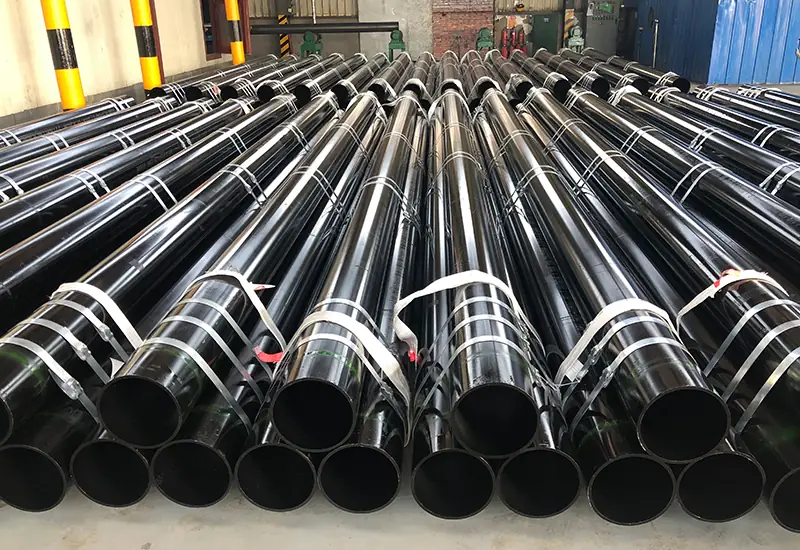
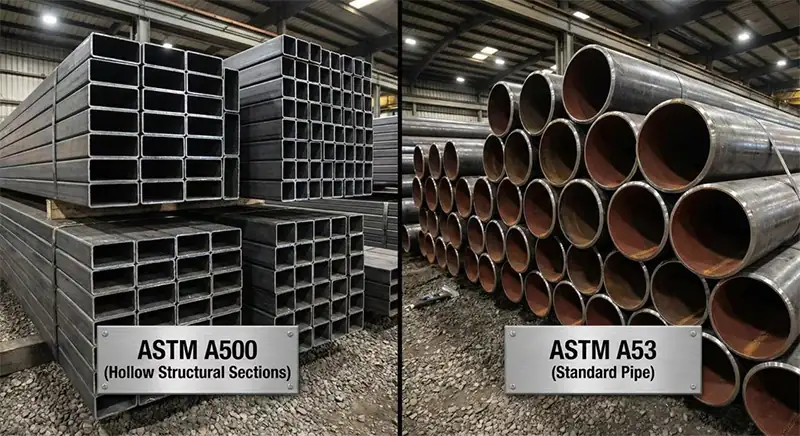
ASTM A53, titled “Standard Specification for Pipe, Steel, Black and Hot-Dipped, Zinc-Coated, Welded and Seamless,” is fundamentally a pressure pipe. Its main purpose is to convey water, steam, oil and gas. This standard covers both seamless and welded types, and usually has a protective zinc coating (galvanized) to resist corrosion. The defining characteristic of a pressure pipe such as ASTM A53 is that it must pass the water pressure test without leakage. The test verifies the integrity of the pipeline wall under internal pressure, which is its main engineering problem. Although it can be used for structural purposes, it is not its intended design function.
ASTM A500 (structural pipe): the skeleton of modern structure
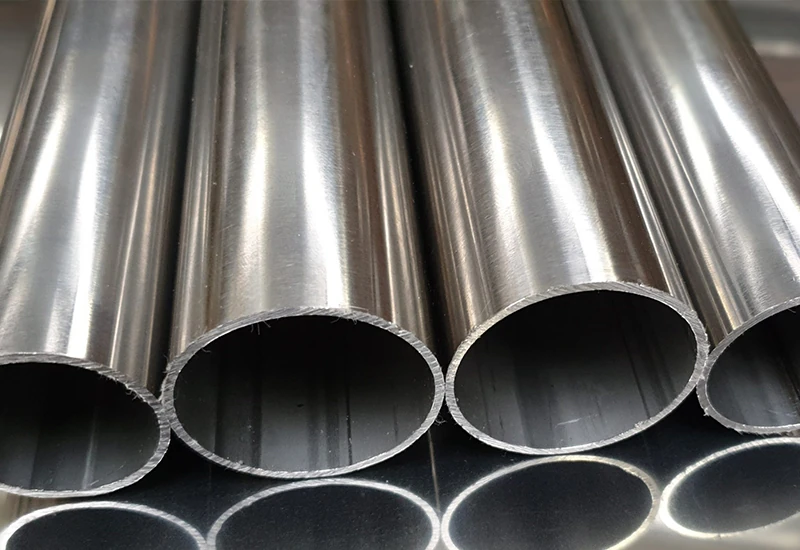
In contrast, ASTM A500, titled “Standard Specification for Cold-Formed Welded and Seamless Carbon Steel Structural Tubing in Rounds and Shapes,” is explicitly designed as structural tubing. It is the preferred material for columns, beams and trusses in buildings, bridges and heavy equipment. The term “tubing” in an engineering context often implies stricter controls on dimensions and geometry compared to “pipe.” The design emphasis of ASTM A500 is not to maintain internal pressure, but to provide high strength-to-weight ratio and predictable behavior under axial (compression and tension) and bending loads. This is why it has stricter dimensional tolerances and higher strength value, as we will see.
Quantitative Analysis: mechanical characteristics
This is the undeniable practical difference for structural engineers. Let’s compare the most common grades, using ASTM A53 Grade B and the round sections of ASTM A500 Grade B and Grade C.
| Performance Metric | ASTM A53 Gr. B | ASTM A500 Gr. B (Round) | ASTM A500 Gr. C (Round) | Engineering Significance |
| Yield Strength (Min) | 35,000 psi (240 MPa) | 42,000 psi (290 MPa) | 46,000 psi (315 MPa) | The strength of A500 is significantly higher (+20% or more), thus realizing lighter and more efficient structural designs. |
| Tensile Strength (Min) | 60,000 psi (415 MPa) | 58,000 psi (400 MPa) | 62,000 psi (427 MPa) | Both grades provide high ultimate strength. |
Yield strength is very important
For structural components, especially columns, yield strength is the most important mechanical property. It defines the stress when a material begins to plastic deformation (permanent deformation). The higher yield strength of ASTM A500 means that a member made from it can support a significantly greater load before buckling or failing compared to an identical-sized member made from ASTM A53. This is the main reason why structural tubes designed for load-bearing applications should be designated as A500.
Quantitative Analysis: dimensional Tolerances
Engineers and manufacturers attach great importance to predictability and consistency, which is provided by the stricter tolerances of ASTM A500.
- ASTM A53 Tolerances: As a pressure conduit, the emphasis is on the wall thickness under internal pressure. The dimensional tolerances is relatively loose. For example, the tolerance of ASTM A53 pipe outside diameter (OD) is usually 1%. Straightness requirements is not too strict.
- ASTM A500 Tolerances: As a structural member, the emphasis is on accurate geometry to achieve predictable connections and load-bearing.
- Outside diameter: Tolerances is usually 0.5% or 0.75% to ensure a more consistent and predictable outside diameter.
- Straight: This is a key difference. A500 has strict requirements for straightness, often as tight as 1/500 of its length. This means that a 20-foot-long pipe can not deviate more than 0.48 inches along its length.
Engineering Significance: the strict straightness and dimensional consistency of ASTM A500 structural pipe make it ideal choice for applications that need precise manufacturing, such as telescopic fits, clean mechanical connections and long-span members with alignment problems caused by deviation. Using A 53 in this case could lead to assembly problems, eccentric loads and endanger structural integrity.
Chemical composition and weldability
ASTM A500 is cold-formed, which contributes to a smoother surface finish and enhanced mechanical properties due to work hardening. The chemical specification of A500 is sometimes tailored to optimize the material of cold forming process and the resulting structural properties, not just pressure vessels. However, for most practical purposes, a qualified welder can successfully join two standard materials using appropriate procedures.
ASTM A500 and A 53 are both made from carbon steel, with similar chemical compositions, and carbon (C), manganese (Mn), phosphorus (P) and sulfur (S) are all limited. They are generally considered to have excellent Weldability, which makes them suitable for manufacturing structures.
Conclusion: Choosing the right material for the job
The difference between ASTM A500 and A53 is not a minor technical problem; This is the basic problem in engineering application. ASTM A53 is a kind of pressure pipeline-the main enemy is internal pressure fluid channel. ASTM A500 is the skeleton of modern structures, and its main enemies are axial load, bending moment and instability.
When your project requires high strength and reliable structural pipe, it is very important to cooperate with a manufacturer who understand these key differences and can provide material that meets the highest quality and accuracy standards. Allland has advanced ability to produce high-precision ASTM A500 structural pipes, including large-diameter circular pipes. We provide the stronger, tighter-tolerance solutions that modern structural engineering projects require, ensuring both safety and efficiency from the ground up.

ASTM A53 vs. API 5L: A Guide to Selection and Application
In the field of industrial piping, ASTM A53 and API 5L are two key standards that are widely used, but have very different positions. ASTM...

Introduction:Technology differences determine success or failure, and selection needs to be “precise”
In oil and gas transmission, municipal infrastructure and other major projects, the reasonable choice of steel pipe welding process directly affects the project...
Steel Density Analysis: Core Differences between Mild and Medium Carbon Steels and Industrial Applications
The density of steel is one of the key parameters that determine its physical properties and industrial applications. Theoretical state of steel density...
3LPE coated steel pipe: a solid barrier in the field of industrial corrosion protection
In the harsh environment of oil and gas, chemical industry, urban pipe network, etc., the long-term reliability and corrosion resistance of pipeline system...
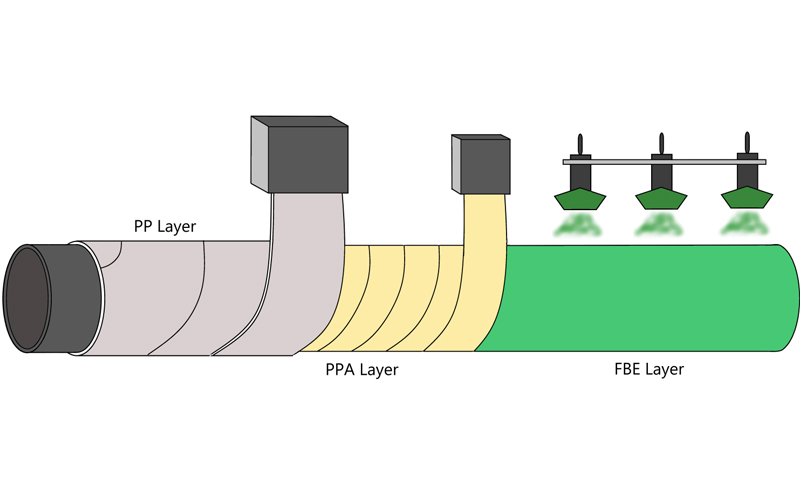
3LPP coated pipe: anti-corrosion guard in high temperature and high pressure environment
In some challenging special environments such as deep-sea oil and gas exploration and high-temperature crude oil transportation, traditional anti-corrosion coatings face significant challenges,...
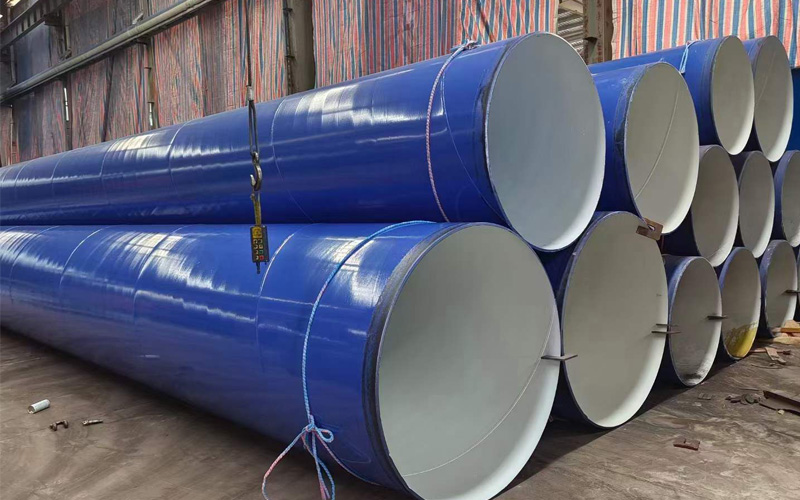
FBE steel pipe: the technological armor of the steel defense line
I In the icy waters beneath the Norwegian Sea pipeline, a section of FBE Lined Carbon Steel Pipe has been in service for 25...