





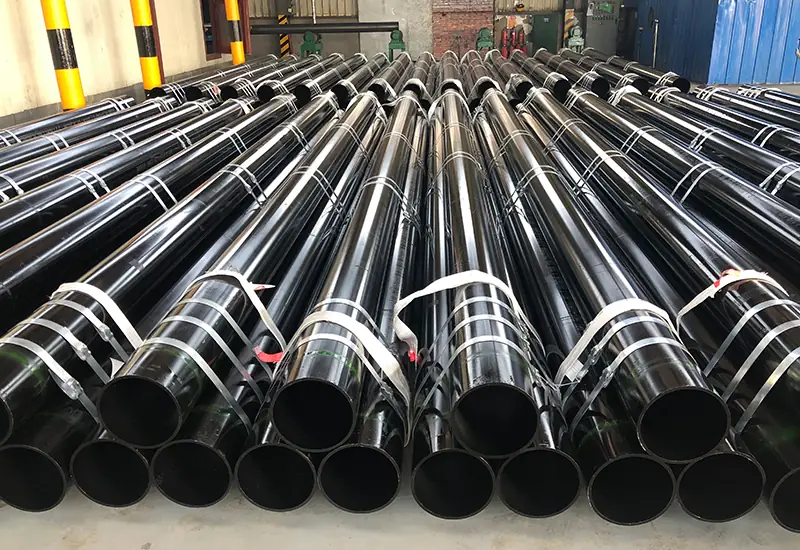
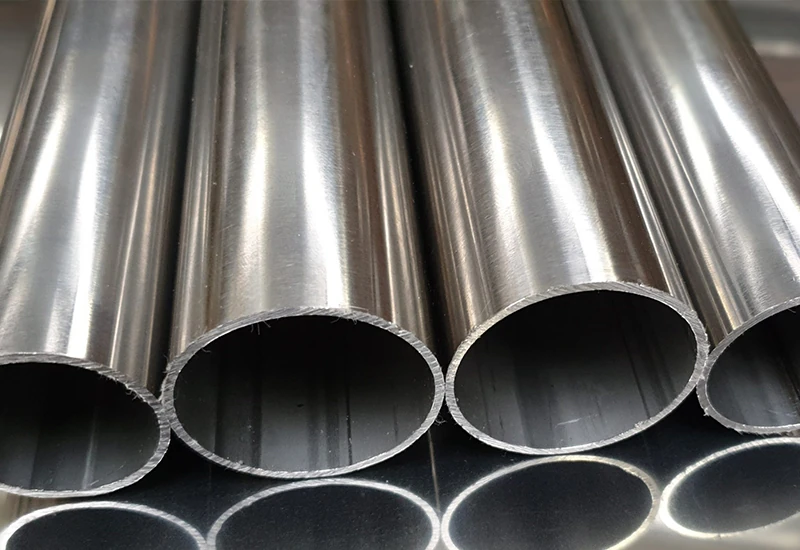

For decades, municipal engineers and procurement professionals instinctively used ductile iron pipe (DIP) when designing water pipes. This is a familiar choice, which is rooted in decades of industry tradition, and its specifications are in line with standard infrastructure practices. However, with the expansion of the cities and the increasing demand for large-diameter pipelines (DN 800 and above) for long-distance water transportation, the hidden costs of DIP can not be ignored. Its fixed short lengths (usually 6 meters) will lead to too many joints, while its heavy weight will increase transportation and installation costs, thus forming an expensive black hole and eroding the project budgets. In this paper, a comprehensive total cost of ownership (TCO) analysis is conducted to prove why buying SSAW pipes is the best solution for modern water conservancy projects.
Initial Price: by meter or by ton?
The first misunderstanding faced by many buyers is to compare the initial prices without considering the efficiency of materials. Ductile iron pipe is made of cast iron, and the tensile strength of this material (about 275 MPa) is lower than that of structural steel (415 MPa or higher) used in SSAW steel pipe production. This strength difference directly affects the wall thickness requirements: in order to bear the same water pressure (for example. Municipal water delivery is 1.6 MPa), the DIP of DN 1200 needs a wall thickness of 14-16mm, while a SSAW pipe only needs 8-10mm.
Weight is another important factor. DN 1200 DIP weighs about 220 per meter, while SSAW pipes with the same diameter and pressure grade only weigh 130 per meter, which is 41% lighter. When pricing by tonnage (the standard for steel products), SSAW Steel Pipe Company uses its thin walls to provide more linear meters per ton. According to data from the American Water Works Association (AWWA), for large diameter pipe (DN 1000+), the unit price per meter of SSAW pipe is 15-25% lower than DIP. This gap widens with the increase of diameter: for DN 1600 pipelines, the cost advantage of SSAW pipeline has jumped to 30-35% due to the exponential growth of DIP material demand.
The Showdown: Total Installed Cost
The initial material price is only part of the total cost of the project. The following table quantifies the life cycle cost differences between DIP and SSAW pipe in a 10km water transmission pipeline (DN 1200, working pressure of 1.6 MPa).
| Feature | Ductile Iron Pipe (DIP) | SSAW steel pipe | Cost effect |
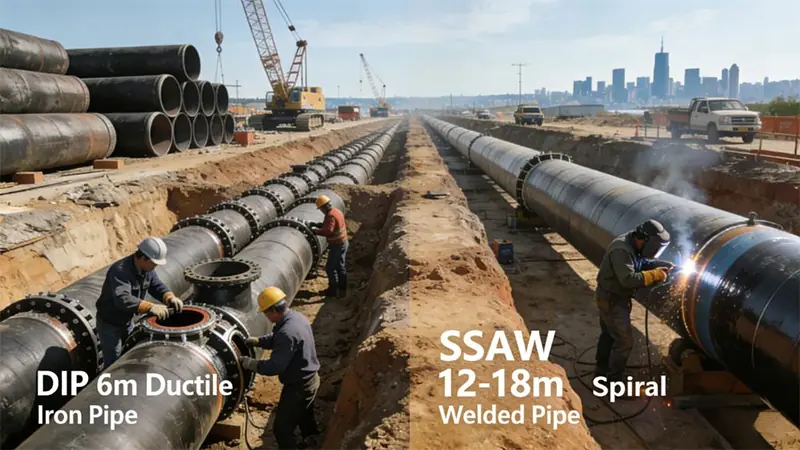
| Unit Length | 6 m (stationary) | 12-18 meters (can be customized) | SSAW pipe reduces joints by 50-66% (1,667 joints for DIP vs. 833-556 for SSAW), cutting labor costs for joint installation by 40,000 – 60,000 (based on a $ 100/joint labor rate). |
| Weight/wall Thickness | 220kg/m/15mm | 130kg/m/9mm | SSAW Pipeline Company reduced the transportation costs by 38% (the total weight is 130 tons, and the DIP is 220 tons), and the crane rental time was reduced by 45% due to the light lifting requirements. |
| Joint Type | Spigot and Socket | All welding | Welded joints eliminates 99% of leakage risks (DIP gaskets will degrade over time, resulting in a leakage rate of 5-8% after 10 years). Long-term maintenance savings: 120000-150,000 for 20 years. |
| Anticorrosion | Asphalt Overlay (Standard) | 3 lPE/FBE (high-performance) | LPE/FBE coating extends the service life of SSAW pipeline to 50-100 years, while the service life of standard DIP is 20-30 years. The replacement costs (2.5m to 3m) of all pipeline updates is avoided. |
| Time of assembly | 45days (10 km) | 22days (10 km) | Shorter construction time reduced project management expenses by $ 80,000 and accelerated the activation of revenue/utility service. |
Why fewer Joints save money
The joint is the most expensive, time-consuming and high-risk component in the construction of water pipeline, which is also the most obvious advantage of SSAW pipelines. For a 1 km large diameter pipeline project.
- Ductile Iron Pipe (DIP): 1000m ÷ 6m = 167 joints (including end caps).
- SSAW pipe (12 m/section): 1,000 m ÷ 12 m = 84 joints (50% reduction.
- SSAW pipeline (18m/section): 1000m ÷ 18m = 56 joints (a decrease of 66%).
Each DIP joint requires excavation of a larger trench (to accommodate the spigot-socket connection), cleaning, lubrication, alignment, and pressure testing—taking 25-30 minutes per joint with a 3-person crew. SSAW Pipeline Company’s welded joints, although requiring certified welders, can be completed in batches faster (15-20 minutes for each joint), and the need for oversize trenches is eliminated. Beyond labor savings, fewer joints directly reduce leakage risks: the International Pipe Council (IPC) reports that 82% of water pipeline failures originate from joint degradation. By choosing to purchase SSAW pipeline, project owners reduced the risk of failure by half, and avoided expensive emergency maintenance, water loss and service interruption. This is also the core reason why SSAW pipe has become the first choice for long-distance water pipeline engineering.
Flexibility & Supply – Partner with Allland
The production of ductile iron pipes depends on casting mold, which makes the manufacturers can only produce fixed diameters (e.g., DN 800, DN 1000 and DN 1200) and wall thicknesses. This inflexibility often forces project teams to increase the pipeline size to match available inventory, which leads to unnecessary material costs and increased transportation burdens. In contrast, SSAW pipe are made by spiral submerged arc welding steel coils, which allows complete customization of diameters (DN 300 to DN 3000+), wall thicknesses (5 mm to 30 mm) and lengths (up to 18 meters).
Allland is the world’s leading manufacturer of SSAW steel pipe, specializes in providing tailor-made solutions for water delivery projects. Does your project require non-standard diameter (such as. DN 950) to adapt to the existing infrastructure or a variable wall thickness to adapt to the pressure fluctuations along the pipeline, all the production lines of RAND can provide accurate specifications. This customization eliminates the waste of materials: instead of buying 10% extra pipe for fixed sizes, you only need to buy SSAW pipe to meet the exact requirements of your project. In addition, Allland’s global supply chain ensures short delivery time, which usually takes 4-6 weeks to customize large-diameter pipelines and 8-12 weeks to order professional DIP.
Summary
Although ductile iron pipe is still a reliable choice for small diameter and short distance water supply projects, its limitations become prohibitive in the case of large diameter pipeline and long distance transportation. SSAW pipe outperforms DIP across every critical cost and performance metric: lighter weight reduces transportation and lifting costs, fewer joints cut labor and maintenance expenses, higher strength enables thinner walls for material savings, and customizable production eliminates waste. When calculating Total Cost of Ownership (TCO), including initial purchase, transportation, installation, maintenance and replacement, SSAW Pipeline Company can save 30-40% of the cost during the life cycle of a water pipeline project.
Allland is not just a top-tier SSAW pipe manufacturer; We are also experts in corrosion prevention. Our 3 LPE, FBE and polyurethane coating systems can withstand harsh soil conditions, ensuring that your water pipes can run reliably for 50 years or longer. Whether you are upgrading an aging infrastructure or designing a new long-distance transmission line, our team will work with you to develop a cost-optimized solution and seamlessly replace DIP with SSAW pipelines. Please contact us today for a free TCO analysis to learn how SSAW pipeline can maximize the value of your project.
FAQ
Q 1: Are steel pipes cheaper than ductile iron pipe?
A: For large-diameter pipeline applications (e.g., >DN 800), the material price of SSAW pipe is usually 15-25% lower than that of ductile iron pipe. More importantly, due to fewer joints and faster construction, the total installed cost of SSAW pipe is significantly lower—often by 30-40% —when accounting for labor, transportation, and long-term maintenance expenses.
Q 2: Does steel pipe rust faster than nodular cast iron?
A: If it is used without proper protection, steel pipe can rust faster than ductile iron. However, when you buy SSAW pipe for water conveyance, it is always provided with professional anti-corrosion coatings (e.g., 3LPE, FBE and polyurethane). If these coatings are installed correctly, the buried service life of SSAW pipeline can reach 50-100 years, which can completely compare with or exceeding that of ductile iron pipeline. Allland’s coatings meet AWWA C 203 and ISO 21809 standards, ensuring long-term corrosion resistance and soil pressure.
Q 3: Why is the length of pipeline important for my budget?
A: Joints are the most expensive, slowest, and most leak-prone part of water pipeline construction. The single length of SSAW pipe is 2-3 times of that of ductile iron pipe (12-18m vs.6m). This means that when you buy SSAW pipe, you reduce the number of connectors by 50-66%, which is equivalent to saving a lot of labor costs, installation time and long-term maintenance costs. For a 10-kilometer large-diameter pipeline project, this alone can save the cost (200,000 to 300,000 pounds).

ASTM A53 vs. API 5L: A Guide to Selection and Application
In the field of industrial piping, ASTM A53 and API 5L are two key standards that are widely used, but have very different positions. ASTM...

Introduction:Technology differences determine success or failure, and selection needs to be “precise”
In oil and gas transmission, municipal infrastructure and other major projects, the reasonable choice of steel pipe welding process directly affects the project...
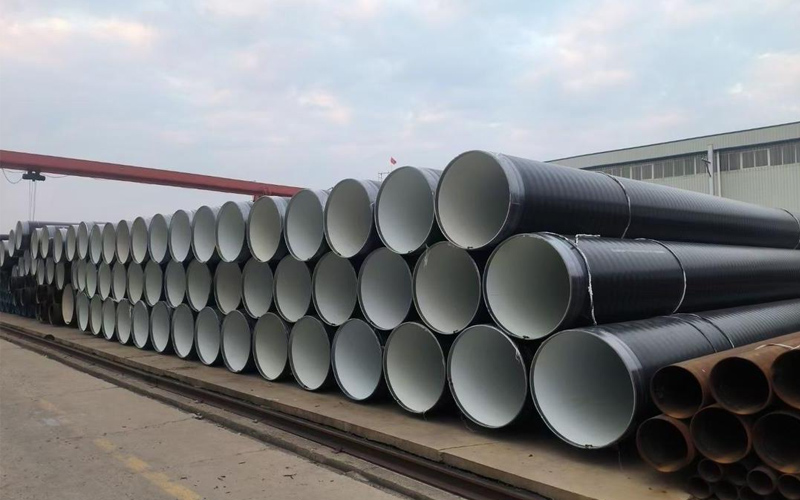
Steel Density Analysis: Core Differences between Mild and Medium Carbon Steels and Industrial Applications
The density of steel is one of the key parameters that determine its physical properties and industrial applications. Theoretical state of steel density...
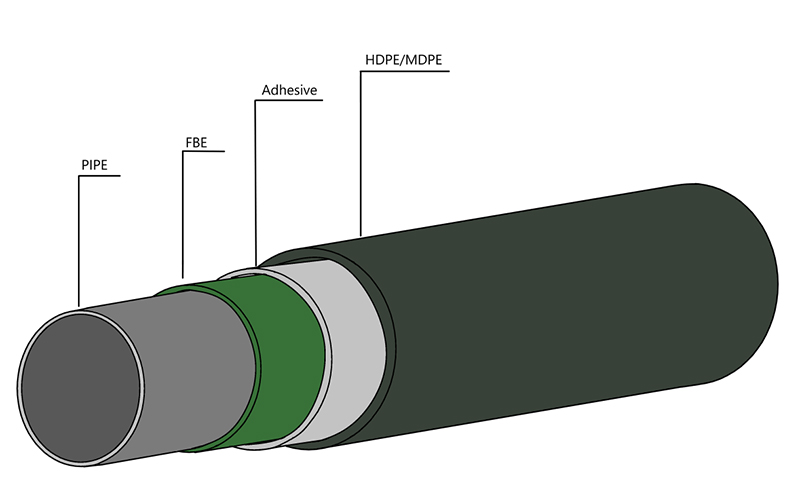
3LPE coated steel pipe: a solid barrier in the field of industrial corrosion protection
In the harsh environment of oil and gas, chemical industry, urban pipe network, etc., the long-term reliability and corrosion resistance of pipeline system...
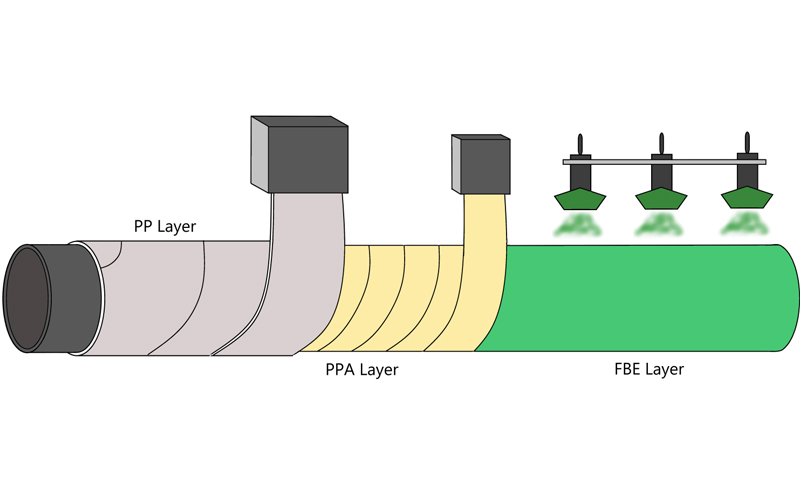
3LPP coated pipe: anti-corrosion guard in high temperature and high pressure environment
In some challenging special environments such as deep-sea oil and gas exploration and high-temperature crude oil transportation, traditional anti-corrosion coatings face significant challenges,...
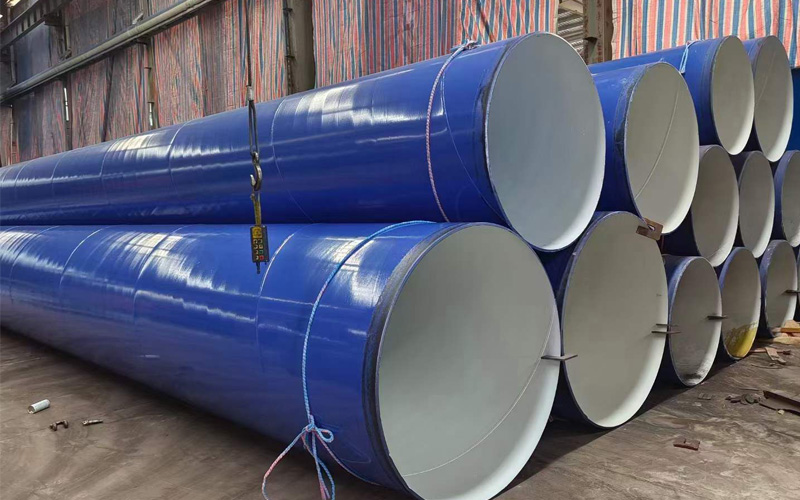
FBE steel pipe: the technological armor of the steel defense line
I In the icy waters beneath the Norwegian Sea pipeline, a section of FBE Lined Carbon Steel Pipe has been in service for 25...