








ASTM Norma A672: Especificaciones técnicas completas para tubos de acero soldados por fusión eléctrica destinados a servicios de alta presión a temperaturas moderadas
1. Visión general y evolución de la norma
1.1 Definición y ámbito de aplicación
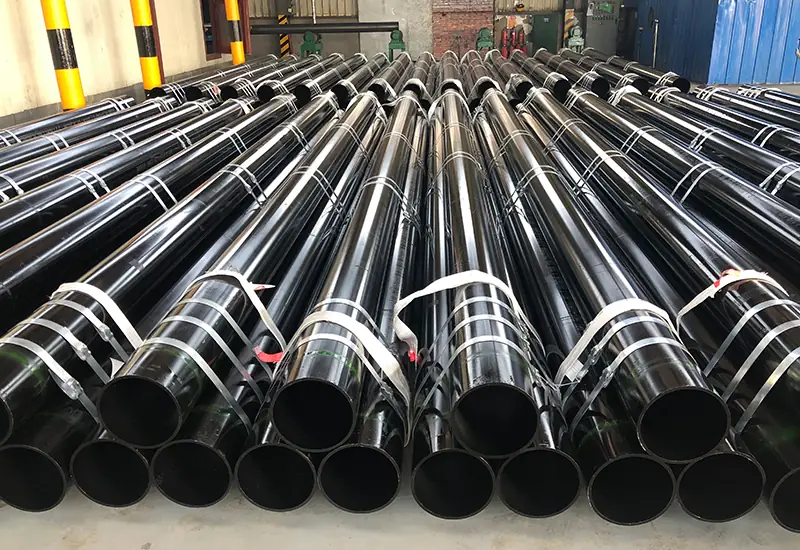
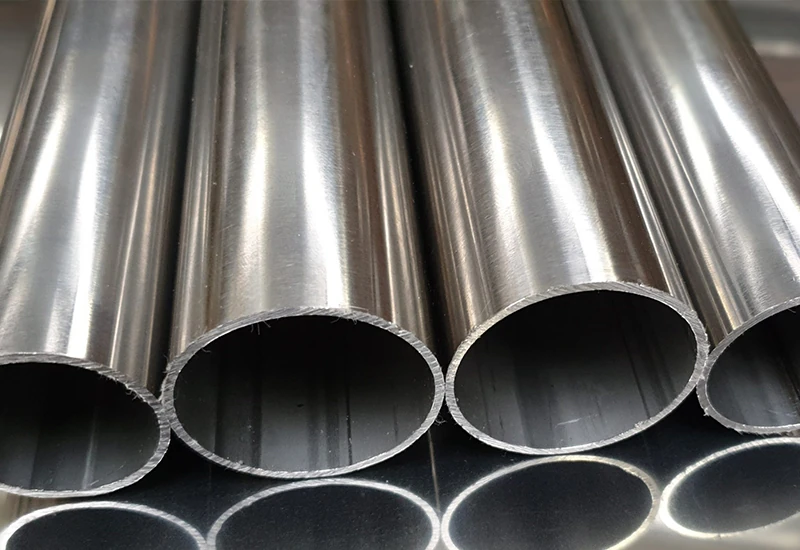
ASTM A672/A672M especifica los requisitos para tubos de acero soldados por electrofusión diseñado para un funcionamiento a alta presión a temperaturas moderadas (de -29 °C a 427 °C / de -20 °F a 800 °F). Entre sus principales aplicaciones se incluyen:
Sistemas de agua de alimentación de centrales eléctricas
Líneas de transferencia de reactores petroquímicos
Tuberías de recuperación de gas de evaporación (BOG) del GNL
1.2 Evolución histórica
| Versión | Actualizaciones clave |
| los años 70 | Versión inicial (acero al carbono, ≤50 MPa) |
| Años 90 | Se han añadido calidades de alta resistencia (C70, C80) |
| 2010 | Se exige el tratamiento térmico 100% para tubos PSL2 |
| 2019 | Rango de temperaturas ampliado; Recomendaciones del gemelo digital |
2. Clasificación y dimensiones del producto
2.1 Sistema de clasificación
Grados de resistencia:
B60: Mín. YS 415 MPa
C70: Mín. YS 483 MPa
C80: Mín. YS 552 MPa
Tipos de tratamiento:
| Clase | Tratamiento térmico | Examen de RT | Prueba hidráulica | Aplicación |
| CL22 | Sin tensiones | Opcional | Obligatorio | Carga no cíclica |
| CL32 | Normalizado | Obligatorio | Obligatorio | Entornos con bajas temperaturas o sujetos a impactos |
| CL42 | Normalizado + templado | Obligatorio | Obligatorio | Servicio de fluencia a alta temperatura |
2.2 Requisitos dimensionales
| Parámetro | Tolerancia |
| Diámetro exterior | ±0,51 TP4T del diámetro exterior nominal |
| Fuera de banda | ≤1% (diámetro máximo-mínimo en cualquier sección transversal) |
| Rectitud | ≤0,11 TP4T de longitud (máx. 3,2 mm en 3 m) |
| Espesor de pared | Espesor mínimo ≥ espesor nominal WT – 0,3 mm |
| Refuerzo de soldadura | ≤3,2 mm interior/exterior |
Gama de tallas:
Diámetro exterior: de 405 mm (16″) a 1.524 mm (60″)
Espesor: de 6 mm a 75 mm
3. Requisitos relativos a los materiales y al rendimiento
3.1 Composición química (calidad C70, wt%)
| Elemento | Min | Max | Objetivo de control |
| C | - | 0.27 | Soldabilidad |
| Mn | 0.85 | 1.20 | Fuerza |
| Si | 0.15 | 0.40 | Desoxidación |
| P | - | 0.025 | Resistencia |
| S | - | 0.020 | Resistencia HIC |
| CEV | - | 0.43 | CE = C + Mn/6 + (Cr + Mo + V)/5 + (Ni + Cu)/15 |
3.2 Propiedades mecánicas
| Propiedad | Calidad C70 | Calidad C80 | Norma de ensayo |
| Límite elástico (Rt0,5) | ≥483 MPa | ≥552 MPa | ASTM A370 |
| Resistencia a la tracción | 485-620 MPa | 620-750 MPa | ASTM A370 |
| Relación Y/T | ≤0.93 | ≤0.93 | - |
| Alargamiento | ≥21% | ≥18% | ASTM A370 |
| Ensayo de resistencia al impacto Charpy con muesca en V a -29 °C | ≥27 J (CL32) | ≥27 J (CL32) | ASTM A370 |
Rendimiento a altas temperaturas:
Resistencia a la rotura por fluencia: ≥80 MPa a 427 °C/100 000 horas
4. Requisitos de soldadura y ensayo
4.1 Especificaciones de soldadura
Tipo de soldadura: Soldadura de doble cara con penetración total
Material de relleno: grado C70; E8018-G
Control de la aportación de calor: 35-45 kJ/cm
Profundidad máxima de reparación: ≤33% del espesor de la pared
4.2 Pruebas obligatorias
Ensayos destructivos:
Ensayo de tracción: 2 muestras de cada lote (ASTM A370)
Capacidad de flexión (180 grados): fisura máxima ≤ 3 mm en el ensayo de flexión lateral
Prueba de impacto: obligatoria para los modelos CL32/42/52
Examen no destructivo:
Examen radiográfico: 100% para CL32/42/52, de conformidad con la sección V, artículo 2, de la norma ASME.
Prueba hidráulica: Presión ≥ 1,5 veces la presión de diseño (máx. 90% YS), como mínimo 10 s
Pruebas complementarias:
Ensayo de fluencia: deformación ≤ 0,11 TP4T/kh a 427 °C
Detección de descargas: sensibilidad de 5,5 kV/mm
5. Control de calidad y aplicaciones
5.1 Proceso de garantía de calidad

Teclas de control:
Variación del aporte térmico de soldadura: ≤±5%
Temperatura de estandarización: 900 ± 20 °C; tiempo de mantenimiento: 2 min/mm
Ensayo de dureza: Zonas de soldadura ≤ material base +30 HV
5.2 Casos prácticos de ingeniería
Central eléctrica ultrasupercrítica (China, 2023):
Tubo: φ813 × 40 mm C70CL42
Servicio: 28,5 MPa/605 °C
Innovación: microaleación de Nb-Ti → mayor resistencia a la fluencia del 15%
Tramo criogénico de gasoducto de GNL (Proyecto Ichthys de Australia):
Tubo: φ1016 × 32 mm B60CL32
Servicio: -162 °C/12 MPa
Proceso: Tratamiento criogénico (-196 °C) → valor de impacto de 52 J a -196 °C
6. Evolución futura
| Desafío | Orientación en materia de innovación |
| Servicio de hidrógeno | Nanorrevestimientos de Al₂O₃ (permeabilidad al H₂ ≤ 0,3 ml/m²/día) |
| Integración digital | Sensores de fibra óptica integrados (con una precisión de ±5 με) |
| Fabricación ecológica | Proceso EAF (huella de carbono: 1,8 tCO₂/t de acero) |
Impacto económico:
Reducción del espesor de las paredes del 20% frente al A106B → un ahorro de 1.500 toneladas de acero por central eléctrica
Índice de averías: 0,07 incidentes por cada 1.000 km-año (831 TP4T menos que las tuberías no normalizadas)
