




Introduction
Offshore projects often operate in challenging marine environments where pipelines are exposed to seawater, waves, currents, and changing weather conditions. These factors place higher demands on pipeline strength, durability, and corrosion resistance.
A conduite flottante is designed for offshore and marine applications where pipelines need to remain buoyant and stable on or near the water surface. These pipes are commonly used in seawater intake systems, dredging operations, and floating infrastructure projects. They provide an effective solution for transporting fluids or materials in marine environments.
Choisir le bon conduite flottante requires careful consideration of several factors, including application requirements, pipe design, material selection, and protective coating systems. This guide explains the common applications of floating pipes, their key advantages, and the factors to consider when selecting a suitable solution for offshore projects.
What Is a Floating Pipe?
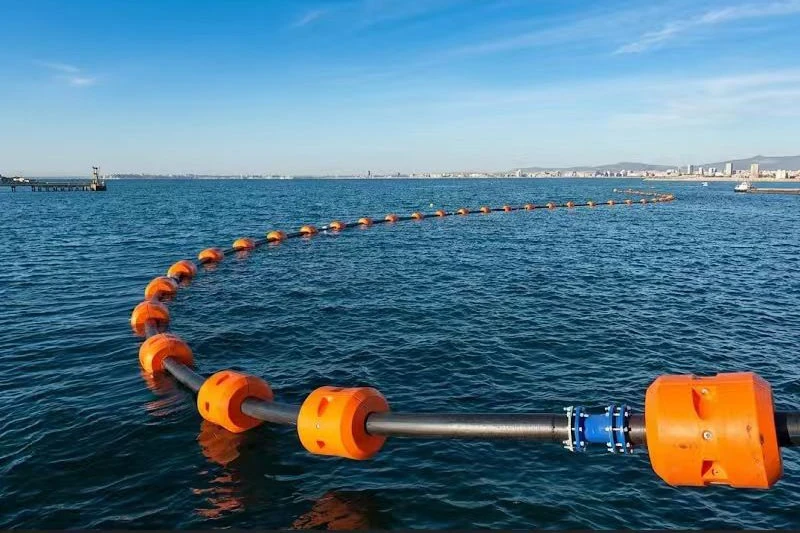
A floating pipe is a marine pipeline system designed to operate on or near the water surface during service. It is commonly used in offshore and coastal projects where pipelines are required to transport fluids or materials across water areas.
Typical applications include dredging operations, seawater intake systems, offshore transportation, and floating facilities.
Unlike conventional pipelines installed underground or on the seabed, floating pipes are continuously exposed to marine conditions throughout their service life. They must maintain stability under the influence of waves, currents, and seawater exposure.
Structure and Working Principle of Floating Pipe
A floating pipe system consists of several key components that work together to support transportation and maintain stability in marine environments. The main components include:
Steel Pipe Body
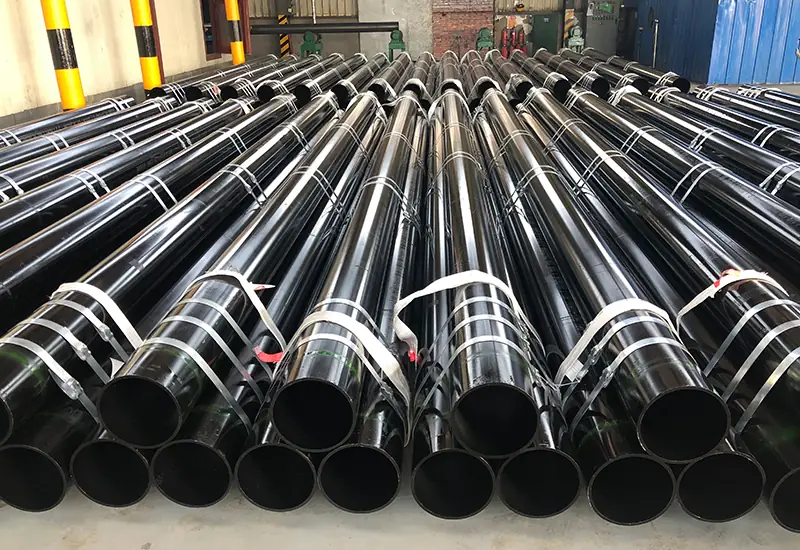
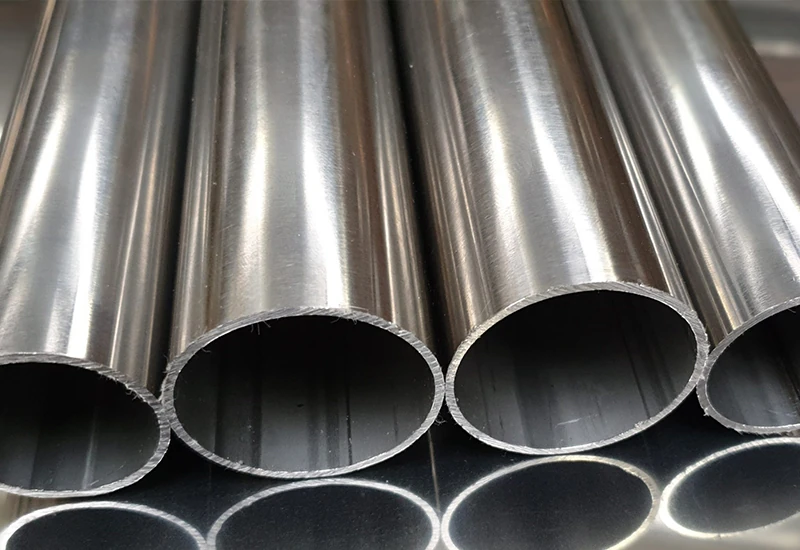
The steel pipe body is the main structural component of a conduite flottante. It provides mechanical strength and carries the transported materials. The pipe is designed to withstand internal pressure, external loads, and changing offshore conditions.
Protective Coating System
The protective coating system provides corrosion resistance by reducing the impact of seawater, moisture, and other marine factors. Selecting the right coating solution helps improve pipeline durability and extend service life.
Connection System
Connection components, such as flanges, couplings, and other connectors, are used to join individual pipe sections. These systems simplify installation, transportation, and maintenance during offshore operations.
Buoyancy System
The buoyancy system helps keep the pipeline at the required position on the water surface. Floating pipes are often equipped with floats, buoyancy collars, or other flotation solutions. The buoyancy design depends on factors such as pipe weight, operating conditions, and project requirements.
In a floating pipe system, the steel pipe provides structural support, while the coating system protects against corrosion and the buoyancy system maintains pipeline stability during operation.
Main Features of Floating Pipe
Floating pipes are designed with specific features that allow them to operate reliably in offshore and marine environments. Their main characteristics include:
Buoyancy Design for Floating Operation
Unlike traditional pipelines installed on land or underwater, floating pipes are designed to remain on or near the water surface during operation.
The buoyancy system provides the necessary support to keep the pipeline in a stable position. This design makes floating pipes suitable for projects where subsea installation is difficult, expensive, or impractical.
Enhanced Corrosion Protection
Floating pipes are continuously exposed to seawater, moisture, and other marine factors. Over time, these conditions can accelerate corrosion and affect pipeline performance.
To improve durability, floating pipes are usually equipped with protective coating systems that help prevent corrosion and protect the steel surface.
Flexible Installation and Project Adaptability
Floating pipe systems offer greater installation flexibility compared with fixed pipeline solutions. They can be installed, relocated, and adjusted more easily according to project requirements.
This flexibility makes them suitable for various marine applications, including dredging projects, seawater transfer systems, and temporary offshore operations.
Suitable for Large-Scale Material Transportation
Floating pipes are commonly used in applications that require the transportation of large volumes of water, slurry, or other materials.
Their large-diameter design provides efficient flow capacity while supporting the requirements of different offshore engineering projects.
Common Applications of Floating Pipe
Floating pipes are widely used in offshore and marine projects where pipelines need to operate on or near the water surface. Their design allows them to handle various transportation requirements in challenging marine environments.
Common applications include:
Offshore Transportation Systems
Floating pipes can be used in offshore projects that require the transportation of fluids or materials across water areas.
Compared with fixed pipeline systems, floating pipelines provide greater installation flexibility. They are suitable for applications where traditional pipeline installation is difficult or not cost-effective.
Seawater Intake and Water Transfer
Floating pipes are commonly used in seawater intake systems, industrial cooling water projects, and large-scale water transfer applications.
Their corrosion-resistant design and floating capability allow them to operate effectively in marine environments. With proper material selection and coating protection, floating pipelines can provide reliable performance for long-term service.
Dredging and Marine Engineering Projects
In dredging operations, floating pipelines are widely used to transport sand, slurry, and other dredged materials.
These systems can be customized according to different project conditions, including transportation distance, water depth, installation methods, and operating requirements.
How to Choose the Right Floating Pipe Supplier for Your Project
Selecting the right floating pipe supplier is essential for the long-term success of an offshore project. A reliable supplier should provide not only suitable pipe products but also professional technical support and solutions that meet specific project requirements.
When evaluating a supplier, buyers should consider several key factors, including pipe design capability, material selection, coating solutions, manufacturing experience, and quality control systems.
Pipe Design and Customization Capability
Floating pipe projects often involve different installation conditions, transportation requirements, and operating environments. Therefore, suppliers need to provide flexible solutions based on specific project needs.
An experienced manufacturer should be able to customize key factors such as pipe dimensions, connection methods, buoyancy solutions, and coating systems.
Material and Coating Solutions
Marine environments expose pipelines to seawater, moisture, and other corrosive factors. Selecting suitable materials and protective coatings is essential for improving pipeline durability and extending service life.
A qualified supplier should provide different material options and coating systems based on project conditions. The right solution depends on factors such as water environment, operating temperature, transportation medium, and expected service period
Manufacturing Experience and Quality Control
Floating pipe production requires advanced manufacturing technology, especially for large-diameter steel pipes used in offshore applications.
A professional supplier should have experience in steel pipe forming, welding processes, and product inspection. Strict quality control procedures are also necessary to ensure dimensional accuracy, weld quality, and product reliability.
Why Choose Allland as Your Floating Pipe Manufacturer?
Large Diameter Floating Pipe Manufacturing Capability
For offshore and marine pipeline projects, pipe size, structural strength, and manufacturing accuracy are critical factors.
Allland specializes in manufacturing large-diameter welded steel pipes for floating pipeline systems, seawater intake projects, offshore transportation, and marine engineering applications.
With advanced JCOE and UOE forming technologies, combined with submerged arc welding processes (SAWL/SAWH), Allland can produce floating pipes with excellent dimensional accuracy and reliable weld performance.
These manufacturing capabilities allow Allland to provide solutions for demanding marine environments that require large-diameter and heavy-wall pipes.
Allland Floating Pipe Manufacturing Range
| Paramètres | Manufacturing Capability |
| Diamètre extérieur | Φ200mm – 2500mm (8″ – 98″) |
| Épaisseur de la paroi | 8.0 mm – 50 mm |
| Longueur standard | 12 m / 18 m / 24 m |
| Customized Length | Up to 36 m |
This wide production range enables Allland to meet different project requirements, from medium-scale marine transfer systems to large offshore floating pipeline applications.
Advanced Anti-Corrosion Coating Systems
Floating pipelines are continuously exposed to seawater, humidity, and changing offshore conditions. A reliable coating system is essential to improve corrosion resistance and extend pipeline service life.
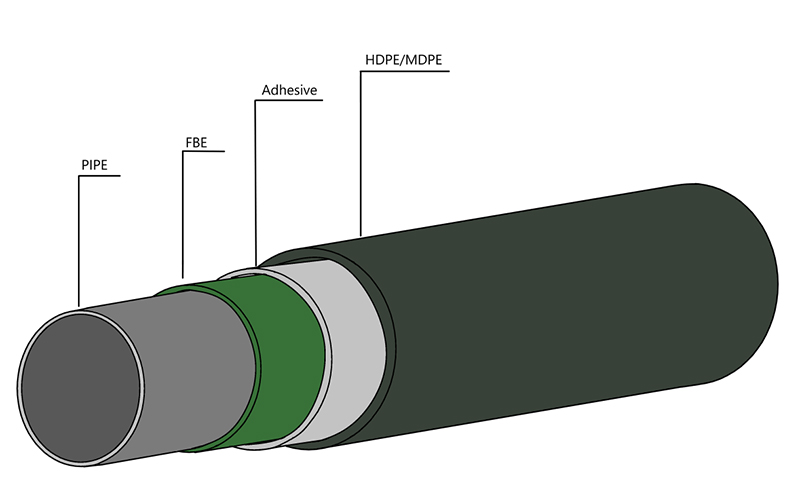
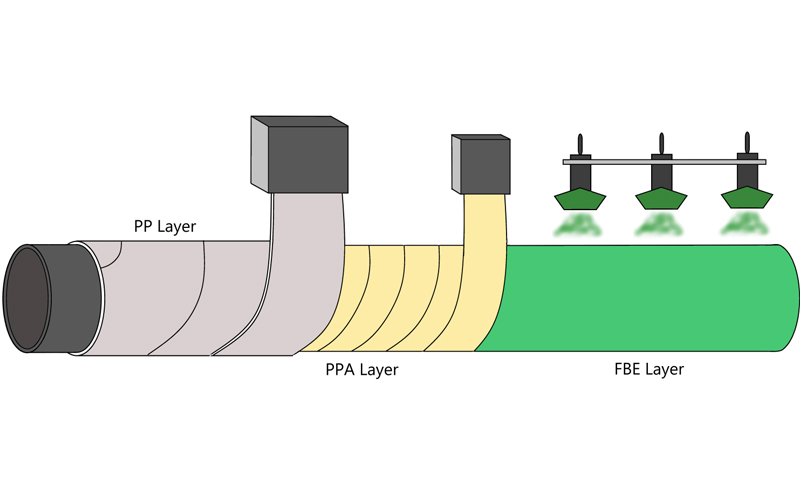
Allland provides multiple coating solutions based on project requirements, including 3LPP coating, FBE coating. These protective solutions improve pipeline durability and provide additional protection during offshore installation and long-term operation.
Available Coating Options
- External coating: 3LPP (≥3.2 mm), FBE + 50–100 mm concrete weight coating
- Internal coating: CRA cladding (Alloy 625/825), smooth-bore epoxy
- Special solution: Integrated buoyancy foam collars (density 180–300 kg/m³)
Allland can also provide customized coating solutions according to specific marine project requirements. This ensures compatibility with different installation conditions and operating environments.
Manufactured According to International Pipeline Standards
Quality consistency and compliance with international standards are important considerations when selecting a floating pipe supplier.
Allland floating pipe products can be manufactured according to recognized standards, including API 5L, DNV-OS-F101, ASTM A106, EN 10208, et ISO 3183.
Main Applicable Standards
| Standard | Available Grades |
| API 5L | X42 / X65 / X80 PSL2 |
| DNV-OS-F101 | 450 FDU |
| ASTM A106 | Grade B / C |
| EN 10208 | L245NB–L485MB |
| ISO 3183 | L390M–L555M |
By combining advanced manufacturing technology, flexible production capability, and international standard compliance, Allland provides floating pipe solutions for offshore energy, marine engineering, and industrial pipeline projects.
FAQ
Q1. What is a floating pipe used for?
A conduite flottante is mainly used in offshore, marine, and water transportation applications. Common uses include seawater intake systems, dredging operations, offshore transportation, and floating infrastructure projects.
Q2. What coating options are available for floating pipes?
Common coating options for floating pipes include 3LPP coating, FBE coating. The appropriate coating solution depends on the marine environment, service conditions, and required pipeline lifespan.
Q3. How do I choose a reliable floating pipeline company?
When selecting a floating pipeline supplier, buyers should evaluate several factors, including manufacturing capability, applicable standards, coating solutions, quality control procedures, and experience with similar marine projects.
Conclusion
Selecting the right conduite flottante solution requires careful evaluation of multiple factors, including project conditions, pipe design, buoyancy requirements, material selection, and corrosion protection systems.
As discussed in this guide, floating pipes play an important role in offshore and marine engineering projects. They are widely used in applications such as offshore transportation, seawater intake systems, dredging operations, and floating infrastructure where pipelines need to operate on or near the water surface.
With experience in large-diameter steel pipe manufacturing, Allland provides customized floating pipe solutions for offshore and marine applications. The company offers flexible pipe designs, coating options, and manufacturing capabilities to support different project needs.
If you are looking for a reliable floating fabricant de tuyaux for your offshore project, contact Allland to discuss your requirements and find a suitable pipeline solution.

ASTM A53 vs. API 5L : Guide de sélection et d'application
Dans le domaine de la tuyauterie industrielle, l'ASTM A53 et l'API 5L sont deux normes clés largement utilisées, mais dont les positions sont très différentes. L'ASTM...

Introduction:Les différences technologiques déterminent le succès ou l'échec, et la sélection doit être “précise”
Dans le domaine du transport du pétrole et du gaz, des infrastructures municipales et d'autres projets majeurs, le choix raisonnable du processus de soudage des tuyaux en acier a une incidence directe sur le projet...
Analyse de la densité de l'acier : Différences fondamentales entre les aciers doux et moyens au carbone et applications industrielles
La densité de l'acier est l'un des paramètres clés qui déterminent ses propriétés physiques et ses applications industrielles. L'état théorique de la densité de l'acier...
Tube d'acier revêtu de 3LPE : une barrière solide dans le domaine de la protection contre la corrosion industrielle
Dans l'environnement difficile du pétrole et du gaz, de l'industrie chimique, du réseau de canalisations urbaines, etc., la fiabilité à long terme et la résistance à la corrosion du système de canalisations...
Tube revêtu de 3LPP : protection anticorrosion dans un environnement à haute température et à haute pression
Dans certains environnements spéciaux difficiles, tels que l'exploration pétrolière et gazière en eaux profondes et le transport de pétrole brut à haute température, les revêtements anticorrosion traditionnels sont confrontés à des défis importants,...
Tube d'acier FBE : l'armure technologique de la ligne de défense de l'acier
I Dans les eaux glacées du pipeline de la mer de Norvège, une section de tube en acier au carbone revêtu FBE est en service depuis 25...