






Introduction
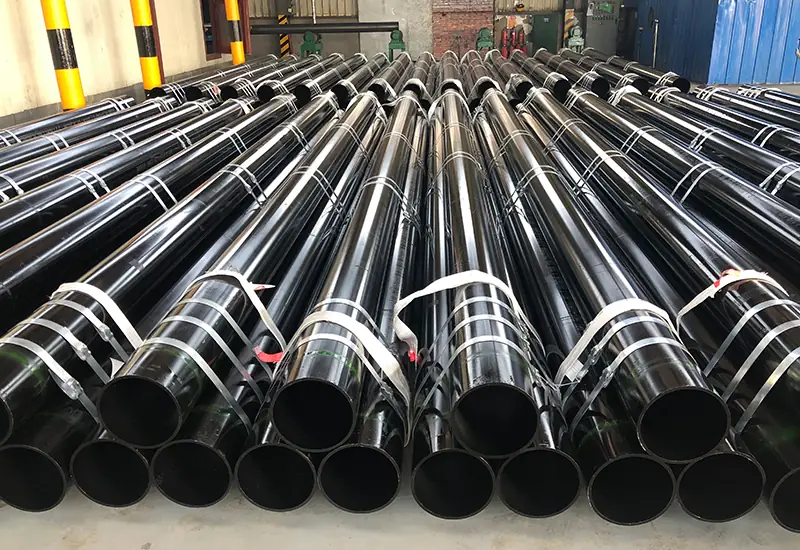
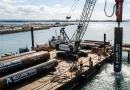
A piling pipe is a type of steel pipe commonly used in pile foundation construction for projects such as deep-water offshore terminals, bridges, roads, and high-rise buildings in coastal, river, and lake regions.
In deep foundation engineering, piling pipes transfer structural loads into deeper soil layers, providing stable support for structures for structures—including bridges, buildings, and marine facilities—thereby ensuring the stability of the overall structure. Therefore, selecting the appropriate tube de pieux is critical.
According to ASTM International, ASTM A252 specifies requirements for welded and seamless piling pipes used as permanent load-carrying members or as shells for concrete piles. Only piling pipes that meet quality standards are a reliable choice.
This article provides a detailed overview of the uses, application scenarios, and manufacturing standards for piling pipes. It aims to assist project owners in selecting reliable products, ensuring the smooth progress of projects, and avoiding construction delays caused by the use of unsuitable products.
8FAQ
What Is a Piling Pipé?
A tube de pieux is a cylindrical steel foundation component designed to transfer structural loads from above-ground structures into deeper soil layers. It is commonly installed through driving, which allows the pile to penetrate the ground and develop bearing capacity through soil friction and end-bearing resistance.
In a driven pile foundation system, steel piles are widely used because they provide high strength, good structural stability, and adaptability to different geological conditions.
Compared with other foundation materials, tube de pieuxs offer several advantages:
- High load-bearing capacity
- Strong resistance to bending and impact forces
- Flexible manufacturing capabilities
- Suitability for large-scale infrastructure projects
Due to these characteristics, piling pipes are commonly used in bridge foundations, marine structures, industrial facilities, and large building projects.
What Factors Should Be Considered When Selecting Piling Pipés ?
Selecting the right piling pipe requires comprehensive consideration. The following factors are commonly considered during engineering design and procurement.
Load Requirements and Soil Conditions
The first consideration is the relationship between structural loads and soil conditions.
Different geological environments require different pile designs. For example, weak soil conditions may require larger diameter piles or thicker walls to achieve sufficient bearing performance, while projects in marine environments may require additional corrosion protection.
For a driven pile foundation system, the following aspects are usually considered:
- Soil investigation results
- Required bearing capacity
- Installation conditions
- Expected structural loads
Understanding site conditions helps determine the most suitable tube de pieux specifications.
Pipe Diameter and Wall Thickness
Pipe diameter and wall thickness directly influence the strength and performance of foundation piles.
A larger diameter generally provides higher structural capacity, while thicker walls improve resistance against driving forces and external pressure.
However, the selection should balance performance requirements and project efficiency.
| Selection Factor | Influence on tube de pieux |
| Diamètre | Affects load capacity and structural stability |
| Epaisseur de la paroi | Improves resistance against stress and deformation |
| Longueur | Determines installation depth and soil penetration |
| Material standard | Ensures product quality and consistency |
Professional fabricants de tubes en acier can offer a wide range of steel pipes in various specifications and materials.
Manufacturing Process and Weld Quality
The manufacturing method is another important factor when selecting steel piles. Different welding technologies provide different production characteristics.
LSAW Piling Pipé
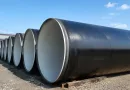
LSAW tube en acier is produced through longitudinal submerged arc welding. This manufacturing process is commonly selected for projects requiring strong weld performance and accurate dimensions.
Key characteristics include:
- Longitudinal welding structure
- Good dimensional control
- Suitable for large diameter foundation applications
SSAW Pipe Pile
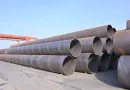
SSAW pipes generally possess higher strength than straight-seam welded pipes; They allow the production of larger-diameter pipes from narrower steel strips and enable manufacturers to produce pipes with different diameters using the same strip width. However, compared to straight-seam pipes of the same length, the weld seam length of spirally welded pipes is greater.
The choice between LSAW and SSAW depends on project design requirements, pipe dimensions, and construction conditions.
What Standards Should Piling Pipés Meet?
International standards help ensure that steel piles meet consistent requirements for material quality, manufacturing processes, and inspection. These standards include EN 10210, API 5L, JIS A 5525, and ASTM A252.
ASTM A252 Piling Pipé
Among these standards, ASTM A252 is one of the most widely recognized specifications for foundation piles.
The standard covers welded and seamless piling pipes used as structural foundation elements. It defines requirements related to dimensions, material properties, and testing procedures.
When selecting suppliers, confirming whether products meet required standards helps ensure compatibility with project specifications.
How Do Environmental Conditions Affect Piling Pipé Selection?
Environmental conditions can significantly influence pile selection, especially for marine and offshore construction.
Marine and Offshore Projects
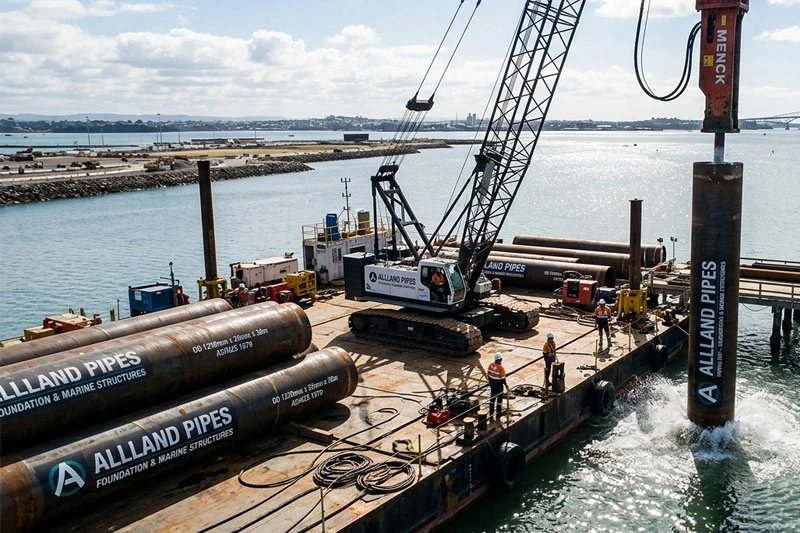
Marine structures such as ports, wharves, and offshore platforms are exposed to water, waves, and corrosive environments.
For these applications, project teams often consider:
- Corrosion protection requirements
- Steel strength
- Coating options
- Installation conditions
Urban Construction Projects
Urban foundation projects often face challenges such as limited working space, nearby structures, and strict construction requirements.
A suitable tube de pieux solution should consider:
- Installation efficiency
- Structural requirements
- Site limitations
- Transportation conditions
Selecting the correct pile dimensions and manufacturing method helps improve construction planning.
Piling Pipé Applications in Infrastructure Construction
piling pipes are widely used in different foundation applications.
| Application | Function |
| Bridge foundations | Transfers structural loads into deeper soil layers |
| Port and marine structures | Supports coastal and offshore construction |
| Building foundations | Provides deep foundation support |
| Industrial facilities | Supports heavy structures and equipment |
Bridge Foundations
Bridge projects require strong and reliable foundation systems because structures are exposed to continuous loads and environmental forces.
piling pipes provide a practical foundation solution by transferring loads into stable soil layers.
Port and Marine Structures
Ports, wharves, and offshore platforms require foundation materials with suitable strength and durability.
Steel piling systems are commonly selected because they can be manufactured in large sizes and adapted to different project conditions.
Building Foundations
For large buildings and industrial facilities, deep foundation systems help improve structural stability, especially where surface soil cannot provide sufficient support.
Why Choose Allland as Your Piling Pipé Supplier?
Selecting reliable fabricants de tubes en acier is essential for foundation projects that require consistent product quality and suitable specifications.
Allland provides tube de pieux solutions for foundation, bridge, marine, and infrastructure applications.
Available Steel Grades and Standards
Allland tube de pieux products are available with:
| Standard | Grade |
| ASTM A252 | GR.1, GR.2, GR.3 |
| API SPEC 5L | X42, X52, X60, X65, X70 |
| EN 10210 | S235JRH, S275J0H, S355J2H |
| JIS A 5525 | SKY295, SKY390 |
Spécifications
| Article | Spécifications |
| Product Name | piling pipe / Piling Steel Pipe |
| Processus de fabrication | LSAW, SSAW |
| Diamètre extérieur | Φ219mm–2540mm (8.6″–100″) |
| Épaisseur de la paroi | 6.0mm–120mm |
| Longueur | 6m–18m |
| Pipe Ends | Plain Ends, Reinforced Ends, Driving Shoes, Weldable Beveled Ends |
| Applications | Foundations, Bridges, Ports, Offshore Structures |
Advanced Manufacturing Capability
With advanced manufacturing equipment and professional welding technology, Allland is capable of producing large diameter and heavy-wall piling pipes for challenging foundation projects.
For companies looking for reliable foundation solutions, choosing experienced fabricants de tubes en acier with suitable production capabilities can help ensure that products meet project requirements.
FAQ
Q1: What is a tube de pieux used for?
A tube de pieux is used as a deep foundation component to transfer structural loads into deeper soil layers. It is commonly applied in bridges, ports, buildings, and offshore projects.
Q2: Why is ASTM A252 important for piling pipes?
ASTM A252 provides requirements for piling pipes used in foundation applications, helping ensure consistent material quality and performance.
Q3: What is the difference between LSAW and SSAW pipe piles?
LSAW steel pipe uses longitudinal submerged arc welding, while an SSAW pipe pile uses spiral submerged arc welding.
LSAW is often selected for projects requiring dimensional accuracy, while SSAW provides flexibility for large diameter pipe production.
Q4: How do I choose a reliable tube de pieux supplier?
Buyers should evaluate:
- Manufacturing capability
- Applicable standards
- Product specifications
- Contrôle de la qualité
- Project support
Expérimenté fabricants de tubes en acier can provide more suitable solutions for different foundation applications.
Conclusion
Selecting the appropriate piling pipes requires a comprehensive assessment of soil conditions, structural loads, pipe dimensions, manufacturing processes, applicable standards, and environmental factors.
This article has provided a detailed overview of how to select suitable steel piles for foundations. From soil conditions to environmental factors, every project—whether involving bridges, ports, buildings, or infrastructure—presents unique challenges; the right foundation solution helps transform engineering blueprints into durable, tangible structures.
Whether it is a large infrastructure project or a demanding foundation application, selecting suitable piling pipes and working with experienced steel pipe manufacturers can improve project reliability and construction efficiency.
With reliable manufacturing capabilities and flexible solutions, Allland continues to provide steel pipe products for different foundation applications, helping customers develop reliable foundation solutions for infrastructure projects.

ASTM A53 vs. API 5L : Guide de sélection et d'application
Dans le domaine de la tuyauterie industrielle, l'ASTM A53 et l'API 5L sont deux normes clés largement utilisées, mais dont les positions sont très différentes. L'ASTM...

Introduction:Les différences technologiques déterminent le succès ou l'échec, et la sélection doit être “précise”
Dans le domaine du transport du pétrole et du gaz, des infrastructures municipales et d'autres projets majeurs, le choix raisonnable du processus de soudage des tuyaux en acier a une incidence directe sur le projet...
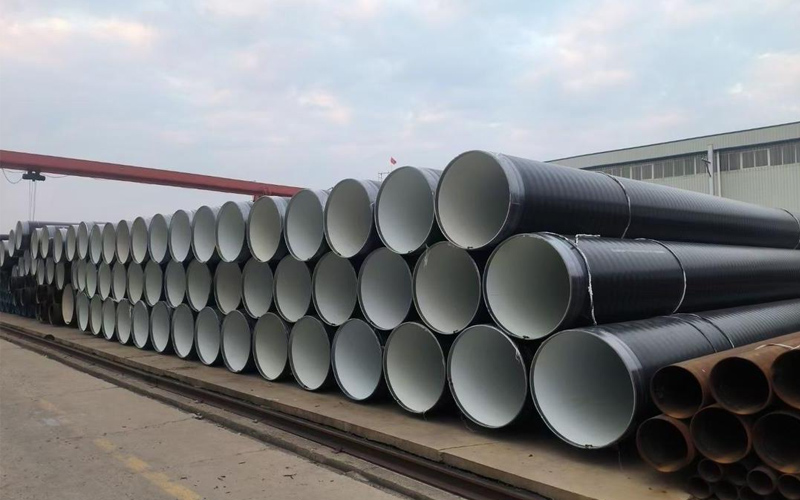
Analyse de la densité de l'acier : Différences fondamentales entre les aciers doux et moyens au carbone et applications industrielles
La densité de l'acier est l'un des paramètres clés qui déterminent ses propriétés physiques et ses applications industrielles. L'état théorique de la densité de l'acier...
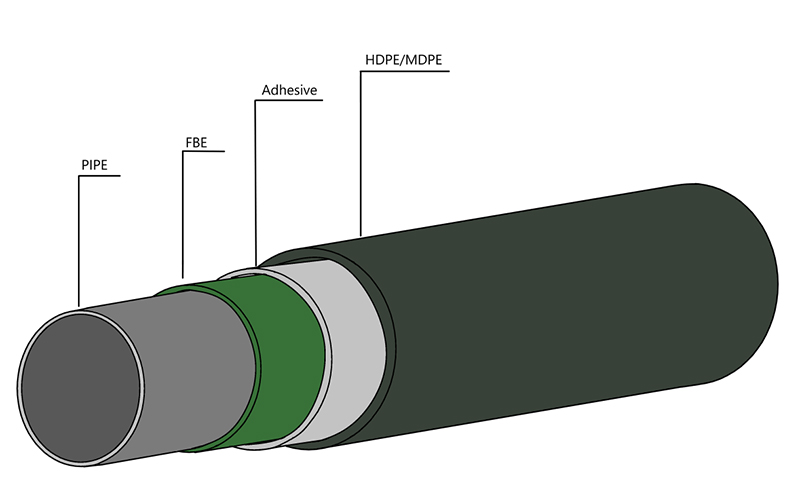
Tube d'acier revêtu de 3LPE : une barrière solide dans le domaine de la protection contre la corrosion industrielle
Dans l'environnement difficile du pétrole et du gaz, de l'industrie chimique, du réseau de canalisations urbaines, etc., la fiabilité à long terme et la résistance à la corrosion du système de canalisations...
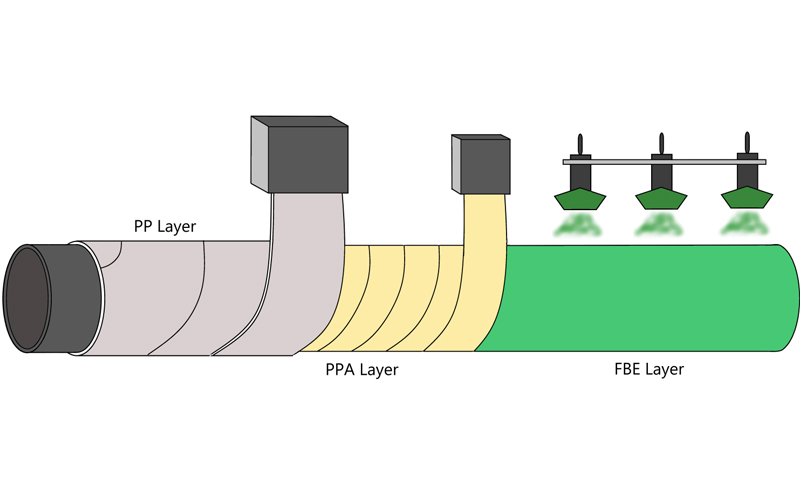
Tube revêtu de 3LPP : protection anticorrosion dans un environnement à haute température et à haute pression
Dans certains environnements spéciaux difficiles, tels que l'exploration pétrolière et gazière en eaux profondes et le transport de pétrole brut à haute température, les revêtements anticorrosion traditionnels sont confrontés à des défis importants,...
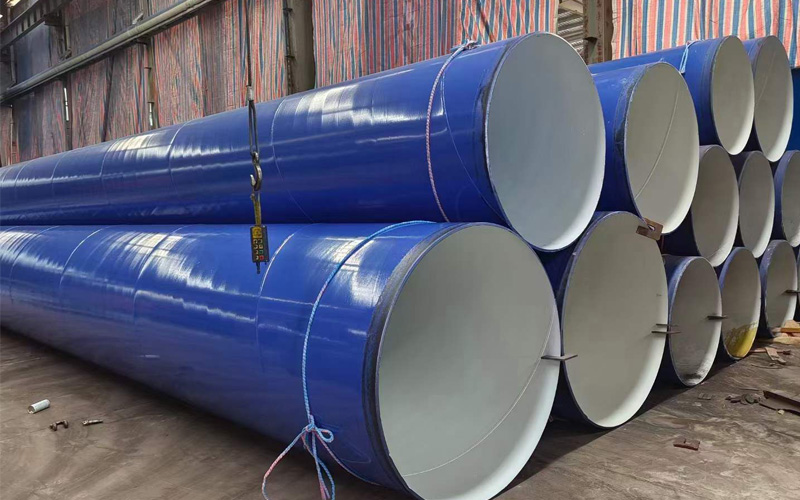
Tube d'acier FBE : l'armure technologique de la ligne de défense de l'acier
I Dans les eaux glacées du pipeline de la mer de Norvège, une section de tube en acier au carbone revêtu FBE est en service depuis 25...