





10FAQ
Introduction
Large-scale pipeline projects require steel pipes that offer reliable strength and durability. Major pipeline undertakings—such as oil and gas transmission, water conveyance, offshore engineering, and infrastructure development—demand high-quality steel pipes capable of handling large-scale fluid transportation and withstanding rigorous operating conditions.
LSAW et SSAW pipes are two widely used types of submerged arc welded pipe. While both fall into the category of large-diameter steel pipes, they differ in their forming methods and welding processes, leading to distinct application areas for each.
When choosing between LSAW and SSAW pipes, contractors and companies must fully understand the manufacturing processes, technical advantages, and application requirements associated with each type. Professional steel pipe manufacturers can provide suitable solutions tailored to specific pipeline designs, operating conditions, and project standards.
What Are LSAW Steel Pipes?
LSAW (Longitudinal Submerged Arc Welded) steel pipe is a type of welded steel pipe manufactured by forming steel plates into a cylindrical shape and welding along the longitudinal direction.
Compared with other welded pipe types, LSAW tuyau is known for its high dimensional accuracy and stable welding quality. It is commonly selected for projects that require large diameters, thick walls, and reliable pressure performance.
LSAW Steel Pipe Manufacturing Process
The manufacturing process of allland LSAW tuyau focuses on achieving accurate dimensions and strong weld performance.
Steel Plate Inspection
The production process starts with high-quality steel plates. The raw materials are inspected to ensure they meet required chemical composition and mechanical property standards.
Création du JCOE
The steel pipe is formed using the JCOE process.
The JCOE process utilizes the principle of three-point bending to sequentially press the steel plate into “J” and “C” shapes, finally closing it into an “O”-shaped pipe blank. This is a progressive, multi-step forming process that ensures uniform deformation across the steel plate, resulting in low residual stress and the absence of significant stress concentration.
Longitudinal Submerged Arc Welded
After the pipe is formed, submerged arc welding technology is used to weld the longitudinal seam. This process ensures consistent weld quality, a stronger weld seam, and reliable performance. Expansion and Inspection
After welding, the pipe can undergo mechanical expansion to improve roundness and dimensional accuracy.
Quality inspection may include:
- Essais par ultrasons
- X-ray inspection
- Essais hydrostatiques
- Dimensional inspection
Anti-Corrosion Coating
Depending on project requirements, LSAW steel pipes can be supplied with corrosion protection coatings, including FBE, 3LPE, and 3LPP coatings.
What Are SSAW Steel Pipes?
SSAW steel pipe—fully known as Spiral Submerged Arc Welded pipe and also referred to as HSAW steel pipe—is a type of welded steel pipe featuring a helical weld seam. Its manufacturing process involves coiling steel strip at an angle relative to the pipe’s centerline, followed by forming and submerged arc welding.
Unlike LSAW pipes that use steel plates, SSAW pipes use steel coils as raw materials. This production method allows manufacturers to produce large-diameter pipes with high production efficiency.
Une fiabilité SSAW pipe supplier can provide cost-effective solutions for large-scale pipeline projects, especially when projects require large quantities of pipes and flexible production options.
SSAW Steel Pipe Manufacturing Process
The production process of SSAW steel pipe includes several main steps.
Steel Coil Preparation
Steel coils are selected and inspected before production to ensure they meet project requirements.
Spiral Forming
During forming, the steel coil is continuously shaped into a cylindrical structure at a specific angle.
This spiral forming method allows manufacturers to produce pipes with different diameters by adjusting production parameters.
Spiral Submerged Arc Welding
The spiral seam is welded using submerged arc welding technology.
The welding process provides consistent weld quality and supports the production of large-diameter pipes.
Cutting and Inspection
After welding, the pipes are cut according to required lengths.
Quality checks may include:
- Weld inspection
- Essais hydrostatiques
- Dimensional inspection
Surface Protection
SSAW pipes can also be supplied with anti-corrosion coatings such as FBE, 3LPE, and 3LPP coating systems.
LSAW vs SSAW Steel Pipe: Key Differences
| Facteur de comparaison | LSAW Tube en acier | SSAW Tube en acier |
| Full Name | Longitudinal Submerged Arc Welded | Spiral Submerged Arc Welded |
| Matières premières | Steel plate | Steel coil |
| Welding Direction | Longitudinal seam | Spiral seam |
| Forming Method | JCOE formant | Spiral forming |
| Diamètre du tube | Large diameter | Large diameter |
| Précision dimensionnelle | Plus élevé | Bon |
| Efficacité de la production | Modéré | Plus élevé |
| Applications typiques | Oil & gas pipelines, high-pressure projects | Water pipelines, infrastructure projects |
The main difference between LSAW and SSAW is the forming and welding method. LSAW uses steel plates and longitudinal welding, while SSAW uses steel coils and spiral welding.
LSAW is an excellent choice for projects requiring high dimensional precision in steel pipes, whereas SSAW offers lower costs and high production efficiency for projects requiring high-volume pipe production.
LSAW vs SSAW Steel Pipe Applications
Oil and Gas Transmission Pipelines
Oil and gas pipelines require steel pipes with reliable strength, corrosion resistance, and stable welding performance.
LSAW pipes are often selected for high-pressure transmission pipelines because of their dimensional accuracy and thick wall capability.
SSAW pipes can also be used in oil and gas applications where project requirements allow spiral welded structures.
Water Supply and Infrastructure Projects
Water transportation projects usually require large quantities of pipes with large diameters.
SSAW pipes are widely used in:
- Water supply pipelines
- Drainage systems
- Infrastructures municipales
Their efficient production process makes them suitable for large-scale construction projects.
Offshore and Long-Distance Pipeline Projects
Offshore and long-distance pipeline projects require careful selection of pipe materials, coating systems, and manufacturing methods.
Both LSAW and SSAW pipes can be used depending on:
- Operating pressure
- Pipe diameter
- Installation conditions
- Project standards
Quality Standards for LSAW et SSAW Steel Pipes
API 5L Requirements
API 5L is an international standard that specifies requirements for seamless and welded steel pipes used in pipeline transportation systems. Its materials include GR.B, X42, X46, X52, X56, X60, X65, X70, etc., and it is mainly used for the transportation of fluids such as oil, natural gas, and water.
Inspection and Testing
Reliable suppliers usually provide inspection procedures including:
- Chemical analysis
- Mechanical testing
- Weld inspection
- Essais hydrostatiques
- Essais non destructifs
Material Certification
Material certificates provide important information about steel grade, production quality, and compliance with project specifications.
Working with an experienced manufacturer helps ensure consistent product quality.
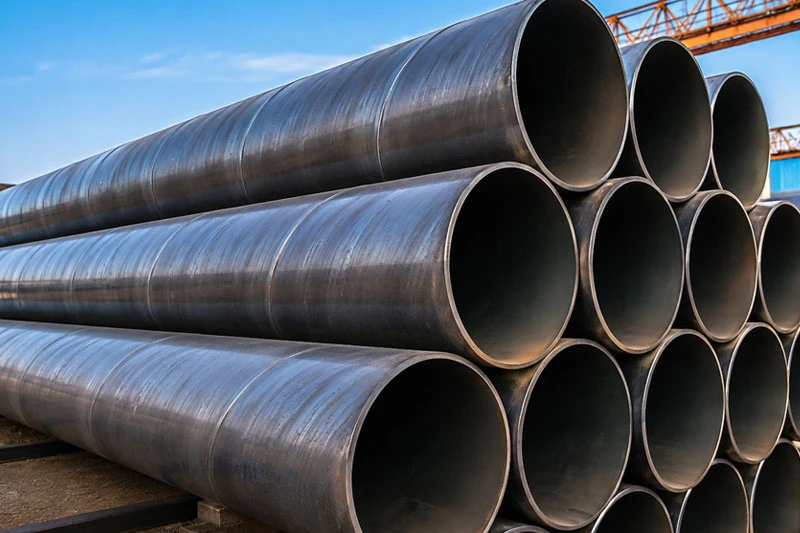
How to Select a Reliable Pipeline Steel Pipe Supplier?
Manufacturing Capability
A qualified supplier should have professional production equipment and experience producing different types of welded steel pipes.
The steel pipes we can produce are as follows:
LSAW Steel Pipeline:
| Specification Item | Details |
| Diamètre extérieur | Φ 406 mm–Φ 1524 mm (16″–60″) |
| Épaisseur de la paroi | 6 mm–60 mm(1/4″ – 3″ ) |
| Pipe Length | 3 – 12.5 m ( 10”- 40”) |
| Forming Method | JCOE formant |
| Coating Options | Bare, Black painted,FBE, 3LPE, 3LPP, or as per client requirements |
SSAW Steel Pipeline:
| Specification Item | Details |
| Diamètre extérieur | Φ 219 mm – Φ 2540 mm (8″ – 100″) |
| Épaisseur de la paroi | 5.0 mm – 25.4 mm (0.2″ – 1″) |
| Normes de qualité | API, ISO, EN, ASTM, DIN, JIS, GB, CSA, GOST |
| Pipe Length | 6 m – 18 m (20″– 60″) |
| Coating Options | Bare, FBE, 3LPE, 3LPP, or according to client requirements |
Quality Control System
Quality control is essential for pipeline steel pipes.
A reliable supplier should have complete inspection procedures and follow international standards.
Allland Pipes provides LSAW, SSAW, ERW, and anti-corrosion coated steel pipe solutions for oil, gas, and infrastructure projects.
FAQ
Q1. What is the difference between LSAW et SSAW steel pipe?
LSAW pipes are produced from steel plates using Longitudinal Submerged Arc Welding (longitudinal seam), while SSAW pipes are manufactured from steel coils using Spiral Submerged Arc Welding (helical seam).
Q2. Which pipe is better for oil and gas pipelines?
The choice depends on project requirements. LSAW is often suitable for projects requiring high accuracy and strong pressure performance, while SSAW can be suitable for large-scale pipeline applications.
Q3. Are LSAW et SSAW pipes suitable for de grand diamètre applications?
Yes. Both LSAW and SSAW pipes are widely used for large-diameter pipeline projects.
Q4. What standards can LSAW et SSAW pipes meet?
Depending on requirements, these pipes can be manufactured according to API, ASTM, EN, JIS, GB, and other international standards.
Q5. How can pipeline steel pipes be protected from corrosion?
Common coating options include FBE, 3LPE, and 3LPP coatings.
Conclusion
LSAW and SSAW steel pipes are both widely used solutions for modern pipeline construction, and each type has its own advantages depending on project requirements. LSAW pipes are known for their high dimensional accuracy, reliable weld quality, and suitability for projects that require strict performance standards, such as oil and gas transmission pipelines, offshore projects, and high-pressure applications. With the JCOE forming process and Longitudinal Submerged Arc Welded technology, LSAW pipes can provide stable performance for demanding engineering environments.
SSAW pipes offer advantages in production efficiency, flexible manufacturing, and cost-effective solutions for large-scale pipeline projects. They are commonly used in water transportation systems, infrastructure construction, and other applications that require large quantities of large-diameter pipe. The spiral forming process allows SSAW pipes to meet different project requirements while maintaining reliable performance.
Choosing between LSAW and SSAW steel pipes requires a comprehensive evaluation of pipeline operating conditions, pipe diameter, wall thickness, coating requirements, project budget, and delivery schedules. Working with an experienced LSAW steel pipe manufacturer ou SSAW steel pipe manufacturer can help customers select the right pipe solution and ensure consistent product quality. With professional manufacturing capabilities, strict quality control, and customized pipeline solutions, reliable suppliers can support long-term and efficient pipeline construction projects.

ASTM A53 vs. API 5L : Guide de sélection et d'application
Dans le domaine de la tuyauterie industrielle, l'ASTM A53 et l'API 5L sont deux normes clés largement utilisées, mais dont les positions sont très différentes. L'ASTM...

Introduction:Les différences technologiques déterminent le succès ou l'échec, et la sélection doit être “précise”
Dans le domaine du transport du pétrole et du gaz, des infrastructures municipales et d'autres projets majeurs, le choix raisonnable du processus de soudage des tuyaux en acier a une incidence directe sur le projet...
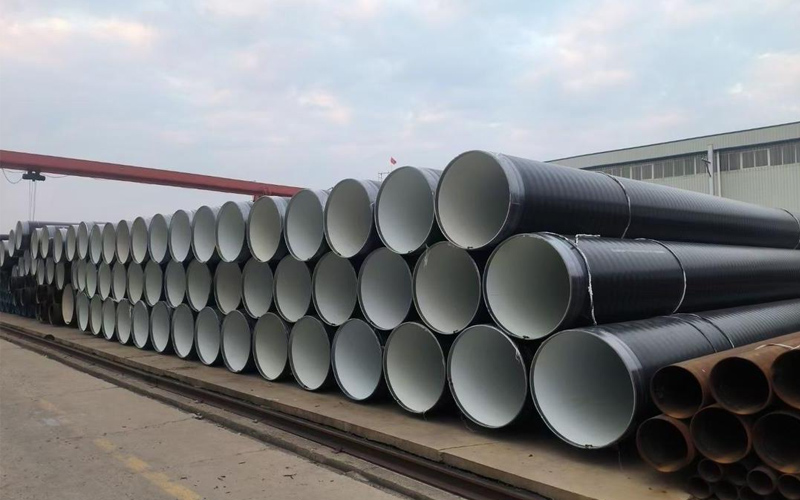
Analyse de la densité de l'acier : Différences fondamentales entre les aciers doux et moyens au carbone et applications industrielles
La densité de l'acier est l'un des paramètres clés qui déterminent ses propriétés physiques et ses applications industrielles. L'état théorique de la densité de l'acier...
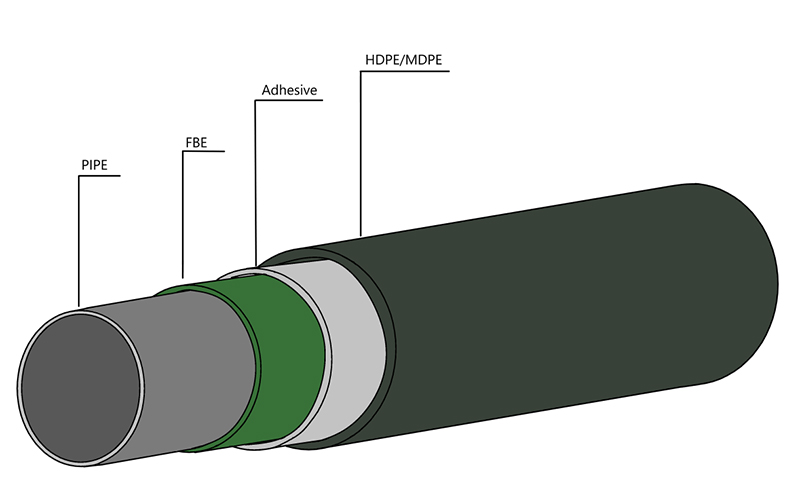
Tube d'acier revêtu de 3LPE : une barrière solide dans le domaine de la protection contre la corrosion industrielle
Dans l'environnement difficile du pétrole et du gaz, de l'industrie chimique, du réseau de canalisations urbaines, etc., la fiabilité à long terme et la résistance à la corrosion du système de canalisations...
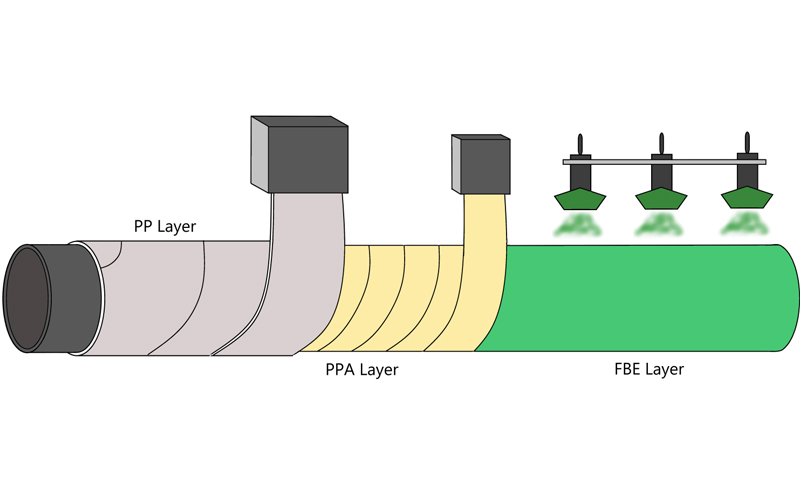
Tube revêtu de 3LPP : protection anticorrosion dans un environnement à haute température et à haute pression
Dans certains environnements spéciaux difficiles, tels que l'exploration pétrolière et gazière en eaux profondes et le transport de pétrole brut à haute température, les revêtements anticorrosion traditionnels sont confrontés à des défis importants,...
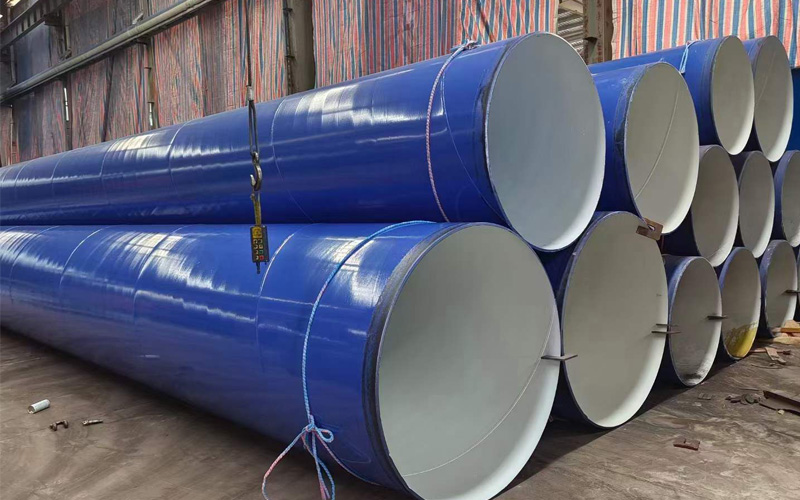
Tube d'acier FBE : l'armure technologique de la ligne de défense de l'acier
I Dans les eaux glacées du pipeline de la mer de Norvège, une section de tube en acier au carbone revêtu FBE est en service depuis 25...