





Selecting the right external coating can have a major impact on pipeline lifespan, maintenance requirements, and project costs. Among the most widely specified systems, 3LPE and 3LPP coatings share a similar three-layer structure but perform differently under demanding operating conditions.
This guide compares their temperature resistance, mechanical performance, cost implications, and typical applications to help engineers and project owners choose the right option.
What Are 3LPE and 3LPP Coatings?
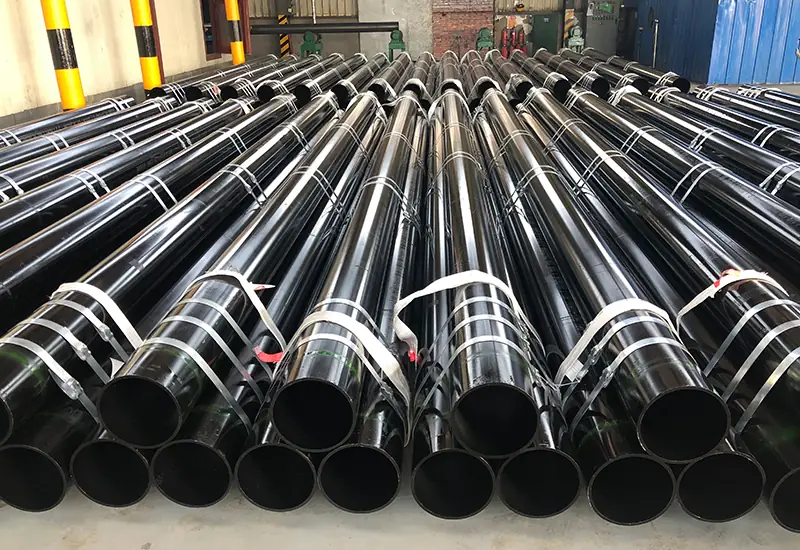
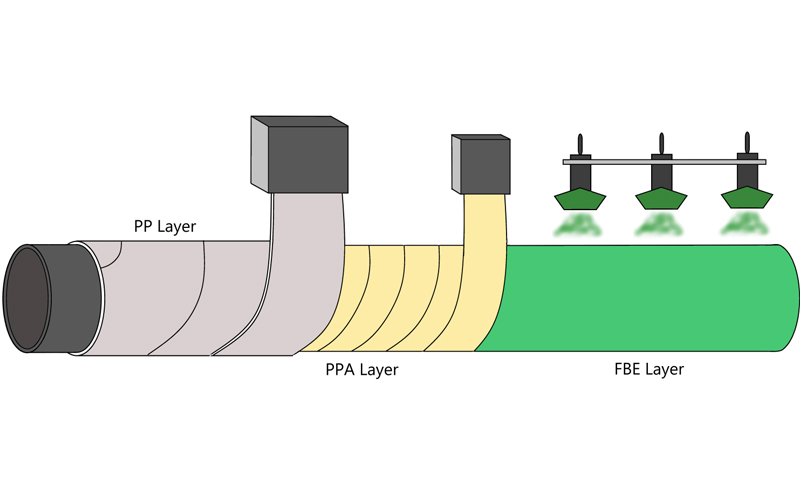
3LPE and 3LPP are three-layer anti-corrosion coating systems applied to steel pipes for buried, subsea, and harsh-environment applications. Both systems use a fusion-bonded epoxy (FBE) primer as the base layer, followed by a copolymer adhesive, but differ in the top layer material.
3LPE Coating Structure
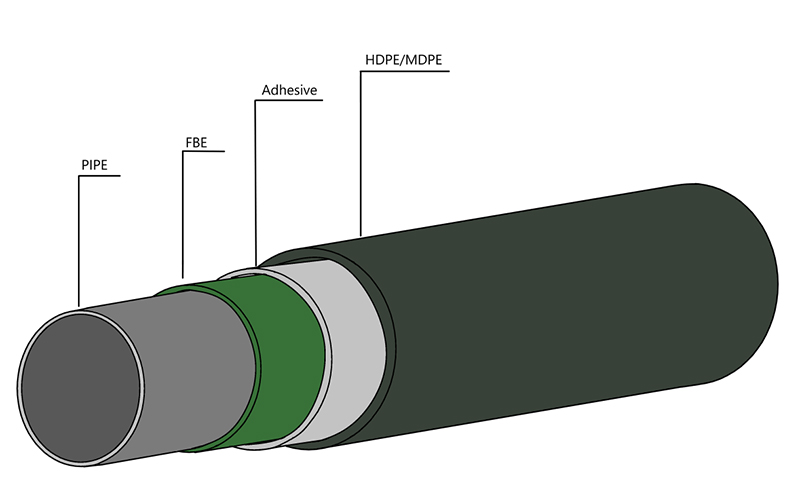
3LPE coated pipe consists of:
- Fusion-Bonded Epoxy (FBE) primer (≥80μm): Provides cathodic disbondment resistance and adhesion to the steel surface.
- Copolymer adhesive layer (170–250μm): Bonds the FBE to the outer polyethylene layer.
- High-Density Polyethylene (HDPE) topcoat (1.5–3.0mm): Offers mechanical protection, impact resistance, and a moisture barrier.
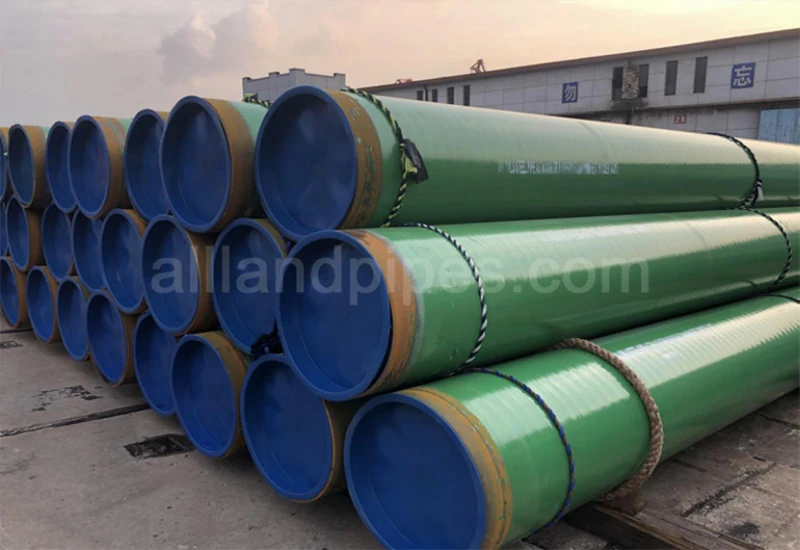
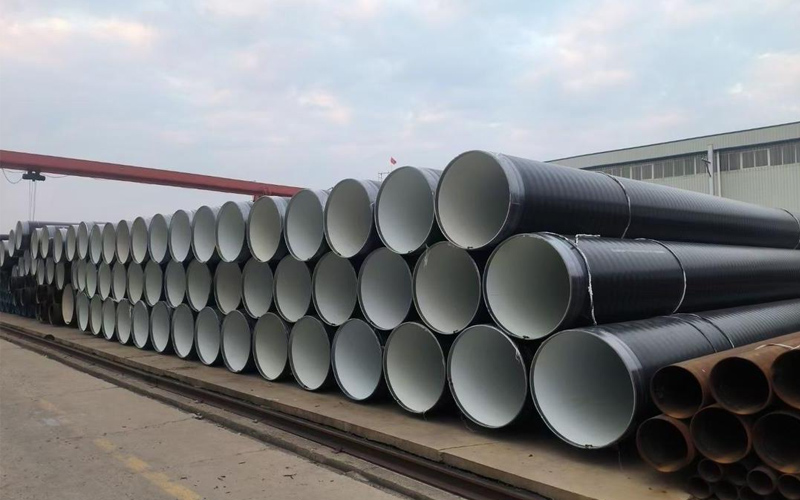
3LPE coating is black as standard and operates in a temperature range of -40°C to 80°C. It is widely used for onshore and offshore pipelines where moderate temperatures and cost efficiency are priorities.
3LPP Coating Structure
3LPP coated steel pipe uses the same three-layer principle but replaces the polyethylene top layer with polypropylene (PP). The structure is:
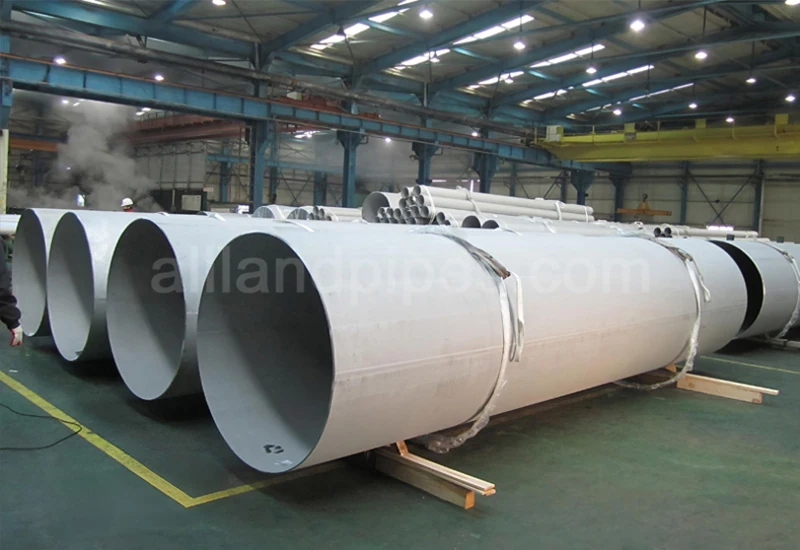
- FBE primer – same as 3LPE.
- Copolymer adhesive – specially formulated for polypropylene bonding.
- Polypropylene top layer (2–4mm) – provides superior mechanical strength, abrasion resistance, and high-temperature stability.
3LPP coating is typically yellow or custom colored and operates in a temperature range of -40°C to 140°C, making it suitable for high-temperature applications such as steam lines and thermal oil transmission.
Applicable Standards for 3LPE and 3LPP Coatings
Standards for 3LPE Coatings
According to the provided documentation, 3LPE coated pipes comply with:
Standards for 3LPP Coatings
3LPP coated pipes follow:
- ISO 21809-1
- DIN 30678
- NACE RP0185
These international certifications ensure that both coating types meet rigorous requirements for oil and gas transmission, water infrastructure, and offshore pipelines.
3LPP vs. 3LPE: Key Differences
Quick Comparison Table
| Feature | 3LPE Coating | 3LPP Coating |
| Top Layer Material | Polyethylene (PE) | Polypropylene (PP) |
| Coating Color | Black (standard) | Yellow / Custom |
| Temperature Range | -40°C to 80°C | -40°C to 140°C |
| Abrasion Resistance | Good | Superior |
| Chemical Resistance | Moderate | Superior |
| Cathodic Compatibility | Good | Excellent |
Operating Temperature Range
The most critical difference is operating temperature. 3LPE coating is rated up to 80°C, while 3LPP coating can withstand 140°C continuously. For pipelines carrying hot crude, steam, or thermal fluids, 3LPP is the only viable option. For ambient or moderately warm fluids, 3LPE is sufficient.
Mechanical Protection and Abrasion Resistance
3LPP offers superior abrasion resistance compared to 3LPE’s “good” rating. This makes 3LPP the preferred choice for:
- Horizontal directional drilling (HDD)
- Pipe jacking through rocky ground
- Subsea pipelines subject to dragging or impact
- Offshore platform pile legs and dock pile pipes
- The polypropylene top layer is tougher and more resistant to mechanical damage during transportation, installation, and backfilling.
Chemical Resistance and Harsh Environments
3LPP has superior chemical resistance while 3LPE is rated only “moderate.” For pipelines exposed to high salinity, acidic soil, marshland, or aggressive industrial chemicals, 3LPP provides better long-term protection. 3LPE remains adequate for most onshore water and gas pipelines with neutral soil conditions.
Cost Considerations
3LPE is generally more economical than 3LPP for equivalent diameters. The polyethylene raw material and processing costs are lower. However, the total lifecycle cost must consider operating temperature, maintenance intervals, and replacement risk. For high-temperature or highly corrosive services, the higher upfront cost of 3LPP is justified by extended service life (30–50 years) and near-zero maintenance.
How to Choose Between 3LPE and 3LPP Coating
Although 3LPE and 3LPP share a similar three-layer coating structure, the right choice depends largely on the operating conditions of the pipeline rather than the coating system itself.
In practice, engineers typically evaluate three key factors when selecting between 3LPE and 3LPP: operating temperature, mechanical stress during installation and service, and the severity of the surrounding environment.
Operating Temperature
Operating temperature is often the first consideration when comparing 3LPE and 3LPP coatings.
For water transmission lines, natural gas pipelines, and other systems operating at relatively low temperatures, 3LPE generally provides sufficient corrosion protection while maintaining lower coating costs. Its proven performance and cost-effectiveness make it a common choice for many onshore pipeline projects.
However, when operating temperatures approach or exceed 80°C, polypropylene-based coatings become a more reliable option. This is why 3LPP is frequently specified for steam injection systems, geothermal projects, thermal oil transportation, and other high-temperature applications where long-term thermal stability is critical.
Mechanical Stress
Installation conditions can be just as important as operating conditions.
Projects involving horizontal directional drilling (HDD), pipe jacking, rocky terrain, or offshore installation may expose the coating to significant abrasion and impact before the pipeline is even put into service. In these situations, coating durability becomes a key consideration.
Because polypropylene offers greater toughness and abrasion resistance than polyethylene, 3LPP can help reduce the risk of coating damage during transportation, installation, and backfilling operations. For projects with demanding installation conditions, this additional mechanical protection may contribute to a longer service life and lower maintenance requirements.
Environmental Conditions
The surrounding environment should also be considered during coating selection.
Pipelines installed in highly saline soils, coastal regions, chemical processing facilities, or other aggressive environments are often exposed to conditions that accelerate coating degradation over time. In these cases, resistance to chemical attack becomes an important factor in ensuring long-term pipeline integrity.
While 3LPE performs well in many standard operating environments, 3LPP may provide a greater safety margin where prolonged exposure to harsh chemicals, high salinity, or other corrosive conditions is expected.
Making the Right Choice
In most cases, the choice between 3LPE and 3LPP is not about selecting the “best” coating, but selecting the coating that best matches the service conditions of the pipeline.
Projects operating at moderate temperatures and in relatively stable environments can often achieve excellent long-term performance with 3LPE. Where elevated temperatures, severe mechanical stress, or aggressive environmental conditions are involved, the additional performance advantages of 3LPP may justify the higher initial investment.
Typical Applications of 3LPE and 3LPP Coated Steel Pipes
Oil and Gas Transmission
Both coatings are widely used. 3LPE is common for onshore trunk lines, branch lines, and gathering pipelines. 3LPP is preferred for subsea pipelines, high-temperature crude lines, and enhanced oil recovery projects where steam injection is used.
Water Infrastructure Projects
3LPE coated pipes are standard for large-diameter water diversion projects, seawater desalination plant inlet/outlet lines, and municipal water supply mains. For elevated temperatures or highly corrosive water (e.g., chemical plant wastewater), 3LPP offers longer life.
Offshore and Industrial Applications
Offshore pipelines, platform risers, and jacket pile legs frequently specify 3LPP because of its superior abrasion and chemical resistance. Industrial applications include:
- Power plant circulating water and demineralized water lines
- Chemical plant process pipelines for corrosive media
- Mining slurry and tailings pipelines
- Geothermal well casings
FAQ
Q1: Is 3LPP Better Than 3LPE?
A: “Better” depends on the service condition. For temperatures up to 80°C and non-aggressive soils, 3LPE is cost-effective and fully adequate. For temperatures above 80°C, high abrasion, or severe chemical exposure, 3LPP is superior. The specification table clearly shows 3LPP outperforming 3LPE in abrasion resistance, chemical resistance, and temperature range.
Q2: Can 3LPP and 3LPE Be Applied to SSAW, LSAW, and ERW Pipes?
A: Yes. The provided coating standards (ISO 21809-1 covers both 3LPE and 3LPP) apply to steel pipes regardless of manufacturing method. Both coatings can be applied to LSAW steel pipe, SSAW steel pipe, and ERW pipe, provided the base pipe meets the required dimensional tolerances and surface preparation (blast cleaning to Sa 2.5).
Q3: What Is the Main Reason to Upgrade from 3LPE to 3LPP?
A: The main reason is temperature. If a pipeline operating temperature is expected to exceed 80°C, 3LPE’s polyethylene top layer may soften or lose adhesion. 3LPP’s polypropylene top layer remains stable up to 140°C. The second reason is mechanical damage risk – 3LPP’s superior abrasion resistance makes it the safer choice for HDD, rock trenches, and subsea installations.
Conclusion
Choosing between 3LPE coated pipe and 3LPP steel pipe comes down to operating temperature, mechanical demands, and chemical exposure. For moderate temperatures and cost-sensitive projects, 3LPE is the proven workhorse of the pipeline industry. For high-temperature, high-abrasion, or highly corrosive environments, 3LPP delivers superior long-term reliability.
Both coatings meet ISO, DIN, and CSA standards, and can be applied to LSAW, SSAW, and ERW pipes in diameters from 60mm to 3000mm. When in doubt, consult your geotechnical and process conditions – the coating choice directly impacts pipeline life, maintenance frequency, and project lifecycle cost. For critical offshore, thermal, or chemical applications, 3LPP is often the upgrade that pays for itself over decades of service.

ASTM A53 vs. API 5L: A Guide to Selection and Application
In the field of industrial piping, ASTM A53 and API 5L are two key standards that are widely used, but have very different positions. ASTM...

Introduction:Technology differences determine success or failure, and selection needs to be “precise”
In oil and gas transmission, municipal infrastructure and other major projects, the reasonable choice of steel pipe welding process directly affects the project...
Steel Density Analysis: Core Differences between Mild and Medium Carbon Steels and Industrial Applications
The density of steel is one of the key parameters that determine its physical properties and industrial applications. Theoretical state of steel density...
3LPE coated steel pipe: a solid barrier in the field of industrial corrosion protection
In the harsh environment of oil and gas, chemical industry, urban pipe network, etc., the long-term reliability and corrosion resistance of pipeline system...
3LPP coated pipe: anti-corrosion guard in high temperature and high pressure environment
In some challenging special environments such as deep-sea oil and gas exploration and high-temperature crude oil transportation, traditional anti-corrosion coatings face significant challenges,...
FBE steel pipe: the technological armor of the steel defense line
I In the icy waters beneath the Norwegian Sea pipeline, a section of FBE Lined Carbon Steel Pipe has been in service for 25...