



Although DIN 2458 has been replaced by EN standards, it is still highly related to the maintenance of old projects and engineering drawings across non-European regions. For engineers, procurement experts and project managers who deal with legacy infrastructure or international projects, a clear understanding of DIN 2458 is very important to ensure accurate selection of welded steel pipe and meet the design requirements. This comprehensive guide decomposes all the key aspects of DIN 2458, focusing on size, weights, applicable manufacturing technology and practical applications involving longitudinal submerged arc welding pipes and SSAW pipes.
What is the German Industrial Standard 2458?
DIN 2458 is a German standard, which specifies the size and regular quality of welded steel pipes per unit length. This is a pure size standard, and it is usually used in combination with technical delivery conditions such as DIN 1626 (general use) or DIN 17172 (pipelines).
Main points
- Scope: only the specified size and weights; Chemical or mechanical properties can not be adjusted.
- Process: Suitable for all welding processes, including LSAW, SSAW, and Electric Resistance Welding (ERW).
- Materials: usually used in combination with St 37.2 steel grade (according to DIN 1626).
- Status: It has been replaced by EN 10220, but it is still in maintenance and use in specific markets.
- Compatibility: the size specifications conforms to modern EN 10220 standards to a great extent.
Understanding DIN 2458: Size versus material
One of the most common misunderstandings among engineers is to confuse the scope of DIN 2458 with material standards. It is essential to clarify this difference to avoid purchasing mistakes.
DIN 2458 acts like a “menu” for welded steel pipes—it only lists dimensional parameters, such as outer diameter and wall thickness. On the contrary, standards such as DIN 1626 or DIN 1628 are the “formulas” that define the chemical composition and mechanical properties of pipeline material.
For example, a drawing labeled “Pipe DIN 2458 323.9 x 6.3 St 37.2” uses DIN 2458 to determine the size of the pipe (323.9 mm external diameter and 6.3 mm wall thickness) and DIN 1626 to specify the material (St 37.2 carbon steel).
The separation of size and material standards means that DIN 2458 can be matched with different material grades according to the performance requirements of the project. However, St 37.2 is still the most widely used option in DIN 2458-compliant applications.
Dimensions and Weights Table (The Core Data)
The core of DIN 2458 is its detailed specifications for the size and theoretical weight per unit length of welded steel pipe. The standard defines three series of outer diameter: series 1, series 2 and series 3, and each series is suitable for different application.
The following table lists the typical sizes and weights for welded steel pipes conforming to DIN 2458 standard, as well as their commonly used equivalent tables which are easy to refer to in international projects.
| Outer Diameter (mm) | Wall Thickness (mm) | Theoretical Weight (kg/m) | Common Schedule Equivalent |
| 114.3 | 4.0 | 10.9 | Sch 10 |
| 219.1 | 6.3 | 33.1 | Sch 20 |
| 323.9 | 7.1 | 55.5 | STD |
| 406.4 | 8.0 | 79.3 | STD |
| 610.0 | 9.5 | 141.0 | STD |
| 813.0 | 12.5 | 249.8 | XS |
It is worth noting that the theoretical weights provided in DIN 2458 is calculated according to the density of standard material, regardless of the slight variations of manufacturing tolerances. For accurate project calculations, it is always verified by the actual test data of the pipeline manufacturer.
Manufacturing technology: LSAW and SSAW
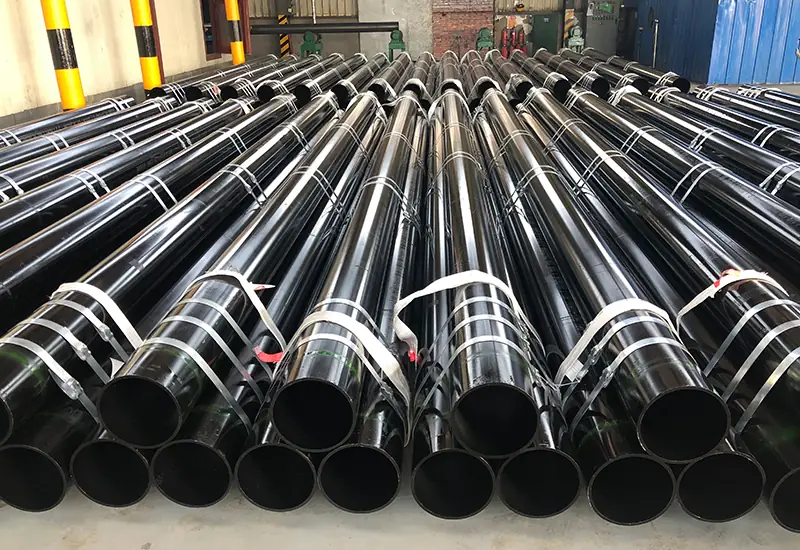
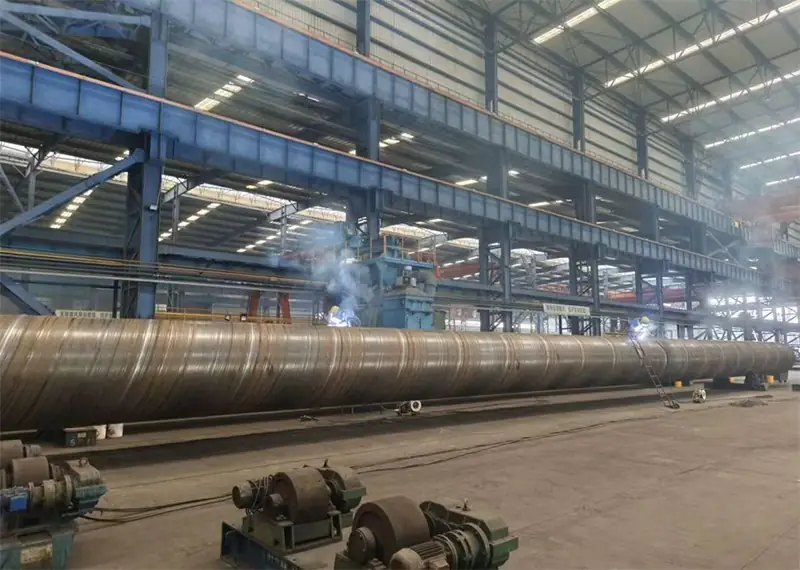
DIN 2458 is especially suitable for large-diameter welded steel pipes, which are usually produced by two key technologies: longitudinal submerged arc welding pipe (longitudinal submerged arc welding) and SSAW pipe (spiral submerged arc welding).
Longitudinal submerged arc welded pipe is made by bending a steel plate into a cylinder and welding the longitudinal seam. Because of its excellent structural integrity and uniform wall thickness, this technology is very suitable for high-pressure applications, such as oil and gas pipelines. Longitudinal submerged arc welded pipes conforming to DIN 2458 are usually produced according to DIN 1626, and these two types of steel pipes stipulate higher mechanical performance requirements.
On the other hand, the Spiral Welded pipe is made by spirally winding a steel strip and welding the seam. It provides superior cost-effectiveness for large diameter pipelines used in water supply, sewage treatment and piling engineering. The spiral welding technology has greater flexibility in pipe length and diameter, which makes SSAW pipe a popular choice for infrastructure projects with different size requirements.
All land specializes in manufacturing both LSAW Pipe and SSAW Pipe that meet the strict dimensional tolerances of DIN 2458. Our production technology ensures consistent quality, making our pipeline suitable for both traditional maintenance projects and new installations projects that meet German standard.
The Transition to EN 10220
As part of European standard harmonization, DIN 2458 has been formally replaced by EN 10220. This transition was aimed at unifying dimensional specifications for both seamless and welded steel pipes across Europe, simplifying international trade and project collaboration.
The good news is that DIN 2458 and EN 10220 are largely compatible in terms of dimensional parameters. EN 10220 incorporates the core size specifications of DIN 2458 while expanding coverage to include additional pipe types and sizes. This compatibility means that EN 10220 pipes can often be used as direct replacements for DIN 2458 pipes in most applications.
However, it is very important to carefully check the project drawings and specifications before replacing them. In some cases, old projects may have specific requirements related to DIN 2458, especially in non-European areas, and this standard still has legal or contractual validity.
DIN 2458 frequently asked Questions
Q 1: What is the difference between DIN 2448 and DIN 2458?
Answer: DIN 2448 is the size standard for seamless steel pipes, while DIN 2458 is specially suitable for welded steel pipes. These two standards share similar structural logic, but they are suitable for different pipeline manufacturing processes.
Q 2: what is the material of St 37.2?
A: St 37.2 is a general-purpose carbon steel grade specified in DIN 1626. It is equivalent to the modern EN standard s 235 JR grade, and is the most commonly used material for welded steel pipes in accordance with DIN 2458 because of its good weldability and mechanical properties.
Q 3: Can I use EN 10220 tube instead of DIN 2458 tube?
A: Yes, in most cases, EN 10220 pipes completely conforms to DIN 2458 pipes in size, and can be used as direct substitute. Be sure to check the specifications of the project to ensure that there are no special requirements related to DIN 2458.
Q 4: Is DIN 2458 applicable to both LSAW and SSAW pipes?
A: Yes, DIN 2458 is a process-agnostic dimensional standard that applies to welded steel pipes produced by various welding processes, including LSAW, SSAW, and ERW.
Q 5: If DIN 2458 has been replaced, why is it still in use?
A: DIN 2458 remains in use for maintaining older infrastructure projects and in non-European regions where the standard is still referenced in engineering drawings, contracts, or local regulations.
Conclusions and call for action
Understanding DIN 2458 is very important for anyone who is engaged in traditional infrastructure, international engineering projects or welded steel pipes in non-European markets. Although this standard has been replaced by EN 10220, its dimensions and specifications are still relevant to practical applications, especially for longitudinal submerged arc welding pipes and SSAW pipes used in maintenance and professional projects.
By paying attention to its core role as a size standard, understanding its compatibility with modern EN standards and understanding its application to different welding processes, you can ensure accurate pipeline selection and project compliance.Do you need welded pipes manufactured according to DIN 2458 size? All land specializes in the production of LSAW and SSAW pipes with St 37.2 and St 52.3 grades, which fully meet DIN 2458 tolerances standards. Please contact our team immediately to discuss your project needs and get a customized quotation.

ASTM A53 vs. API 5L: A Guide to Selection and Application
In the field of industrial piping, ASTM A53 and API 5L are two key standards that are widely used, but have very different positions. ASTM...

Introduction:Technology differences determine success or failure, and selection needs to be “precise”
In oil and gas transmission, municipal infrastructure and other major projects, the reasonable choice of steel pipe welding process directly affects the project...
Steel Density Analysis: Core Differences between Mild and Medium Carbon Steels and Industrial Applications
The density of steel is one of the key parameters that determine its physical properties and industrial applications. Theoretical state of steel density...
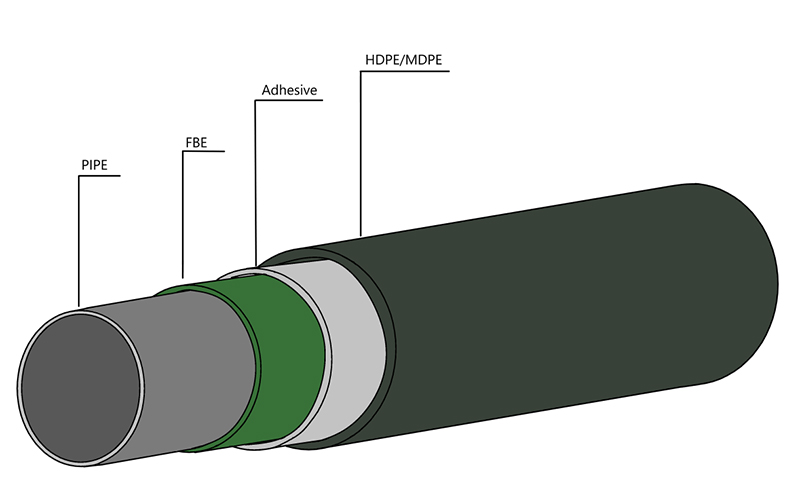
3LPE coated steel pipe: a solid barrier in the field of industrial corrosion protection
In the harsh environment of oil and gas, chemical industry, urban pipe network, etc., the long-term reliability and corrosion resistance of pipeline system...
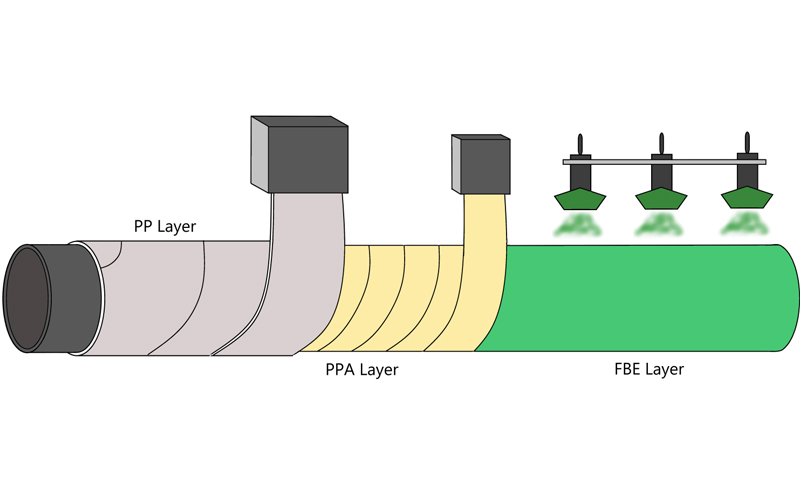
3LPP coated pipe: anti-corrosion guard in high temperature and high pressure environment
In some challenging special environments such as deep-sea oil and gas exploration and high-temperature crude oil transportation, traditional anti-corrosion coatings face significant challenges,...
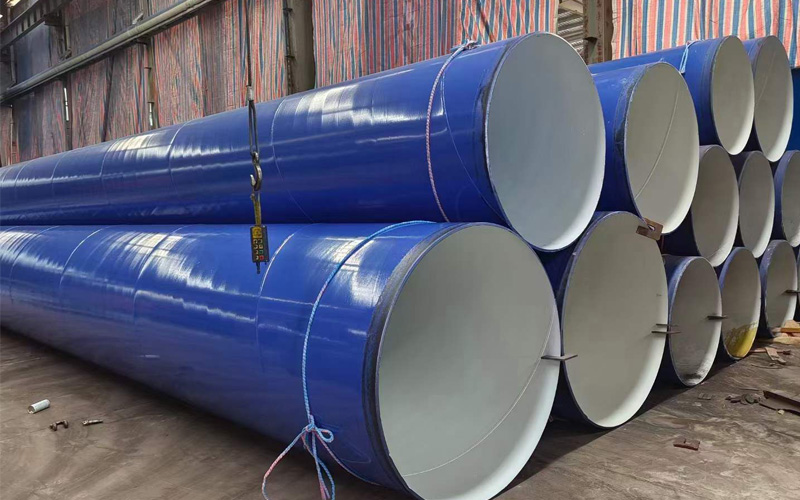
FBE steel pipe: the technological armor of the steel defense line
I In the icy waters beneath the Norwegian Sea pipeline, a section of FBE Lined Carbon Steel Pipe has been in service for 25...