







What is a Sour Service Pipeline and How to Select Its Material?
A sour service pipeline refers to a steel line pipe transporting oil or natural gas that contains significant amounts of hydrogen sulfide (H₂S), which poses severe risks of Hydrogen-Induced Cracking (HIC) and Sulfide Stress Corrosion Cracking (SSCC). According to NACE MR0175 / ISO 15156, material selection requires carbon steel with restricted chemical composition (typically Sulfur ≤ 0.002% and Phosphorus ≤ 0.010%), refined grain structure, and rigorous PSL2 qualification including HIC/SSCC testing.
The presence of wet H₂S in produced hydrocarbons creates one of the most demanding service environments for pipeline infrastructure. Hydrogen sulfide corrosion manifests primarily through three mechanisms: hydrogen-induced cracking (HIC), sulfide stress corrosion cracking (SSCC), and electrochemical weight loss corrosion.
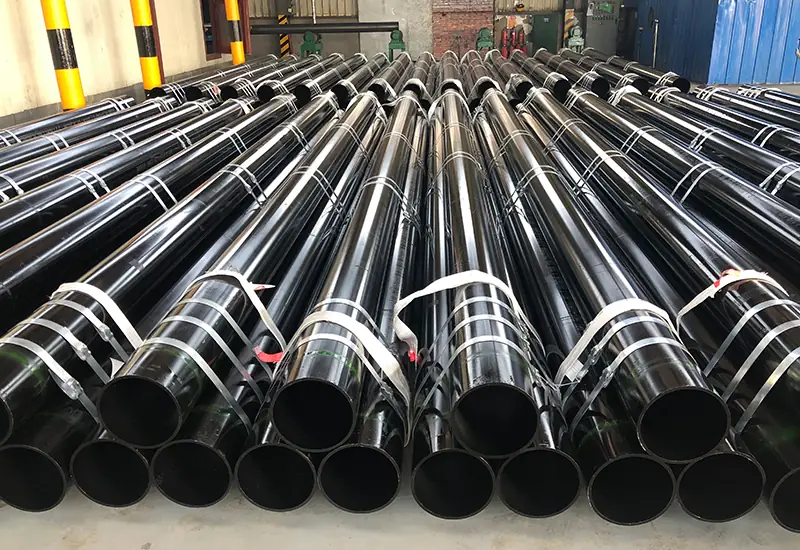
Selecting the appropriate material for sour service begins with sourcing from a verified API 5L PSL2 line pipe supplier. For sour service and many offshore applications, API 5L PSL2 is generally required. High-strength grades such as X60 and above are commonly specified as PSL2 when enhanced toughness and sour service qualification are needed.
Unlike PSL1, which permits broader chemical tolerances, PSL2 imposes stringent limits on harmful elements and requires compulsory fracture toughness testing. This is not merely a documentation requirement—it is the foundational step in ensuring pipeline integrity throughout its operational life, as explicitly stated in API 5L (46th Edition) and reinforced by NACE MR0175/ISO 15156 for sour environments.
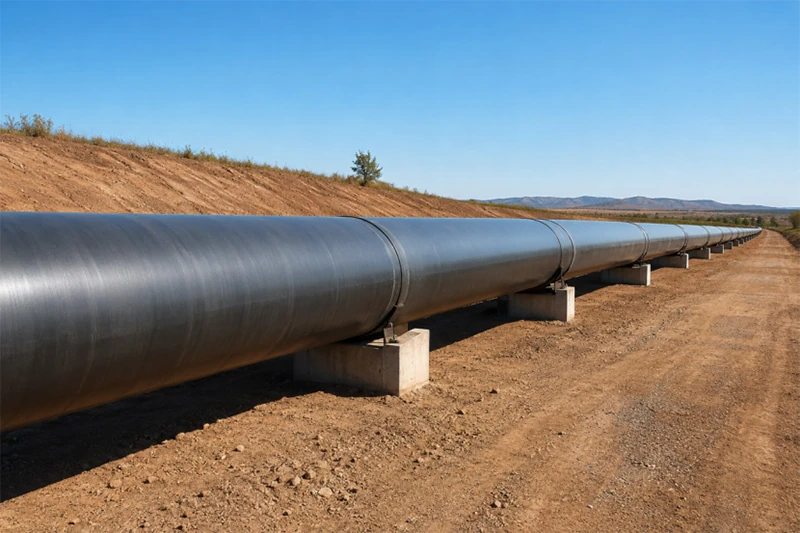
Technical Comparison: Standard vs. Sour Service Line Pipes
The differences between standard line pipes and those qualified for sour service are substantial and measurable. The table below summarizes the critical distinctions:
| Requirement Parameter | Standard Line Pipe (API 5L PSL1) | Sour Service Line Pipe (API 5L PSL2 + NACE) |
| Sulfur (S) Content | ≤ 0.030% | ≤ 0.002% (Ultra-low S) |
| Phosphorus (P) Content | ≤ 0.030% | ≤ 0.010% |
| Cracking Risks Covered | General Corrosion, Mechanical Wear | Hydrogen-Induced Cracking (HIC) & Sulfide Stress Corrosion Cracking (SSCC) |
| Testing Standards | Hydrostatic Test, Visual, NDT | HIC Testing (NACE TM0284) + SSCC Testing (NACE TM0177) |
PSL2 represents a higher quality level with significantly more stringent requirements for testing, chemical composition, and mechanical properties. While both PSL1 and PSL2 must meet the basic requirements of API 5L, PSL2 introduces a series of tighter controls that make it essential for sour service, high-pressure, and offshore pipelines. The ultra-low sulfur and phosphorus limits are particularly critical, as these elements form non-metallic inclusions that serve as initiation sites for HIC.
Metallurgical Controls: Preventing HIC and SSCC From Within
Structural Vulnerabilities in Standard Steels
Standard carbon steels contain elongated manganese sulfide (MnS) inclusions that act as preferential sites for hydrogen accumulation. When atomic hydrogen (H+) generated by wet H₂S corrosion penetrates the steel lattice, it diffuses to these inclusion sites and recombines into molecular hydrogen. The resulting pressure buildup exceeds the material’s internal cohesion, initiating micro-cracks that can propagate under stress. This mechanism is particularly dangerous because it occurs without external warning signs.
Refined Steelmaking and Inclusion Shape Control
The solution lies in advanced steelmaking practices. Calcium treatment for inclusion shape control converts elongated MnS inclusions into harmless, hard, spherical shapes, effectively eliminating the micro-voids where hydrogen gas can accumulate and build pressure.
This metallurgical refinement is essential for compliance with NACE MR0175/ISO 15156, which serves as the ultimate guideline for material selection in acidic environments. The standard specifies not only chemical composition limits but also mechanical properties, heat treatment processes, and material applicability under specific H₂S partial pressure, pH value, and chloride content conditions.
For high-grade steels (X60 and above), the technical conditions apply also to PSL 2. The combination of ultra-low sulfur (≤ 0.002%), refined grain structure, and inclusion shape control creates a steel that resists hydrogen penetration and crack initiation—a fundamental requirement for any sour service API 5L steel pipe.
Wall Thickness and Structural Weight Calculations for High–Pressure Lines
Stress Limitation to Suppress SSCC
SSCC is driven by tensile stress. When a pipeline operates under high pressure, the hoop stress in the pipe wall must be maintained within limits prescribed by NACE standards to prevent stress-assisted cracking. For high-pressure sour service applications, this typically requires increased wall thickness beyond what would be necessary for pressure containment alone. The thicker wall reduces the operating stress level, providing an additional safety margin against SSCC initiation.
Engineering Calculation Using Carbon Steel Density
Pipeline design engineers calculate the nominal weight of thick-walled pipelines using the standard density of carbon steel (approximately 7,850 kg/m³). The fundamental calculation is:
Nominal Weight (kg/m) = π × (D − t) × t × ρ_steel
Where D is the outside diameter, t is the wall thickness, and ρ_steel is the density of carbon steel.
To illustrate: consider a 24-inch (610 mm) outside diameter pipeline with a wall thickness of 20 mm for standard service. If sour service requirements necessitate increasing the wall thickness to 25 mm to reduce hoop stress, the weight per meter increases from approximately 292 kg/m to approximately 363 kg/m—a 24% increase in structural tonnage.
This example demonstrates why higher design pressure and sour service requirements directly translate to higher structural tonnage and, consequently, higher material and transportation costs. Engineers must balance stress limitations with economic considerations while never compromising safety margins required for H₂S environments, as recommended in the design guidelines of API RP 1111 and NACE SP0102.
LSAW Manufacturing for Critical Gas Transport Infrastructure
Why Are Longitudinal Welded Pipes (LSAW) Preferred for Sour Service?
High-pressure offshore and onshore gas transmission requires uniform mechanical properties. Longitudinal Submerged Arc Welded (LSAW) pipes manufactured using JCOE technology offer several advantages for sour service applications. The mechanical cold expansion process used in LSAW manufacturing helps reduce and redistribute residual welding stresses—a critical trigger for SSCC. By expanding the pipe after welding, residual stresses are redistributed and reduced, minimizing the tensile stress that drives stress corrosion cracking.
Factory–Level Process Quality
As an experienced high pressure pipe manufacturer, Allland ensures that LSAW pipe undergoes rigorous quality control throughout the manufacturing process. The production sequence includes edge milling, JCOE cold forming, comprehensive geometric monitoring, and multiple non-destructive testing stages.
This systematic approach prevents local stress concentration that could otherwise serve as initiation sites for HIC or SSCC. The company’s manufacturing complex spans 220,000 m², featuring two JCOE production lines and five anti-corrosion coating lines, with an annual production capacity of approximately 200,000 tons of premium steel pipes and 4 million m² of protective coatings. This scale of operation enables consistent quality control—essential for sour service pipe production where batch-to-batch consistency is critical.
External Barrier Coating Systems for Offshore and Onshore Pipelines
Mitigating External Soil & Subsea Corrosion
While internal metallurgy manages H₂S corrosion from the transported fluid, external environments require a robust physical barrier to prevent general corrosion and cathodic disbondment. Pipelines buried in soil or laid on the seabed face aggressive external corrosion from moisture, chlorides, and stray currents. A compromised external coating can lead to localized corrosion that, while not directly related to H₂S, can create stress concentration points that exacerbate SSCC susceptibility.
The 3–Layer Polyethylene (3LPE) Protection Layer
The 3LPE-coated pipe offers a proven solution for external corrosion protection in demanding environments. The multi-layer composition provides comprehensive protection:
- Epoxy Primer Layer: Provides excellent adhesion to the steel surface and offers superior chemical resistance against soil-borne and seawater-borne corrosives.
- Copolymer Adhesive: Bridges the epoxy primer and the polyethylene topcoat, ensuring the system acts as an integrated barrier rather than separate layers.
- Polyethylene Topcoat: Delivers high mechanical resistance to rocky terrains, subsea currents, and installation-related damage.
This coating system, applied in accordance with standards such as ISO 21809-2 and NACE RP0394, ensures that the external environment does not compromise the pipeline’s structural integrity over its design life, which can exceed 30 years under harsh conditions.
Comprehensive Non–Destructive Testing (NDT) & Laboratory Validation
Laboratory Crack Testing
Qualifying steel for sour service requires rigorous laboratory testing beyond standard mechanical property verification. HIC testing under NACE TM0284 involves 96-hour exposure to Solution A or B, with assessment of Crack Length Ratio (CLR), Crack Thickness Ratio (CTR), and Crack Sensitivity Ratio (CSR). Typical acceptance criteria for sour service pipes require CLR ≤ 15%, CTR ≤ 5%, and CSR ≤ 2%.
SSCC testing under NACE TM0177 evaluates the material’s resistance to stress corrosion cracking in H₂S environments, typically using the four-point bend or tensile test methods. Both test protocols are explicitly referenced in API 5L PSL2 annexes for sour service grades, ensuring that every certified pipe has been validated against the most severe cracking mechanisms.
On–Line NDT QA Flow
The inspection and testing sequence includes:
- Full–body Ultrasonic Testing (UT): Detects internal defects and ensures uniform wall thickness.
- Automated Weld Line Ultrasonic Testing (AUT): Provides comprehensive examination of the longitudinal weld seam.
- Wet Magnetic Particle Inspection (MPI): Examines pipe ends for surface-breaking defects.
- Hydrostatic Testing: Verifies ultimate pressure integrity before dispatch.
- X–ray Flaw Detection: Confirms weld quality through radiographic examination.
This multi-stage NDT protocol ensures that every length of pipe leaving the manufacturing facility meets the stringent quality requirements for sour service application. The 100% inspection coverage—far beyond industry sampling standards—provides the assurance that project engineers and operators require for critical H₂S service.
Frequently Asked Questions
Q: What is the difference between API 5L PSL1 and PSL2 for sour service?
A: PSL2 imposes significantly stricter limits on harmful elements (Sulfur ≤ 0.002% vs. 0.030% for PSL1, Phosphorus ≤ 0.010% vs. 0.030%), requires mandatory fracture toughness testing, and demands rigorous HIC and SSCC qualification. PSL1 is not suitable for sour service applications, as per the explicit requirements of API 5L and NACE MR0175/ISO 15156.
Q: Why is calcium treatment important for sour service steel pipes?
A: Calcium treatment converts elongated manganese sulfide (MnS) inclusions—which serve as initiation sites for hydrogen-induced cracking—into harmless, hard, spherical shapes. This eliminates the micro-voids where hydrogen gas can accumulate and build pressure, significantly improving HIC resistance.
Q: Can standard carbon steel pipes be used in sour service if coated internally?
A: No. Internal coatings provide a barrier but cannot compensate for the metallurgical vulnerabilities of standard steel. If the coating is damaged or disbonds, the underlying steel remains susceptible to HIC and SSCC. Material selection must be based on the steel’s intrinsic resistance to H₂S environments, as specified by NACE MR0175/ISO 15156.
Q: What testing is required to qualify a pipe for sour service?
A: Qualification requires HIC testing per NACE TM0284 (assessing CLR, CTR, and CSR), SSCC testing per NACE TM0177, and full compliance with API 5L PSL2 requirements including chemical composition verification, mechanical property testing, and 100% NDT inspection. These procedures are detailed in the respective NACE and API standards.
Q: How does wall thickness affect sour service pipeline performance?
A: Increased wall thickness reduces hoop stress under operating pressure, keeping tensile stress within NACE limits and reducing the driving force for SSCC. Engineers must calculate the required thickness based on both pressure containment and stress limitation requirements, using the density of carbon steel and the design pressure as per API RP 1111.
Conclusion
Effective management of H₂S corrosion in high-pressure transport ultimately depends on a fully traceable chain of decisions—from selecting a qualified supplier, applying ultra-low sulfur and phosphorus limits, and performing rigorous HIC/SSCC testing per NACE and API standards, to choosing LSAW forming for residual stress relief and 3LPE coating for external protection. At the center of this entire process lies the API 5L steel pipe, which must be produced with refined grain structure, validated through 100% NDT coverage, and documented with mill test certificates that demonstrate compliance with both chemical and mechanical requirements. While wall thickness and weight calculations influence project economics, and manufacturing choices affect stress states, none of these factors can substitute for the intrinsic material quality that only a properly specified and certified sour-service-grade steel pipe can provide. Therefore, operators and engineers are advised to prioritize verified material procurement channels and transparent, factory-level quality assurance systems.

ASTM A53 vs. API 5L: A Guide to Selection and Application
In the field of industrial piping, ASTM A53 and API 5L are two key standards that are widely used, but have very different positions. ASTM...

Introduction:Technology differences determine success or failure, and selection needs to be “precise”
In oil and gas transmission, municipal infrastructure and other major projects, the reasonable choice of steel pipe welding process directly affects the project...
Steel Density Analysis: Core Differences between Mild and Medium Carbon Steels and Industrial Applications
The density of steel is one of the key parameters that determine its physical properties and industrial applications. Theoretical state of steel density...
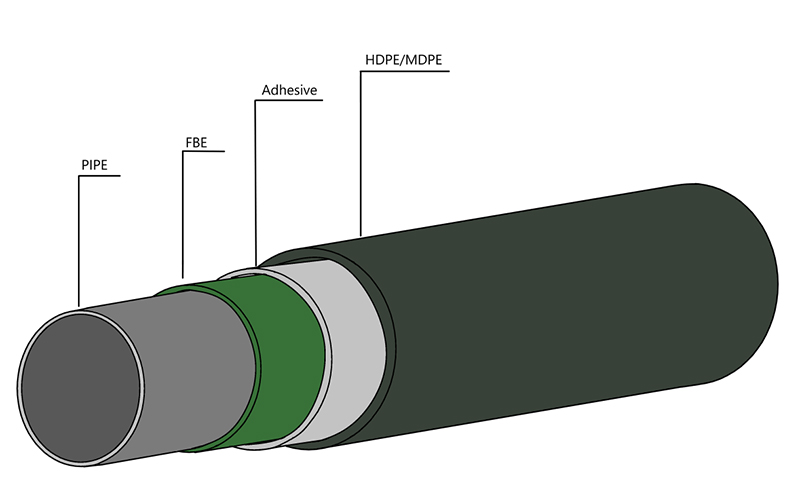
3LPE coated steel pipe: a solid barrier in the field of industrial corrosion protection
In the harsh environment of oil and gas, chemical industry, urban pipe network, etc., the long-term reliability and corrosion resistance of pipeline system...
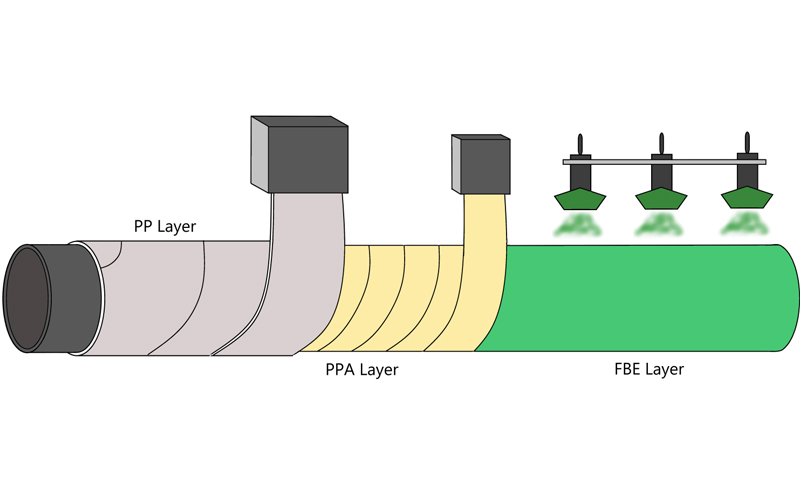
3LPP coated pipe: anti-corrosion guard in high temperature and high pressure environment
In some challenging special environments such as deep-sea oil and gas exploration and high-temperature crude oil transportation, traditional anti-corrosion coatings face significant challenges,...
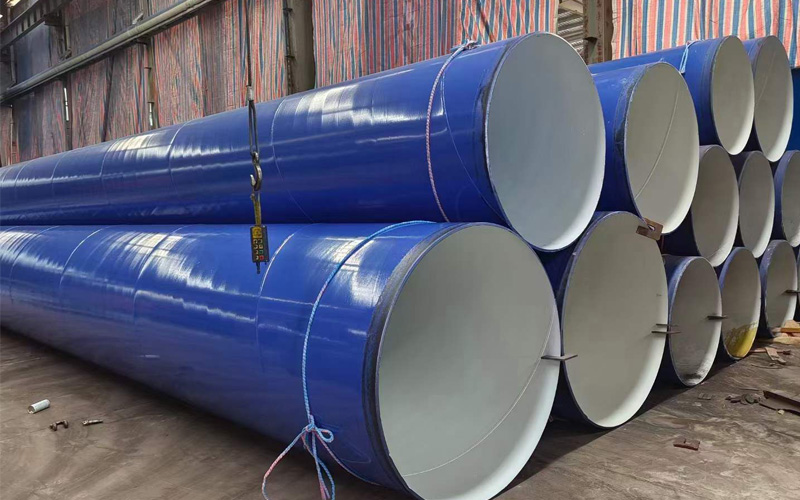
FBE steel pipe: the technological armor of the steel defense line
I In the icy waters beneath the Norwegian Sea pipeline, a section of FBE Lined Carbon Steel Pipe has been in service for 25...