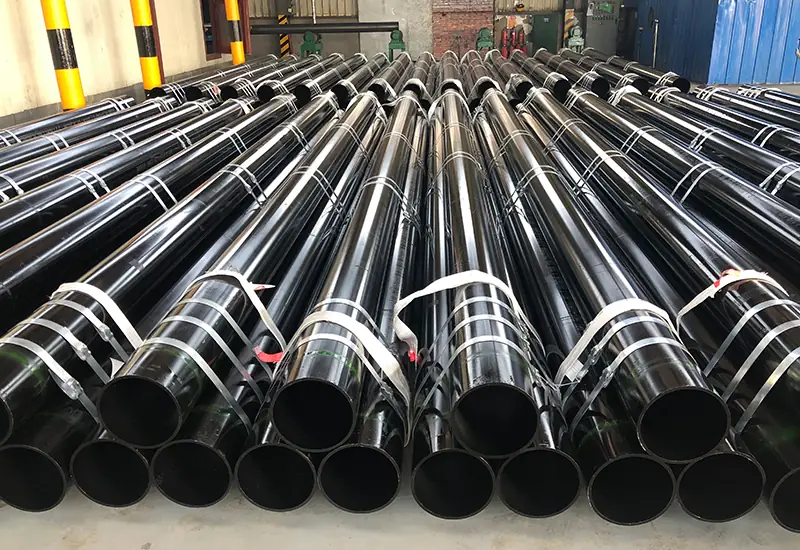
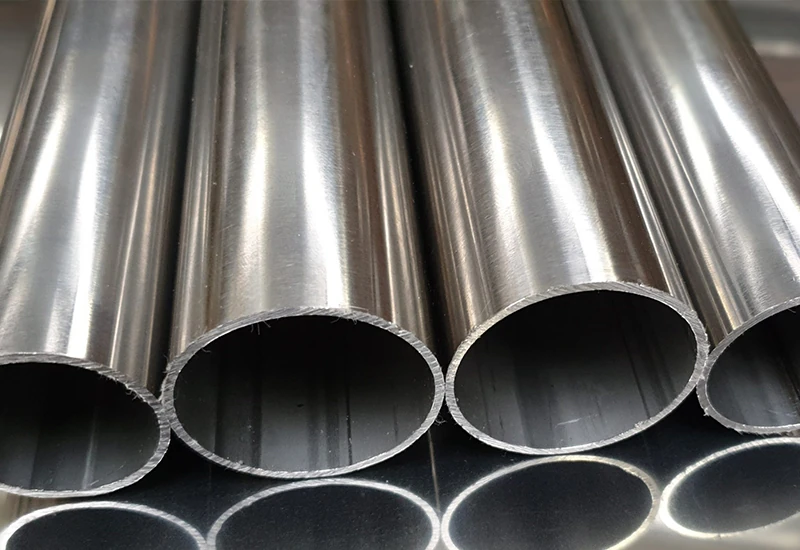
In the complex ecosystem of industrial piping, engineers and procurement managers often face a “Tower of Babel” situation. A project in Houston might reference ASME codes, the imported machinery from Germany specifies DIN standards, and the available stock in the warehouse is marked with ASTM specifications.
For high-pressure applications—such as oil refineries, power generation boilers, and chemical processing plants—this confusion is not just a headache; it is a safety risk. Mistaking a dimension standard for a material standard, or selecting a pipe with insufficient yield strength, can lead to catastrophic failures under pressure.
This comprehensive guide is designed to be your ultimate reference tool. We will decode the “Alphabet Soup” of international pipe standards, explain the critical differences between ASTM, ASME, and DIN, and provide a detailed cross-reference table to help you select the right materials for your high-pressure projects.
The “Big Three” Explained
Before diving into grades and numbers, we must clarify the fundamental roles of the three major organizations governing the steel pipe industry. They are not competitors; they are distinct layers of the safety ecosystem.
1. ASTM (American Society for Testing and Materials)
The “Recipe Book” ASTM standards define the Material. They tell you “what the pipe is made of.”
Scope: Chemical composition (how much Carbon, Manganese, Silicon), mechanical properties (Tensile strength, Yield strength), and manufacturing methods (Seamless vs. Welded).
Key Standard:ASTM A106 is the bible for high-temperature seamless carbon steel pipe.
2. ASME (American Society of Mechanical Engineers)
The “Rule Book” ASME codes define the Application. They tell you “how to use the pipe safely.”
Scope: Design rules, safety factors, installation guidelines, and pressure limits. ASME codes often adopt ASTM materials. When an ASTM material is approved for pressure vessel use by ASME, it gets an “S” prefix (e.g., ASTM A106 becomes ASME SA106).
Key Standard:ASME B31.3 (Process Piping) dictates the wall thickness required for a specific pressure and temperature.
3. DIN (Deutsches Institut für Normung) / EN (European Norms)
The “European Standard” DIN is the historic German standard, famous for its precision. However, in the last two decades, Europe has unified under EN (Euronorm) standards.
The Confusion: Many legacy blueprints and replacement parts still explicitly request old DIN numbers (like DIN 17175). Finding a modern equivalent requires understanding the DIN-to-EN transition.
Deep Dive into High-Pressure Material Standards
For high-pressure applications, generic “water pipe” standards (like ASTM A53) are insufficient. The industry relies on specific “Killed Carbon Steel” grades.
ASTM A106: The Industry Workhorse
ASTM A106 Grade B is the default choice for high-temperature, high-pressure service.
Manufacturing: It must be Seamless (SMLS).
Chemistry: It is “Killed Steel,” meaning it has been deoxidized with Silicon (min 0.10%) to ensure a uniform grain structure and prevent trapped gases. This makes it superior to A53 for high-stress environments.
Temperature: It can handle temperatures up to 750°F (400°C) without losing significant strength.
DIN 17175: The German Legend
Before the EN standards took over, DIN 17175 was the gold standard for seamless tubes of heat-resistant steels.
St35.8 vs. St45.8: These were the most common grades. “St” stands for Stahl (Steel), and the number represents the minimum tensile strength (in kg/mm²).
The Modern Replacement: Today, if you see DIN 17175 on a drawing, you should likely be buying EN 10216-2, specifically grade P235GH or P265GH.
The Engineer’s Cheat Sheet (Cross-Reference Table)
Note: While these materials are functionally equivalent for most applications, always verify specific chemical limits with your project engineer.
High-Pressure Carbon Steel Equivalents
Feature
ASTM (USA)
DIN (German Legacy)
EN (European Modern)
Standard Name
ASTM A106
DIN 17175
EN 10216-2
Material Type
Seamless Carbon Steel
Seamless Heat-Resistant Steel
Seamless Steel for Pressure
Grade (Medium Strength)
Grade B
St45.8
P265GH
Yield Strength (min)
240 MPa (35,000 psi)
255 MPa
265 MPa
Tensile Strength
415 – 585 MPa
410 – 530 MPa
410 – 570 MPa
Carbon Content (max)
0.30%
0.21%
0.20%
Typical Use
Refineries, Boilers
Power Plants (Legacy)
EU Pressure Vessels
High-Pressure Alloy Steel Equivalents (High Temp)
When temperatures exceed 400°C, carbon steel creeps and fails. We switch to Chrome-Moly alloy steels.
Common Name
ASTM / ASME
DIN Equivalent
EN Equivalent
1-1/4 Chrome
ASTM A335 P11
DIN 17175 13CrMo44
EN 10216-2 13CrMo4-5
2-1/4 Chrome
ASTM A335 P22
DIN 17175 10CrMo910
EN 10216-2 10CrMo9-10
9 Chrome (P91)
ASTM A335 P91
X10CrMoVNb9-1
EN 10216-2 X10CrMoVNb9-1
Critical Technical Differences
While the tables above show “equivalents,” they are not “identical.” Here are the subtle differences that rigorous engineers need to know.
1. Dimensional Tolerances
ASTM: Tends to be slightly more lenient on wall thickness variations. For example, A106 allows a wall thickness tolerance of -12.5%.
DIN/EN: Generally stricter. EN 10216-2 often requires tighter tolerances, which is why European pipes are sometimes preferred for precision automated welding systems.
2. Testing Requirements (NDT)
High pressure means high risk, so testing is non-negotiable.
Hydrostatic Test: Both ASTM and EN standards require every single pipe to be tested with water pressure to ensure no leaks.
Nondestructive Electric Test (NDT): ASTM A106 allows NDT (like Eddy Current or Ultrasonic) as an alternative to the Hydrostatic test. However, for critical applications (like API 5L PSL2 pipelines) in oil and gas, Ultrasonic Testing (UT) is often mandatory to detect internal laminations.
3. Impact Testing (Toughness)
ASTM A106: Does not require Charpy V-Notch impact testing by default (unless specifically ordered).
EN 10216-2: The “GH” in P265GH indicates that the material is designed for elevated temperatures, but European standards generally place a higher emphasis on impact toughness values at standard temperatures compared to basic ASTM specs.
Application Guide – Which Standard Should You Choose?
Scenario A: The Oil & Gas Refinery
Standard:ASME B31.3 / ASTM A106 The global oil and gas industry is dominated by American standards. If you are building a refinery in Saudi Arabia, Singapore, or Brazil, the design is almost certainly based on ASME B31.3. You need ASTM A106 Grade B or API 5L pipes.
Scenario B: The Power Plant Boiler
Standard:ASME B31.1 / ASTM A335 High-pressure steam lines operate at extreme temperatures. Here, ASTM A335 P11 or P22 (Chrome-Moly) is the standard. If it’s a European-designed plant, look for EN 10216-2 13CrMo4-5.
Scenario C: Replacing a Pipe in an Old Machine
Standard:DIN / EN If you are maintaining a German-built hydraulic press from the 1990s, the manual will call for DIN 1629 or DIN 17175. Do not panic if you can’t find “DIN” pipes. Order the EN 10216 equivalent, which is physically and chemically compatible.
Conclusion
Navigating the maze of pipe standards doesn’t have to be a guessing game. The key takeaway is to distinguish between the Design Code (ASME – The Rules) and the Material Standard (ASTM/DIN – The Product).
ASTM A106 is your go-to for standard high-temperature pressure.
ASTM A335 is your shield against extreme heat.
EN 10216-2 is the modern European successor to the legendary DIN 17175.
Still unsure which specification matches your project requirements?
At Allland Steel, we specialize in bridging the gap between international standards. We supply high-pressure seamless pipes that can be dual-certified or customized to meet strict project specs.
Need ASTM A106 with specific impact tests? We can do it.
Need to replace a DIN specification? We have the conversion data.
Contact Allland Steel’s Engineering Team today for a technical consultation and a fast quote on your high-pressure piping needs.
Provide us with your project details (like application, specifications, quantity). Our experienced team will respond with a tailored solution and competitive quote within 24 business hours.
In oil and gas transmission, municipal infrastructure and other major projects, the reasonable choice of steel pipe welding process directly affects the project...
The density of steel is one of the key parameters that determine its physical properties and industrial applications. Theoretical state of steel density...
In the harsh environment of oil and gas, chemical industry, urban pipe network, etc., the long-term reliability and corrosion resistance of pipeline system...
In some challenging special environments such as deep-sea oil and gas exploration and high-temperature crude oil transportation, traditional anti-corrosion coatings face significant challenges,...