








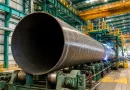
Dans les projets industriels à haute pression tels que le transport du pétrole et du gaz naturel, les systèmes de chaudières et le traitement chimique, la sélection des matériaux pour les pipelines est une décision clé, qui affecte directement la sécurité des opérations, le contrôle du budget et la fiabilité à long terme. Le choix d'un mauvais matériau entraîne non seulement des dépassements de coûts inutiles en raison d'un remplacement et d'une maintenance précoces, mais aussi des risques catastrophiques, tels que l'éclatement et l'explosion d'un pipeline, qui peuvent entraîner de graves pertes humaines et des dommages environnementaux. Selon les statistiques de l'industrie, plus de 30% d'oléoducs et de gazoducs sont en cours de construction. tuyau à haute pression sont attribuées à une mauvaise sélection des matériaux. Cet article vise à effectuer une comparaison approfondie de trois matériaux d'acier courants pour les tuyaux à haute pression - l'acier au carbone, l'acier inoxydable et l'acier allié - en analysant leurs caractéristiques de performance, leurs avantages en termes de coûts, leurs spécifications de produits et leurs scénarios d'application, afin d'aider les professionnels à prendre des décisions en connaissance de cause.
Tube en acier au carbone : Le cheval de bataille rentable
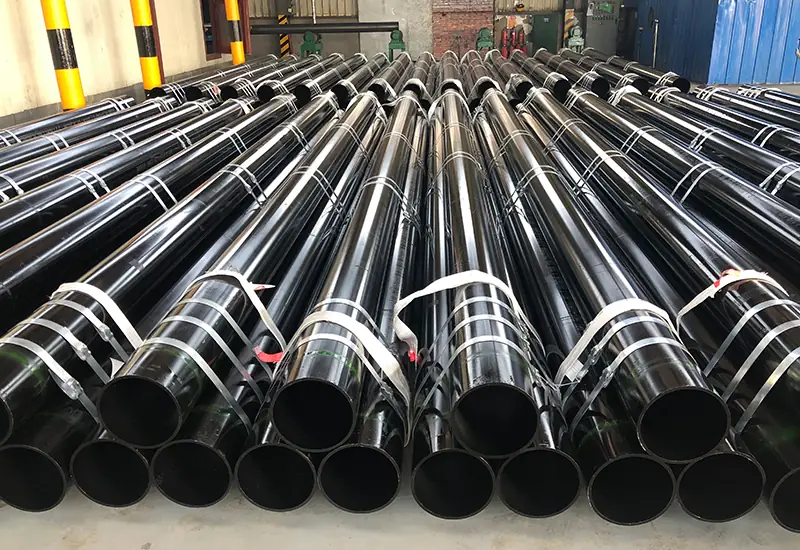
Carbone tube en acier est un alliage fer-carbone composé principalement de fer et de carbone, et contient également des oligo-éléments tels que le manganèse et le silicium. Connu comme le “pain et le beurre” de l'industrie, c'est le matériau le plus largement utilisé dans l'application des tuyaux en acier à haute pression en raison de ses performances équilibrées et de ses avantages économiques.
Dans des conditions de haute pression, la norme la plus couramment utilisée pour les tuyaux en acier au carbone est la suivante ASTM A106, L'ASTM A106 Grade A, qui comprend trois grades (A, B et C), a des propriétés mécaniques différentes pour répondre à des exigences de pression et de température différentes. L'ASTM A106 Grade B est la variante la plus fréquemment adoptée, avec une résistance minimale à la traction de 415MPa et une limite d'élasticité de 240MPa, ce qui la rend adaptée à la plupart des tâches de transmission de fluides à pression moyenne. Une autre norme importante est API 5L, qui est spécialement conçu pour les applications de pipelines de pétrole et de gaz naturel.
Les principaux avantages du tube en acier au carbone sont sa grande résistance, son faible coût, son excellente soudabilité et sa facilité d'usinage. Par rapport à l'acier inoxydable et à l'acier allié, le coût du tube en acier au carbone ne représente que 1/3 à 1/5 de celui de l'acier inoxydable et 1/2 de celui de l'acier allié, ce qui réduit considérablement l'investissement dans le projet. Sa bonne soudabilité permet une installation flexible sur site, améliorant ainsi l'efficacité de la construction. Cependant.., tube en acier au carbone présentent des inconvénients évidents : mauvaise résistance à la corrosion, nécessitant des revêtements anticorrosion tels que la résine époxy ou le polyuréthane pour prolonger leur durée de vie, et tolérance limitée aux températures extrêmes - ils ne conviennent généralement que pour des températures de travail comprises entre 29°C et 427°C (Source : https://www.astm.org/Standards/A106.htm).
Applications typiques de l'ASTM A106 tube en acier au carbone Parmi les applications possibles, citons les oléoducs et gazoducs, les systèmes d'alimentation en eau des centrales électriques, les tuyaux d'alimentation en eau des chaudières et les composants des structures mécaniques. Il est particulièrement adapté à la plupart des situations de transmission de fluides à haute pression à corrosion moyenne et faible, où le budget est un facteur clé.
Tuyau en acier inoxydable : résistant à la corrosion
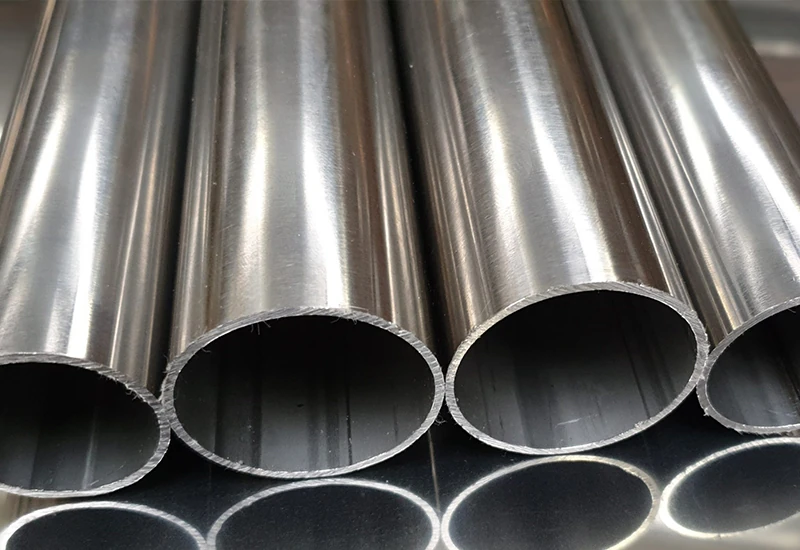
Les tuyaux en acier inoxydable sont définis comme un alliage d'acier contenant au moins 10,5% de chrome, qui forme un film d'oxyde passif dense sur sa surface pour résister à la corrosion. Cette composition chimique unique en fait le premier choix pour les applications à haute pression dans un environnement corrosif.
La principale norme pour l'acier inoxydable tube en acier à haute pression est l'ASTM A312, qui couvre les tuyaux sans soudure et soudés en acier inoxydable austénitique, y compris TP304 et TP316 et d'autres qualités courantes. L'acier inoxydable TP304 offre une résistance de base à la corrosion, tandis que le TP316 ajoute du molybdène pour améliorer sa résistance à la corrosion par les chlorures, ce qui le rend plus adapté aux environnements difficiles.
Les tuyaux en acier inoxydable présentent d'excellents avantages : une excellente résistance à la corrosion sans revêtement anticorrosion supplémentaire, d'excellentes performances en matière d'hygiène (conformes aux normes de qualité alimentaire) et une excellente résistance aux basses températures - le PP304 peut fonctionner de manière stable à des températures aussi basses que 270°C, et convient au transport de fluides à basse température tels que le gaz naturel liquéfié (GNL). En outre, sa durée de vie est très longue, généralement 2 à 3 fois supérieure à celle des tuyaux en acier au carbone.
Le principal inconvénient des tuyaux en acier inoxydable est leur coût élevé, qui est généralement 3 à 5 fois supérieur à celui des tuyaux en acier inoxydable. tube en acier au carbone. Par rapport à l'acier au carbone, sa dureté relativement élevée accroît également la difficulté de traitement et la complexité du soudage.
Les scénarios d'application courants comprennent les usines de transformation alimentaire, les installations chimiques pour le traitement des milieux corrosifs, l'ingénierie marine (plates-formes offshore et pipelines de navires), les produits pharmaceutiques et les systèmes de stockage et de transport de GNL. C'est le meilleur choix lorsque la résistance à la corrosion ou les performances à basse température sont les principales considérations.
Tubes en acier allié : Le spécialiste des hautes températures
Les tubes en acier allié sont des tubes en acier dans lesquels des éléments d'alliage tels que le chrome (Cr), le molybdène (Mo) et le vanadium (V) sont ajoutés à l'acier au carbone pour améliorer sa résistance aux températures élevées, sa résistance au fluage et ses propriétés mécaniques. Il est spécialement conçu pour les environnements industriels à haute température et à haute pression (HTHP).
La norme clé pour les tuyaux en acier allié à haute pression est l'ASTM A335, qui classe les tuyaux en fonction de la qualité des matériaux (tels que P11, P22 et P91). L'acier allié P11 contient 1,25% de chrome et 0,5% de molybdène, ce qui convient aux températures moyennes et aux hautes pressions ; P91 contient 9% de chrome et 1% de molybdène, ce qui offre une excellente résistance au fluage à haute température et est largement utilisé dans les centrales électriques ultra-supercritiques.
Le principal avantage des tubes en acier allié est leur excellente performance à haute température. Il peut conserver son intégrité structurelle et sa résistance mécanique à des températures supérieures à 600°C, avec une excellente résistance au fluage - il résiste à la déformation permanente sous des charges à long terme à haute température et à haute pression. Dans un environnement à haute température, il présente également une meilleure résistance à la corrosion que les tuyaux en acier allié. tube en acier au carbone.
Cependant, le coût des tubes en acier allié est plus élevé que celui des tubes en acier au carbone (bien qu'inférieur à celui de l'acier inoxydable), et ils nécessitent des processus de soudage compliqués, généralement un préchauffage et un traitement thermique après soudage afin d'éviter les défauts de soudage. La difficulté de sa transformation est également élevée et nécessite un équipement et une technologie professionnels.
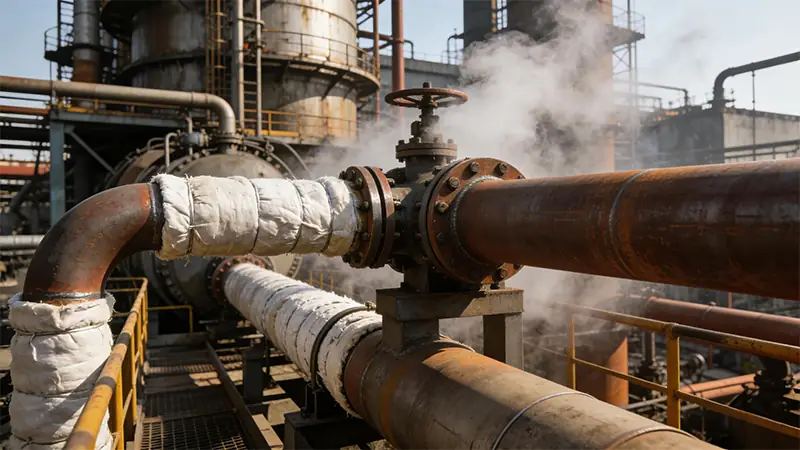
Les applications typiques comprennent les chaudières de centrales électriques, les conduites de vapeur à haute température, les unités de craquage pétrochimique et les réacteurs d'hydrogénation à haute température, où il est très important de résister à des températures et à des pressions élevées.
L'ultime comparaison
| Type de matériau | Résistance à la corrosion | Coût | Manipulation de la pression et de la température | Norme commune |
| Tube en acier au carbone | Faible | Faible | Bonne ( -29°C à 427°C ) | ASTM A106, API 5L |
| Tube en acier inoxydable | Haut | Haut | Excellent pour la cryogénie ( -270°C à 871°C ) | ASTM A312 (TP304/316) |
| Tube en acier allié | Moyen | Moyen | Excellent pour les températures élevées (jusqu'à 650°C+) | ASTM A335 (P11/P22/P91) |
Comment choisir ?
Le choix d'un matériau approprié pour les tuyaux en acier à haute pression doit tenir compte de différents facteurs, tels que le budget, l'environnement de fonctionnement (degré de corrosion, température et pression) et la durée de vie. Suivez les étapes ci-dessous pour faire le meilleur choix.
- Évaluer les contraintes budgétaires : Si le budget est limité et que l'environnement d'exploitation est peu corrosif ou non corrosif (par exemple, transport d'eau propre et de gaz sec) et tube en acier au carbone (par exemple, ASTM A106) constituent le choix le plus rentable. Il répond aux exigences de base en matière de haute pression et minimise l'investissement.
- Évaluation des conditions de température : Pour les conditions de température élevée (par exemple, les tuyaux en acier allié sont essentiels pour les chaudières des centrales électriques, les tuyaux de vapeur à haute température avec des températures de travail supérieures à 450°C). Choisissez l'ASTM A335 P11/P22 pour les températures moyennes et le P91 pour les températures très élevées.
- Tenir compte des facteurs de corrosion : Si le fluide est corrosif (par exemple, chlorure, composés sulfurés) ou si l'environnement est difficile (par exemple, usines marines et chimiques), il est recommandé d'utiliser des tuyaux en acier inoxydable (ASTM A312 TP304/316). Pour les applications cryogéniques (gaz naturel liquéfié, par exemple), l'acier inoxydable est également le premier choix.
- Vérifier la conformité aux normes : s'assurer que la canalisation choisie répond aux normes de l'industrie - l'acier au carbone répond aux normes de l'Union européenne. ASTM A106, L'acier inoxydable est conforme à la norme ASTM A312 et l'acier allié à la norme ASTM A335 pour garantir la qualité et la sécurité.
FAQ
Q 1 :Quelle est la différence entre ASTM A106 Classe B et classe C ?
R 1 : Il s'agit dans les deux cas de tuyaux en acier au carbone ASTM A106. La qualité B a une résistance à la traction de ≥ 415MPa et une limite d'élasticité de ≥ 240MPa, convenant aux applications à pression moyenne. La qualité C offre une résistance plus élevée (résistance à la traction ≥ 485MPa, limite d'élasticité ≥ 275MPa) et est utilisée dans des situations de haute pression avec des exigences plus élevées.
Q 2 : Les tubes en acier au carbone peuvent-ils être utilisés en milieu marin ?
R 2 : Il n'est pas recommandé de l'utiliser à long terme. Tube en acier au carbone ont une faible résistance à la corrosion de l'eau salée et de l'air marin humide, ce qui entraîne une rouille rapide. Les tuyaux en acier inoxydable (TP316) ou en acier allié avec des revêtements anticorrosion sont plus appropriés.
Q 3 : Qu'est-ce que la résistance au fluage et pourquoi est-elle importante pour les tubes en acier allié ?
R 3 : La résistance au fluage désigne la capacité des matériaux à résister à une déformation permanente sous l'effet de charges à long terme à haute température et à haute pression. Le tube en acier allié est conçu pour un environnement à haute température, et sa résistance au fluage peut empêcher la défaillance du pipeline et garantir la sécurité à long terme.
Q 4 : Les tubes en acier inoxydable conviennent-ils pour la vapeur à haute température et à haute pression ?
R 4 : Cela dépend de la température. Les tuyaux en acier inoxydable (ASTM A312) peuvent supporter des températures allant jusqu'à 871°C, mais les tuyaux en acier allié offrent une meilleure résistance au fluage à des températures supérieures à 600°C, ce qui les rend plus fiables pour les applications de vapeur à ultra-haute température.
Conclusions et CTA
Il n'existe pas de “meilleur” matériau pour les tuyaux en acier à haute pression, mais seulement le matériau qui convient le mieux à des scénarios d'application spécifiques. Les tuyaux en acier au carbone (en particulier les ASTM A106 ) est très rentable dans les environnements à faible corrosion et à pression moyenne. Les tuyaux en acier inoxydable sont inégalés en termes de résistance à la corrosion et de performance à basse température. Les tuyaux en acier allié sont le premier choix pour les travaux à haute température et à haute pression. L'essentiel est de procéder à une évaluation complète des conditions d'exploitation, du budget et des exigences de sécurité.Vous ne savez toujours pas quel matériau convient à vos exigences en matière de contraintes ? Contactez les ingénieurs d'Allland Steel pour une consultation et un devis gratuits. Notre équipe d'experts analysera les besoins spécifiques de votre projet et vous recommandera le matériau optimal. tube en acier à haute pression pour garantir la sécurité, la fiabilité et la rentabilité.

ASTM A53 vs. API 5L : Guide de sélection et d'application
Dans le domaine de la tuyauterie industrielle, l'ASTM A53 et l'API 5L sont deux normes clés largement utilisées, mais dont les positions sont très différentes. L'ASTM...

Introduction:Les différences technologiques déterminent le succès ou l'échec, et la sélection doit être “précise”
Dans le domaine du transport du pétrole et du gaz, des infrastructures municipales et d'autres projets majeurs, le choix raisonnable du processus de soudage des tuyaux en acier a une incidence directe sur le projet...
Analyse de la densité de l'acier : Différences fondamentales entre les aciers doux et moyens au carbone et applications industrielles
La densité de l'acier est l'un des paramètres clés qui déterminent ses propriétés physiques et ses applications industrielles. L'état théorique de la densité de l'acier...
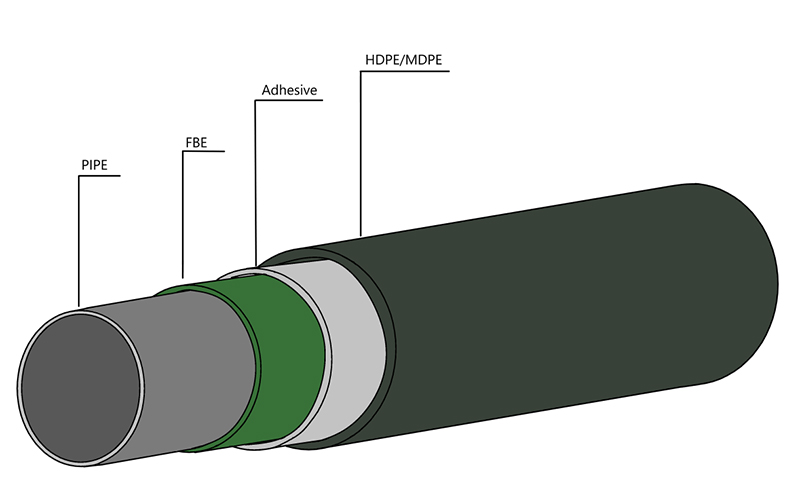
Tube d'acier revêtu de 3LPE : une barrière solide dans le domaine de la protection contre la corrosion industrielle
Dans l'environnement difficile du pétrole et du gaz, de l'industrie chimique, du réseau de canalisations urbaines, etc., la fiabilité à long terme et la résistance à la corrosion du système de canalisations...
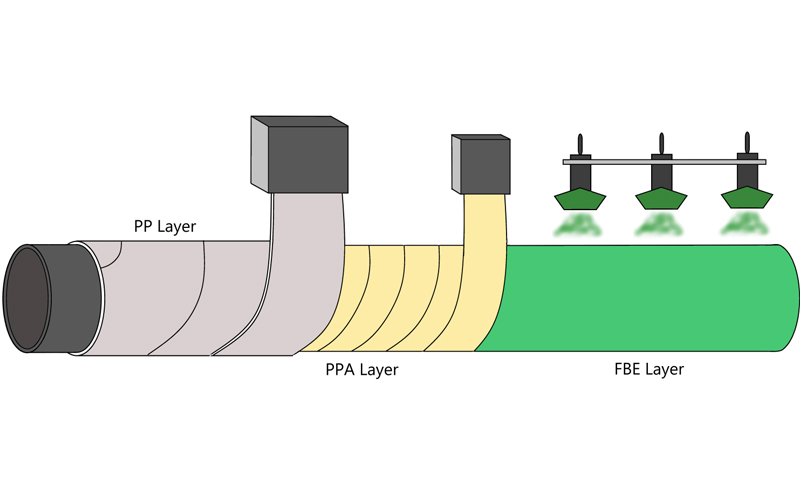
Tube revêtu de 3LPP : protection anticorrosion dans un environnement à haute température et à haute pression
Dans certains environnements spéciaux difficiles, tels que l'exploration pétrolière et gazière en eaux profondes et le transport de pétrole brut à haute température, les revêtements anticorrosion traditionnels sont confrontés à des défis importants,...
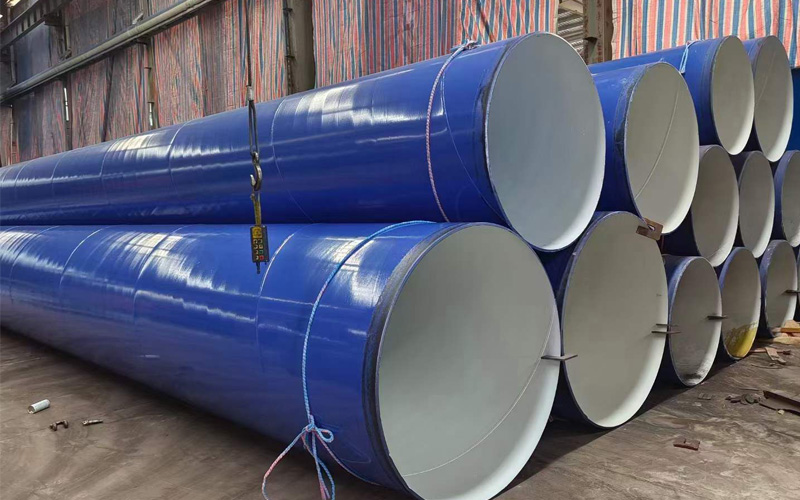
Tube d'acier FBE : l'armure technologique de la ligne de défense de l'acier
I Dans les eaux glacées du pipeline de la mer de Norvège, une section de tube en acier au carbone revêtu FBE est en service depuis 25...