







Introduction
In industrial piping networks, malleable iron pipe fittings serve as essential components for connecting steel pipes across water, gas, oil, steam, and compressed-air systems. Different regional standards can significantly influence piping compatibility, installation efficiency, and long-term maintenance requirements. Many industrial pipe manufacturers produce fittings under both standards. However, differences in thread geometry, pressure ratings, and material specifications can create compatibility challenges.
For professionals responsible for procuring carbon steel pipe fittings, particularly those sourcing threaded piping components from the international market, a thorough understanding of the distinctions between relevant standards is of paramount importance. A fundamental fact is that fittings designed specifically for NPT threads cannot achieve a reliable seal when paired with BSPT threads. Furthermore, the pressure rating standards governing these two systems differ significantly. In the following sections, we will conduct a comparative analysis of these two sets of standards, examining them across several key dimensions, including thread geometry, pressure ratings, material properties, and common industrial applications.
1. What Are Malleable Iron Pipe Fittings and Why Are They Important?
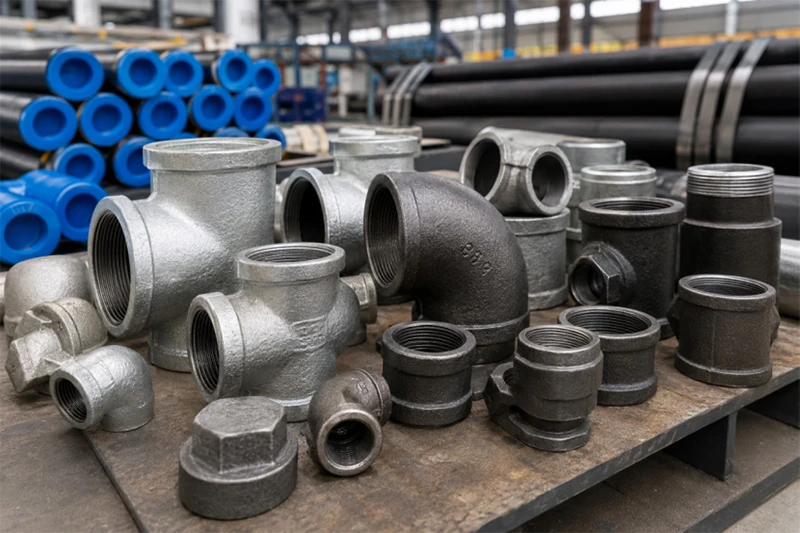
Malleable iron pipe fittings are threaded connectors manufactured from cast iron that has undergone a controlled annealing process. This heat treatment transforms brittle white cast iron into a ductile material capable of withstanding mechanical stress and vibration without fracturing.
Steel tubing and malleable iron fittings differ in chemical composition and mechanical properties, but both are widely used in low-pressure threaded piping systems. Typical steel pipe products connected to these fittings include black iron pipe nominal diameter ranging from 1/8″ to 6″ (DN 6 to DN 150). The material exhibits a carbon steel density of approximately 7.2–7.4 g/cm³, contributing to its mechanical durability.
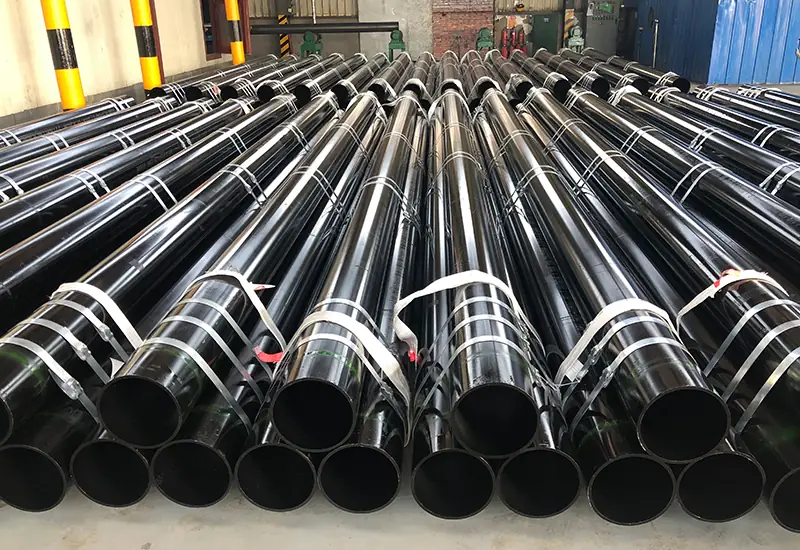
Fittings produced by a black steel pipe factory are commonly finished in black (oiled) or hot-dip galvanized coatings. Black iron fittings are typically used for gas and oil lines, while galvanized finishes offer corrosion resistance for water applications. The combination of mechanical strength, ease of installation (threaded assembly eliminates welding), and cost-effectiveness makes these fittings a standard choice for many piping applications.
2. The British & European Standard: BS EN 10242 and ISO 7-1
BS EN 10242 is the European standard specifying requirements for threaded pipe fittings in malleable cast iron. The current BS EN 10242 standard covers threaded malleable iron fittings with black or hot-dip galvanized surfaces. These fittings are intended for general-purpose fluid and gas transmission within specified pressure and temperature limits. The standard addresses design, performance, dimensions, tolerances, material composition, and testing procedures.
Fittings manufactured to BS EN 10242 use BSPT (British Standard Pipe Taper) threads, governed by ISO 7-1 (also known as EN 10226). BSPT threads feature a 55-degree thread angle with rounded peaks and valleys. The taper ratio is 1:16, similar to NPT, but the thread form differs fundamentally.
Working pressures for BS EN 10242 fittings vary by application. Some manufacturers specify up to 1379 kPa for water supply systems and 1034 kPa for gas, steam, or compressed air service. The standard applies to sizes from 1/8″ to 6″ (DN 6 to DN 150), intended for connection with non-alloy steel tubes as specified in EN 10255.
Additional British standards referenced alongside BS EN 10242 include BS 143 and BS 1256, which provide detailed dimensional specifications. Many steel pipe standard sizes are compatible with both BSPT and NPT threaded fittings, provided the correct thread type is specified at the time of order.
3. The American Standard: ASTM A197 and ASME B16.3
The American system for malleable iron pipe fittings rests on two primary standards. ASTM A197/A197M specifies the material requirements for cupola malleable iron used in castings. ASME B16.3 defines the dimensions, threading requirements, pressure-temperature ratings, and coating specifications for malleable iron threaded fittings.
ASME B16.3 categorizes fittings into Class 150 and Class 300 pressure ratings. Class 150 fittings are rated for a maximum working pressure of 300 psi (20 bar), while Class 300 fittings are rated for 600 psi (40 bar). Temperature limits range from -20°F to 400°F (-29°C to 204°C).
The thread standard for American fittings is NPT (National Pipe Taper), defined by ASME B1.20.1. NPT threads have a 60-degree thread angle with flattened peaks and valleys, in contrast to the 55-degree rounded profile of BSPT threads.
Material properties under ASTM A197 typically yield tensile strength of at least 300 MPa, elongation of 6% or greater, and hardness not exceeding 150 HB. These steel pipe specifications ensure consistent quality across manufacturers. For schedule 40 steel pipe dimensions, fittings conform to ASME B16.3 wall thickness requirements, with sch 40 and sch80 being common options for heavier-duty applications.
4. Key Differences: BS EN vs. American Standards
The following table summarizes the primary differences between BS EN and American standards for malleable iron pipe fittings:
| Feature | BS EN (BSPT) | American (NPT) |
| Governing Standards | BS EN 10242, ISO 7-1, BS 143 | ASTM A197, ASME B16.3, ASME B1.20.1 |
| Thread Angle | 55 degrees (rounded) | 60 degrees (flattened) |
| Thread Profile | Whitworth form | Sellers form |
| Pressure Classes | Working pressure varies by temperature (typically 1379 kPa water, 1034 kPa gas) | Class 150 (300 psi / 20 bar), Class 300 (600 psi / 40 bar) |
| Temperature Range | -20°C to +300°C | -29°C to +204°C |
| Sizes | 1/8″ to 6″ (DN 6 to DN 150) | 1/8″ to 6″ (NPS) |
| Coatings | Black or hot-dip galvanized (EN 10242) | Black (oiled) or hot-dip galvanized (ASTM A153) |
4.1 Dimensions and Threading
One of the most critical distinctions is the thread geometry. NPT and BSPT threads are both tapered, but they are not interchangeable. An NPT thread cannot form a proper seal with a BSPT thread because the two systems use different thread angles and profiles. The outside diameter of steel pipe also follows slightly different nominal measurements between the two systems, though pipe OD values are broadly similar.
4.2 Pressure Ratings
Pressure-temperature ratings differ in their classification systems. American standards use Class designations (150, 300) that correspond to specific psi ratings. BS EN 10242 does not employ a similar class system; instead, permissible working pressures are specified within temperature ranges, with linear interpolation permitted for intermediate temperatures.
4.3 Material Specifications
Both systems reference malleable iron with comparable mechanical properties. The carbon steel hardness chart for ASTM A197 material shows typical hardness ≤150 HB, with tensile strength ≥300 MPa and elongation ≥6%. BS EN 10242 fittings manufactured to EN 1562 or comparable grades exhibit similar yield and tensile characteristics.
5. Applications: From Fire Sprinklers to High-Pressure Pipelines
Malleable iron pipe fittings are used across diverse industrial sectors, with application requirements dictating the choice between BS EN and American standards.
5.1 Fire Sprinkler Systems
Fire protection systems represent a major application area. Steel pipe for fire sprinkler system installations commonly uses schedule 40 sprinkler pipe with threaded malleable iron fittings. Both BS EN and American standard fittings are available with UL and FM approvals, indicating compliance with fire safety requirements.
The selection often depends on regional building codes. North American projects typically require NPT-threaded fittings to ASME B16.3, while European and Asian projects specify BS EN 10242 with BSPT threads. Fire sprinkler fittings must withstand vibration, thermal expansion, and in some regions, seismic movement. As a result, material ductility becomes especially important.
5.2 Water Treatment and Oil & Gas Transport
Potable water supply pipe systems frequently employ galvanized malleable iron fittings for corrosion resistance. BS EN 10242 fittings are generally subjected to hydrostatic pressure testing during production. For oil and gas applications, API 5L steel pipes are primarily butt-welded for mainline transmission, though threaded fittings may be used for low-pressure auxiliary lines in oil and gas facilities. High-pressure gas pipeline requirements for en 10217-7 welded steel tubes are compatible with BS EN threaded fittings.
Offshore pipeline installations face additional corrosion challenges. Coated fittings and pipes are essential for saltwater resistance, as discussed in Section 6.
5.3 Structural and Piling Applications
While less common, malleable iron fittings appear in structural support systems and temporary piping. Structural steel pipe manufacturers often supply products for pipe pile foundation projects. These applications require large-diameter pipes with highly durable connections. For these heavy-duty applications, LSAW pipes and SSAW spiral-welded pipes are more typical than threaded fittings, but large diameter steel pipe systems may incorporate malleable iron fittings for secondary connections and instrumentation take-offs.
6. Corrosion Protection and Coatings
The service life of malleable iron pipe fittings depends significantly on the effectiveness of applied coatings. Corrosion protection is particularly critical for buried pipelines, offshore installations, and systems conveying corrosive fluids.
Fusion Bonded Epoxy (FBE) coated products are widely used for internal and external pipe protection. FBE is a thermosetting powder coating applied to heated steel surfaces, forming a hard, adherent film with excellent chemical resistance. A single FBE layer typically ranges from 300 to 600 microns in thickness.
For more demanding environments, 3LPE coated pipe systems offer enhanced mechanical protection. The three-layer system consists of an FBE primer, an adhesive layer, and a polyethylene topcoat. Total thickness for 3LPE coatings ranges from 1.8 to 3.2 mm. This structure improves both chemical resistance and mechanical durability. It also helps protect pipelines from soil stress, impact damage, and moisture penetration.
Epoxy coated steel pipe supplier products are available for both internal and external applications. The choice of anti-corrosion coating depends on several environmental factors. These include soil conditions, operating temperature, and handling requirements during construction.
Internal fbe pipe coating is commonly specified for drinking water transmission, as FBE does not leach contaminants into the fluid stream. 3pp anti-corrosion pipe (three-layer polypropylene) serves as a high-temperature alternative to 3LPE, suitable for operating temperatures up to 140°C.
7. Why Choose Allland Pipes?
Allland Pipes is a recognized carbon steel pipe manufacturer and large diameter pipe company serving global markets. As an api pipe supplier, Allland maintains comprehensive stock of carbon steel pipes and malleable iron pipe fittings across both BS EN and American standards.
The company operates integrated production lines for LSAW (Longitudinal Submerged Arc Welded), SSAW (Spiral Submerged Arc Welded), and ERW welded pipes. These manufacturing capabilities ensure consistent quality control from raw material through final coating application. LSAW welded steel pipe supplier credentials are supported by third-party certifications and rigorous testing protocols.
Allland provides welded steel pipe quotations along with technical support for standard and specification selection. As a steel pipe exporter, the company handles logistics across multiple regions, ensuring timely delivery of pipe and fitting packages.
Allland’s LSAW pipe products are manufactured to API 5L, EN 10217, and ASTM specifications, while allland dsaw steel pipe (Double Submerged Arc Welded) is available for heavy-wall, large-diameter applications requiring enhanced weld integrity. With a focus on customer-specific requirements, Allland provides malleable iron pipe fittings in black or galvanized finishes, with NPT or BSPT threads as specified.
8. Frequently Asked Questions (FAQ)
Q1: Can NPT and BSPT fittings be used together?
A: No, NPT (60° thread angle) and BSPT (55° thread angle) are not interchangeable. Using them together may result in leakage and joint failure.
Q2: What is the maximum working pressure for Class 150 malleable iron fittings?
A: Class 150 fittings are typically rated for pressures up to 300 psi (20 bar) under standard operating temperatures. Class 300 fittings are rated for 600 psi (40 bar).
Q3: Are BS EN 10242 fittings compatible with schedule 40 steel pipe?
A: Yes, BS EN 10242 fittings are intended for connection with non-alloy steel tubes per EN 10255, which shares similar dimensional characteristics with Schedule 40 steel pipe. However, thread type (BSPT vs. NPT) must match.
Q4: What is the temperature range for malleable iron pipe fittings?
A: BS EN 10242 fittings typically operate from -20°C to +300°C. ASME B16.3 fittings operate from -29°C to +204°C. Operating limits depend on specific material grades and pressure conditions.
Q5: How can I prevent corrosion on malleable iron fittings?
A: Hot-dip galvanizing per ASTM A153 or EN 10242 provides corrosion protection. For buried or offshore applications, FBE (Fusion Bonded Epoxy) or 3LPE coatings are recommended.
9. Conclusion
Choosing the correct fitting standard depends primarily on regional code requirements, operating conditions, and thread compatibility with existing systems. For projects located in Europe, the Middle East, or Asia, BS EN 10242 fittings with BSPT threads are typically specified. For North American projects, ASTM A197 material with ASME B16.3 dimensions and NPT threads is the standard requirement. Mixing the two thread systems is not recommended and may result in joint leakage.
During system design, engineers should review both pressure ratings and pipe wall thickness charts. This helps ensure compatibility between fittings and the connected pipe. Class 150 or Class 300 ratings (American) and the temperature-dependent pressure limits of BS EN 10242 require careful review before final selection.
Contact Allland Pipes for assistance with malleable iron pipe fittings selection, including sizing, coating requirements, and certification documentation. As a trusted large diameter pipe supplier, Allland provides integrated solutions for pipe and fitting requirements across both BS EN and American standards.

ASTM A53 vs. API 5L: A Guide to Selection and Application
In the field of industrial piping, ASTM A53 and API 5L are two key standards that are widely used, but have very different positions. ASTM...

Introduction:Technology differences determine success or failure, and selection needs to be “precise”
In oil and gas transmission, municipal infrastructure and other major projects, the reasonable choice of steel pipe welding process directly affects the project...
Steel Density Analysis: Core Differences between Mild and Medium Carbon Steels and Industrial Applications
The density of steel is one of the key parameters that determine its physical properties and industrial applications. Theoretical state of steel density...
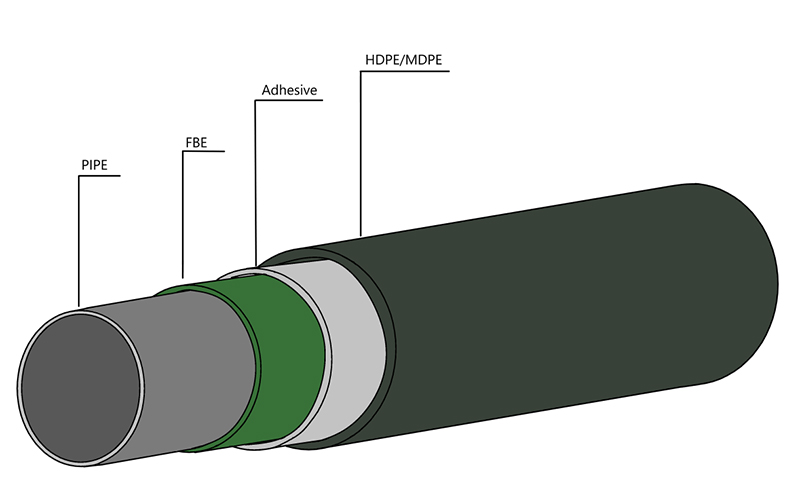
3LPE coated steel pipe: a solid barrier in the field of industrial corrosion protection
In the harsh environment of oil and gas, chemical industry, urban pipe network, etc., the long-term reliability and corrosion resistance of pipeline system...
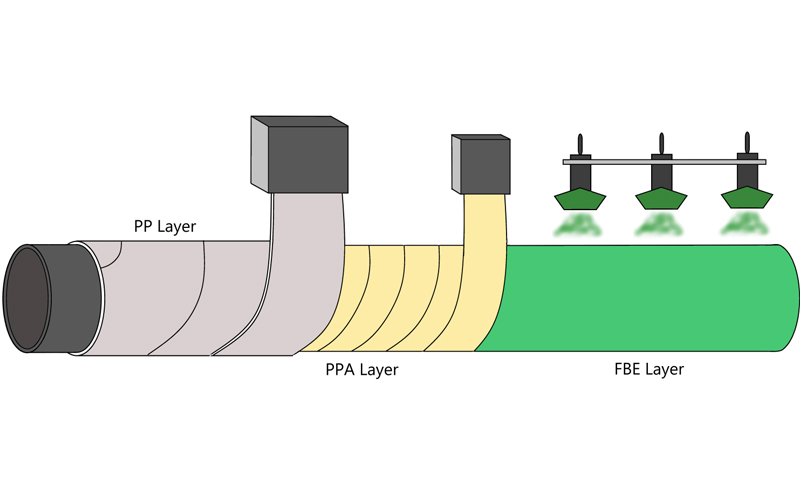
3LPP coated pipe: anti-corrosion guard in high temperature and high pressure environment
In some challenging special environments such as deep-sea oil and gas exploration and high-temperature crude oil transportation, traditional anti-corrosion coatings face significant challenges,...
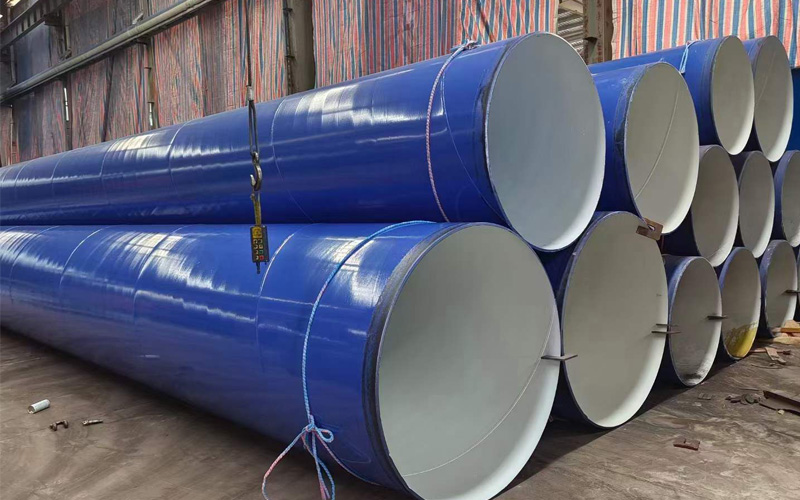
FBE steel pipe: the technological armor of the steel defense line
I In the icy waters beneath the Norwegian Sea pipeline, a section of FBE Lined Carbon Steel Pipe has been in service for 25...