





Introduction
For global engineering contractors, pipeline developers, and infrastructure procurement managers, the procurement process rarely ends with selecting a qualified steel pipe supplier or negotiating the factory price. Industry logistics report confirms that international shipping and land transportation costs of heavy pipes can consume 30% or more of the total project procurement budget, thus turning seemingly competitive factory quotations into an unprofitable total cost package. When ordering super-large hollow tubular products, such as large-diameter steel pipe, LSAW steel pipe and SSAW steel pipe, the hollow cylindrical shape causes a unique cost imbalance. Because large-diameter steel pipes occupy significant cargo space relative to their weight, freight costs are often influenced by volumetric utilization, particularly in containerized and breakbulk shipments.
A widespread pain point shared by overseas buyers of carbon steel pipe sizes is wasted container capacity caused by poorly calibrated pipe dimensions, improper loading techniques, and a lack of pre-production logistics coordination. Many generic manufacturers only prioritize production output, offering zero guidance on space-saving loading, dimension fine-tuning, or transit corrosion protection, leaving clients to absorb unexpected surcharges for oversized cargo, damaged coatings, or underutilized shipping containers.
As a reliable supplier of ISO-certified steel pipe, Allland Pipes integrates logistics optimization into every stage of production scheduling, rather than as an added service afterwards. Our in-house team of structural engineers, logistics coordinators, and coating specialists collaborates with clients from drawing review through final port loading, designing customized transport frameworks tailored to exact carbon steel pipe sizes, wall thickness metrics, and global delivery destinations. This end-to-end alignment reduces unnecessary transportation costs, minimizes the risk of product damage and provides a predictable total landing cost for each batch of LSAW steel pipe, SSAW steel pipe and 3LPE steel pipes manufactured and transported around the world.
7FAQ
Understanding Dimensional Mathematics: Volume and Weight
Global freight companies adopt two core charging modes for industrial pipeline transportation: charging weight (actual physical tonnage) and volumetric weight (calculated according to the cubic space occupied). For large-diameter hollow steel pipes, transportation economics are often influenced by both cargo weight and space utilization, depending on shipment size, pipe dimensions, and transport mode. Mastering the math tied to carbon steel pipe sizes and data from a reliable pipe wall thickness chart empowers buyers to adjust specifications for balanced weight-to-volume ratios before production begins.
Every key dimension directly determines the economy of shipping: the outside diameter (OD) determines the cargo footprint of the pipeline, while wall thickness (WT) determines the quality of solid steel per linear meter. Thinner pipe walls reduce the total weight of the pipeline, but enlarge the hollow internal space and increase the volume of freight; Excessive thickness of the walls reduces the hollow space, but increases the actual tonnage and the carriers’ weight surcharges. The reference pipe wall thickness table standardized by API 5L and ASTM A252 is the basic tool used by Allland Pipes to draw cost trade-off diagrams for each customer’s project parameters.
Sample Dimension & Freight Impact Reference Table
| Pipe Type | Outer Diameter (OD) | Wall Thickness (WT) | Weight per Meter | Internal Hollow ID | Estimated Volumetric Space per 12m Pipe | Primary Freight Billing Driver |
| LSAW steel pipe | 610mm | 12mm | 178kg | 586mm | 3.52 m³ | Volume-sensitive |
| SSAW steel pipe | 762mm | 10mm | 185kg | 742mm | 4.38 m³ | Volume-sensitive |
| 3LPE steel pipe (LSAW base) | 508mm | 14mm | 169kg | 480mm | 2.41 m³ | Balanced |
| Thin-wall carbon steel pipe sizes | 324mm | 6mm | 47kg | 312mm | 0.98 m³ | Volume-sensitive |
Allland Pipes engineering team cross-references the customer’s construction blueprints with the official industry pipeline wall thickness map to propose a minor, performance-safe size adjustment. For example, a minor increase in wall thickness may slightly increase pipe weight while improving the balance between structural performance and transportation efficiency. Depending on the pipe dimensions and loading configuration, such adjustments can improve container utilization and reduce overall freight costs. Minor dimensional adjustments, optimized pipe-length planning, and improved nesting compatibility often generate double-digit logistics savings without affecting project compliance requirements. We share the complete API/ASTM specification documents to verify that all adjusted carbon steel pipe sizes meet local building and pipeline regulatory standards before production starts.
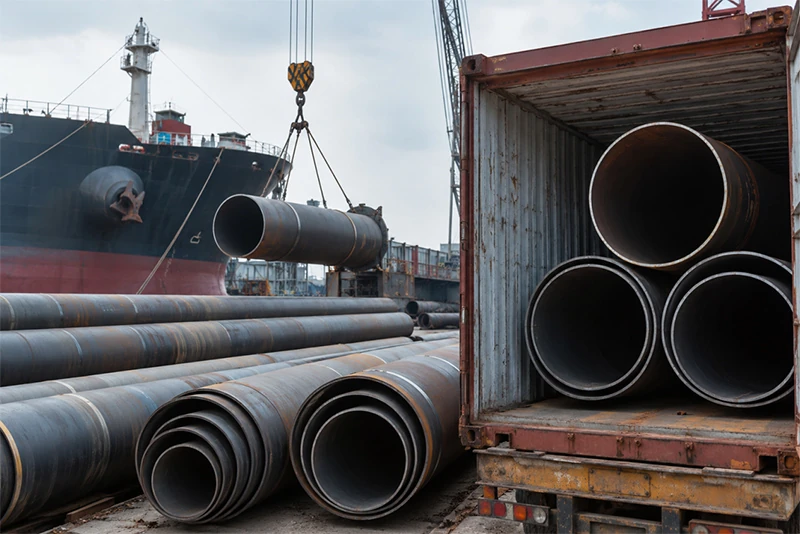
How Pipe Nesting Reduces Freight Costs
Telescopic Pipe Nesting (Nested Loading) is the single most impactful strategy to reduce volumetric freight for mixed batches of large diameter steel pipe, LSAW steel pipe, and SSAW steel pipe, which can significantly reduce freight costs, often achieving savings of 20%–40% depending on pipe dimensions, nesting compatibility, and shipment volume. on total sea freight invoices. The core principles include completely inserting the pipe section with a smaller outer diameter into the pipe section with a larger inner diameter, integrating multiple discrete pipe units into a unified external coverage area, and significantly reducing unused cargo volume. Although the concept sounds simple, precision engineering is mandatory to prevent clogging, surface scratches or compromised anti-corrosion coatings-the unique welding contours of LSAW steel pipe and SSAW steel pipe amplify these risks.
Key Technical Challenges and Allland Solutions
1. Weld Clearance and Nesting Tolerance
SSAW steel pipe is characterized by a continuous external spiral weld, while LSAW steel pipe has straight internal and external longitudinal weld. These welding protrusions reduce the available inside diameter (ID) for nesting. Rough manual measurements often lead to pipe jamming during insertion or removal, which requires costly unloading and rehandling operations at the destination port. Our production team uses laser measurement systems to verify the actual inner diameter of the outer pipe and the maximum outer diameter of the inner pipe, including weld reinforcement and dimensional tolerances. To ensure safe insertion, extraction, and coating protection, nesting combinations are designed with sufficient clearance, typically exceeding 20 mm and adjusted according to pipe length, straightness tolerance, coating thickness, and transportation conditions. Dedicated rubber spacers and end protection pads are also installed to prevent movement and surface abrasion during transit.
2. Maritime Vibration Surface Protection
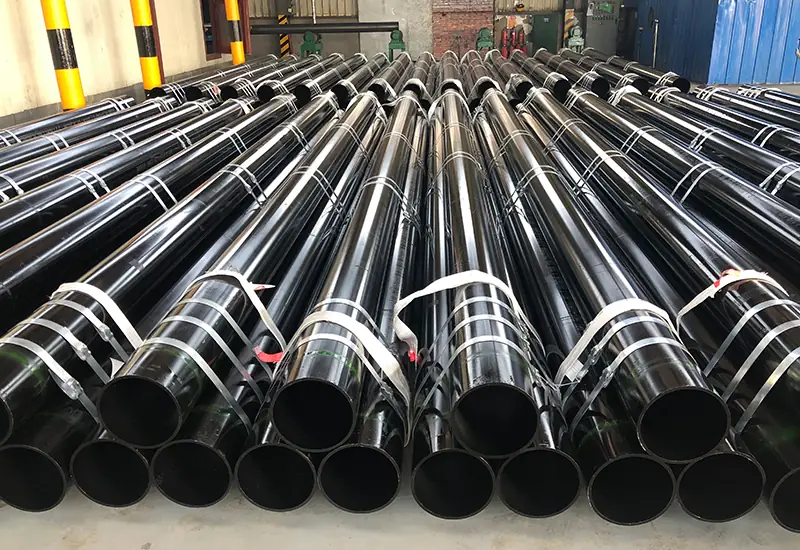
Ocean transportation will produce continuous rolling vibration, which will lead to metal-to-metal friction between nested pipelines and scrape off factory-applied primer, black paint or high-quality 3LPE steel pipe external coatings. As a professional steel pipe supplier, Allland Pipes has deployed three layers of protective barriers for each batch of nested shipment: thick rubber pads wrapped outside the inner pipe, solid wooden pads placed at both ends of the pipe to separate metal contact points, and heavy-duty braided nylon tension belts for firmly locking nested components during transportation. Our factory yard uses purpose-built forklift fixtures designed exclusively for damage-free telescoping, avoiding the dents and coating abrasions common with untrained third-party loading crews.
Container vs. Breakbulk Shipping for Large-Diameter Steel Pipes
Selecting the optimal vessel transport format hinges on pipe length, outer diameter scale, total order tonnage, and client project timeline, with two dominant options for large diameter steel pipe: sealed intermodal containers and open-deck breakbulk/Ro-Ro vessels. Misalignment between pipe dimensions and shipping format is a top cause of inflated logistics bills for overseas buyers sourcing from a generic steel pipe supplier.
1. 40′ HQ Container Shipping
For the pipeline length below 11.8 meters, the containers are still the most cost-effective choice, which is the standard internal length limit of a 40-foot-high container. Allland loading supervisors optimize every inch of 40’ HQ space for LSAW steel pipe, SSAW steel pipe and 3LPE steel pipe.
- Nested telescopic pipe assemblies are stacked horizontally and supported by cross-battens to prevent displacement.
- Carbon steel pipes of the same size are grouped to eliminate uneven stacking weights.
- A small vertical gap is reserved for a desiccant moisture-proof bag to stabilize humidity in the sealed containers, which is very important to protect the uncoated and coated pipeline surfaces.
Containers deliver extra perks: fixed transit schedules, reduced risk of impact damage from open-deck weather exposure, and seamless direct transfer to overland trucks at destination ports without intermediate cargo handling.
2. Breakbulk & Ro-Ro Vessel Shipping
Breakbulk vessels are non-negotiable for oversized large diameter steel pipe (OD exceeding 1200 mm) or extended-length pipe runs of 12 m, 15 m, or 18 m, which cannot fit within standard shipping containers. For bulk cargo, Allland Pipes comply with the international maritime strapping and stacking agreement, so as to avoid structural failure in rough seas.
- Reinforced steel support hangers are arranged on the floor of the cargo hold of the ship to evenly distribute the weight of heavy LSAW steel pipe and SSAW steel pipe.
- Strict stacking height limit (up to 3 layers for unlined pipes and up to 2 layers for precision 3LPE steel pipe) can prevent the bottom pipe from crushing.
- High-tensile steel turnbuckles and lashing chains secure every pipe bundle to vessel anchor points in accordance with IMO CSS Code (Code of Safe Practice for Cargo Stowage and Securing).
Freight Break-Even Analysis
For orders under 350 tons and pipeline lengths ≤ 11.8 meters, container transportation almost always delivers a lower total landing cost. For orders with over 400 tons of super-large diameter steel pipe or 18 meters of extended lengths, the freight per ton of bulk carrier offsets higher port handling charges. Our logistics analysts run side-by-side cost comparisons for every client quotation, pairing order carbon steel pipe sizes with real-time carrier spot rates to eliminate guesswork in shipping format selection.
Overland Transit Challenges for Over-Length Pipes
If the land “last mile” transportation from the unloading port to the construction site spirals up to the unplanned expenditure, the optimization of maritime transportation will hardly be realized, which is the recurrent hidden cost for projects using heavy LSAW steel pipe and super-long and large-diameter steel pipe. Road transport regulations impose strict legal caps on length, width, gross vehicle weight (GVW), and axle load, varying drastically across national, state, and regional highway jurisdictions worldwide.
Oversized tubular shipments require specialized low-bed flatbed trailers, which carry premium rental fees, plus costly government-issued oversize load permits, police escort vehicles, and route survey fees to clear weight-restricted bridges and tight-radius highway bends. Many inexperienced steel pipe suppliers failed to draw the destination transportation routes before production, and once the steel pipe arrived at the port, they had to apply for expensive licenses at the last minute.
Allland Pipes have passed the pre-production route verification, which reduces the land risks: our logistics team requires customers to provide site coordinates and then studies the restrictions of the local expressway administration on the maximum legal pipeline length, the allowable trailer width and bridge weight before the final determination of the pipeline cutting lengths. When transportation costs for extended-length pipes become excessive due to regional road restrictions, permit requirements, or limited trailer availability, we may recommend adjusting pipe lengths to better match standard transport equipment. For example, reducing an 18 m pipe run to 11.8 m or 12 m sections often enables more efficient containerization and simplifies overland transportation while maintaining project installation efficiency through approved field welding procedures.
Protecting Your Investment: Anti-Corrosion Coatings for Long-Distance Marine Transit
Salt-laden ocean air, persistent high humidity, and condensed container moisture create an aggressively corrosive transit environment for bare steel pipe. Unprotected pipe fittings usually have serious surface corrosion in the middle, and expensive sandblasting and paint touch-up work is needed after reaching the destination, which can offset the logistics cost saved by nested loading or optimized transportation mode. As a vertically integrated steel pipe supplier, Allland Pipes operates fully automated in-house coating lines engineered specifically to shield LSAW steel pipe, SSAW steel pipe, and premium 3LPE steel pipe during cross-ocean transit and decades of operational service post-installation.
Temporary transport-grade protection options include industrial black antirust paint and solvent-based primer, which are very suitable for short-distance sea routes and above-ground structural pipeline applications. For subsea, buried cross-country oil, gas, and water transmission pipelines, 3LPE steel pipe stands as the industry gold standard. The three-layer polyethylene system has strong resistance to transportation wear caused by stacking and bundling, and its long-term defense ability against soil corrosion, cathodic stripping and chemical erosion of groundwater is far better than that of single-layer coatings. We also offer Fusion Bonded Epoxy (FBE) single-layer and 3 LPP polypropylene coating systems for ultra-high-temperature pipeline operating environments, with all coating thicknesses documented against ISO 21809 industry standards.
Every coated pipe batch undergoes third-party thickness and adhesion testing before loading, with inspection certificates packaged alongside shipping documents for customs and client quality teams. This rigorous coating quality control from our steel pipe supplier facility eliminates costly post-transit rework and ensures pipes arrive site-ready for immediate installation, preserving both logistics and production budget efficiency.
FAQ
Q 1: Can pipe nesting be applied to the mixture of various carbon steel pipe sizes for Allland Pipes?
A 1: Yes. Compatible nesting combinations are determined through detailed dimensional analysis, including weld reinforcement height, diameter tolerances, coating thickness, and straightness requirements. Our engineers will review your complete plan of carbon steel pipe size during the quotation process to mark the feasible nesting combinations and outline the accurate freight saving forecast in advance. Very thick-walled, large-diameter steel pipes with the smallest hollow inner diameter may not support nesting, and we will transparently reveal this limitation through alternative space-saving loading plans.
Q 2: How long will it take for Allland Pipes to implement customized logistics and nested loading?
A 2: We need to complete the dimensional calibrations, protective packaging materials and loading fixture preparation for nested pipe assemblies within at least 7 working days after the order is confirmed. For break-bulk oversized large-diameter steel pipe shipments requiring vessel booking and overland permit coordination, a 14-day pre-production lead window delivers the most competitive carrier rates.
Q 3: Is 3LPE steel pipe more susceptible to damage during nested transportation?
A 3: According to our internal quality tracking log, through our layered rubber, wood and nylon protective packaging system, damage rates of nested 3LPE steel pipe in thousands of shipments around the world have been maintained at extremely low levels. We avoid metal-to-3LPE contact entirely via end spacers and full inner pipe wrapping, eliminating scuffs to the polyethylene coating during ocean vibration.
Conclusion
Successful procurement of large diameter steel pipe, LSAW steel pipe, SSAW steel pipe and 3LPE steel pipe goes far beyond the scope of comparing factory prices across competing steel pipe suppliers. Total onshore profitability depends on coordinated pre-production logistics engineering: accurate size adjustment by using the proven pipe wall thickness map, telescopic nested loading to reduce costs, data-driven container and bulk transportation selection, proactive land route permission, and strong anti-corrosion coating protection for maritime transportation. General manufacturers regard logistics as the responsibility of customers, but Allland Pipes takes transportation optimization as a core value-added service into every project workflow.If your team is finalizing specifications for an upcoming structural steel project of pipeline, piling or customized carbon steel pipeline sizes, please immediately submit your complete design drawings and delivery port/location details to Allland Pipes. Our joint team of production engineers and specialized logistics experts will provide a transparent and all-inclusive landed cost quotation, with a fully customized optimization plan, covering production scheduling, nested loading layout, coating specification matching, ocean shipping booking and land transportation risk mitigation, maximizing budget efficiency while maintaining uncompromised steel pipe manufacturing quality for your global infrastructure construction.

ASTM A53 vs. API 5L: A Guide to Selection and Application
In the field of industrial piping, ASTM A53 and API 5L are two key standards that are widely used, but have very different positions. ASTM...

Introduction:Technology differences determine success or failure, and selection needs to be “precise”
In oil and gas transmission, municipal infrastructure and other major projects, the reasonable choice of steel pipe welding process directly affects the project...
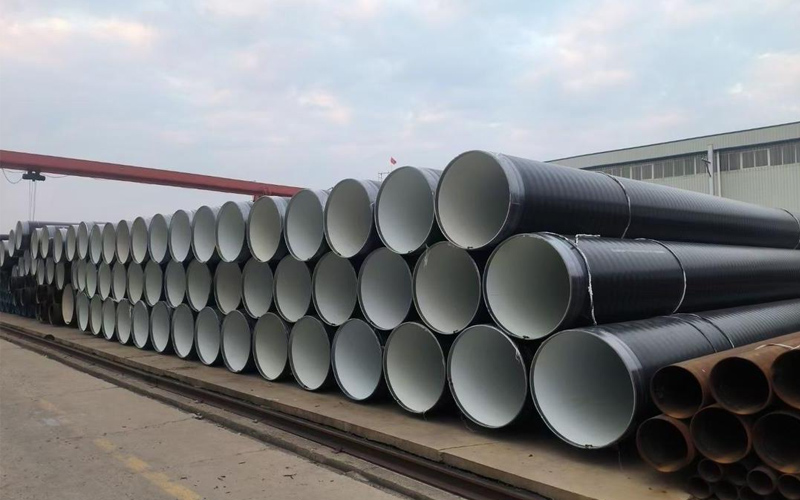
Steel Density Analysis: Core Differences between Mild and Medium Carbon Steels and Industrial Applications
The density of steel is one of the key parameters that determine its physical properties and industrial applications. Theoretical state of steel density...
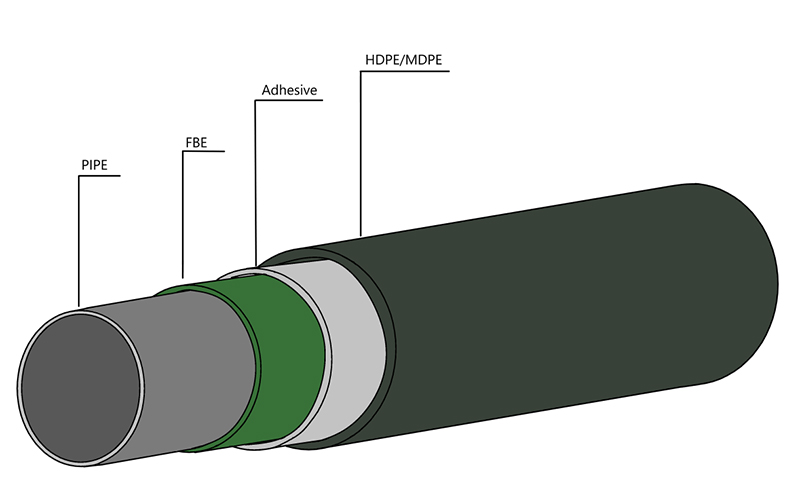
3LPE coated steel pipe: a solid barrier in the field of industrial corrosion protection
In the harsh environment of oil and gas, chemical industry, urban pipe network, etc., the long-term reliability and corrosion resistance of pipeline system...
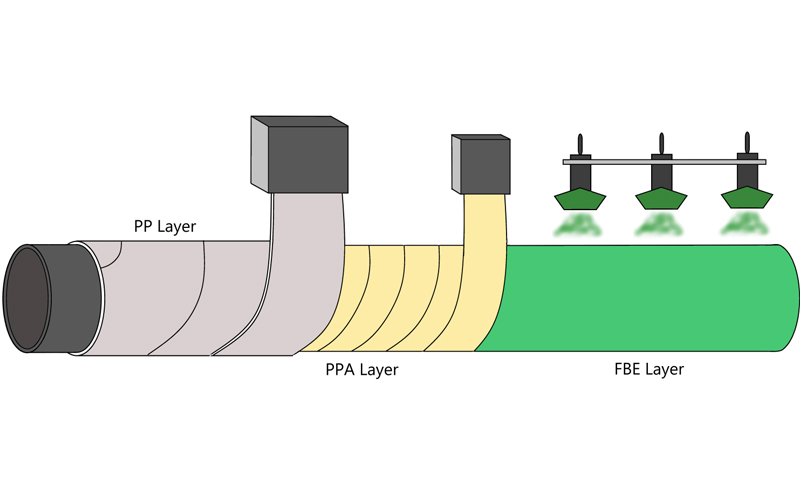
3LPP coated pipe: anti-corrosion guard in high temperature and high pressure environment
In some challenging special environments such as deep-sea oil and gas exploration and high-temperature crude oil transportation, traditional anti-corrosion coatings face significant challenges,...
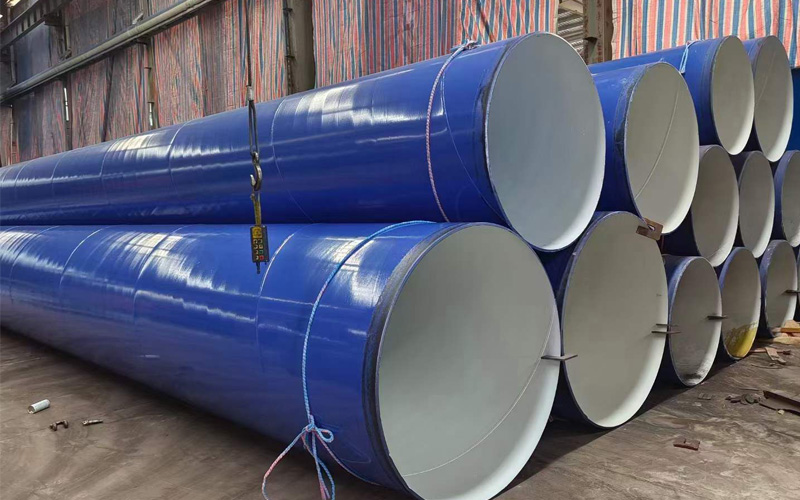
FBE steel pipe: the technological armor of the steel defense line
I In the icy waters beneath the Norwegian Sea pipeline, a section of FBE Lined Carbon Steel Pipe has been in service for 25...