





In global pipeline projects, engineers, purchasing managers and technical teams often meet two main steel pipe standards: the American API 5L and international ISO 3183. These are often called “technical twins” for overlapping specifications of oil, natural gas and water pipelines. But are they completely interchangeable in all technical details, test protocols and certification requirements? For cross-continental projects—with design/construction teams referencing different standards—this question impacts compliance, cost, and timelines. This white paper discusses their coordination history, L-level /X-level cross-references, technical nuances and the value of dual authentication.
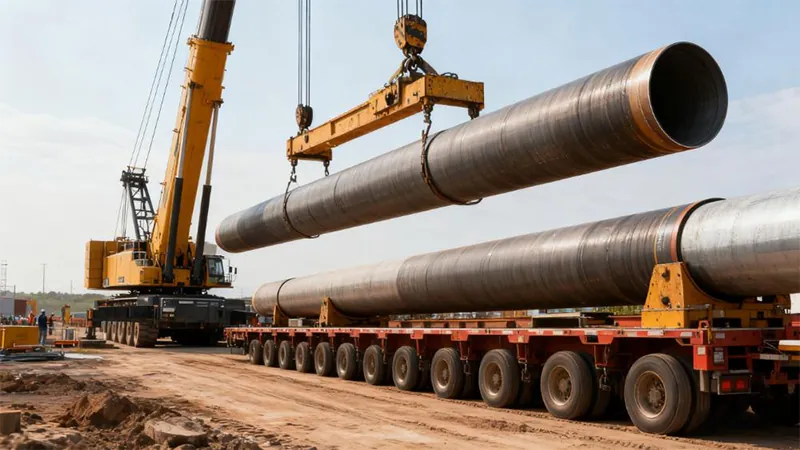
A harmonious history: from divergence to agreement
Before their current alignment, ISO 3183 and API 5L had major differences pre-API 5L 44th Edition. API 5L (American Petroleum Institute) focused on U.S. oil/gas needs, emphasizing high-pressure performance. ISO 3183 (International Organization for Standardization) was a global benchmark with diverse regional requirements.
These gaps—from chemical limits to mechanical testing—plagued multinational projects. A API 5L steel pipe meeting U.S. specs might fail ISO 3183, causing delays or rework. In the beginning of the 21st century, ISO and API set up a joint working group to “coordinate” core requirements: chemical scope, tensile thresholds, impact test and NDT protocols.
As a result, API 5L 46th Edition (2022) and ISO 3183: 2019 have highly unified technical cores. Both of them use the same quality framework-PSL 1 (basic quality for non-critical use) and PSL 2 (enhanced specification for high pressure/Arctic applications, with mandatory toughness testing and strict nondestructive testing).
For teams, this means a PSL 2-compliant API 5L steel pipe meets nearly the same technical specs as an ISO 3183 pipe of the same grade. What is the key to the use of cross-standards? Understanding their differences in naming.
Naming Convention: L-Grades vs. X-Grades–The Critical Cross – reference
Although technically the same, ISO 3183 and API 5L are different in grade naming, which is rooted in the unit of measurement. This confuses global projects, making a cross-reference tables very important.
API 5L naming logic (us customary unit)
API 5L uses “X grade”, where numerical value = minimum yield strength (ksi).
- API 5L X 52 = 52 ksi (360 MPa).
- API 5L X 60 = 60 ksi (415 MPa).
ISO 3183 Naming Logic (SI Units)
ISO 3183 uses “L-Grades,” where the number = minimum yield strength in MPa:
- ISO 3183 l 360 = 360 MPa (52 psi).
- ISO 3183 l 415 = 415 MPa (60 psi).
Comprehensive Grade Cross-Reference Table
| ISO 3183 Grade | API 5L Grade | Minimum Yield Strength (MPa) | Common Applications |
| L245 | Grade B | 245 | Low-pressure water pipe/pipeline |
| L290 | X42 | 290 | Mid-pressure oil/regional gas |
| L360 | X52 | 360 | High pressure gas/offshore |
| L415 | X60 | 415 | Long-distance/harsh-environment gas |
| L450 | X65 | 450 | Deep water offshore/high-pressure oil |
| L485 | X70 | 485 | Ultra-high-pressure/arctic/subsea |
Specifies that the European design of ISO 3183 L 360 is equivalent to the American specifications of API 5L X 52. Recognizing this is helpful for purchasing steel pipes that meet API 5L standards and saving costs.
Technical Nuances & Annexes: Where Standards Diverge
Although they are consistent, there is still a slight gap between ISO 3183 and API 5L in terms of regional requirements and certification, which is very important for compliance.
European specific Requirements: appendix to ISO 3183
ISO 3183 includes accessories for specific regions, such as Annex M (“Requirements for European Pipeline Steel”), which has been added:
- Tighter tolerances of outside diameter/wall thickness (applicable to European fittings).
- Mandatory full length UT (relative to. Sampling) is used for high-risk applications
- Higher anti-seismic/cold climate toughness (exceeding API 5L PSL 2).
Annex M reflects the regulatory pattern in Europe (e.g., Pressure Equipment Directive/PED). EU/EEA projects often require ISO 3183 Annex M, even if base specs align with API 5L..
Authentication system: API logo and ISO compliance
The biggest gap is authentication. API 5L requires the API Monogram—rigorous third-party approval:
- Annual quality management system audits (API Q 1 consistency).
- Consistent API 5L steel pipe test/document.
- Complete traceability (from raw materials to finished products).
ISO 3183 does not have a mandatory logo. Compliance purpose:
- Manufacturer-issued Certificate of Conformity (CoC).
- Regional certificate (e.g. PED, ASME) company’s products can be used if necessary.
- Certification laboratory test report.
For owners, an API Monogram API 5L steel pipe offers extra-quality assurance, while ISO 3183 relies on docs/regional certs.
The Solution: Global Project Flexibility Double Certification
Dual certification (“Dual Stenciled/Certified”) solves regional gaps—critical for multinational projects, cutting complexity and ensuring compliance.
What is dual certification?
Dual-certified pipeline fully meets the requirements of ISO 3183 and API 5L.
- Consistent chemical/mechanical/NDT specifications
- Compliance with regional accessories (e.g., Annex M to ISO 3183).
- Double marking (e.g., “API 5L X52 PSL2 / ISO 3183 L360 PSL2 Annex M”).
A dual-certified API 5L steel pipe (x 52/l 360) meets both grades’ strength/toughness. Its value is incalculable because:
- European design+middle east architecture.
- Global procurement (multi-country compliance)
- Multi-contractor projects (mixed standard preferences).
Advantages of dual certification of Allland
Allland leads to the use of advanced LSAW/SSAW lines in the dual-certified pipeline pipes. The functions include:
- Full API 5L 46th (PSL 1/2) and ISO 3183: 2019 (Annex M) compliance.
- API 5L steel pipe with top quality.
- ISO 17025 accredited internal laboratory (comprehensive test).
Double stencil printing (transparent ISO 3183/API 5L certification).
Whether you need LSAW (high pressure) or SSAW (cost-effective long-distance) pipeline, all Rand’s dual-certification products eliminate the contradiction. Our team is in line with regional demand of global supply chains.
Conclusion: the core is unified and the application is flexible
PSL and ISO 3183 are “partially identical”: the chemical/mechanical/chemical specifications are the same, but the naming, accessories and certification are different. Success needs L-Grade/X-Grade mastery and strategic dual certification.
Dual-certified API 5L/ISO 3183 pipeline provides the greatest flexibility for global teams. Allland’s decades of dual-certified LSAW/SSAW experience make us a trusted partner—with API Monogram and ISO 3183 compliance, ensuring consistent performance worldwide.
Navigation Global Pipeline Procurement? Contact Allland for reliable dual-certified API 5L steel pipe and ISO 3183 pipes. Our experts deliver tailored solutions, from spec alignment to on-time delivery.

ASTM A53 vs. API 5L: A Guide to Selection and Application
In the field of industrial piping, ASTM A53 and API 5L are two key standards that are widely used, but have very different positions. ASTM...

Introduction:Technology differences determine success or failure, and selection needs to be “precise”
In oil and gas transmission, municipal infrastructure and other major projects, the reasonable choice of steel pipe welding process directly affects the project...
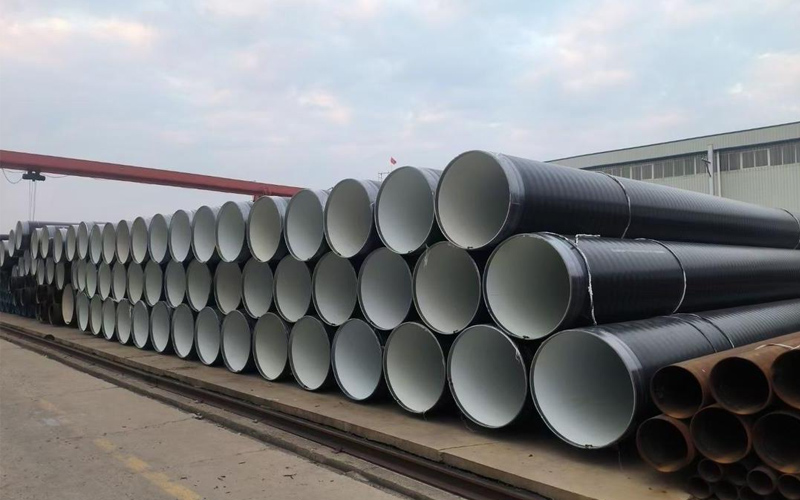
Steel Density Analysis: Core Differences between Mild and Medium Carbon Steels and Industrial Applications
The density of steel is one of the key parameters that determine its physical properties and industrial applications. Theoretical state of steel density...
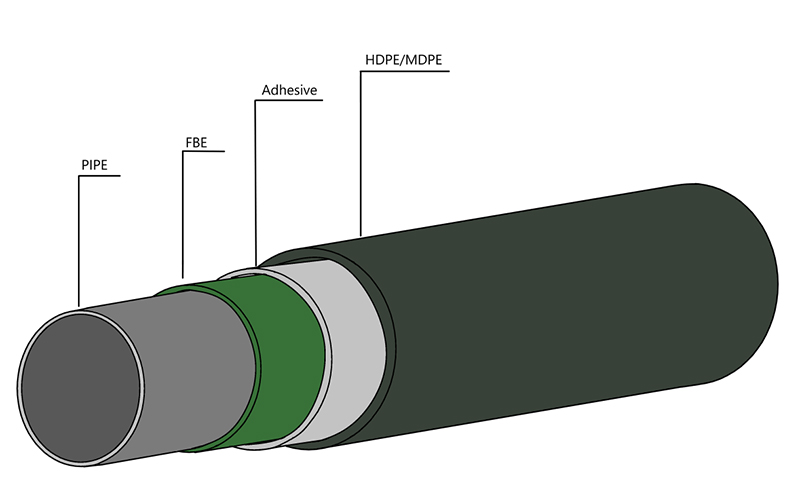
3LPE coated steel pipe: a solid barrier in the field of industrial corrosion protection
In the harsh environment of oil and gas, chemical industry, urban pipe network, etc., the long-term reliability and corrosion resistance of pipeline system...
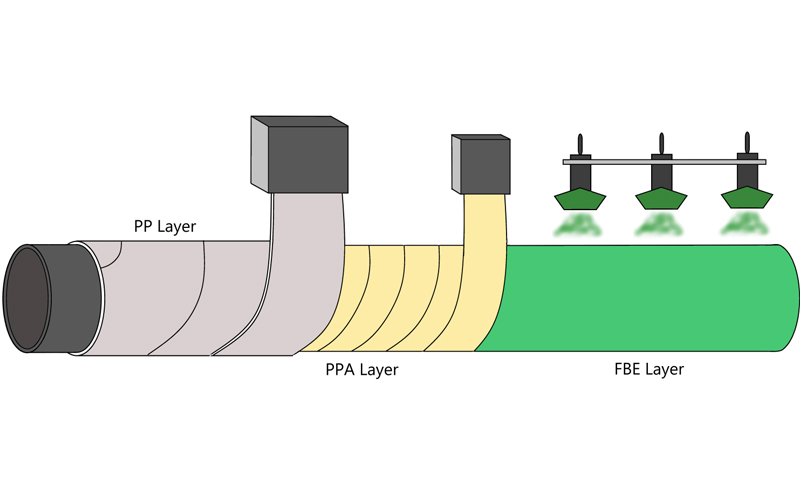
3LPP coated pipe: anti-corrosion guard in high temperature and high pressure environment
In some challenging special environments such as deep-sea oil and gas exploration and high-temperature crude oil transportation, traditional anti-corrosion coatings face significant challenges,...
FBE steel pipe: the technological armor of the steel defense line
I In the icy waters beneath the Norwegian Sea pipeline, a section of FBE Lined Carbon Steel Pipe has been in service for 25...