








Introduction: A Procurement Manager’s Dilemma
Suppose you are the purchasing manager for a new main gas pipeline. The design requires the use of 30-inch, x 70-class large-diameter pipeline, running at 15 MPa. Your intuition might be to specify a high-pressure seamless pipe and stick to the traditional belief that “seamless” equals ultimate safety.
However, your preliminary investigation has provided a severe reality check. The offer is not only high; They are astronomical figures-three or four times as much as you expected in your budget. The preparation time is even more frustrating, more than six months. Your project can not wait that long, and your budget can not absorb that cost. This situation emphasizes a key problem: for the sizes of high-pressure pipeline, especially large diameters, adhering to seamless pipeline can mean a lot of budget waste and unacceptable schedule risk.
This article will discuss this crucial purchasing decision in depth. We will demonstrate that for modern high pressure pipe sizes (particularly those over 20 inches), LSAW Pipe manufactured to the rigorous API 5L PSL2 standard is often the best cost-performance choice, offering equivalent safety with significant savings and faster delivery.
The “cost wall” of large diameter seamless steel pipe
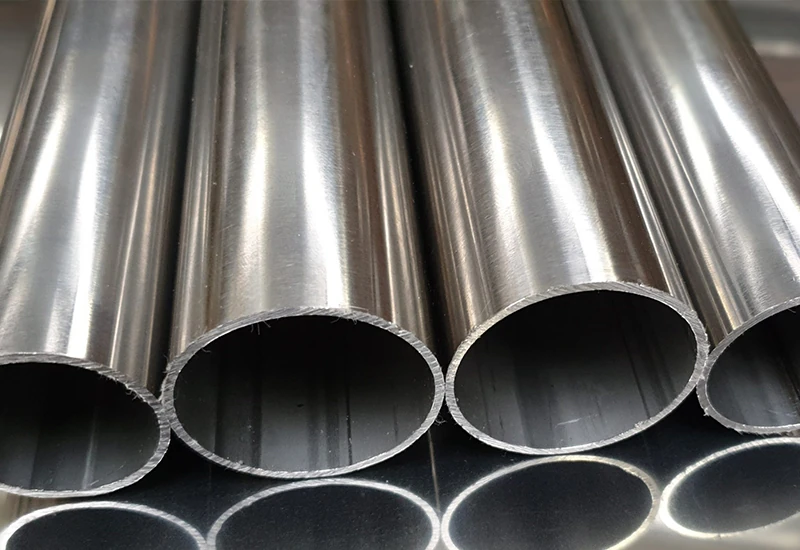
Seamless pipe is made by punching a solid billet and rolling it into a hollow pipe without leaving any weld. This is an effective and reliable process for small diameters. However, when it comes to the sizes of high-pressure pipe, especially large-diameter pipe (for example. More than 24 inches), the seamless process has encountered major physical and economic obstacles.
Manufacturing large diameter pipe as high pressure seamless pipe requires great force to penetrate and expand the solid billets. On a global scale, only a few factories have the large-scale equipment needed for these sizes. This inherent scarcity has caused a huge price premium. You are paying not just for the material, but for an extremely specialized and limited manufacturing capability.
The conclusion is clear: in the field of large diameter, the value positioning of high-pressure seamless steel pipe is particularly low. You are paying a vast premium for a product whose advantages are truly realized at smaller sizes, while for large diameter pipe projects, those advantages are drowned out by a massive “cost wall.”
LSAW Pipe: the “Best” High-Pressure Alternative
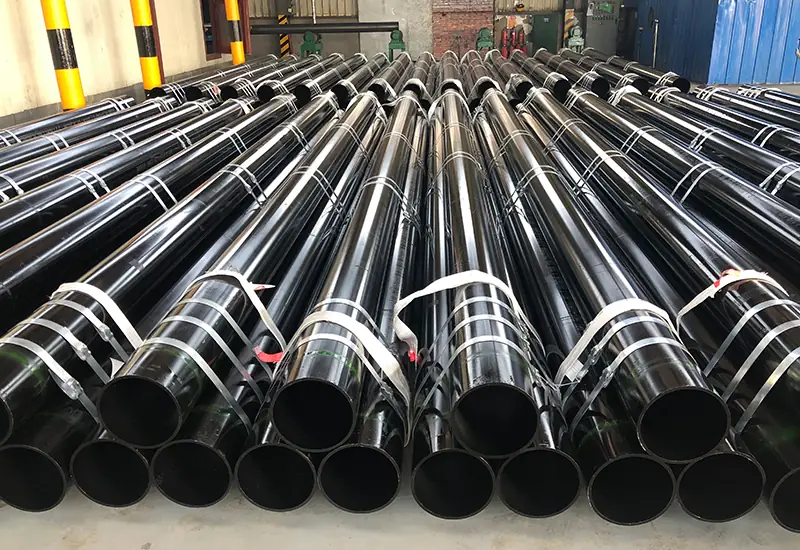
So, what are the feasible alternative? The answer is longitudinal submerged arc welded (LSAW) steel pipe. Modern longitudinal submerged arc welded pipes, especially those produced by JCOE (J-ing, C-ing, O-ing, Expanding) molding process, are strong competitors for high-pressure applications.
Longitudinal submerged arc welded pipe is made of high-strength steel plates (such as x 70 or x 80), and its quality is the same as that of high-pressure seamless pipe steel. The plate is cold-formed into a cylindrical shape, and then welded along its length. The key progress lies in quality and management. LSAW Pipe manufactured to the stringent API 5L standard (specifically the Product Specification Level 2, or PSL 2, requirement) undergoes 100% non-destructive testing (e. Ultrasonic testing and radiographic testing), and is usually mechanically expanded. This process stress-relieves and smoothed the weld zone, ensuring the weld strength matches the parent pipe metal.
The value proposition is unmistakable: the straight submerged arc welded pipe conforming to API 5L PSL2 standard provides the same pressure bearing capacity as its high-pressure seamless pipe, but the purchase price is usually 30-40% lower, and the delivery time is faster and more predictable.
Quantifiable Analysis: Price vs. Specs Showdown
This comparison table clearly illustrates why LSAW Pipe is the most intelligent cost-choice for large-scale projects.
| Feature | Large Diameter Seamless Pipe | LSAW Pipe(API 5L PSL2 Compliant) | Impact on Your Project Cost |
| Initial Purchase Price | Very High (3x – 5x LSAW) | Moderate & Competitive | LSAW is the best cost choice for buying high-pressure performance. |
| Size Range Availability | Very Limited (Typically max 26″) | Excellent (16″ – 60″+) | For large diameter pipe over 30 inches, LSAW is often the only viable industrial option. |
| Wall Thickness Uniformity | Fair (Inherent eccentricity issues) | Excellent | LSAW pipe, made from plate, has superior wall consistency, easing field welding and lowering installation cost. |
| High-Pressure Adaptability | Excellent | Excellent (with API 5L PSL2) | Both of them are suitable for high-pressure applications when they meet the standards. |
| Lead Time | Very Long (6-12 months) | Fast (2-3 months) | Project delays carry huge hidden costs; LSAW, let your project go according to plan. |
Data source: Analysis of industry comments based on the data of global open bidding for steel pipe factories. For example, the U.S. Department of Energy acknowledges the use of welded pipe in high-voltage transmission, pointing out its cost-effectiveness. Source: U.S. Department of Energy, Modern Pipeline Monitoring. In addition, the International Association of Pipeline and Offshore Contractors (IPLOCA) often reports the project cost and schedule benchmarks, emphasizing the availability of materials as a key factor.
Decision guide: when is LSAW a wise choice?
When should you specify LSAW Pipe for your high-pressure project? This is a simple guide:
- Scene: Any high pressure (e.g. Pipeline project requiring large-diameter pipe larger than 20 inches (508 mm).
- Key standard: you must specify a new standard that conforms to API 5L PSL. It’s not negotiable. PSL 2 mandates more rigorous testing, including Charpy V-Notch impact tests for toughness and comprehensive NDT, which directly addresses historical concerns about weld integrity.
In this size range, it is a standard industry practice to choose API 5L PSL2 straight seam submerged arc welding pipe-based on engineering and economic wise decision, not a compromise. A study in the journal of natural gas science and engineering confirmed that the welded pipe technology is mature and can meet the most demanding conditions for grade x 70 and above.Source: ScienceDirect, “Mechanical properties of high grade pipeline steel…”
Summary
In the procurement of high-pressure pipeline, “seamless” is not synonymous with safety. For large diameter pipe projects, modern LSAW Pipe offers equivalent safety, performance, and reliability, while providing overwhelming advantages in price and lead time. By adhering to the API 5L PSL2 standard, you can be sure that the pipeline you receive can withstand the harshest operating conditions.
Call for Action:
As a leading manufacturer of LSAW Pipe, All land Industries has extensive experience supplying high-quality, rigorously tested (hydrostatic+NDT) x 70 and higher-grade pipes for global high-pressure oil and gas projects. Let us help you make the most cost-effective choice, saving a lot of budget and time on your next large-diameter project. Please contact us immediately to obtain a competitive quotation tailored to your project specifications.
Frequently Asked Questions (FAQs)
Q 1: Can LSAW pipes really withstand high pressure like seamless pipe?
A: Yes. When compliant with API 5L PSL2, LSAW Pipe undergoes 100% weld inspection and hydrostatic testing, giving it pressure-containing capability equivalent to high pressure seamless pipe. It is a standard material for high-pressure transmission lines worldwide.
Q 2: What is the price difference between a 24-inch seamless and LSAW Pipe?
A: 24 inches is the limit of seamless steel tube production capacity. Therefore, a 24-inch high-pressure seamless pipe can be 2-3 times more expensive than an API 5L PSL2 straight seam submerged arc welded pipe of the same grade and size. Choosing LSAW can save a lot of cost.
Q 3: How can I ensure that LSAW welding is safe?
A: the key lies in due diligence and standardization. When you buy, you must abide by the API 5L PSL2 standard. Ask your supplier to provide a complete factory test certificate (Mics), including nondestructive testing report, Charpy impact test results and hydrostatic test records. These documents prove the quality and integrity of the welding.

ASTM A53 vs. API 5L: A Guide to Selection and Application
In the field of industrial piping, ASTM A53 and API 5L are two key standards that are widely used, but have very different positions. ASTM...

Introduction:Technology differences determine success or failure, and selection needs to be “precise”
In oil and gas transmission, municipal infrastructure and other major projects, the reasonable choice of steel pipe welding process directly affects the project...
Steel Density Analysis: Core Differences between Mild and Medium Carbon Steels and Industrial Applications
The density of steel is one of the key parameters that determine its physical properties and industrial applications. Theoretical state of steel density...
3LPE coated steel pipe: a solid barrier in the field of industrial corrosion protection
In the harsh environment of oil and gas, chemical industry, urban pipe network, etc., the long-term reliability and corrosion resistance of pipeline system...
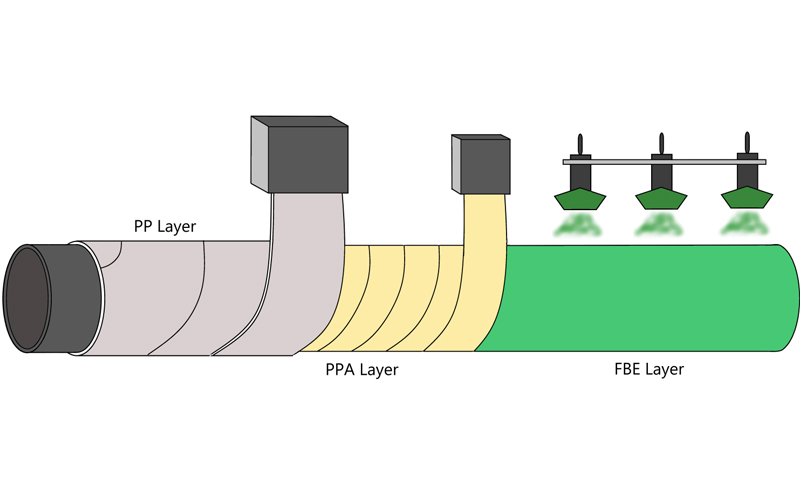
3LPP coated pipe: anti-corrosion guard in high temperature and high pressure environment
In some challenging special environments such as deep-sea oil and gas exploration and high-temperature crude oil transportation, traditional anti-corrosion coatings face significant challenges,...
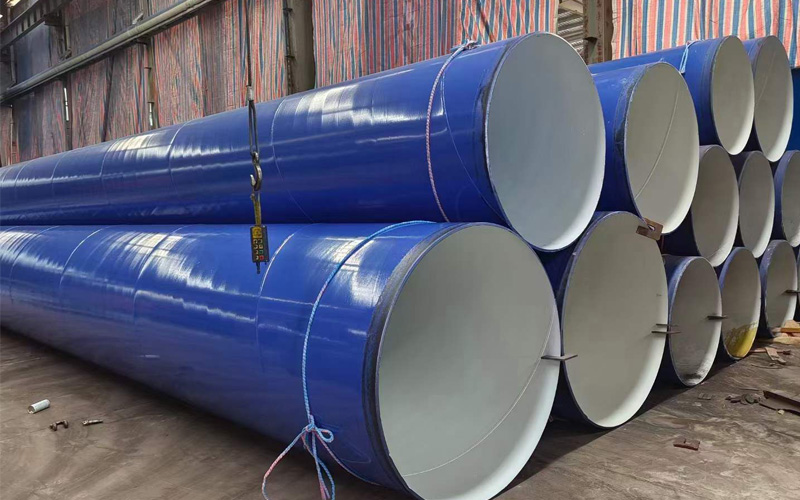
FBE steel pipe: the technological armor of the steel defense line
I In the icy waters beneath the Norwegian Sea pipeline, a section of FBE Lined Carbon Steel Pipe has been in service for 25...