







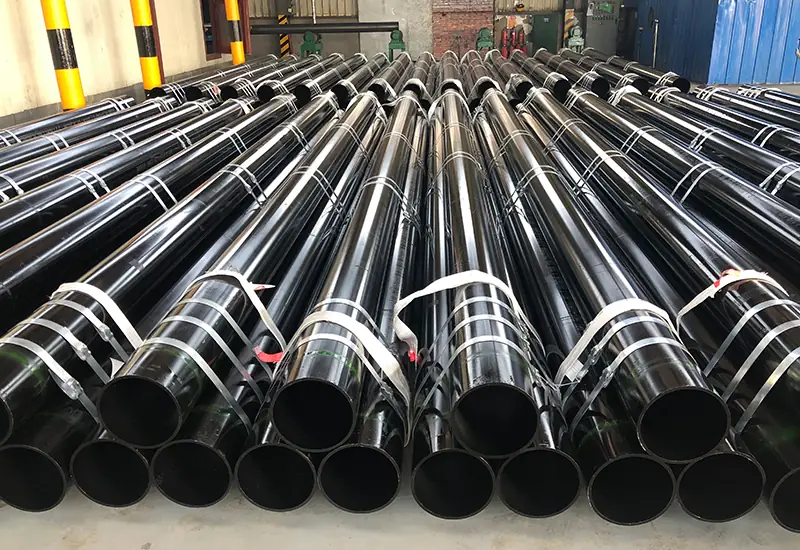
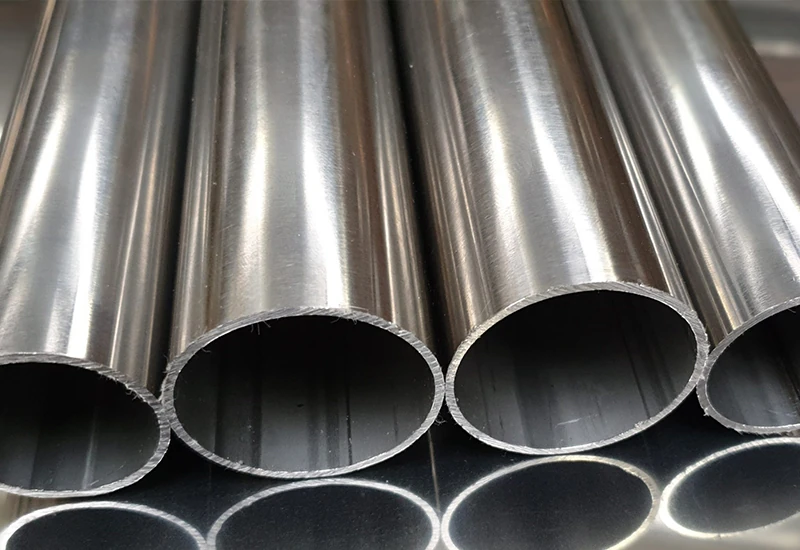


When it comes to the pipe procurement in industrial, commercial, and residential projects, many buyers only pay attention to the OD or upfront cost, while ignoring the key parameters that directly affect safety, performance and long-term value: the “schedule” or wall thickness grade. Choosing the wrong schedule can lead to disastrous consequences — from insufficient pressure resistance leading to leakage or pipe bursts, to unnecessary cost waste caused by over-specification thick-walled pipes, and even installation difficulties caused by size mismatch. Among all available Schedule grades, schedule 40 is one of the most widely used standard wall thickness grades in the world. Whether you are a project manager, engineer or a procurement expert, it is very important to know the size and thickness of schedule 40 pipe to ensure the success of the project, reduce risks and optimize costs.
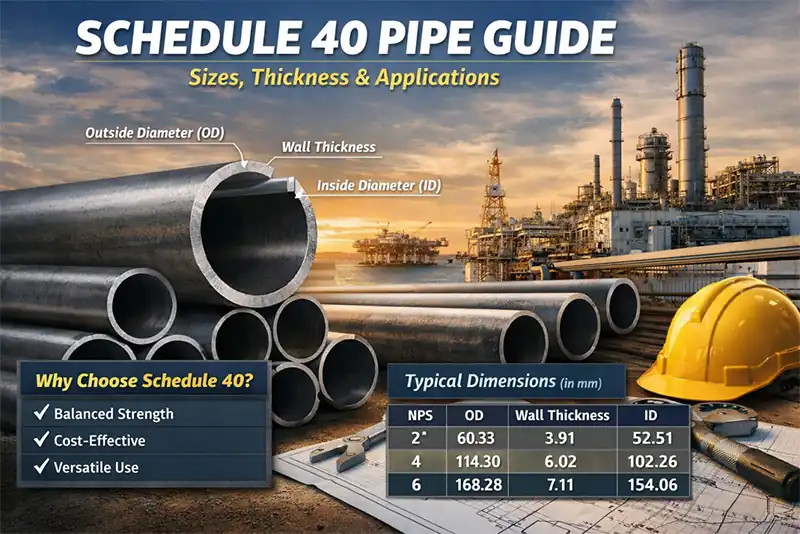
1. Why Is Schedule 40 Pipe an Industry Standard?
The industrial sector relies on consistency and reliability, and schedule 40 pipe has earned a reputation as an industrial standard. Its wide application stems from its ability to balance strength, cost and versatility-filling an important gap between thin-walled (Schedule 10) and thick-walled (Schedule 80) pipes. Unlike thinner pipe sections subjected to moderate pressure or thicker pipe sections which increase the cost of material and installation, schedule 40 pipe provide sufficient durability for most common applications. This balance makes it the go-to choice for countless projects, from water supply systems to oil and gas pipes, and its global availability ensures consistent supply chains, reducing lead times and procurement headaches.
Ignoring the schedule rating has far-reaching consequences. For example, the use of thin-walled Schedule 10 pipe in a medium-pressure water system can lead to pipe failure, resulting in water damage, project delay and expensive maintenance costs. On the contrary, specifying a thick-walled Schedule 80 pipe for a low-pressure application will waste materials and increase unnecessary installation costs, which could be allocated to other key project components. This is why understanding the size and thickness of the schedule 40 pipe is not only a technical detail, but also a strategic decision that affects the whole project life cycle.
2. What Does “Schedule 40” Mean?
First of all, it’s important to clarify that “Schedule 40” is not a fixed measurement value, but a standardized wall thickness grade developed by the American National Standards Institute (ANSI) as part of its pipe size system. The term “Schedule” (often abbreviated as “Sch”) refers to a numerical designation that correlates to the wall thickness of a pipe, but crucially, the Schedule number itself is not a direct pressure rating. On the contrary, the actual bearing capacity of schedule 40 pipe depends on the material, size and working temperature of the pipe.
A major misunderstanding is that Schedule 40 refers to a fixed wall thickness across all pipe sizes, but this is not the case. Schedule 40 pipe thickness varies with the nominal pipe size (NPS), meaning a 2-inch NPS schedule 40 pipe has a different wall thickness than a 6-inch NPS schedule 40 pipe. The purpose of this change is to ensure that the pressure-to-weight ratio of each pipe size is consistent, thus optimizing performance for its intended use. For example, a 2-inch NPS schedule 40 pipe has a wall thickness of 3.91 mm, while a 6-inch NPS schedule 40 pipe has a wall thickness of 7.11 mm—reflecting the need for greater structural integrity in larger-diameter pipes.
The schedule system defined in ASME B36.10M and other standards provides a common language for pipe manufacturers and buyers, ensuring that pipes from different suppliers meet the same size requirements. This standardization is crucial for interoperability, especially in large-scale projects, where components from multiple suppliers must work seamlessly together.
3. Schedule 40 Pipe Dimensions
To fully understand schedule 40 pipe, it’s essential to distinguish between three core dimensions that define its performance: Nominal Pipe Size (NPS), Outside Diameter (OD), and Inside Diameter (ID), along with schedule 40 pipe thickness. These parameters together determine the capacity, compression resistance and compatibility with pipe fittings and other system components of the pipe.
- Nominal Pipe Size (NPS): This is a standard name used to refer to the pipe size, but it doesn’t directly correspond to the actual outer diameter or inner diameter of the pipe. For example, a 1-inch pipe has no 1-inch outer diameter or inner diameter. It is just a standardized label, which can ensure consistency across manufacturers.
- Outside Diameter (OD): The OD of a schedule 40 pipe is fixed for each NPS, regardless of the Schedule rating. This consistency allows for compatibility with standard fittings, valves, and flanges, which are designed to match specific OD sizes.
- Wall Thickness: As mentioned above, the thickness of the schedule 40 pipe varies with NPS. This thickness is the key factor in determining the pipe’s pressure capacity and structural strength.
- Inner diameter (ID): The inner diameter is calculated by subtracting twice the wall thickness from the outer diameter. Since the thickness of the schedule 40 pipe changes with the change of NPS, the inner diameter will also change accordingly-directly affecting the pipe flow.
Schedule 40 Pipe Sizes & Thickness Chart
The following table provides accurate industry standard schedule 40 pipe sizes, including NPS, outer diameter, schedule 40 pipe thickness and inner diameter. According to the requirements of global standards such as ASME B36.10M, all measurements are in millimeters (mm).
| NPS (Nominal Pipe Size) | Outside Diameter (OD) (mm) | Wall Thickness (Sch 40) (mm) | Inside Diameter (ID) (mm) |
| 1/2″ | 21.34 | 2.77 | 15.80 |
| 3/4″ | 26.72 | 2.87 | 20.98 |
| 1″ | 33.40 | 3.38 | 26.64 |
| 1.5″ | 48.30 | 3.68 | 40.94 |
| 2″ | 60.33 | 3.91 | 52.51 |
| 3″ | 88.90 | 5.49 | 77.92 |
| 4″ | 114.30 | 6.02 | 102.26 |
| 6″ | 168.28 | 7.11 | 154.06 |
| 8″ | 219.10 | 8.18 | 202.74 |
| 10″ | 273.00 | 9.27 | 254.46 |
As shown in the table, the outer diameter of each NPS remains the same, while the thickness of the schedule 40 pipe increases with the increase of NPS. This ensures that larger pipes, which are usually used for higher flow rates or more demanding applications, have the necessary structural strength to withstand the working pressures.
4. Schedule 40 Pipe Thickness Explained
Schedule 40 pipe thickness is not arbitrary-it is strictly defined by international standards to ensure consistency and performance of different manufacturers. The most common standards for controlling the thickness of schedule 40 pipe include ASTM A53, ASTM A106 and API 5L, and each standard is adjusted for specific materials and applications.
- ASTM A53: This standard covers carbon steel pipe, including both seamless and welded varieties, for use in fluid transfer (water, oil, steam). It specifies schedule 40 pipe thickness for carbon steel pipes to ensure that they meet minimum strength requirements for medium pressure applications.
- ASTM A106: Seamless carbon steel pipe (such as steam pipes) are designed for high-temperature applications. This standard puts more stringent requirements on the thickness and material composition of schedule 40 pipes to ensure durability under extreme conditions.
- API 5L: This standard is applicable to pipes in oil and gas applications, including schedule 40 pipes. It stipulates the thickness requirements according to the expected use of the pipe (onshore, offshore, etc.) and the pressure it will bear.
From a technical point of view, schedule 40 pipe is classified as a medium wall thickness. It is located between Schedule 10 (thin wall for low-pressure and non-critical applications) and Schedule 80 (thick wall for high-pressure and heavy-duty applications. This middle position makes schedule 40 pipe an ideal choice for most medium-pressure fluid transportation applications, in which strength and cost must be balanced.
For example, in a typical water supply system with a working pressure of 50-100 psi, a Schedule 40 pipe can provide adequate pressure resistance for such applications without increasing the cost of Schedule 80 pipe. In contrast, a high-pressure oil pipe operating at 500+psi pressure would need Schedule 80 or higher pipes. Understanding this difference is key to choosing the right pipe for your application and avoiding unnecessary costs or security risks.
5. Common Applications of Schedule 40 Pipe
The versatility of schedule 40 pipe makes it suitable for a wide range of industrial, commercial and even residential applications. Its balanced advantages and cost make it the first choice for many projects, including.
- Oil&Gas pipes: Schedule 40 pipe is widely used in onshore and offshore oil and gas operations, particularly for gathering lines, distribution lines, and auxiliary systems. Among them, the moderate wall thickness provides enough strength to withstand the pressure of oil and gas flow, and its cost-effectiveness makes it ideal choice for large-scale projects.
- Water Supply Systems: Municipal water distribution, industrial water lines, and residential plumbing all rely on schedule 40 pipe. Its corrosion resistance (when made of suitable materials such as galvanized steel or polyvinyl chloride) and medium pressure capability make it very suitable for delivering clean water to homes, enterprises and factories.
- Structural architecture: In architecture, schedule 40 pipe are used for structural support, handrails and frames. Its strength and durability make it suitable for indoor and outdoor applications, and its standardized size ensures compatibility with other structural components.
- Fire Protection Systems: Fire sprinkler systems and fire mains often use Schedule 40 pipe, as it can withstand the high pressure required to deliver water quickly in emergency situations. Its thickness ensures that the pipe will not crack under the pressure of fire extinguishing systems.
- Mechanical piping: Industrial machinery, heating, ventilation and air conditioning (HVAC) systems use schedule 40 piping to transport fluid and gas. Its versatility allows it to be used with a variety of fluids, including water, steam and refrigerant.
The popularity of schedule 40 pipe stems from three key advantages: the balance of strength and cost, the convenience of welding and installation, and the maturity of global supply chain. Unlike special pipes that may be difficult to purchase, schedule 40 pipes can be obtained from global manufacturers, ensuring consistent supply and competitive prices. In addition, its standardized size makes it easy to cut, weld and install standard fittings, thus reducing installation time and labor costs.
6. Seamless vs. Welded Schedule 40 Pipe
Schedule 40 pipe is available in two main manufacturing types: seamless and Electric Resistance Welded (ERW) welded. Each type has its own strengths, costs, and typical applications, making it important to choose the right one for your project.
- Seamless Schedule 40 Pipe: This type of pipe is manufactured without any welds, using a process where a solid steel billet is heated and pierced to form a hollow tube. Seamless schedule 40 pipe has a uniform structure, making it stronger and more resistant to pressure than welded pipe. It is an ideal choice for high-pressure applications, such as oil and gas pipes. In this case, the integrity of pipe integrity is crucial.
- ERW Welded Schedule 40 pipe: ERW pipe is made by rolling a steel plate into a cylinder, and then welding the joint with resistance. This manufacturing process is more cost-effective than seamless pipe, making ERW schedule 40 pipe a popular choice for medium-pressure applications where cost is a priority, such as water supply systems and structural buildings.
Comparison Table of Seamless and Welded Schedule 40 Pipes
| Type | Strength | Cost | Typical Use |
| Seamless Schedule 40 Pipe | Higher strength, suitable for high-pressure applications | Higher cost due to complex manufacturing process | Oil & gas pipes, high-temperature steam lines, critical industrial applications |
| ERW Welded Schedule 40 Pipe | Moderate strength, suitable for medium-pressure applications | Lower cost, more cost-effective for large-scale projects | Water supply systems, structural construction, HVAC, non-critical industrial piping |
7. How to Select the Appropriate Schedule 40 Pipe Size
Choosing the right schedule 40 pipe size requires careful consideration of the specific requirements of your project. Follow these four steps to ensure that the right size is selected for your application.
- Step 1: Confirm Fluid Type–the type of fluid (water, steam, oil, gas, etc.) will impact the pipe’s material and size. For example, corrosive fluids may require schedule 40 pipe made from stainless steel, and water may be suitable for galvanized carbon steel. In addition, high-viscosity fluids (such as petroleum) may need a larger inner diameter to ensure adequate flow.
- Step 2: Check Working Pressure–Determine the maximum working pressure of your system. Schedule 40 pipe is designed for medium pressure, so if your system operates at high pressure (most applications are above 100 psi), you may need to consider a thicker Schedule (like Schedule 80). Always refer to the rated pressure of the pipe according to the material and size of the pipe.
- Step 3: Confirm Standards and Certification-Ensure that the schedule 40 pipe meets the industry standards required by your application (ASTM A53, ASTM A106, API 5L, etc.). Additionally, request a Mill Test Certificate (MTC) from the manufacturer to verify the pipe’s material composition and thickness, ensuring it meets your project’s specifications.
- Step 4: Consider Length & Container Loading–Schedule 40 pipe is available in random lengths (typically 6-12 meters) or fixed lengths (customized to your project’s needs). Consider the logistics of container loading-a 40-foot containers help optimize transportation costs by maximizing the number of pipes per container. For example, selecting optimized fixed lengths can improve container loading efficiency and reduce transportation damage, thus reducing damage during transportation.
8. Cost vs Performance: Is Schedule 40 Always the Best Choice?
While schedule 40 pipe is the most versatile and cost-effective option for most applications, it is not always the best choice. In order to determine whether schedule 40 pipe is suitable for your project, it is very important to compare it to other schedule grades in thickness, cost and application.
Comparison Table (Schedule 10 vs 40 vs 80)
| Schedule | Thickness | Cost | Application |
| Schedule 10 | Thin-walled, lightest weight | Lowest cost | Low-pressure applications (e.g., residential drainage, non-critical air lines) |
| Schedule 40 | Medium-walled, balanced weight | Balanced cost (best value for most applications) | General industry, medium-pressure fluid transfer, structural construction, fire protection |
| Schedule 80 | Thick-walled, heaviest weight | Highest cost | High-pressure applications (e.g., oil & gas transmission, industrial process lines) |
The key insight here is that schedule 40 pipe is the “universal”, providing the best balance of cost and performance for most applications. It is not the cheapest option (Schedule 10) or the strongest option (Schedule 80), but it provides the right combination of strength, durability and cost-effectiveness for the majority of industrial and commercial projects. For example, a municipal water supply project would benefit from schedule 40 pipe, because it can withstand the moderate pressure of the system and keep the costs low. However, Schedule 80 pipe is required to ensure the safety and reliability of high-pressure oil pipe.
9. Conclusion
Because of its balanced strength, cost-effectiveness and versatility, Schedule 40 pipe is the pillar of industrial and commercial pipe industry. Understanding the size and thickness of schedule 40 pipe and its applications is very important for making wise purchasing decisions to reduce risks, optimize costs and ensure the success of the project. Whether you’re working on a water supply system, oil and gas pipe, or structural construction project, schedule 40 pipe offers the reliability and performance you need.
In a word, schedule 40 pipe is a kind of pipe with medium wall thickness. Its standardized size is governed by international standards such as ASTM A53, ASTM A106 and API 5L, and its thickness varies with the size of NPS to ensure the consistency of pressure resistance across different pipe sizes. There are two manufacturing types: seamless and ERW welded, each of which is suitable for a specific applications, and balances cost and performance better than thinner or thicker schedules.Need reliable schedule 40 pipe size and certified steel pipe supply? Contact us today for a full size chart and competitive factory quotation. Our team of experts can help you select the right schedule 40 pipe size, type, and material for your project, ensuring you get the best value and performance.

ASTM A53 vs. API 5L: A Guide to Selection and Application
In the field of industrial piping, ASTM A53 and API 5L are two key standards that are widely used, but have very different positions. ASTM...

Introduction:Technology differences determine success or failure, and selection needs to be “precise”
In oil and gas transmission, municipal infrastructure and other major projects, the reasonable choice of steel pipe welding process directly affects the project...
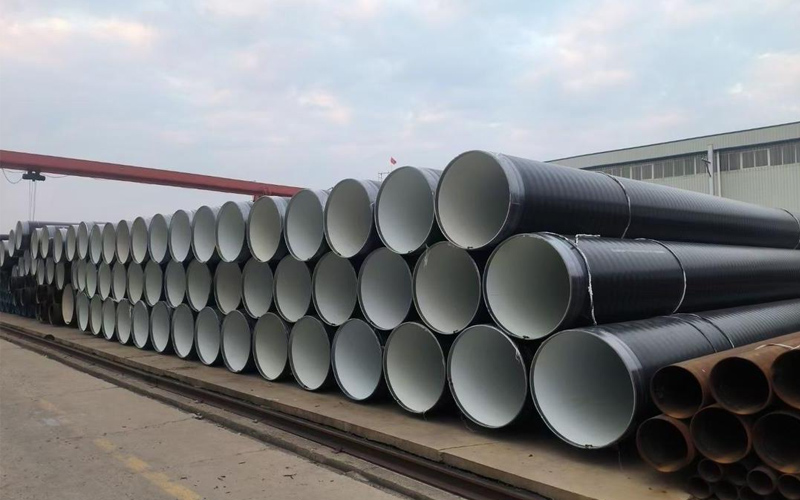
Steel Density Analysis: Core Differences between Mild and Medium Carbon Steels and Industrial Applications
The density of steel is one of the key parameters that determine its physical properties and industrial applications. Theoretical state of steel density...
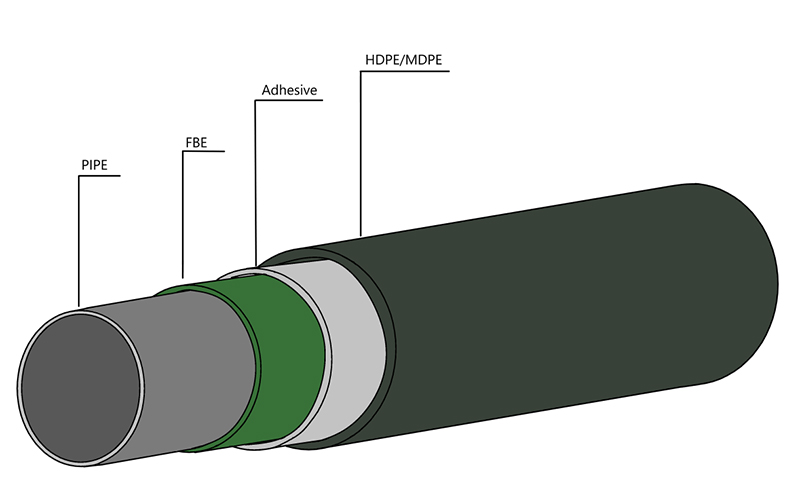
3LPE coated steel pipe: a solid barrier in the field of industrial corrosion protection
In the harsh environment of oil and gas, chemical industry, urban pipe network, etc., the long-term reliability and corrosion resistance of pipeline system...
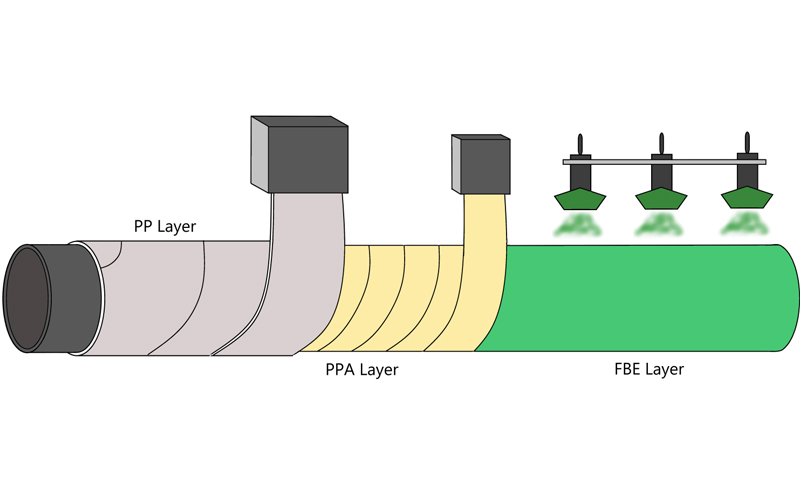
3LPP coated pipe: anti-corrosion guard in high temperature and high pressure environment
In some challenging special environments such as deep-sea oil and gas exploration and high-temperature crude oil transportation, traditional anti-corrosion coatings face significant challenges,...
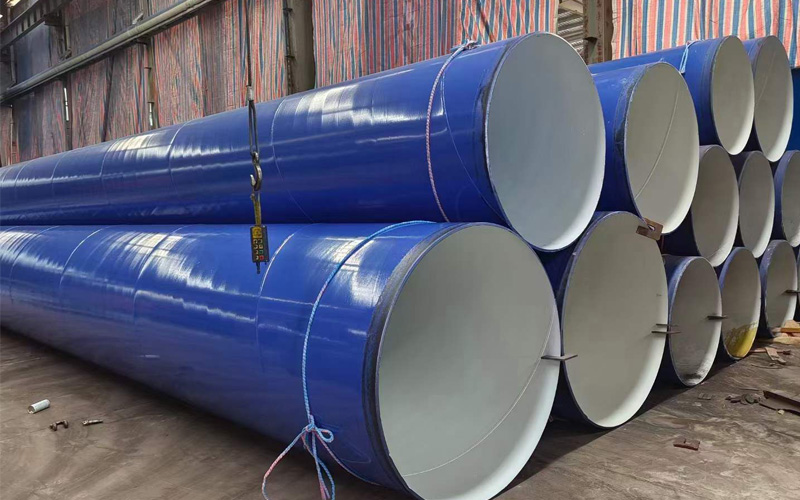
FBE steel pipe: the technological armor of the steel defense line
I In the icy waters beneath the Norwegian Sea pipeline, a section of FBE Lined Carbon Steel Pipe has been in service for 25...