








1. Introduction
Many buyers, project managers and mechanical engineers are faced with uncertainty when choosing pipeline materials: they often hesitate between stainless steel pipe and carbon steel pipe, not sure which can provide better performance, cost-effectiveness and long-term reliability for their project. Choosing the wrong type can lead to premature corrosion, overweight, budget overrun, and even safety risks of structures and fluid systems. Extensive industry standards, changing project requirements, and contradictory information about material properties available on the Internet often exacerbate this confusion.
This guide compares carbon steel pipe and stainless steel pipe across material composition, mechanical properties, steel density, dimensional standards, weight calculation, manufacturing types, and real-world applications. By the end, you will have a clear, data-backed framework to select the ideal steel pipe for industrial, structural, plumbing, or corrosive environments. In addition, we will resolve common misunderstandings about these two types of pipes, and provide practical tips to simplify your selection process, ensure that your project stays on track and meets all performance standards. (Sources: What Is Piping: Steel Pipe Weight Calculation, https://whatispiping.com/pipe-weight-calculation-steel-pipe-weight-chart/)
2. What Are Carbon Steel Pipes?
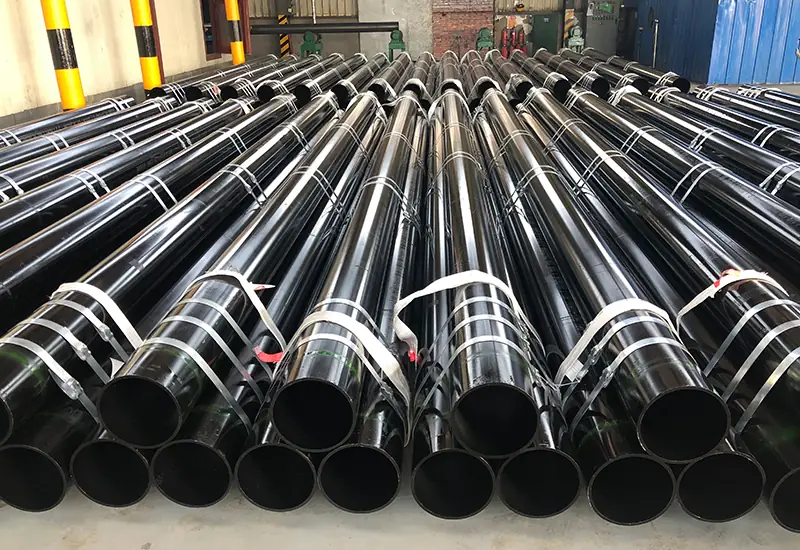
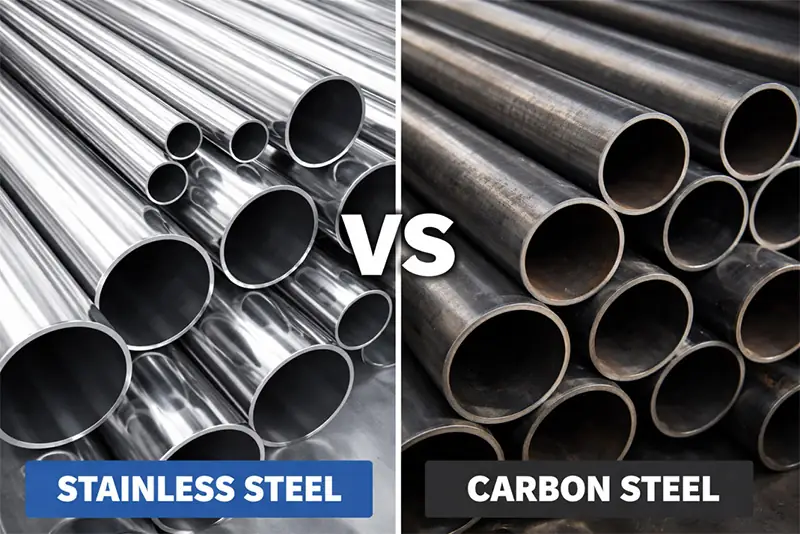
Carbon steel pipe is mainly composed of iron and carbon., and contains a small amount of alloying elements. Because of its strength, machinability and affordable cost, it is the most widely used type in the global pipeline industry. Unlike carbon steel, alloy steel contains additional elements such as chromium or nickel to enhance specific properties. It relies on its iron-carbon composition to provide reliable structural properties in most common applications.
Definition and Product Types
Carbon steel piping includes the following common variants, each of which is designed for specific project requirements.
- LSAW steel pipe: Longitudinal submerged arc welded pipe used for large-diameter structure and pressure applications, usually used in oil and gas pipelines and large-scale infrastructure projects.
- SSAW steel pipe: Spiral submerged arc welded pipe used for piling, pipelines and structure, which is paid attention to because it can withstand heavy load and external pressure.
- High Pressure Pipe: Used for oil, gas, and industrial fluid transport under moderate to high pressure, manufactured to meet strict industry standards for leak resistance and durability.
- Structural tube: Used for building frames, supporting columns and engineering structures, and strength and stiffness are the main requirements.
- Pile driving Pipe: Used in foundation engineering, ports, bridges and marine buildings, designed to withstand soil pressure and harsh environmental conditions.
- Sprinkler steel pipe: Used in firefighting systems, water supply networks and municipal facilities, designed to provide stable water flow in emergency.
Core Applications
- Water and natural gas transmission: Carbon steel pipe is widely used in municipal water supply systems and natural gas distribution networks because of their low price and moderate pressure.
- Foundation piling and structural support: In construction projects, it provides a stable base for buildings, bridges, and other structures, ensuring long-term structural integrity.
- Fire sprinkler systems: Its ability of resisting high temperatures and maintaining flow rate makes it ideal choice for fire prevention applications in commercial and industrial buildings.
- Oil and gas gathering and transportation pipeline: Used to transport crude oil and natural gas from oil wells to processing plants, its strength and weldability are very important.
- Building and infrastructure: From building frames to road support, it has become the main material in modern buildings because of its versatility and cost-effectiveness.
Main Characteristics
- High tensile strength and structural rigidity: It can bear heavy loads and external pressure, making it suitable for structure and pressure-bearing applications.
- Lower material and production cost: Compared to stainless steel, the production cost of carbon steel is lower, making it an economic choice for large-scale projects.
- Welded or seamless versions are available: Welded tubes are more cost-effective for most applications, while seamless tubes are used for higher pressure requirements.
- Very suitable for medium-voltage and low-pressure systems: It runs reliably in systems where pressure does not exceed a medium level and is suitable for most industrial and municipal applications.
- Good weldability and machinability: It can be easily welded, cut and formed to meet the requirements of specific project and reduce the installation time and costs.
Carbon steel pipe is still the first choice for most general industrial and structural projects, where corrosion resistance is not the main requirement. Its balance of strength, affordability, and versatility makes it a go-to option for engineers and project managers worldwide.
3. What Are Stainless Steel Pipes?
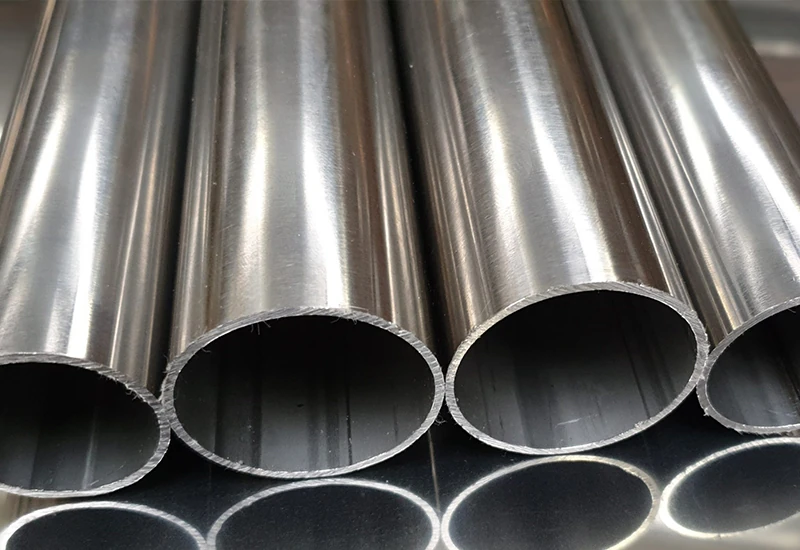
The definition of stainless steel pipe is its chromium content (minimum 10.5%), and chromium forms a passive oxide layer to prevent rust and corrosion. This protective layer distinguishes it from carbon steel and makes it suitable for environments where humidity, chemicals or hygiene are key issues. The most commonly used grades are 304 and 316L, designed for hygiene, chemical resistance, and long service life, with 316L offering enhanced corrosion resistance for more demanding applications.
Core Applications Programs
- Drinking water pipelines and food-grade processing: Its smooth and non-porous surface can prevent bacteria from growing, making it ideal choice for transporting drinking water and food.
- Pharmaceutical, beverage, and dairy equipment: Strict hygiene standards in these industries require pipes that are easy to clean and resistant to contamination.
- Chemical processing and marine environment: It can resist the corrosion from chemicals, salt water and other harsh substances, ensuring a long service life under harsh conditions.
- Sanitary pipeline systems requiring cleaning ability: Its smooth inner surface minimizes fluid turbulence, is easy to disinfect, and reduces the risk of pollution.
Main Characteristics
- Excellent corrosion resistance and oxidation resistance: Passivated chromium oxide layer protects pipeline from rust and corrosion, even in humid or chemical-rich environment.
- Stable density of steel is about 7.93: This consistent density makes it very easy to calculate weight and plan logistics of large-scale projects.
- Long service life and low maintenance cost: Unlike carbon steel, it does not need to be painted or coated regularly to prevent corrosion, thus reducing long-term maintenance costs.
- Smooth inner surface is beneficial to sanitary flow: Its non-porous surface can prevent sediment accumulation and ensure clean fluid transportation in applications with strict sanitary requirements.
- Suitable for highly hygienic and slightly corrosive environments: This is the first choice in industries where pollution or corrosion could endanger the quality or safety of products.
Stainless steel does not easily rust or contaminate fluids, making it irreplaceable in sanitary and corrosive settings. Although it is more expensive than carbon steel, it has long service life and low maintenance requirements, which is usually a cost-effective choice for correct application in the long run.
4. Stainless Steel Pipe Dimensions & Weight
The dimensions of stainless steel pipe comply with international standards, such as American Society of Mechanical Engineers B36.19M, which stipulates the outer diameter (OD), wall thickness (WT), length and tolerance. Correct size selection will directly affect the rated pressure, flow and structural load, so it is very important to choose the size that meets the specific requirements of the project. These standards ensure consistency across manufacturers, and make it easier to purchase and install pipelines for projects around the world.
How to Calculate Stainless Steel Pipe Weight
Weight is determined by pipe size and the density of the steel. The standard formula of weight (kg/m) of stainless steel pipe is:
Weight = (OD − WT) × WT × 0.02507
The formula uses the density (7.93 g/cm³) of 304/316L stainless steel as a reference. Accurate weight calculation is essential for logistics planning, as it affects shipping costs and load-bearing capacity in structural applications. Engineers and project managers should always verify the density of the specific grade of stainless steel they are using, because there can be slight differences between different grades.
| Outer Diameter (OD) | Wall Thickness (WT) | Weight per meter (kg/m) |
| 60.3 mm (2″) | 3.91 mm | 5.68 kg/m |
| 88.9 mm (3″) | 5.49 mm | 10.64 kg/m |
| 114.3 mm (4″) | 6.02 mm | 16.57 kg/m |
| 168.3 mm (6″) | 7.11 mm | 28.81 kg/m |
The density of steel affects weight estimation and logistics. The density of stainless steel (≈ 7.93 g/cm³) is slightly higher than that of carbon steel pipe (≈ 7.85g/cm), so stainless steel pipes of the same size are slightly heavier. This difference may seem small, but in large-scale projects, it will accumulate, affecting the calculation of transportation costs and structural load. When planning the budget and logistics of the project, it is very important to consider this difference.
5. Comparison Between Welded Steel Pipes and Seamless Steel Pipes
When selecting steel pipe, you must also choose between welded and seamless production. Our catalogue focuses on welded steel pipe (SSAW/LSAW), which meets the needs of most industrial and structural projects. Welded pipes are manufactured by joining steel plates or coils, while seamless pipes are made by piercing a solid steel billet and rolling it into a tube, resulting in a pipe with no weld seam.
| Feature | Welded Steel Pipe (SSAW/LSAW) | Seamless Steel Pipe |
| Manufacturing Process | Welded (ERW, SSAW, LSAW) | Seamless (hot/cold rolled) |
| Cost | Lower cost, faster production | Higher cost, limited diameter |
| Applications | Structural, fluid transport, piling | High pressure, high temperature |
| Available Products | LSAW, SSAW, High Pressure, Structural | Limited (mostly high pressure) |
For general industrial purposes, structural applications or low-pressure fluid transportation, welded steel pipes are cost-effective and widely available. This is the practical choice for most carbon steel pipe projects, providing an excellent balance of performance, price, and availability compared with seamless steel pipes.
6. Choosing the Right Pipeline for Your Project
Considering the specific requirements, budget and environmental conditions of the project, use this simple decision-making framework to choose the most suitable steel pipe for your application. The framework will help you avoid common mistakes and ensure that the pipeline you choose meets all performance and safety standards.
1. General industrial, construction, water/gas transportation, piling, and firefighting systems.
Select welded carbon steel pipe.
Reason: High strength, low cost and reliable performance. For these applications, it is the most cost-effective option, providing the required strength and durability without the high price of stainless steel.
2. Hygiene, corrosiveness, food, medicines and marine environment.
Select stainless steel pipes (304/316L).
Cause: Excellent corrosion resistance and cleaning ability. These environments require a pipe that can resist rust and contamination, making stainless steel the only practical choice.
Steel density is a practical factor for transportation and loading planning, because it affects the total weight of pipelines, which in turn affects the transportation costs and the bearing capacity of structures.
- Carbon steel pipes: ~ 7.85 g/cm³.
- stainless steel pipes: ~ 7.93g/cm³.
Be sure to use the correct density to calculate the weight to avoid cost or logistics errors. This is especially important for large-scale projects, even small weight difference can lead to major budget overruns or structural problems.
7. Frequently Asked Questions (FAQ)
Q 1: What is the standard steel density for carbon steel pipe?
A: The typical steel density of carbon steel pipe is 7.85 g/cm³ (7850 kg/m³). This value is widely accepted in engineering calculations and international standards, and is used as the basis for most weight calculations in the industry.
Q 2: Why is stainless steel more corrosion-resistant than carbon steel pipe?
A: Stainless steel contains at least 10.5% chromium, and chromium forms a self-repairing oxide layer on the surface of the pipeline. Even in humid or chemical-rich environment, this protective layer can protect the underlying steel from rust and corrosion. Carbon steel pipe lacks this protective layer, and it will rust when exposed to moisture and oxygen, so it is not suitable for corrosive environment.
Q 3: Can I use the same weight formula for carbon steel pipe and stainless steel pipe?
A: No. The formula constant for carbon steel pipe is 0.02466, and for stainless steel it is 0.02507, which reflects their different steel densities. The density of these two materials is slightly different, which means that the weight calculation formula must be adjusted to ensure accuracy, which is very important for logistics and structural planning.
Q 4: Is the strength of welded steel pipe the same as that of seamless pipe?
A: For most applications, welded steel pipe meet the standard structure and pressure requirements. Seamless pipe are only used under extreme high pressure and high temperature conditions, for example, in the oil and gas industry, pipelines are exposed to extreme working conditions. For most industrial and structural projects, welded pipe have enough strength and reliability.
Q 5: What kind of pipeline is more cost-effective for large projects?
A: Carbon steel pipe (especially welded SSAW/LSAW) provide the best balance of strength, availability and cost for large-scale infrastructure and industrial projects. Although stainless steel has a longer service life, its high initial cost makes it not cost-effective in large-scale projects where corrosion resistance is not a key requirement.
8. Conclusion
Choosing the right steel pipe depends on three core factors: application environment, pressure demand and budget. Taking some time to evaluate these factors will help you choose the pipeline that meets the needs of the project, ensures long-term reliability and stay within budget.
For most structural, water, gas, piling and firefighting applications, carbon steel pipe are the best solution, providing a balance of strength, price and versatility.
For corrosion resistance and hygiene: stainless steel pipe (304/316L) is necessary because it can withstand harsh environment and prevent pollution.
Steel density helps you to accurately calculate weight, transportation costs and structural loads. Always use the validated data from authoritative material standards to ensure safety and efficiency, because incorrect density calculations can lead to costly errors and security risks.At Allland Pipes, we provide certified carbon steel pipe (LSAW, SSAW), high pressure pipes, structural pipes and stainless steel pipes to customers all over the world. Our products conform to ASTM, ASME and EN standards, ensuring reliable performance of the most important projects. We also provide expert guidance to help you choose the right pipeline for your specific application and ensure the success of your project from beginning to end.

ASTM A53 vs. API 5L: A Guide to Selection and Application
In the field of industrial piping, ASTM A53 and API 5L are two key standards that are widely used, but have very different positions. ASTM...

Introduction:Technology differences determine success or failure, and selection needs to be “precise”
In oil and gas transmission, municipal infrastructure and other major projects, the reasonable choice of steel pipe welding process directly affects the project...
Steel Density Analysis: Core Differences between Mild and Medium Carbon Steels and Industrial Applications
The density of steel is one of the key parameters that determine its physical properties and industrial applications. Theoretical state of steel density...
3LPE coated steel pipe: a solid barrier in the field of industrial corrosion protection
In the harsh environment of oil and gas, chemical industry, urban pipe network, etc., the long-term reliability and corrosion resistance of pipeline system...
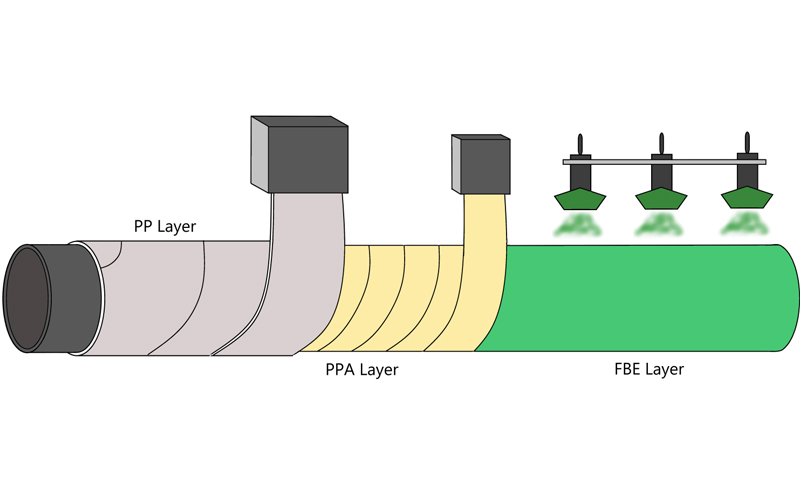
3LPP coated pipe: anti-corrosion guard in high temperature and high pressure environment
In some challenging special environments such as deep-sea oil and gas exploration and high-temperature crude oil transportation, traditional anti-corrosion coatings face significant challenges,...
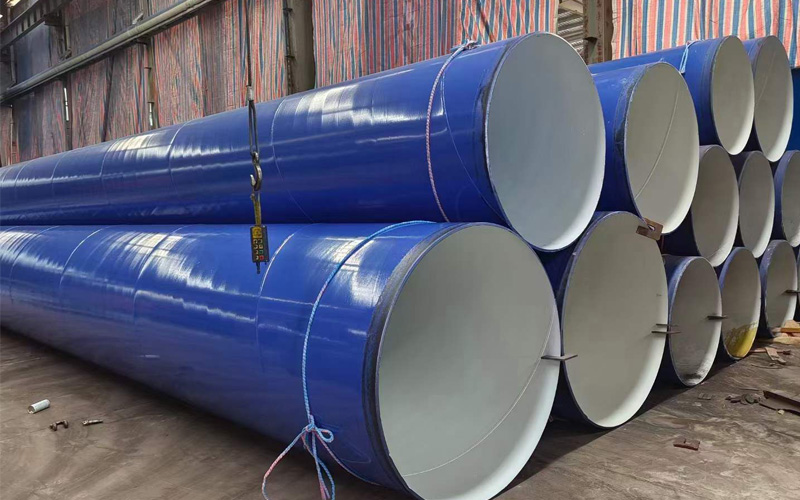
FBE steel pipe: the technological armor of the steel defense line
I In the icy waters beneath the Norwegian Sea pipeline, a section of FBE Lined Carbon Steel Pipe has been in service for 25...