



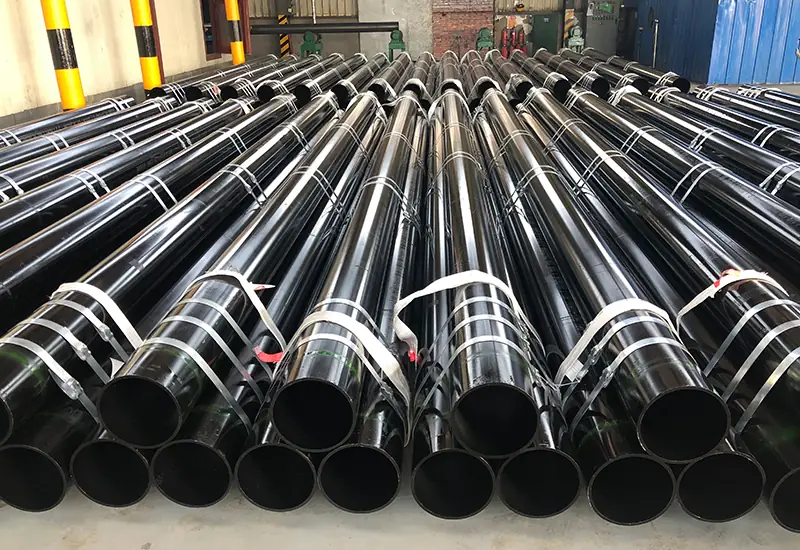

3PE (Three-Layer Polyethylene) coating is the gold standard for corrosion protection of onshore pipeline systems worldwide. It combines the strong adhesion of Fusion Bonded Epoxy (FBE) with polyethylene’s mechanical protection, forming a robust barrier against corrosion and physical damage. 3PE depends on industry standards, among which DIN 30670 (German), ISO 21809 (International) and SY/T 0413 (China Oil and Gas) are the most authoritative. These standards define key parameters, such as coating thickness and peel strength, which are very important for the durability of pipelines.
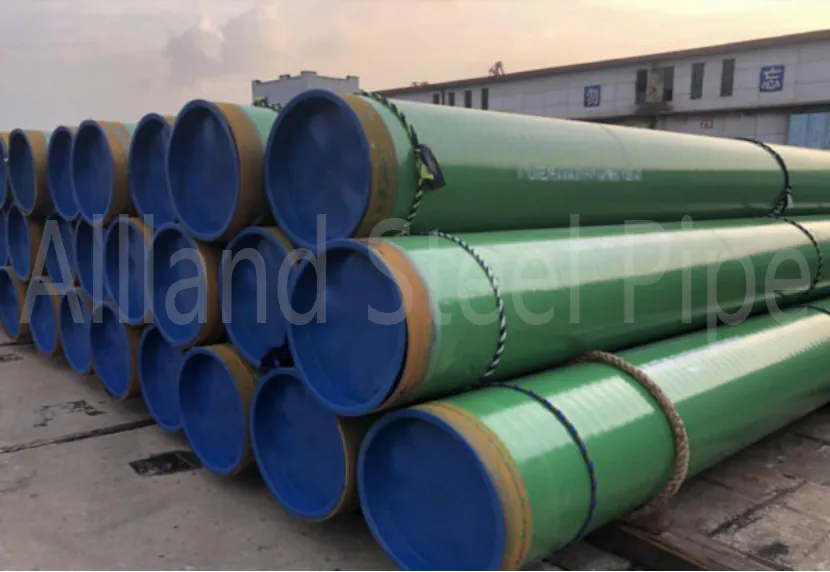
What is 3PE Coating? (The Triple Layer Defense)
3PE coating is a multi-layered corrosion protection system specifically engineered for steel pipelines operating in buried or harsh industrial environments. Its three distinct layers work in perfect synergy to address both corrosion threats and mechanical damage, offering significantly better performance and longer service life than single or dual-layer coating alternatives. Because the system can resist soil erosion, chemical exposure and physical impacts during installation and long-term operation, it is widely used in oil, gas and water transportation projects all over the world.
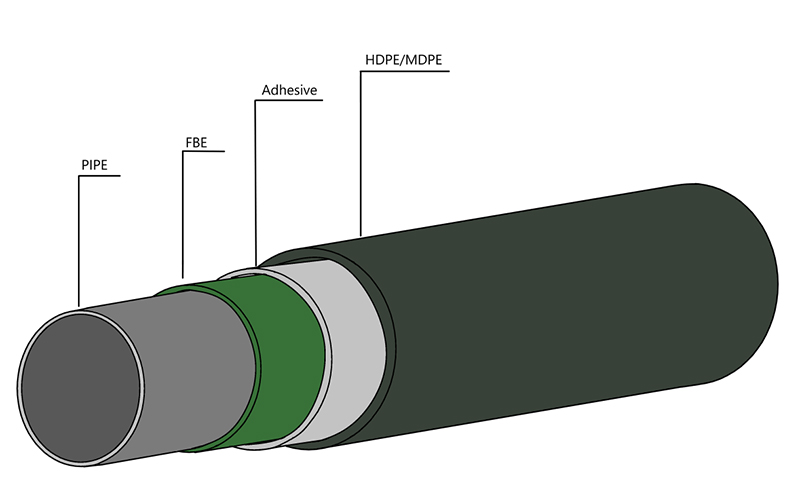
Layer 1: Fusion Bonded Epoxy (FBE) coating–the innermost layer, applied directly to pre-treated steel, acts as the primary corrosion barrier. It bonds tightly to steel, resisting moisture, electrolytes, and harmful chemicals that can cause rust and degradation. Proper pretreatment, including shot blasting to the Sa2.5 level and achieving an anchor profile of 50-75 microns, can ensure the best adhesion and prevent the FBE layer from peeling or cracking over time, which is very important for long-term corrosion protection.
Layer 2: Adhesive layer – Bonds FBE and polyethylene, preventing delamination that could expose the steel pipe to corrosion. This layer is specially formulated and melts and flows during the coating process, forming a seamless and firm transition between the internal corrosion barrier (FBE) and the external mechanical protective layer (PE). It also enhances the overall flexibility of the 3PE system, allowing the coating to adapt to minor pipe movements without cracking, which is vital for pipelines buried in dynamic soil conditions.
Layer 3: Polyethylene (PE) coating – The outer HDPE layer provides mechanical protection, preventing environmental factors such as transportation/installation damage and ultraviolet radiation, and prolonging the service life of the pipeline.
A close relative of 3PE is 3LPP coating (Three-Layer Polypropylene), which replaces the polyethylene outer layer with polypropylene. The key difference between 3LPE and 3LPP lies in their temperature resistance: 3LPP can withstand higher working temperatures (up to 110°C), which is very suitable for high-pressure gas pipeline systems and projects in high temperature environment. In contrast, 3LPE is better suited for standard onshore applications with moderate temperature requirements, offering a cost-effective solution for most buried pipeline projects.
Comparison of Major 3PE Standards
In order to help stakeholders make informed decisions when choosing 3PE coating standards for their projects, the following table provides a detailed comparison of DIN 30670, ISO 21809-1 and SY/T 0413, with emphasis on key technologies and application-related features.
| Feature | DIN 30670 | ISO 21809-1 | SY/T 0413 |
| Origin | Germany (Pioneer in 3PE coating standards) | International Standard (globally recognized) | China (Oil & Gas Industry, adapted for local conditions) |
| Coating Thickness | Based on the size and weight of the pipe, different applications have flexible requirements. | More stringent on large diameter pipe, ensuring uniform thickness for critical projects | Optimized for onshore projects, with thickness specifications aligned with common soil conditions in China |
| Peel Strength | ≥ 35 N/cm (at 20°C), providing reliable adhesion for standard applications | ≥ 150 N/cm (Highest requirement among the three standards, ensuring superior bond strength) | ≥ 100 N/cm, a significant improvement from earlier versions to enhance durability |
| Impact Energy | The measurement unit is Joule/mm, and the specifications depends on the common mechanical stress. | The requirements for 3PE steel pipe are high, and it is suitable for high stress environment such as offshore installations. | Consistent with common soil conditions in China, balancing protection and cost – effectiveness. |
| Application | Universal, widely used in onshore and offshore projects. | The preferred choice for offshore pipelines and multinational, high-value infrastructure projects. | Large-scale onshore pipeline construction in China and Asia has been optimized for local soil and environmental conditions. |
Main Technical Factors in Purchasing
When purchasing 3PE coated pipe, key technical factors are to ensure compatibility and reliability, which directly affect the success of the project and the service life of the pipeline. These factors include the compatibility of pipeline materials, environmental adaptability and the conformity of size specifications, all of which must be carefully evaluated to avoid expensive rework, coating failure and premature aging of the pipeline. Ignoring any of these factors can lead to potential safety hazards and an increase in long-term maintenance costs.
Pipe Material Compatibility
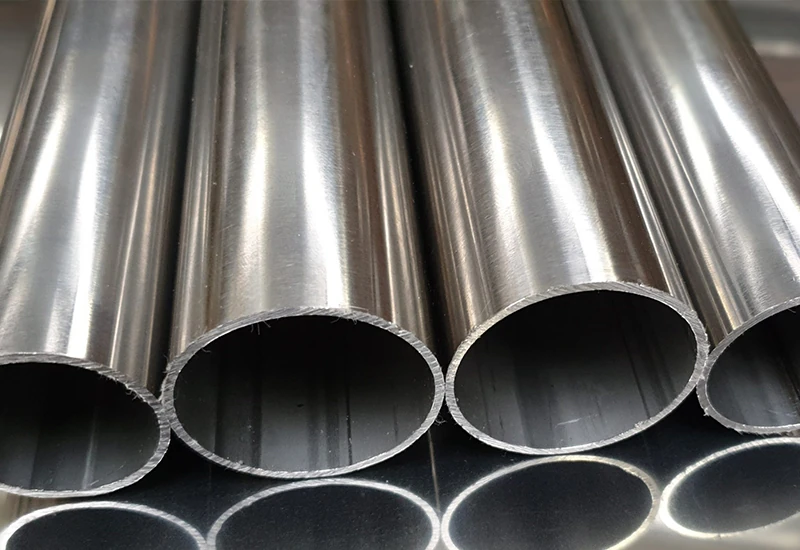
3PE coatings are suitable for API 5L steel pipes, including LSAW pipe, SSAW pipe and carbon steel seamless pipe. Proper steel pre-treatment—such as shot blasting and preheating—is essential to ensure strong FBE adhesion, as any contaminants or uneven surfaces can compromise the coating’s performance. API 5L X52/X65 grades are particularly common for high-pressure, long-distance pipeline projects due to their exceptional tensile strength and inherent corrosion resistance, making them ideal for pairing with 3PE coatings.
Environmental Adaptation
3PE coating must be closely matched with the specific environment of the pipeline engineering to ensure long-term durability. For harsh soil conditions, such as high salinity, acidity or high water content, choosing corrosion-resistant pipes that meet strict peeling strength and impact energy standards (for example, ISO 21809-1) is very important to prevent the coating from premature failure. These corrosive environments can accelerate corrosion, so the coating must form an impermeable barrier to protect the steel matrix.
For offshore applications, external 3LPP coating is superior to 3PE. Its excellent temperature resistance and mechanical strength are suitable for offshore oil pipelines, and polypropylene is resistant to ultraviolet rays and chemical degradation in the marine environment.
Dimensions and Specifications
3PE coating thickness depends on the pipe wall thickness chart and the size of the steel pipe; Larger pipes and those with thicker walls require thicker coatings to ensure uniform protection and withstand greater mechanical stress. ISO 21809-1 enforces stricter thickness requirements for large diameter pipes, which is critical for project safety as these pipes often carry high-pressure fluids over long distances. Engineers calculate the optimal coating thickness according to specific standards, pipeline specifications and project environment, so as to provide maximum protection and avoid unnecessary waste of materials.
Why Choose Certified 3PE Coated Pipes from Allland?
As a leading steel pipe manufacturer with many years of industry experience, Allland Pipes provides high-quality 3PE coated pipes that meet the most stringent international and national standards. Our robust supply chain, from raw material sourcing to final delivery, and rigorous quality control processes ensure that every product we provide is reliable, durable, and fully customized to meet our customers’ unique project requirements. We give priority to consistency and performance, making us a reliable partner for pipeline projects of all sizes.
The pipes we produce meet the requirements of API 5L and ISO 3183. According to the needs of the project, 3PE coating conforming to ISO 21809-1, DIN 30670 or SY/T 0413 is adopted. Strict quality testing for anti-corrosion coating for steel pipe—including peel strength, impact resistance, and thickness checks—ensures every product meets or exceeds required standards, giving customers confidence in the durability and performance of their pipeline systems.
Allland provides full-size customization, from small schedule 40 pipe to large-diameter steel pipe. Our engineers provide tailored solutions balancing performance, cost, and compliance for all pipeline needs.
Frequently Asked Questions
Q 1: What is the difference between 3LPE and 3LPP?
A: The key difference between 3LPE and 3LPP lies in the outer material and temperature resistance. Medium and High-density polyethylene (MDPE/HDPE) are suitable for standard onshore pipelines (the temperature is as high as 80°C), and it is cost-effective. 3LPP (polypropylene) can withstand temperatures as high as 110°C, which is an ideal choice for high-pressure gas pipelines and offshore projects, but it is expensive.
Q 2: Can drinking water pipes be coated with 3PE?
A: Yes, 3PE is used as an external coating for drinking water pipes. The interior is lined with a food-grade, leaching-resistant liquid epoxy coating to ensure the safety of drinking water, while 3PE can prevent buried corrosion.
Q 3: Is 3PE suitable for high-pressure gas pipelines?
A: Yes, 3PE is matched with API 5L (X52/X65+) pipes, which are suitable for high-pressure gas pipelines. 3PE provides corrosion/mechanical protection, while API 5L steel deals with high pressure. 3LPP is the first choice for high-temperature gas pipelines.
Conclusion
Choosing the right 3PE standard is very important for the success and long-term performance of any pipeline project. DIN 30670 is versatile and very suitable for most onshore and offshore projects, providing a balanced combination of performance and cost-efficiency. Due to the strict requirements for peel strength and coating quality, ISO 21809-1 stands out and becomes the first choice for global, key and offshore projects. SY/T 0413 is specially optimized for the construction of large-scale onshore pipelines in China and Asia, and provides an economical and efficient solution in line with local soil conditions and project budgets. The best choice should always be based on a comprehensive evaluation of soil corrosivity, ambient temperature and project budget constraints.Choose an ISO-certified supplier like Allland Pipes, a trusted steel pipe manufacturer complying with API 5L, ISO 3183, and 3PE standards. Strict quality control guarantees high standards from raw materials to testing. We offer 3PE anti-corrosion pipe, epoxy-coated steel piping, large-diameter steel pipe, and full customization from small schedule 40 pipe to large-diameter options, serving all pipeline needs.

ASTM A53 vs. API 5L: A Guide to Selection and Application
In the field of industrial piping, ASTM A53 and API 5L are two key standards that are widely used, but have very different positions. ASTM...

Introduction:Technology differences determine success or failure, and selection needs to be “precise”
In oil and gas transmission, municipal infrastructure and other major projects, the reasonable choice of steel pipe welding process directly affects the project...
Steel Density Analysis: Core Differences between Mild and Medium Carbon Steels and Industrial Applications
The density of steel is one of the key parameters that determine its physical properties and industrial applications. Theoretical state of steel density...
3LPE coated steel pipe: a solid barrier in the field of industrial corrosion protection
In the harsh environment of oil and gas, chemical industry, urban pipe network, etc., the long-term reliability and corrosion resistance of pipeline system...
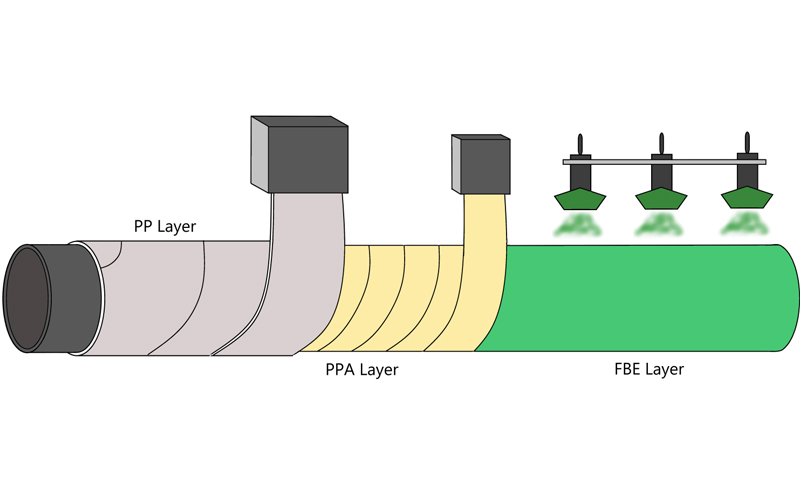
3LPP coated pipe: anti-corrosion guard in high temperature and high pressure environment
In some challenging special environments such as deep-sea oil and gas exploration and high-temperature crude oil transportation, traditional anti-corrosion coatings face significant challenges,...
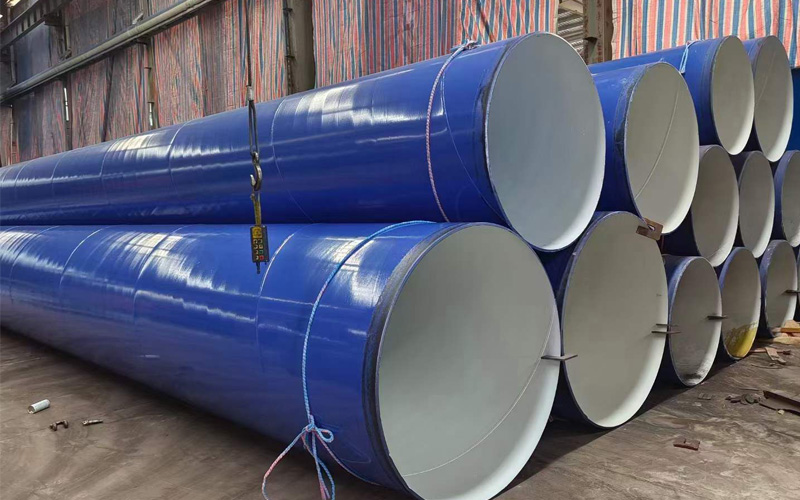
FBE steel pipe: the technological armor of the steel defense line
I In the icy waters beneath the Norwegian Sea pipeline, a section of FBE Lined Carbon Steel Pipe has been in service for 25...