







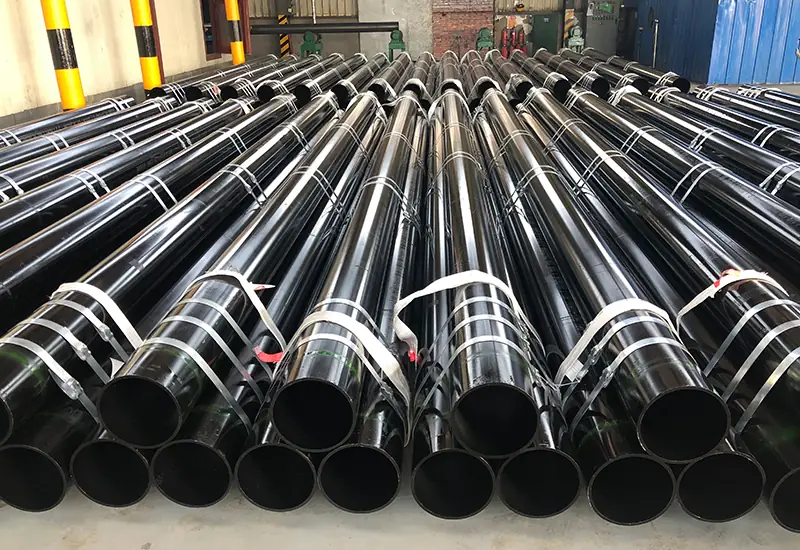
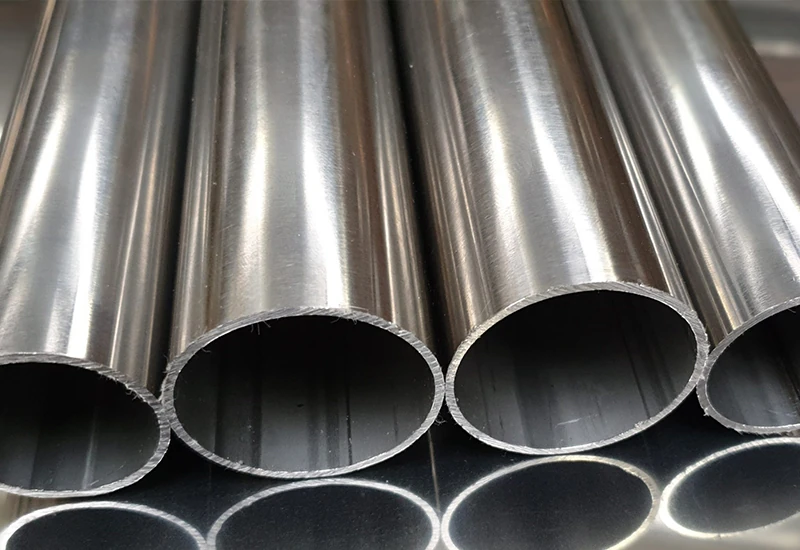

In most engineering and construction projects, purchasing teams and project managers tend to pay attention to three core factors when choosing pipes: diameter, material and unit price. While these are critical considerations, they often overlook a parameter that can make or break the project’s efficiency, safety, and cost-effectiveness—Pipe Schedule. The Pipe Schedule, a standardized system that defines the wall thickness of pipes, directly impacts the pipe’s strength, pressure-bearing capacity, and overall durability. Choosing the wrong schedule can lead to catastrophic consequences: insufficient pipe strength that results in leaks or bursts, unnecessary material costs from over-specifying thicker walls than needed, and hidden risks to the entire piping system’s performance. Among the existing standard schedules, Schedule 20 stands out as a popular light option, which is widely used in low-pressure applications such as drainage, ventilation and light fluid transportation. This guide will analyze what Schedule 20 steel pipe is, compare its PVC and steel variants, outline its manufacturing processes, highlight its main advantages, specify the standard pipe size in detail, and provide a practical selection framework to help you make the right choice for your project.
What Does “Schedule 20” Mean?
Before diving into the specifics of Schedule 20 pipe, it’s essential to understand the broader concept of Pipe Schedule. The pipe schedule system developed by the American National Standards Institute (ANSI) and American Society of Mechanical Engineers (ASME) is a standardized method to specify the wall thickness of pipes, regardless of the material or diameter of pipes. Contrary to common misconception, the schedule number does not directly represent pressure rating of the pipe-it is purely a reference to wall thickness. The higher the schedule number, the thicker the pipe wall, which usually means higher pressure bearing capacity and greater strength.
Common Pipe Schedule ratings used in industrial and construction projects include Schedule 10, Schedule 20, Schedule 40, and Schedule 80. Schedule 20 is a light schedule, which is characterized by thin-walled design and lighter weight. Compared with higher schedules such as 40 or 80, the material cost is lower. Its design is optimized for low-pressure applications in which extreme strength or high-pressure resistance is not required. This makes Schedule 20 an economical choice for projects that give priority to cost savings and easy installation without affecting the performance of the expected use cases.
Schedule 20 PVC Pipe: Lightweight and Cost-Effective
Schedule 20 PVC (Polyvinyl Chloride) pipe is a lightweight, plastic piping solution that has become a staple in low-pressure applications across residential, commercial, and agricultural sectors. Made from durable PVC resin, this type of pipe is engineered to be corrosion-resistant, easy to install, and cost-effective—making it ideal for projects with tight budgets and simple installation requirements.
The manufacturing process for Schedule 20 PVC pipe includes extruding PVC resin through a die to form the shape of the pipe, then cooling and cutting it into standard lengths. The process is efficient and cost-effective, allowing manufacturers to produce large quantities of pipe with consistent wall thickness and dimensions. Unlike metal pipes, PVC pipes do not need complicated anti-corrosion treatments or coatings, because the material itself has natural resistance to most chemicals, water and environmental factors.
The main advantages of Schedule 20 PVC pipe include its lightweight design-easy transportation and installation without heavy machinery-excellent corrosion resistance and low cost. It is also electrically non-conductive, which makes it safe to be used in electrical applications or places with electrical hazards. Additionally, PVC pipe is easy to cut and connect using solvent cement or push-fit fittings, reducing installation time and labor costs.
Common applications of Schedule 20 PVC pipe include residential and commercial drainage systems, agricultural irrigation systems, groundwater transportation (for low-pressure applications), ventilation pipes and light fluid transportation in non-industrial environments. Its low-pressure capacity makes it unsuitable for high-pressure systems, but it performs well in gravity supply or low-pressure applications, where durability and cost-effectiveness are key. For example, in agricultural environment, Schedule 20 PVC pipe is usually used to distribute water to crops, because it can withstand underground burial and resist the destruction of soil and moisture without corrosion.
Schedule 20 Steel Pipe: Stronger Structural Performance
Although Schedule 20 PVC pipe is an ideal choice for light and low-pressure applications, Schedule 20 steel pipe provides excellent structural strength and durability, making it suitable for more harsh environments. Unlike PVC, steel pipe is a metal piping solution that provides higher mechanical strength, better impact resistance, and the ability to withstand moderate pressure—though it is still classified as a lightweight steel pipe and not intended for high-pressure fluid transport.
A reputable steel pipe manufacturer typically produces Schedule 20 steel pipe using either carbon steel or mild steel, two materials known for their strength and affordability. The manufacturing process of Schedule 20 steel pipe includes either seamless production or welded production. Seamless steel tube is a hollow tube formed by heating a solid billet and perforating it, thus forming a tube with uniform strength without weld. On the other hand, welded steel pipes are made by rolling steel plates into cylinders and welding seams-an efficient process, which is often more cost-effective for mass production. These two processes meet strict industry standards, ensuring consistent wall thickness and structural integrity.
The main characteristics of Schedule 20 pipe include its high mechanical strength, which enables it to withstand shocks and heavy loads, as well as its ability to be used in structural applications. Unlike PVC, steel pipe is conductive and can be painted or coated to enhance corrosion resistance, making it suitable for outdoor or harsh environments. However, it is heavier than PVC pipe, which can increase transportation and installation costs, and because of its weight, it needs more labor to install.
Common applications of Schedule 20 pipe include building structural support, industrial fluid transportation (low pressure to medium pressure), machinery and equipment pipes and outdoor infrastructure projects. It is usually used in building projects that require structural strength, such as supporting beams or frames, or in industrial environments where pipes may be impacted or heavily loaded. It is worth noting that although Schedule 20 steel pipe is stronger than PVC, it is not designed for high pressure applications. For these applications, higher schedules, such as 40 or 80 steel pipe, is more suitable.
Schedule 20 vs Schedule 40: Key Differences
One of the most common problems in pipe selection is the difference between Schedule 20 and Schedule 40 pipe. Although both are widely used, they are designed for different applications, and there are key differences in wall thickness, weight, cost and bearing capacity. Understanding these differences is very important for choosing the right pipe for your project and avoiding unnecessary costs or safety risks.
| Parameter | Schedule 20 | Schedule 40 |
| Wall Thickness | Thin (optimized for lightweight use) | Thicker (designed for higher strength) |
| Weight | Lighter, easier to transport and install | Heavier, requires more labor and equipment |
| Cost | Lower material and installation costs | Higher material and installation costs |
| Pressure Capacity | Lower, suitable for low-pressure applications | Higher, suitable for medium to high-pressure applications |
| Applications | Drainage, ventilation, agricultural irrigation, low-pressure fluid transport | Potable water systems, industrial pipes, high-pressure fluid transport |
Many projects choose Schedule 20 pipe instead of Schedule 40 pipe, so as to reduce costs without sacrificing performance. For applications with low pressure and minimal structural stress, such as residential drainage or agricultural irrigation, Schedule 20 can provide sufficient strength, while significantly reducing material and installation costs. In these cases, choosing Schedule 40 would lead to unnecessary costs, because thicker wall will not bring additional benefit to low-pressure applications.
Typical Dimensions of Schedule 20 Pipes
Standard pipe sizes of Schedule 20 pipe varies according to the material (PVC or steel) and the applicable industry standard (such as ASTM or ASME). Because there may be subtle differences between different manufacturers, it is very important to refer to relevant standard to obtain accurate dimensions. The following table lists the typical sizes of Schedule 20 pipe, including nominal pipe size, external diameter and wall thickness, which provides general reference for project planning.
| Nominal Pipe Size (NPS) | Outside Diameter (OD) | Schedule 20 Wall Thickness |
| 8 inches | 219.1 mm | 6.35 mm (0.250″) |
| 10 inches | 273.0 mm | 6.35 mm (0.250″) |
| 12 inches | 323.8 mm | 6.35 mm (0.250″) |
| 14 inches | 355.6 mm | 7.92 mm (0.312″) |
| 16 inches | 406.4 mm | 7.92 mm (0.312″) |
As mentioned above, these dimensions are typical, and may vary based on the specific criteria (e.g., the PVC pipe is ASTM D 1785, and the steel pipe is ASTM A 53) and the production specifications of the steel pipe manufacturer. Be sure to check the dimensions with the supplier to ensure that they meet the project requirements.
How to Choose the Right Schedule 20 Pipe (PVC vs steel)
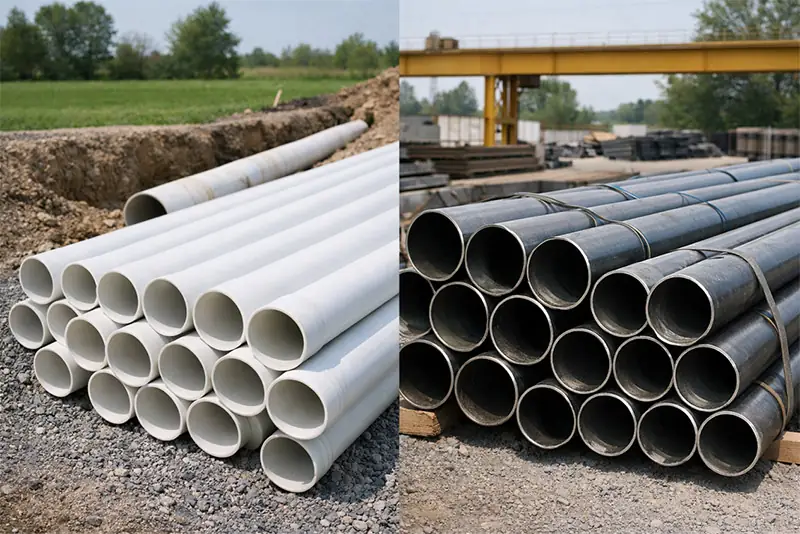
Choosing between Schedule 20 PVC and steel pipe depends on four key factors: system pressure, corrosive environment, installation environment and budget constraints. By evaluating these factors, you can choose the right material to balance performance, durability and cost.
1. System Pressure
The first and most critical factor is the pressure of the fluid or gas being conveyed. Schedule 20 pipes (both PVC and steel) are designed for low-pressure applications. If your system is running at low pressure (for instance, gravity-fed systems or low-pressure fluid transport), Schedule 20 is an economical choice. For high-pressure systems, you need to consider higher Schedule (e.g., Schedule 40) or alternative materials.
2. Corrosion Environment
Corrosion resistance is another important consideration. PVC pipe itself is corrosion resistant, and no additional coatings or treatments is required to resist moisture, chemicals or soil corrosion. This makes it ideal for underground applications, agricultural irrigation or areas with high humidity or chemical exposure. On the other hand, steel pipes are prone to rust and corrosion unless they are coated (e.g., with paint, electroplating or epoxy). If your project is in a corrosive environment (e.g., coastal areas with saltwater, industrial areas with chemical exposure), PVC is usually a better choice. For non-corrosive environment that requires structural strength, steel pipe is a feasible choice.
3. Installation Environment
The installation environment will also affect your choice. PVC pipe is lightweight and easy to install, making it ideal for residential projects, underground burial, or areas where heavy machinery is not available. It is also suitable for above-ground applications, although it may be easily damaged by shock or extreme temperatures. Steel pipe is heavier and requires more labor and equipment to install, but it offers superior impact resistance and durability, making it ideal for structural applications, industrial settings, or outdoor projects where the pipe may be exposed to heavy loads or harsh weather.
4. Budget Constraints
Budget is usually the decisive factor in choosing pipes. Schedule 20 PVC pipe is significantly less expensive than Schedule 20 steel pipe, both in terms of material costs and installation costs. If your project budget is tight, and the structural strength of steel is not needed, PVC is the more cost-effective choice. Although steel pipe are more expensive, they have longer durability and structural strength, which may be worth investing in projects that need long-term performance or structural support.
Why Choose Allland Pipes?
When selecting Schedule 20 pipes (whether PVC or steel pipes), it is very important to cooperate with a reliable steel pipe manufacturer and supplier to ensuring quality, consistency and on-time delivery. Allland Pipes is a reliable supplier of high-quality Schedule 20 pipe, providing PVC and steel choices that meet ASTM and ASME standards. Our commitment to quality and customer service has made us the ideal partner for construction, infrastructure and industrial projects of all sizes.
Our product advantages include various standard pipe sizes from 1 inch to 8 inches and above, which can meet any project requirements. We provide Schedule 20 PVC and steel pipe, allowing you to select the material that best suit your project needs. All our pipes are manufactured according to strict industry standards, ensuring consistent wall thickness, size and performance. In addition, we offer customized length options to minimize waste and shorten installation time.
With large-scale inventory and experience in international project, Allland pipes can meet the needs of small residential projects and large-scale industrial infrastructure. We provide competitive prices, fast global delivery and specialized customer support, from choosing the right pipe to ensuring on-time delivery and installation.
Conclusion
Schedule 20 pipes are versatile and economical lightweight piping solutions that is widely used in low-pressure applications across residential, commercial, agricultural, and industrial sectors. Its thin-walled design, low cost and easy installation make it an ideal choice for projects that give priority to performance and cost-effectiveness. When choosing between Schedule 20 PVC and steel pipe, it is very important to consider system pressure, corrosive environment, installation environment and budget constraints-PVC has excellent corrosion resistance and cost, while steel provides better structural strength and durability.
By understanding the main differences between Schedule 20 and higher Schedule (such as Schedule 40) and cooperating with a reliable steel pipe manufacturer, you can choose the right pipe for your project, reduce costs and ensure long-term performance. Whether you need Schedule 20 PVC pipe for residential drainage or Schedule 20 steel pipe for structural support, Allland Pipes products, expertise and support can meet your requirements.Do you need reliable Schedule 20 pipe for your next project? Contact Allland Pipes to get custom sizes, competitive pricing, and fast global delivery. Our team of experts is always ready to help you choose the pipe suitable for your project and ensure a smooth and successful installation.

ASTM A53 vs. API 5L: A Guide to Selection and Application
In the field of industrial piping, ASTM A53 and API 5L are two key standards that are widely used, but have very different positions. ASTM...

Introduction:Technology differences determine success or failure, and selection needs to be “precise”
In oil and gas transmission, municipal infrastructure and other major projects, the reasonable choice of steel pipe welding process directly affects the project...
Steel Density Analysis: Core Differences between Mild and Medium Carbon Steels and Industrial Applications
The density of steel is one of the key parameters that determine its physical properties and industrial applications. Theoretical state of steel density...
3LPE coated steel pipe: a solid barrier in the field of industrial corrosion protection
In the harsh environment of oil and gas, chemical industry, urban pipe network, etc., the long-term reliability and corrosion resistance of pipeline system...
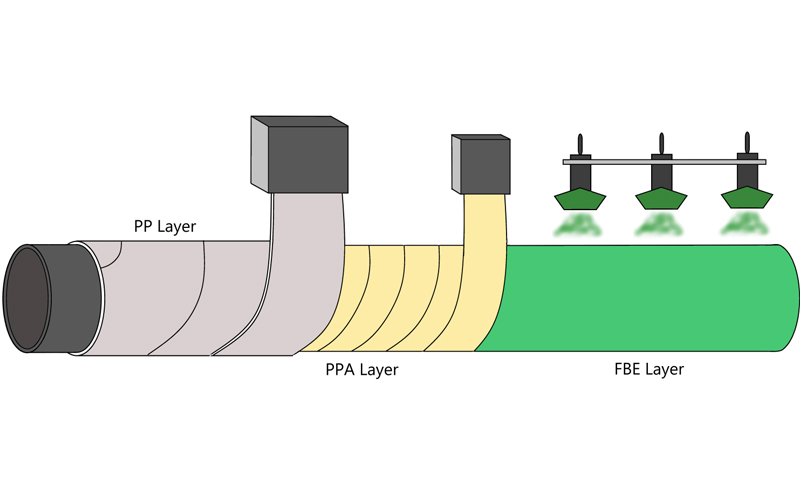
3LPP coated pipe: anti-corrosion guard in high temperature and high pressure environment
In some challenging special environments such as deep-sea oil and gas exploration and high-temperature crude oil transportation, traditional anti-corrosion coatings face significant challenges,...
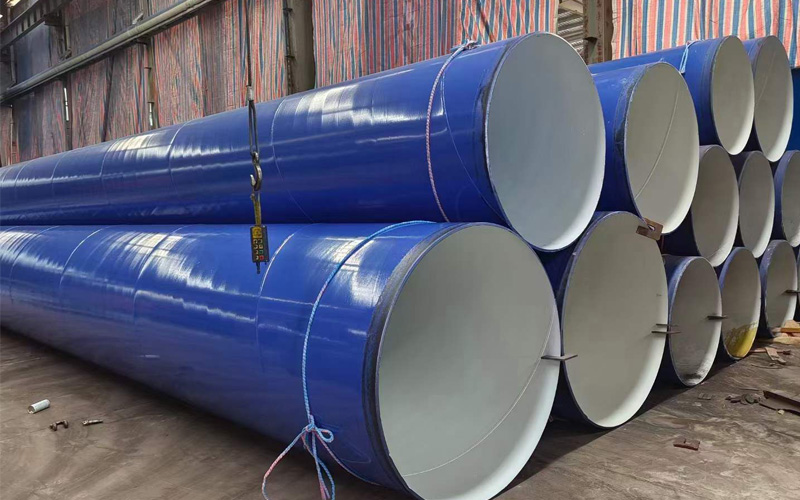
FBE steel pipe: the technological armor of the steel defense line
I In the icy waters beneath the Norwegian Sea pipeline, a section of FBE Lined Carbon Steel Pipe has been in service for 25...