









What is Nominal Diameter (ND) in Steel Pipes?
Nominal Diameter (ND) is a universally recognized term used for sizing pipes, steel tubes, valves, and other components.
Nominal Diameter (ND) is not an actual dimension; it is simply a numerical value used for standardized labeling and to facilitate selection.
Nominal Diameter vs Inner Diameter
ND refers to the nominal diameter, typically measured in inches or mm, and represents the nominal size of steel pipes or tubing, not the actual dimensions.
Inner Diameter (ID) is the actual fluid-carrying diameter of a pipe, steel pipe, or pipe fitting, measured in inches or mm. It is a physical dimension that can be measured.
For steel pipes, at the same pressure, the larger the ID, the greater the volume of fluid that can pass through per unit of time.
Difference Between NB and NPS
What is NB (Nominal Bore)?
NB stands for Nominal Bore and is primarily used in Europe or as an international standard. NB is mainly used in fluid systems to indicate pipe diameter. It does not represent the actual physical dimensions, and the unit is typically expressed in millimeters.
What is NPS (Nominal Pipe Size)?
NPS stands for Nominal Pipe Size, a term commonly used in the North American market. It refers to the nominal outer diameter rating of a pipe and is used in steel pipe and tubing sizing standards, with measurements given in inches. For example, an NPS 2 steel pipe ( 2″nominal diameter) has an actual outer diameter of 2.375 inches (≈60.3 mm).
NB vs NPS Comparison
NB is more commonly used for fluid pipe diameters and is primarily used in fluid engineering design. NPS places greater emphasis on standard pipe dimensions and standard steel pipe grades, and is used in pipe manufacturing and selection.
However, NB is essentially the same concept as NPS(Nominal Pipe Size); both refer to notional dimensions used to identify pipe specifications and facilitate communication, rather than actual dimensions.
Additionally, each NPS value corresponds to a specific NB value.
| NPS (inch) | Corresponding NB (inch/mm) | OD(inch/mm) |
| 1/8 | 6 NB / 6 mm | 0.405 / 10.3 |
| 1/4 | 8 NB / 8 mm | 0.540 / 13.7 |
| 3/8 | 10 NB / 10 mm | 0.675 / 17.1 |
| 1/2 | 15 NB / 15 mm | 0.840 / 21.3 |
| 3/4 | 20 NB / 20 mm | 1.050 / 26.7 |
| 1 | 25 NB / 25 mm | 1.315 / 33.4 |
| 1 1/4 | 32 NB / 32 mm | 1.660 / 42.2 |
| 1 1/2 | 40 NB / 40 mm | 1.900 / 48.3 |
| 2 | 50 NB / 50 mm | 2.375 / 60.3 |
| 2 1/2 | 65 NB / 65 mm | 2.875 / 73.0 |
| 3 | 80 NB / 80 mm | 3.500 / 88.9 |
| 3 1/2 | 90 NB / 90 mm | 4.000 / 101.6 |
| 4 | 100 NB / 100 mm | 4.500 / 114.3 |
| 5 | 125 NB / 125 mm | 5.563 / 141.3 |
| 6 | 150 NB / 150 mm | 6.625 / 168.3 |
| 8 | 200 NB / 200 mm | 8.625 / 219.1 |
| 10 | 250 NB / 250 mm | 10.750 / 273.1 |
| 12 | 300 NB / 300 mm | 12.750 / 323.9 |
| 14 | 350 NB / 350 mm | 14.000 / 355.6 |
| 16 | 400 NB / 400 mm | 16.000 / 406.4 |
| 18 | 450 NB / 450 mm | 18.000 / 457.0 |
| 20 | 500 NB / 500 mm | 20.000 / 508.0 |
| 24 | 600 NB / 600 mm | 24.000 / 609.6 |
· NPS (Nominal Pipe Size) is expressed in inches.
· NB (Nominal Bore) can be expressed in inches or the corresponding millimeters. In North American standards, NPS and NB are not exactly equivalent; expressing NB in millimeters is more intuitive.
· OD (Outside Diameter) is the actual outer diameter of the steel pipe.
Steel Pipe Dimensions and Schedule
The dimensions of steel pipes primarily include:
NPS: Nominal pipe size
ND / NB: Nominal diameter
OD (Outside Diameter): Actual outer diameter
ID (Inner Diameter): Actual inner diameter
Thickness (t): Wall thickness; corresponds to the schedule
Understanding Pipe Schedule (SCH)
SCH (Schedule Number) is a system used to indicate the wall thickness of steel pipes, equivalent to the pipe’s wall thickness grade.
The wall thickness grade determines the pipe’s strength and inside diameter; common designations include ASME / ANSI B36.10/B36.19.
The higher the SCH value, the thicker the wall, the smaller the inside diameter (ID), and the greater the pressure-bearing capacity.
Steel Pipe Dimensions Schedule 40/80
| NPS (inch) | OD (in/mm) | SCH 40 ID (in/mm) | SCH 80 ID (in/mm) |
| 1/2 | 0.840 / 21.3 | 0.622 / 15.8 | 0.546 / 13.9 |
| 3/4 | 1.050 / 26.7 | 0.824 / 20.9 | 0.742 / 18.8 |
| 1 | 1.315 / 33.4 | 1.049 / 26.6 | 0.957 / 24.3 |
| 1 1/4 | 1.660 / 42.2 | 1.380 / 35.0 | 1.250 / 31.8 |
| 1 1/2 | 1.900 / 48.3 | 1.610 / 40.9 | 1.500 / 38.1 |
| 2 | 2.375 / 60.3 | 2.067 / 52.5 | 1.939 / 49.3 |
| 2 1/2 | 2.875 / 73.0 | 2.469 / 62.7 | 2.323 / 59.0 |
| 3 | 3.500 / 88.9 | 3.068 / 77.9 | 2.900 / 73.7 |
| 3 1/2 | 4.000 / 101.6 | 3.548 / 90.1 | 3.480 / 88.4 |
| 4 | 4.500 / 114.3 | 4.026 / 102.3 | 3.826 / 97.2 |
| 5 | 5.563 / 141.3 | 5.047 / 128.2 | 4.981 / 126.5 |
| 6 | 6.625 / 168.3 | 6.065 / 154.1 | 5.981 / 151.8 |
| 8 | 8.625 / 219.1 | 7.981 / 202.7 | 7.849 / 199.4 |
| 10 | 10.750 / 273.1 | 9.950 / 252.7 | 9.782 / 248.5 |
| 12 | 12.750 / 323.9 | 11.938 / 303.3 | 11.750 / 298.5 |
| 14 | 14.000 / 355.6 | 13.938 / 354.1 | 13.750 / 349.2 |
| 16 | 16.000 / 406.4 | 15.938 / 404.9 | 15.750 / 400.1 |
| 18 | 18.000 / 457.0 | 17.938 / 455.6 | 17.750 / 450.4 |
| 20 | 20.000 / 508.0 | 19.938 / 506.3 | 19.750 / 501.6 |
| 24 | 24.000 / 609.6 | 23.938 / 607.9 | 23.750 / 603.3 |
SCH 40 and SCH 80 are both commonly used wall thickness grades. In engineering design, if the pipeline has high flow and pressure requirements, the higher-strength SCH 80 should be used; for general industrial or building applications, SCH 40 can meet basic strength requirements.
How Schedule Affects Nominal Diameter and Inner Diameter
SCH affects only the inner diameter (ID) and does not affect ND or NPS.
ND, NPS, and NB are standardized nominal sizes that serve as designations for pipes and do not change with wall thickness grades.
For the inner diameter (ID), as the schedule (SCH) increases, the wall thickness (t) increases, and the ID decreases.
ID = OD − 2 × t
Example: NPS 2 (fixed outer diameter of 60.3 mm)
| Schedule | Wall Thickness t (mm) | Inner Diameter ID (mm) |
| SCH 40 | 3.91 | 52.5 |
| SCH 80 | 5.54 | 49.3 |
| SCH 160 | 8.74 | 42.8 |
In piping standards (such as ASME B36.10), the outside diameter (OD) remains constant, and the wall thickness is adjusted via SCH to meet different engineering requirements.
How to Choose the Right Nominal Diameter for Your Project
Selecting the appropriate nominal diameter (ND) is a critical step in pipeline design. It directly affects a range of issues both during the initial design phase and after the pipeline is put into operation.
1. Key Point: ND Does Not Represent Actual Size
First, it is important to understand that ND / NPS / NB = nominal size, which is used for selection purposes. ID (internal diameter) = actual flow capacity, which can be used for calculations.
2. Determining Flow Requirements
First, determine the volumetric flow rate and type of the fluid to be transported, and then establish the economic flow velocity. Every fluid has a flow velocity that minimizes total costs.
Common ranges for economic flow velocities:
Water and low-viscosity liquids: 1.0–3.0 m/s
Saturated steam: 20–40 m/s
Low-pressure gases: 10–20 m/s
Corrosive or particulate-laden media are typically limited to: ≤ 1.5 m/s
Formulas for Economic Flow Velocity and ND
Q = A × v
· Flow velocity v ↑, the required cross-sectional area A ↓, and ND ↓
· Flow velocity v ↓, the required cross-sectional area A↑, and ND ↑
3. Calculate the required inner diameter (ID)
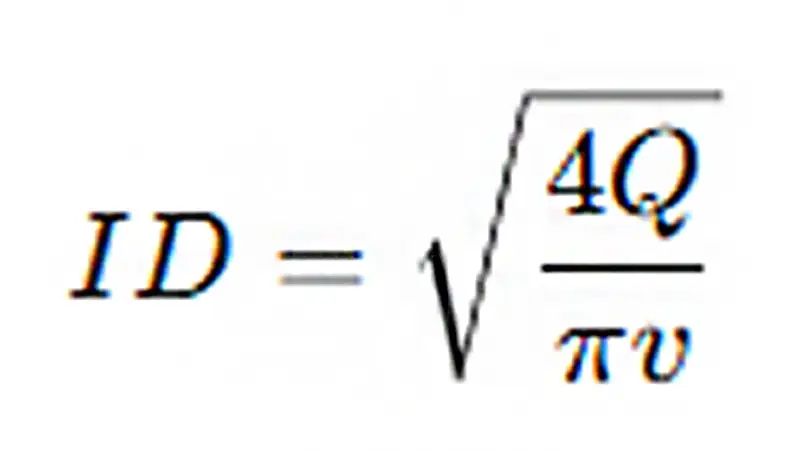
Using the formula, we can calculate the theoretical inner diameter and then select the closest standard ND/NPS size.
Note: When selecting a size, it is better to choose a larger size than a smaller one to allow for future capacity expansion.
4. Meeting Special Process Constraints
4.1 Fluids containing solid particles (slurries, wastewater) typically require a Nominal Diameter (ND) of at least 3 to 4 times the maximum diameter of the solid particles.
4.2 Pump Inlet Pipe Diameter (NPSH Requirements): The pump inlet pipe diameter must be at least one size larger than the outlet. For example, if the pump outlet is ND80, the inlet should be at least ND100.
5. Consider Practical Engineering Factors
Before a project is put into actual operation, it is essential to consider safety margins, potential future expansion needs, and cost optimization.
Generally, safety margins are factored in at a rate of 10%–20% above the original design.
FAQ
What is Nominal Diameter (ND) in steel pipes?
Nominal Diameter (ND): A standardized “designation” for pipe sizes; it does not represent the actual inner or outer diameter and is intended solely for selection and design purposes.
Is Nominal Diameter the same as Inner Diameter (ID)?
NO.
ND (Nominal Diameter): A reference dimension that remains constant
ID (Actual Inner Diameter): Varies with wall thickness; as wall thickness changes, so does the inner diameter
The ID changes, but the ND remains the same.
What is the difference between NB and NPS?
NB refers to the nominal bore of a pipe, measured in millimeters; it is not the actual dimension and is commonly used in the United Kingdom.
NPS is a widely used pipe sizing standard in North America, measured in inches; it does not refer to the actual outer or inner diameter of the pipe, but is simply a sizing designation.
However, the two are essentially equivalent concepts and refer to pipes of the same specification. For example, NPS 2 ≈ NB 50.

ASTM A53 vs. API 5L: A Guide to Selection and Application
In the field of industrial piping, ASTM A53 and API 5L are two key standards that are widely used, but have very different positions. ASTM...

Introduction:Technology differences determine success or failure, and selection needs to be “precise”
In oil and gas transmission, municipal infrastructure and other major projects, the reasonable choice of steel pipe welding process directly affects the project...
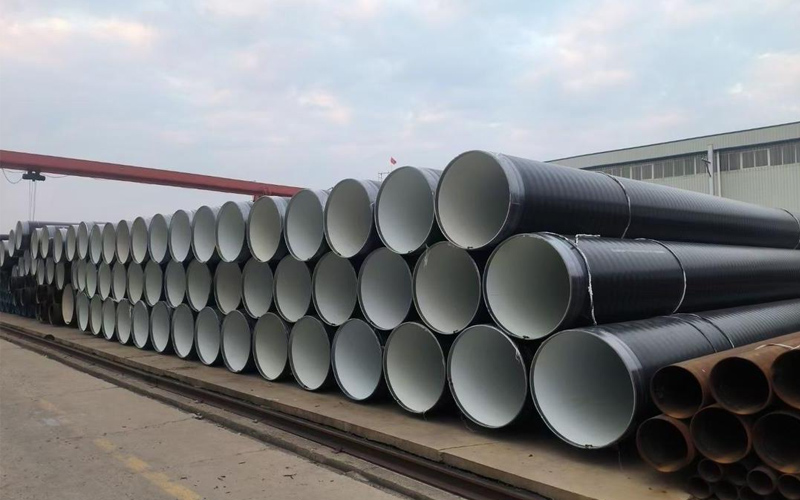
Steel Density Analysis: Core Differences between Mild and Medium Carbon Steels and Industrial Applications
The density of steel is one of the key parameters that determine its physical properties and industrial applications. Theoretical state of steel density...
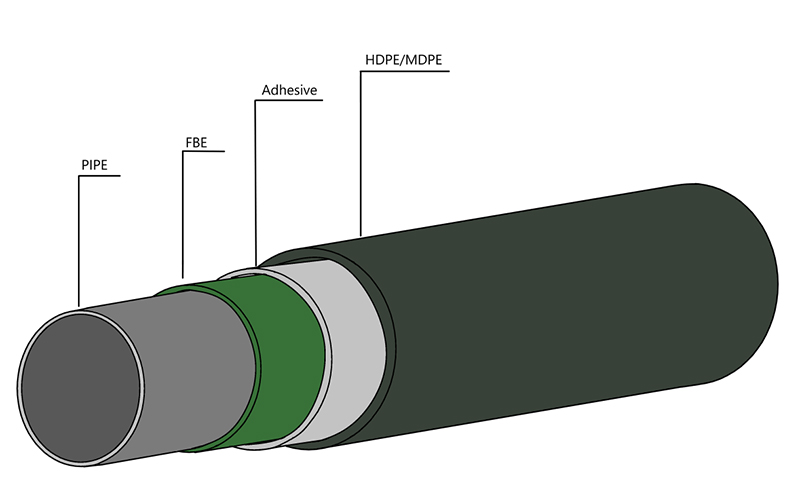
3LPE coated steel pipe: a solid barrier in the field of industrial corrosion protection
In the harsh environment of oil and gas, chemical industry, urban pipe network, etc., the long-term reliability and corrosion resistance of pipeline system...
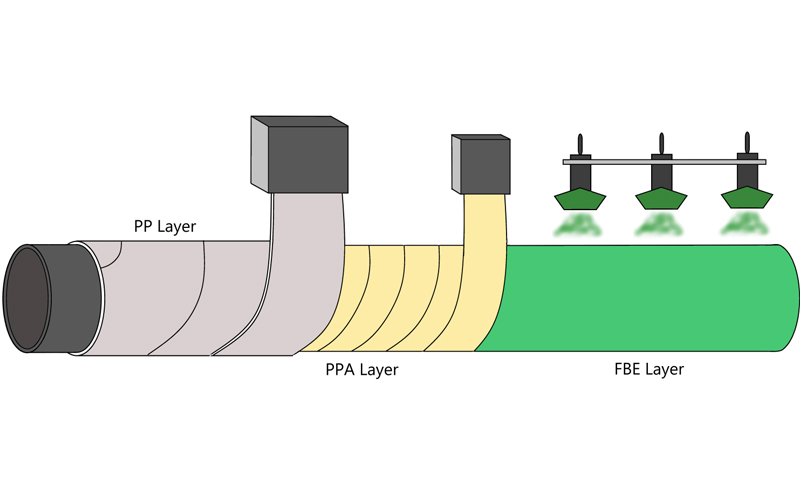
3LPP coated pipe: anti-corrosion guard in high temperature and high pressure environment
In some challenging special environments such as deep-sea oil and gas exploration and high-temperature crude oil transportation, traditional anti-corrosion coatings face significant challenges,...
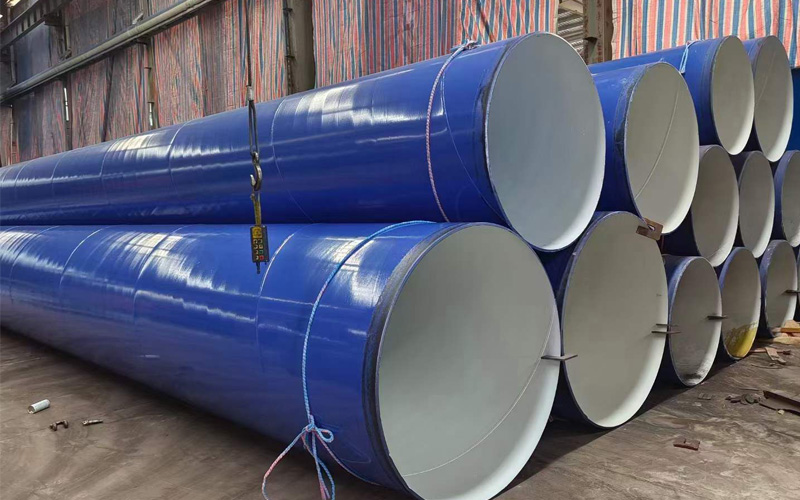
FBE steel pipe: the technological armor of the steel defense line
I In the icy waters beneath the Norwegian Sea pipeline, a section of FBE Lined Carbon Steel Pipe has been in service for 25...