









Introduction
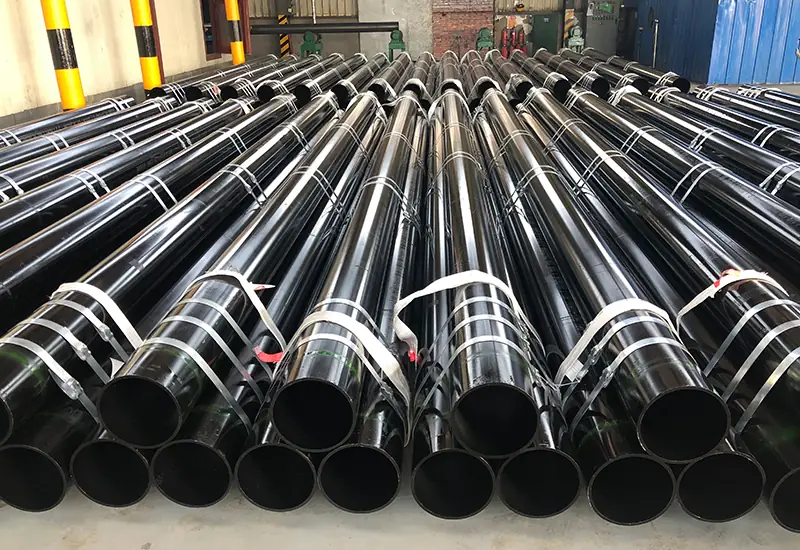
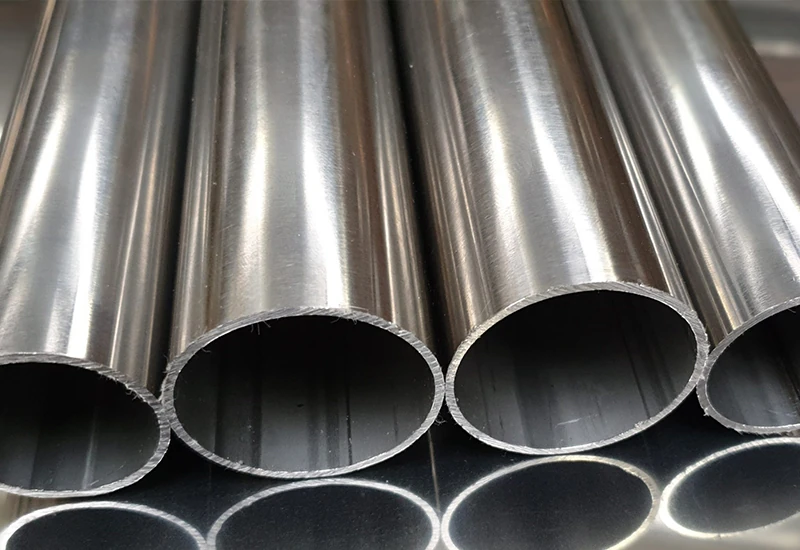
What is the pipe size chart, and how to choose the appropriate pipe size for industrial or gas systems? For industry professionals, this issue is very important for the success, safety and cost-effectiveness of the project. A common problem is to confuse the nominal pipe size (NPS) with actual diameter, resulting in order errors and rework. Pipes that are too small will lead to pressure loss and overheating; Oversized pipes waste materials and increase costs. This paper introduces the pipe size chart, explains the nominal pipe size chart, and uses the gas line pipe size chart as a guide to help you choose the sizes and avoid defects, and helps match sizes with SSAW steel pipes and other pipe types through a reliable steel pipe supplier.
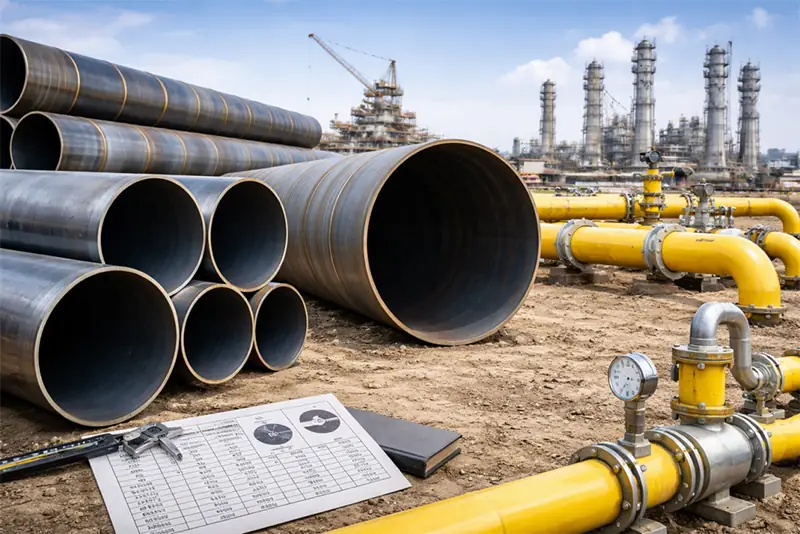
Quick Answer: What is a pipe size chart?
A pipe size chart is a standardized reference for displaying the pipe sizes (outer diameter, wall thickness and inner diameter) for fluid, gas and structures. Based on NPS and pipe schedule, it eliminates guesswork, ensuring consistency and compatibility between pipes and fittings—essential for any gas or industrial pipe project.
What Is a Pipe Size Chart and Why Is It Important?
A standard piping size chart includes three key dimensions.
- Outside Diameter (OD): Fixed by NPS for steel pipes, ensuring compatibility with fittings.
- Inner Diameter (ID): Varies with wall thickness and determines the flow rate (A larger ID allows a higher fluid or gas flow rate).
- Wall Thickness: Determined by pipe schedule (e.g., schedule 40), indicating pressure grade—thicker walls for higher pressure.
A pipe size chart directly affects the flow, pressure loss and safety. Flow capacity depends on the inner diameter (ID)-insufficient ID limits flow, while excessive ID wastes resources. Undersized pipe increases the pressure loss and the operating costs. The correct size can prevent overheating, bursting or leakage. This is especially critical for gas systems, as leaks can lead to fire or explosion
Pipe size charts are widely used in industrial systems, building services, and oil & gas transportation, to ensure consistency across all project scales.
What Is Nominal Pipe Size (NPS) and How Does It Work?
Nominal Pipe Size (NPS) is a North American standard for classifying pipes. It is a nominal reference (not actual OD/ID) ensuring fitting compatibility—critical for using a pipe size chart effectively.
Key NPS rule: For NPS 12 and below, the value does not equal the actual outer diameter. For NPS 14 and above, it approximately matches the outer diameter. For example, the outer diameter of NPS 2 is 60.3 mm (not 2 inches), which, if misunderstood, will lead to installation mismatch.
How to Read a Nominal Pipe Size Chart?
Reading the chart of nominal pipe size is simple. The following is a quick reference standard chart:
| NPS (Inch) | Outside Diameter (OD) | Schedule 40 Wall Thickness | Inside Diameter (ID) |
| 1 | 33.4 mm | 3.38 mm | 26.64 mm |
| 2 | 60.3 mm | 3.91 mm | 52.48 mm |
| 4 | 114.3 mm | 6.02 mm | 102.26 mm |
| 6 | 168.3 mm | 7.11 mm | 154.08 mm |
When reading this chart, consider the following three key points: OD is fixed according to NPS (to ensure the compatibility of fittings), the schedule determines wall thickness (generally, the schedule 40 is used, and the higher pressure schedule is used), and ID = OD – 2 × wall thickness (e.g., NPS 2 has a 52.48 mm ID). Always refer to industry standards when selecting the appropriate schedule, and select the schedule according to the pressure requirements. The nominal pipe size data and dimensional schedules in this chart are sourced from API Spec 5L, the authoritative standard for industrial and oil and gas line pipelines.
What Is a Gas Line Pipe Size Chart and When Should You Use It?
A gas line pipe size chart is a special pipe size chart. It considers pipe size, flow rate (CFH), pipe length, and allowable pressure drop, which is critical for safe gas systems, because the gas flow rate depends on these factors.
Key factors to determine the size of gas line pipe: flow rate (CFH, based on equipment/industrial requirements), pipe length and pressure loss (excessive loss will lead to equipment failure).
It is used in residential gas systems, industrial applications, and long-distance gas transmission. A reliable steel pipe supplier provides customized charts matching SSAW steel pipe for large-scale projects.
How to Choose the Right Gas Line Pipe Size?
Use the chart below to select the size of the gas transmission pipe, which relates the size, length and flow.
| Pipe Size | 20 ft Length | 50 ft Length | 100 ft Length |
| 1/2” | 175 CFH | 120 CFH | 82 CFH |
| 3/4” | 360 CFH | 250 CFH | 170 CFH |
| 1” | 680 CFH | 465 CFH | 320 CFH |
| 2” | 2100 CFH | 1450 CFH | 950 CFH |
Two key rules emerge: flow capacity decreases with the length of the pipe (e.g., 1/2” pipe drops from 175 CFH to 82 CFH over 20-100 feet) and increases with the increase of pipe size (A 2-inch pipe can handle 2100 CFH over 20 feet, approximately 12 times more than a 1/2-inch pipe). Larger pipes are suitable for long-distance or high-flow gas applications. Match pipe size with the flow demand and length, and make it slightly larger for future expansion.
Which pipe type should be chosen for different applications?
After determining the size according to the pipe size chart, select the appropriate pipe type. Three kinds of common steel pipes: seamless steel pipe, ERW steel pipe and SSAW steel pipe-the comparison is as follows.
| Pipe Type | Best Application | Cost | Diameter Range |
| Seamless Pipe | High pressure & temperature | High | Small–Medium |
| ERW Pipe | General industrial use | Medium | Small–Medium |
| SSAW steel pipe | Large pipes & long-distance transport | Low | Large |
Although seamless steel pipes and ERW steel pipes are suitable for small and medium-sized applications, SSAW steel pipes have performed well in large-scale long-distance projects. Three main advantages: it can handle large-diameter (up to 3000 mm) natural gas line pipes, cost is lower than that of seamless pipes (made of rolled/welded steel plates), and the delivery time is shorter, so it is very suitable for delivery with a reliable steel pipe supplier within a tight time.
SSAW steel pipes are widely used in long distance gas transmission, municipal water pipes and infrastructure. Its strength and cost-effectiveness make it an ideal choice-always choose a reputable steel pipe supplier to ensure the quality.
How to select the appropriate pipe size for your Project?
Using the pipe size chart and project requirements, the pipe size is selected in 4 steps.
- Step 1: Determine the medium (gas, liquid, or structural use) to select the correct pipe size chart.
- Step 2: Calculate the flow/pressure-GPM (liquid) or CFH (gas) and pressure loss limits.
- Step 3: Use the Pipe Size Chart–Cross-reference NPS, OD, ID, and flow requirements.
- Step 4: Choose Material–Seamless (high pressure/temp), ERW (general use), SSAW steel pipe (large-diameter/long-distance). Please consult the supplier of steel pipe.
What Common Mistakes Should You Avoid When Using Pipe Size Charts?
Avoid these 4 common errors when using a pipe size chart.
- Mistake 1: Confuse NPS with actual diameter ——NPS≠OD/ID (for NPS ≤ 12 “); Check the chart of nominal pipe size.
- Mistake 2: Ignoring Schedule–Schedule determines pressure rating; Insufficient thickness will lead to failures.
- Mistake 3: Overlooking Pressure Loss–Critical for gas systems; Use a gas transmission pipe size chart to avoid inefficiency.
- Mistake 4: Over-selecting high-cost pipe types-SSAW steel pipe are used for large-diameter/low-pressure projects; Please consult the supplier of steel pipe.
FAQs
Q1: What is the difference between NPS and actual pipe diameter?
A: NPS is a nominal size, and the actual diameter refers to the real external or internal measurement. NPS is a standardized reference number, which is used to ensure compatibility between pipes and fittings, and it does not directly correspond to the physical size of pipes (except NPS ≥ 14 inches, where NPS is approximately equal to the outer diameter).
Q2: How do I choose the right diameter for gas line pipe?
A: You need to consider the flow rate, the length of the pipe and allowable pressure drop. Cross-reference these three factors by using the table of pipe size of gas line pipe: select the pipe size that can handle the required flow (CFH) for the total pipe length and does not exceed the allowable pressure loss.
Q3: Is SSAW steel pipe suitable for gas transmission?
A: Yes, SSAW steel pipe is widely used for large-diameter, long-distance gas line pipes due to its cost efficiency and strength. It can be manufactured in large diameters, with lower production cost compared to seamless pipes, and it has the durability to withstand the requirements of gas transmission systems.
Conclusion
In summary, the pipe size chart is very important for accurate selection of pipes. A nominal pipe size chart illustrates the relationship between NPS and actual size, while a gas line pipe chart guides the size determination of gas system. Follow the 4-step process to avoid mistakes, so as to realize safe and economical projects.
SSAW steel pipes are an ideal choice for large-diameter and long-distance projects. Cooperate with a reliable steel pipe supplier to improve quality and efficiency.Need reliable steel pipe? Contact Allland Pipes today for customized SSAW steel pipe solutions. As a reliable supplier of steel pipe, we provide high quality, fast delivery and competitive price for global industrial and natural gas projects.

ASTM A53 vs. API 5L: A Guide to Selection and Application
In the field of industrial piping, ASTM A53 and API 5L are two key standards that are widely used, but have very different positions. ASTM...

Introduction:Technology differences determine success or failure, and selection needs to be “precise”
In oil and gas transmission, municipal infrastructure and other major projects, the reasonable choice of steel pipe welding process directly affects the project...
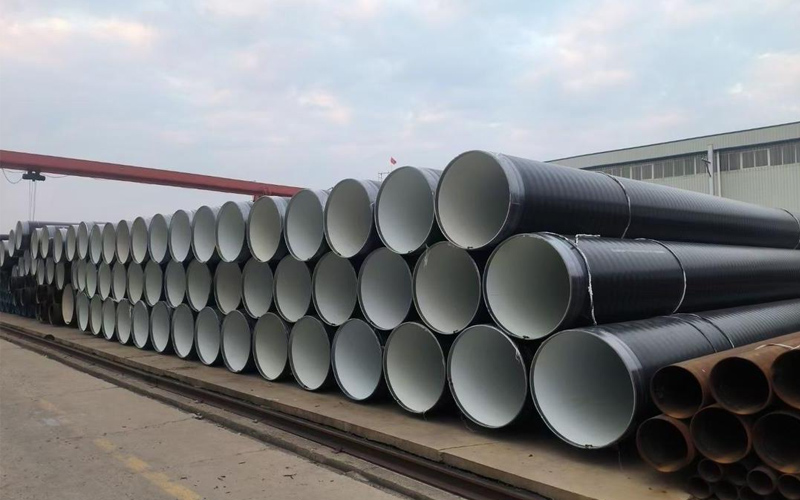
Steel Density Analysis: Core Differences between Mild and Medium Carbon Steels and Industrial Applications
The density of steel is one of the key parameters that determine its physical properties and industrial applications. Theoretical state of steel density...
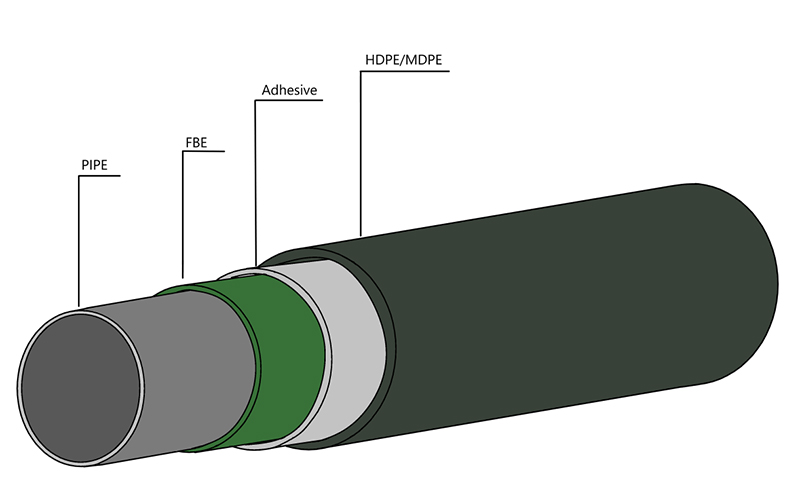
3LPE coated steel pipe: a solid barrier in the field of industrial corrosion protection
In the harsh environment of oil and gas, chemical industry, urban pipe network, etc., the long-term reliability and corrosion resistance of pipeline system...
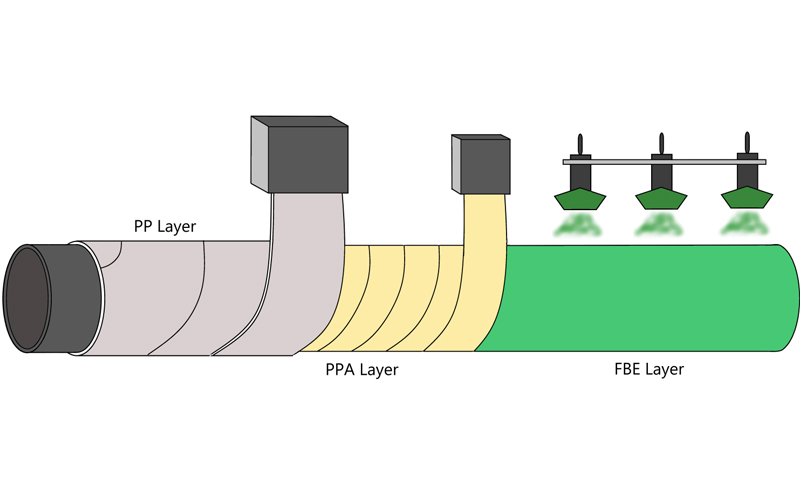
3LPP coated pipe: anti-corrosion guard in high temperature and high pressure environment
In some challenging special environments such as deep-sea oil and gas exploration and high-temperature crude oil transportation, traditional anti-corrosion coatings face significant challenges,...
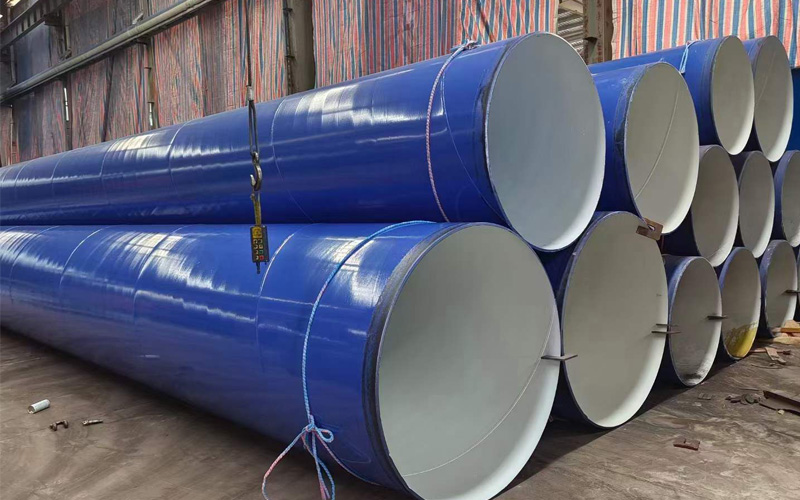
FBE steel pipe: the technological armor of the steel defense line
I In the icy waters beneath the Norwegian Sea pipeline, a section of FBE Lined Carbon Steel Pipe has been in service for 25...