







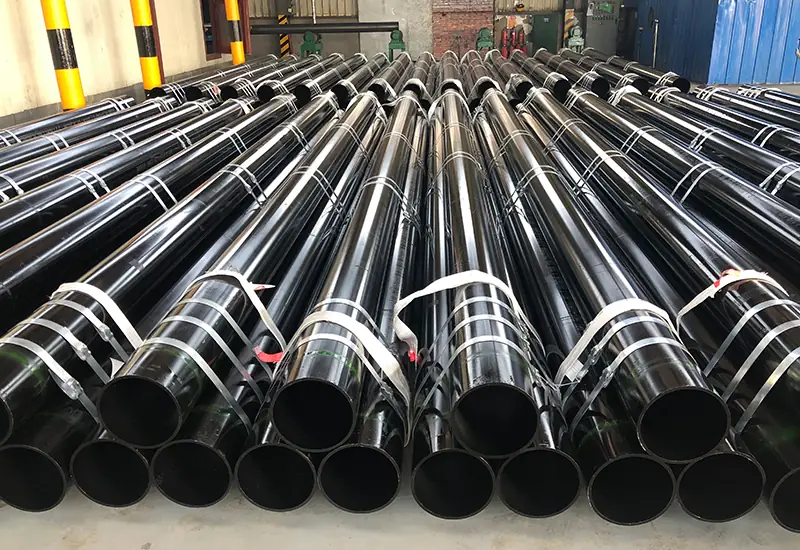
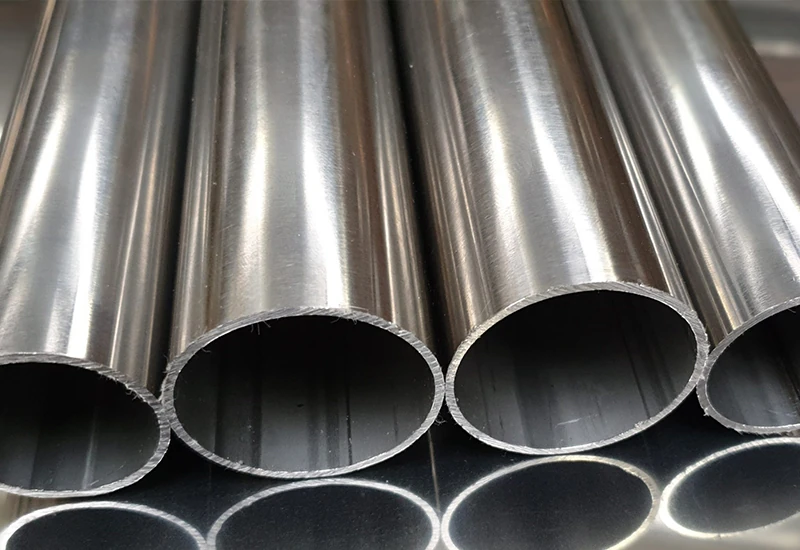

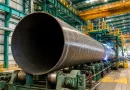
For industrial, commercial and residential pipe engineering, it is very important to know the thickness of Schedule 40 pipe to ensure structural integrity, safety, and optimal performance. Schedule 40 pipe is one of the most widely used piping standards globally, favored for its balance of strength, durability, and cost-effectiveness. However, a common question still remains: how thick is Schedule 40 pipe? The answer is not a single number, but it varies according to the nominal size, material and manufacturing standards of the pipe. In this comprehensive guide, we will cover everything you need to know about dimensions, manufacturing methods, and applications of Schedule 40 pipe and how to choose the right steel pipe manufacturer for your project.
Wall thickness is not just a technical detail; it directly affects the pressure resistance and corrosion resistance of pipe, as well as the reliable operation in various environments. For fluid dynamics, the correct thickness can ensure the efficient flow without leakage or structural failure, which is critical in applications from water supply systems to oil and gas transportation. Whether you are a contractor, engineer or project manager, a clear understanding of steel pipe size (especially Schedule 40 steel pipe) is the key to avoiding costly mistakes and ensuring compliance with industry laws and regulations.
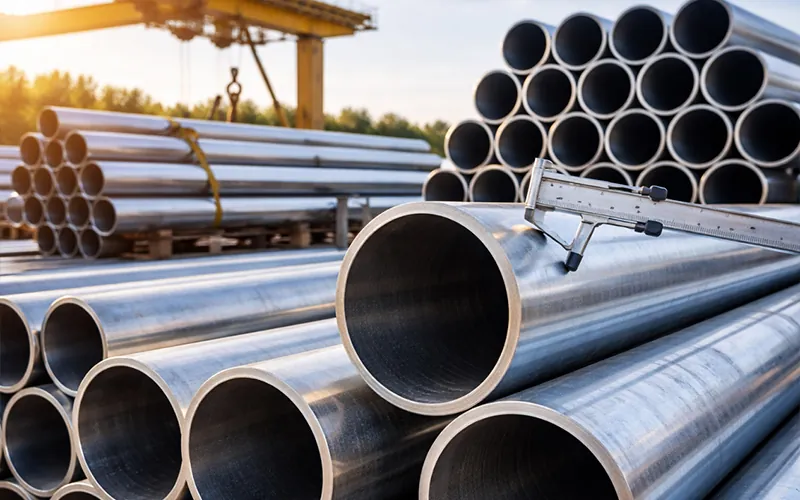
What Does “Schedule 40” Actually Mean?
To answer the question “How thick is Schedule 40 pipe?” We need to clarify what “schedule” means first. The term “Schedule” (abbreviated as “SCH”) is a standardized numbering system developed by the American National Standards Institute (ANSI) and American Society of Mechanical Engineers (ASME), which is used to represent the wall thickness of pipe. What is important is that it does not directly measure the thickness in millimeters or inches, but the ratio related to the nominal size and pressure level of the pipe. The higher the schedule number, the thicker the pipe wall (for the same nominal size), and the higher its pressure-bearing capacity.
One key difference to understand is the difference between the nominal pipe size (NPS) and the outside diameter (OD). NPS is a nominal name, which does not directly correspond to the actual inner diameter or outer diameter of the pipe. For example, a 1-inch NPS Schedule 40 pipe does not have an inner diameter of 1 inch; On the contrary, its outside diameter is standard 1.315 inches (33.4 mm), as defined by ASME B36.10M (the main standard for welded and seamless forged steel pipe). Then calculate the actual inner diameter (ID) by subtracting twice the wall thickness from the outer diameter.
Crucially, with the increase of NPS, the actual wall thickness of Schedule 40 pipe will increase. This is because larger diameter pipes require thicker walls to maintain structural integrity and withstand internal and external pressures. For instance, a 1/2-inch NPS Schedule 40 pipe has a much thinner wall than a 24-inch NPS Schedule 40 pipe.
Schedule 40 Pipe Thickness Chart (Standard Dimensions)
For the sake of clarity, the following is a comprehensive chart about the standard steel pipe size of Schedule 40 pipe, covering common NPS size from 1/2 inch to 24 inches. All dimensions conform to ASME B36.10M, which is the steel pipe industry standard. The chart includes NPS, outer diameter (OD) in inches and millimeters, wall thickness in inches and millimeters, and weight per foot (lb/ft) and per meter (kg/m).
| NPS (Inch) | Outside Diameter (OD) – Inch | Outside Diameter (OD) – mm | Wall Thickness – Inch | Wall Thickness – mm | Weight (lb/ft) | Weight (kg/m) |
| 1/2 | 0.840 | 21.3 | 0.109 | 2.77 | 0.85 | 1.27 |
| 3/4 | 1.050 | 26.7 | 0.113 | 2.87 | 1.13 | 1.69 |
| 1 | 1.315 | 33.4 | 0.133 | 3.38 | 1.68 | 2.50 |
| 1.25 | 1.660 | 42.2 | 0.140 | 3.56 | 2.27 | 3.39 |
| 1.5 | 1.900 | 48.3 | 0.145 | 3.68 | 2.72 | 4.05 |
| 2 | 2.375 | 60.3 | 0.154 | 3.91 | 3.65 | 5.44 |
| 2.5 | 2.875 | 73.0 | 0.203 | 5.16 | 5.79 | 8.63 |
| 3 | 3.500 | 88.9 | 0.216 | 5.49 | 7.58 | 11.29 |
| 4 | 4.500 | 114.3 | 0.237 | 6.02 | 10.79 | 16.07 |
| 6 | 6.625 | 168.3 | 0.280 | 7.11 | 18.97 | 28.26 |
| 8 | 8.625 | 219.1 | 0.322 | 8.18 | 28.55 | 42.55 |
| 10 | 10.750 | 273.0 | 0.365 | 9.27 | 40.48 | 60.31 |
| 12 | 12.750 | 323.8 | 0.406 | 10.31 | 53.52 | 79.73 |
| 16 | 16.000 | 406.4 | 0.500 | 12.70 | 82.77 | 123.30 |
| 20 | 20.000 | 508.0 | 0.594 | 15.09 | 123.11 | 183.42 |
| 24 | 24.000 | 610.0 | 0.688 | 17.48 | 171.29 | 255.41 |
As the chart clearly shows, there is no single thickness for Schedule 40 pipe. For example, the wall thickness of 1/2 inch NPS pipe is 2.77 mm (0.109 inches), while that of 24 inch NPS pipe is 17.48 mm (0.688 inches). This change emphasizes the importance of consulting steel pipe size chart and working with a reputable steel pipe manufacturer to ensure that you choose the right pipe for your specific application.
Manufacturing Methods: From Seamless to SSAW Steel Pipe
Schedule 40 pipe can be manufactured using several different methods, each with its own advantages, limitations, and ideal applications. The choice of manufacturing method depends on factors such as pipe size, pressure requirements, material and cost. The three most common manufacturing methods include: seamless, ERW, and SSAW.
- Seamless steel pipe: Seamless steel pipes are produced by heating a solid billet and punching it to form a hollow pipe, and then rolled and stretching it to the required size and thickness. Since they have no welds, seamless Schedule 40 pipes provide superior strength and pressure resistance, making them ideal for high pressure applications and small diameter pipes (usually up to 24 inches). They are usually used in oil and gas transportation, high temperature steam systems and other critical applications where leakage or structural failure could have serious consequences. However, seamless pipes are more expensive to manufacture due to the complex production process.
- ERW Pipe (Electric Resistance Welded): ERW pipes are made by rolling a flat steel coil into a cylindrical shape and welding the edges together using electric resistance. This method has high efficiency and low cost, making ERW Schedule 40 pipe a popular choice for medium-pressure applications, such as water supply, sewage systems and low-pressure natural gas pipe. ERW pipes are available in a wide range of sizes and are easier to produce in large quantities, making them a budget-friendly option for many projects. Modern ERW pipe use high frequency induction (HFI) technology. The weld produced by this technology has the same chemical properties as the parent metal, ensuring reliable performance.
- SSAW steel pipe (spiral submerged arc welding): SSAW steel pipes are made by spirally winding a steel strip and welding the weld seam by submerged arc welding. This process can produce a deep and strong weld. In large-diameter applications (usually more than 20 inches), SSAW steel pipe is a common choice to achieve the strength standard of Schedule 40. The spiral welding process can accurately control the wall thickness, even if the diameter is very large, it can meet the requirements of Schedule 40 or the thickness customized according to the requirements of specific project.
One of the main advantages of SSAW steel pipe is its flexibility in size and length. Unlike seamless pipes or ERW pipes, SSAW pipes can exceed 24 inches in diameter, which is very suitable for large-scale infrastructure projects such as water pipe, municipal sewage systems, piling and structural components. The spiral weld evenly distributes stress around the pipe, which provides excellent structural strength and external pressure resistance, which is very important for underground or above-ground applications. In addition, SSAW pipes are cost-effective for large-diameter pipe, because they use hot-rolled steel coils (which are easier to obtain and cheaper than steel plates), and the resulting material waste is minimal.
Schedule 40 vs Schedule 80: What’s the difference?
When selecting Schedule 40 pipe, it is usually compared with the Schedule 80 pipe, because both of them are widely used in industrial and commercial applications. The main difference between the two is wall thickness, which directly affects the pressure-bearing capacity, durability and cost.
- Wall Thickness and Pressure-Bearing Capacity: As mentioned earlier, Schedule numbers correspond to wall thickness—for the same NPS, Schedule 80 pipe has a thicker wall than Schedule 40 pipe. For example, a 2-inch NPS Schedule 40 pipe has a wall thickness of 3.91 mm, while a 2-inch NPS Schedule 80 pipe has a wall thickness of 5.54 mm—a 41.7% increase. This thick wall makes Schedule 80 pipe more resistant to internal pressure, external damage and corrosion, making it suitable for high-pressure applications, corrosive environments or areas where the pipe may be physically impacted.
- Cost vs. Durability Trade-Off: The thicker wall of Schedule 80 pipe means it requires more raw material to manufacture, resulting in a higher cost—typically 30% to 60% more expensive than Schedule 40 pipe of the same size. In addition, Schedule 80 pipe is heavier, which increases transportation and installation costs. For most applications, Schedule 40 pipes strike the best balance of durability and cost effectiveness. However, if your project involves high pressure, corrosive fluids or harsh environment, Schedule 80 pipe may be the better choice, even if the cost is high.
- Choose between SSAW and other manufacturing Methods: When making a decision between Schedule 40 and Schedule 80, you need to consider the manufacturing method. For large diameter applications (more than 20 inches), SSAW steel pipe is usually the only viable choice of two specifications, because seamless and ERW pipes have limited size. SSAW steel pipe can be made to meet the thickness requirements of Schedule 40 and Schedule 80, providing flexibility for large-scale projects. Like Allland Pipe, a reputable steel pipe manufacturer can help you evaluate the pressure, size and budget requirements of the project to determine whether Schedule 40 pipe (SSAW steel pipe, ERW steel pipe or seamless steel pipe) is the right choice.
Key Applications of SCH 40 Steel Pipes
Schedule 40 steel pipes are widely used across various industries, which benefits from their balanced strength, durability and cost-effectiveness. The following are the most common applications.
- Fluid transportation: Schedule 40 pipe is most commonly used for fluid transportation, including water (drinking water, industrial water and municipal water), oil, natural gas and chemicals. In water supply systems, Schedule 40 pipes (usually made of steel or PVC) are used to supply water to homes, enterprises and industrial facilities. For oil and gas applications, Schedule 40 steel pipe (including large-diameter SSAW steel pipe) is used to transport crude oil, natural gas and refined products. It is also used for conveying non-corrosive or moderately corrosive fluids in chemical plants, and material selection (such as stainless steel, carbon steel), depending on the type of fluid.
- Architectural and structural Applications: Schedule 40 pipes are often used as structural components in construction projects. It is used as pillars, support and scaffold in commercial and industrial buildings, as well as as as a guardrails and handrails. Its strength and durability make it ideal material to bear loads and environmental pressure. For large-scale structural projects, such as bridges or industrial frames, SSAW steel pipe (manufactured according to Schedule 40 standards) are usually used because they can handle large diameters and heavy loads.
- Large-scale infrastructure projects: Allland Pipes provides high-quality SSAW steel pipe manufactured according to Schedule 40 standards for large-scale infrastructure projects around the world. These include municipal water pipes, sewage treatment systems and piling for bridges and buildings. For example, Allland’s SSAW steel pipe has been used in large-scale water supply projects, and its accurate steel pipe size and reliable performance can ensure efficient water supply to communities. The company meets international standards such as ASTM A53, API 5L and AWWA C 200, ensuring that its Schedule 40 pipe meets the most stringent safety and performance industry requirements.
- Other Applications: Schedule 40 pipes are also used in HVAC systems (for refrigerant pipes and condensate drainage), electrical conduit (for cables protection) and temporary facilities (such as water pipes and air pipes in construction sites). Its versatility makes it a go-to choice for a wide range of projects, from small residential repairs to large industrial developments.
How to Measure Schedule 40 Wall Thickness Accurately?
Accurate measurement of the wall thickness of the Schedule 40 pipe is very important to ensuring compliance with standards and project requirements. Even a slight deviations from the specified thickness can damage the performance of the pipe, leading to leakage, structural failure or non-compliance. The following are the most commonly used tools and techniques for measuring wall thickness, and important information about tolerances.
Tools for measuring wall thickness:
- Vernier caliper: Vernier caliper is a hand-held tool, which is used to accurately measure small to medium-sized pipe. To measure wall thickness, place the caliper jaws on the outer diameter and inner diameter of the pipe, and then subtract the inner diameter from the outer diameter and divide it by two. This method is simple and cost effective, but it needs to be close to the inside and outside of the pipe.
- Ultrasonic Thickness Gauge: An ultrasonic thickness gauge is a non-destructive testing tool, which measures the wall thickness from the outside of the pipe by using sound waves. This is an ideal choice for pipes that have already been installed or can not be accessed from the inside. The measuring instrument emits a sound wave, which passes through the pipe wall and reflects back. The equipment calculates the thickness according to the time required for the sound wave to return. This method is very precise and widely used in industrial environment.
- Laser Thickness Gauge: For high-precision, non-contact measurements (e.g., thin-walled Schedule 40 pipe or production line test), using a laser caliper. It emits two parallel laser beams, simultaneously measures the outer diameter and inner diameter, and calculates the wall thickness according to the difference. This method is ideal for continuous online testing in manufacturing facilities, as it avoids mechanical wear and can handle high speeds.
Tolerances for Schedule 40 pipe: According to ASTM A53 (the primary standard for carbon steel pipe), Schedule 40 pipe has specific tolerances for wall thickness. For pipes with a wall thickness of less than 0.188 inches (4.78 mm), the tolerance is ± 12.5% of the specified thickness. For pipes with a wall thickness of 0.188 inches or more, the tolerance is 10% of the specified thickness. These tolerances ensure that slight changes in manufacturing process will not affect the performance of the pipe. A reputable steel pipe manufacturer like Allland Pipes adheres to these tolerances through strict quality control processes, ensuring that every Schedule 40 pipe meets or exceeds industry standards.
Why choose Allland Pipe for your Project?
When choosing a steel pipe manufacturer to meet your Schedule 40 pipe needs, it is very important to choose a company with a good record of quality, reliability and compliance with international standards. For several key reasons, Allland Pipes stands out as a leading supplier.
- Strict quality control: From the selection of raw materials to the final inspection, Allland Pipe is subject to strict quality control procedures at every stage of manufacturing. The company uses advanced inspection equipment (including ultrasonic thickness gauges and laser thickness gauges) to ensure that all Schedule 40 pipes meet the specified steel pipe dimensions and tolerances. All products meet international standards such as ASTM A53, API 5L and AWWA C200, ensuring reliability and safety.
- Diversified product range: Allland Pipe offers a variety of Schedule 40 pipe options, including seamless, ERW and SSAW steel pipe. The company can adapt to the customized sizes and thicknesses, making it easy for you to find the perfect pipe for your project-whether you need a small-diameter seamless pipe for high-pressure applications or a large-diameter SSAW steel pipe for infrastructure projects.
- International Supply Capability: Allland Pipes has a global supply network, allowing it to deliver Schedule 40 pipe to projects around the world. The company’s logistics team ensures timely delivery, even large orders, and provides full support throughout the ordering and installation process.
- Expertise and Support: Allland Pipes’ team of engineers and industry experts is available to provide guidance and support, helping you select the right Schedule 40 pipe for your specific application. Whether you need help to understand steel pipe size, comparing manufacturing methods or meet industry standards, the team is committed to ensuring the success of your project.
Conclusion
The question “how thick is Schedule 40 pipe?” As demonstrated in the chart, wall thickness varies significantly with NPS. From 1/2 inch pipe with a wall thickness of 2.77 mm to 24 inch pipe with a wall thickness of 17.48 mm, Schedule 40 pipes are designed to balance strength, durability and cost-effectiveness, and are suitable for various applications.
It is very important to know the size and manufacturing method of Schedule 40 pipe (including seamless, ERW and SSAW steel pipe) and its comparison with other Schedule (such as Schedule 80) for selecting the suitable pipe for your project. Whether you are engaged in a small residential project or a large-scale infrastructure development project, partnering with a reputable steel pipe manufacturer like Allland Pipes can ensure that you can obtain high-quality and compliant products to meet the unique needs of your project.

ASTM A53 vs. API 5L: A Guide to Selection and Application
In the field of industrial piping, ASTM A53 and API 5L are two key standards that are widely used, but have very different positions. ASTM...

Introduction:Technology differences determine success or failure, and selection needs to be “precise”
In oil and gas transmission, municipal infrastructure and other major projects, the reasonable choice of steel pipe welding process directly affects the project...
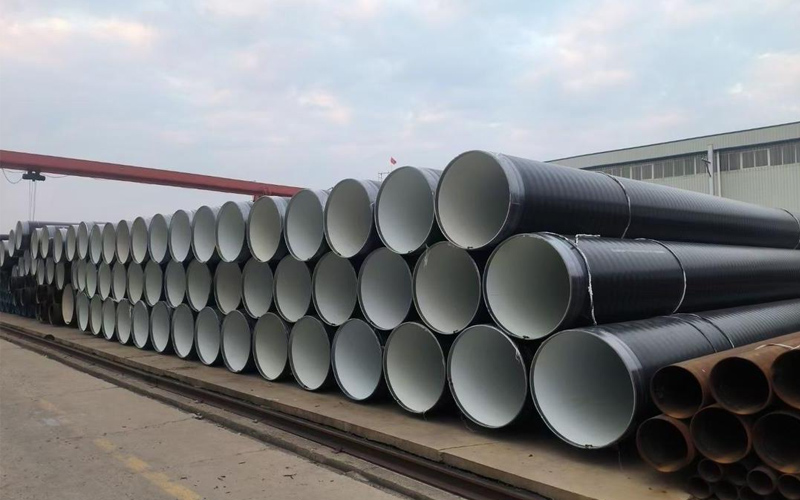
Steel Density Analysis: Core Differences between Mild and Medium Carbon Steels and Industrial Applications
The density of steel is one of the key parameters that determine its physical properties and industrial applications. Theoretical state of steel density...
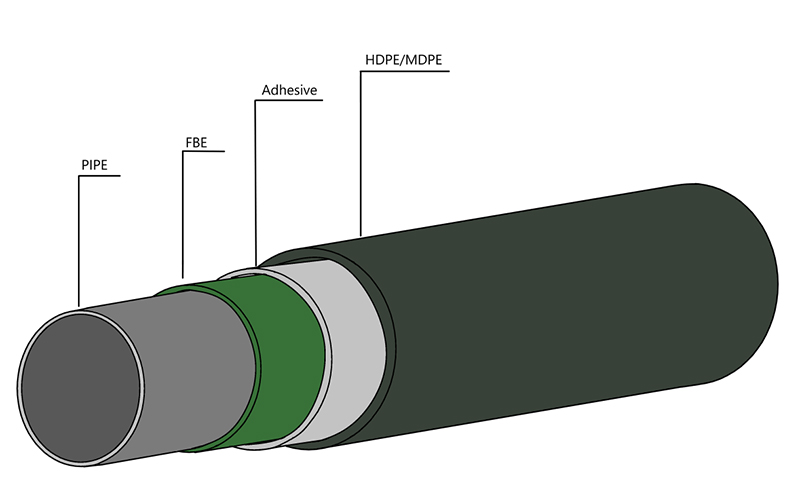
3LPE coated steel pipe: a solid barrier in the field of industrial corrosion protection
In the harsh environment of oil and gas, chemical industry, urban pipe network, etc., the long-term reliability and corrosion resistance of pipeline system...
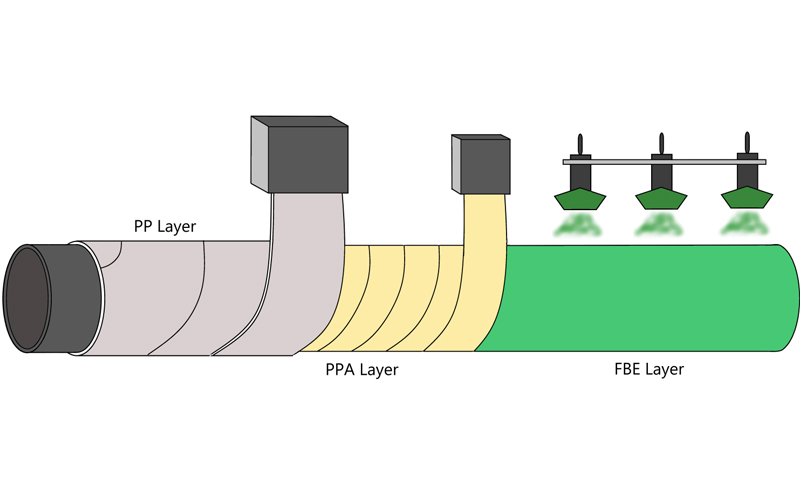
3LPP coated pipe: anti-corrosion guard in high temperature and high pressure environment
In some challenging special environments such as deep-sea oil and gas exploration and high-temperature crude oil transportation, traditional anti-corrosion coatings face significant challenges,...
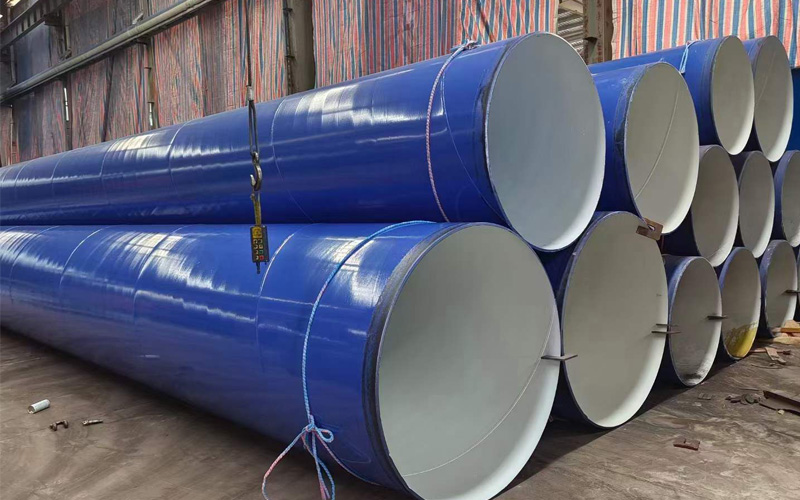
FBE steel pipe: the technological armor of the steel defense line
I In the icy waters beneath the Norwegian Sea pipeline, a section of FBE Lined Carbon Steel Pipe has been in service for 25...