







Introduction
Les canalisations industrielles soumises à des températures extrêmes, utilisées dans les secteurs du pétrole et du gaz, de la production d'électricité, du stockage à basse température et des infrastructures municipales, reposent sur des tubes en acier soudés résistants, capables de résister à la fissuration à chaud et aux déformations induites par la pression. Tous les projets de canalisations à usage intensif exigent le respect strict des normes Caractéristiques techniques des tubes en acier au carbone, car la fragilité à basse température et le fluage à haute température sont deux causes courantes de défaillance dans des conditions de fonctionnement extrêmes. Il est très important que les ingénieurs de projet et les équipes d’achat fassent la distinction entre les normes ASTM A671 et ASTM A672 relatives aux conduites en acier EFW, car ces deux normes sont largement appliquées par les fabricants qualifiés de conduites en acier au carbone du monde entier.
Ces deux normes EFW relatives aux tubes recourent toutes deux au soudage à l'arc submergé sur tôle pour produire des produits haut de gamme Tube d'acier LSAW, alors qu'ils sont conçus pour des conditions de température totalement différentes. ASTM A671 met l'accent sur la ténacité aux chocs à basse température, tandis que la norme ASTM A672 vise la stabilité à haute pression et à des températures moyennes et élevées. Cet article précise leurs différences en matière de nuances de matériaux, de traitements thermiques, de protocoles d'essai et de cas d'application, et aide les utilisateurs à choisir des spécifications de tuyaux conformes ainsi que des fabricants fiables pour les projets de canalisations soumis à des températures extrêmes.
1. Comprendre la norme ASTM A671 : tubes en acier EFW destinés à un usage à basse température
1.1 Portée et objectif de la conception
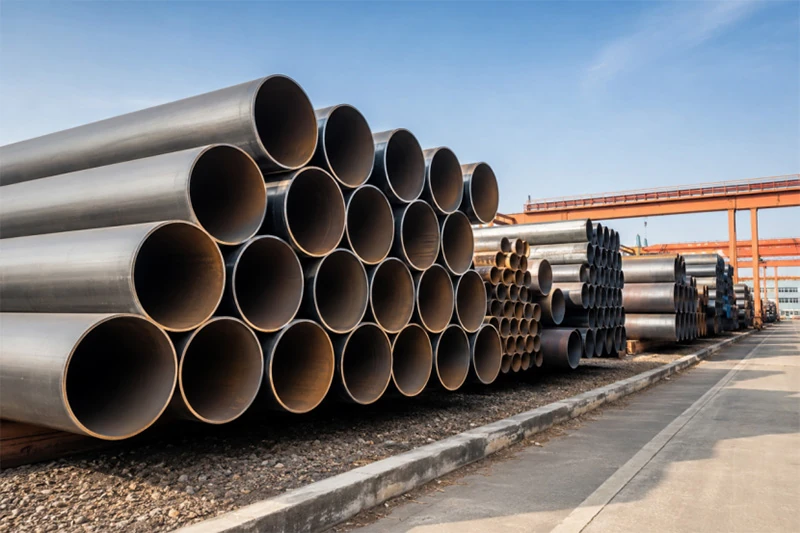
La norme ASTM A671 s'applique aux tubes en acier soudés par fusion électrique destinés à une utilisation en milieu atmosphérique et à basse température, où la ténacité en entaille est requise. La conception de base privilégie la ténacité en entaille à basse température afin d'éviter toute rupture fragile dans un environnement où les températures sont inférieures à zéro. Cette norme s'applique aux canalisations de grand diamètre (NPS 16 et plus), d'une épaisseur de paroi minimale de 6 mm, et est largement utilisée dans les systèmes industriels à basse température.
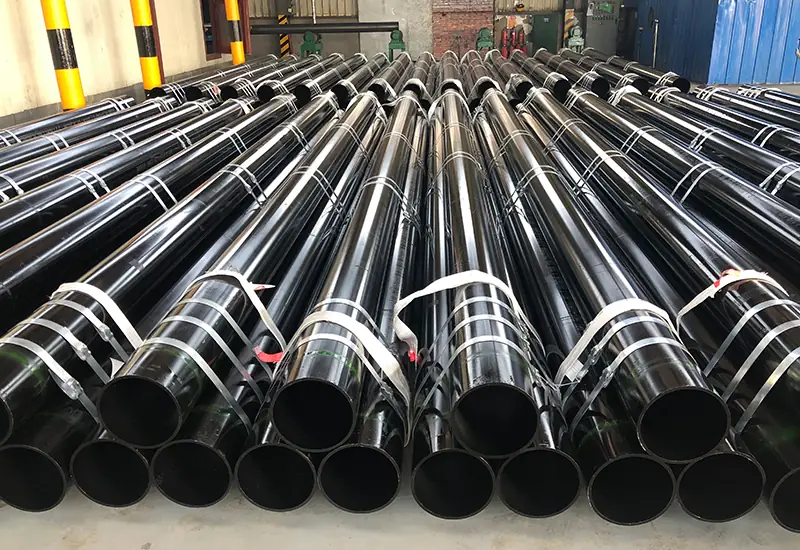
En tant que produit phare destiné aux professionnels fabricant de tubes en acier au carboneDans les installations de s’, les tubes en acier EFW conformes à la norme ASTM A671 sont généralement fabriqués à l’aide de procédés de formage de tôles et de soudage à l’arc submergé, notamment la méthode JCOE et d’autres techniques de soudage longitudinal. Le contrôle rigoureux des impuretés chimiques permet d’empêcher efficacement la propagation des microfissures en cas de choc thermique à basse température, ce qui est conforme aux spécifications internationales relatives aux tubes destinés à un service à froid.
1.2 Nuances courantes et catégories de traitement thermique
Les nuances de l'ASTM A671 correspondent à des tôles d'acier spécifiques destinées aux récipients sous pression et sont conformes aux spécifications unifiées relatives aux canalisations industrielles.
- CA55 / CB60 : Fabriqués à partir de tôles d'acier conformes à la norme ASTM A442 (spécification historique mentionnée dans la norme)
- CC60 / CC65 / CC70 : Utilise des tôles à grain fin A516 Gr 60/65/70, idéales pour les réseaux de canalisations cryogéniques
- CD70 / CD80 : utilise de l'acier A537 trempé et revenu pour les conduites arctiques à très basse température
Les codes de classe (12, 22, 32) définissent les exigences en matière de traitement thermique et de contrôle radiographique (Source : spécifications de l'ASTM International) :
- Premier chiffre : norme relative au traitement thermique (1 = à l'état brut de soudure, 2 = détendu, 3 = normalisé)
- Deuxième chiffre : couverture du contrôle radiographique des soudures (2 = détection par radiographie sur toute la longueur 100%)
La classe 22 est la nuance la plus couramment utilisée ; elle fait l'objet d'un traitement de détente et d'un contrôle complet des soudures afin d'éliminer les contraintes résiduelles et de prévenir la fissuration à basse température.
1.3 Principales applications
ASTM A671 Tube d'acier LSAW est principalement utilisé dans les applications à basse température et cryogéniques :
- Conduites à basse température pour le gaz naturel liquéfié, le gaz de pétrole liquéfié et l'azote liquide.
- Réseaux de collecte et gazoducs principaux pour le pétrole et le gaz de l'Arctique.
- Réseaux d'adduction d'eau municipaux et canalisations industrielles dans les régions froides.
- Systèmes de transport de fluides pour l'exploitation minière et le secteur de l'énergie à des températures inférieures à zéro.
2. Comprendre la norme ASTM A672 : tubes en acier EFW destinés à un usage sous haute pression et à des températures modérées à élevées
2.1 Portée et objectif de la conception
ASTM A672 Cette norme s'applique aux tubes en acier soudés par fusion électrique destinés à une utilisation sous haute pression à des températures modérées. Contrairement à la norme A671, axée sur la ténacité à basse température, cette norme optimise la microstructure et la composition chimique de l'acier afin de garantir une résistance à la traction et une résistance au fluage stables sous des contraintes thermiques élevées à long terme.
Une usine spécialisée dans la fabrication de tubes en acier au carbone a mis en place un processus de production autonome pour la norme A672 tuyau en acier soudé pour répondre aux normes d'utilisation à haute température. Cette norme couvre la même gamme de dimensions que la norme A671 et permet une grande souplesse dans le choix des dimensions pour les projets industriels à haute température. Les tubes ASTM A672 de grand diamètre et à paroi épaisse sont généralement fabriqués sur mesure selon le procédé LSAW pour des applications industrielles exigeantes.
2.2 Classes courantes et caractéristiques des matériaux
La nuance A672 est axée sur la stabilité structurelle à haute température ; les matériaux de tôle les plus courants sont les suivants :
- A45 / A50 : Tôles A 285 C à faible teneur en carbone pour conduites à basse pression et à température moyenne
- B60 / B65 : Tôles A515 Gr 60/65 destinées aux conduites thermiques à vapeur et à moyenne pression
- C60 / C70 : Tôles A516 Gr 60/70 destinées aux chaudières à haute pression et aux canalisations de procédés chimiques
Bien que certaines nuances des normes A671 et A672 utilisent les mêmes plaques de base, leurs spécifications industrielles en matière de tubes diffèrent considérablement en ce qui concerne les normes d'essai. Contrairement à la norme ASTM A671, la norme ASTM A672 n'impose généralement pas d'essais de résistance aux chocs à basse température, sauf si cela est spécifié dans les exigences du projet.
2.3 Principales applications
ASTM A672 tuyau en acier soudé est destiné aux secteurs industriels où règnent des conditions de haute pression et de haute température :
- Collecteurs de vapeur des chaudières de centrale électrique et conduites de raccordement des surchauffeurs.
- Canalisations de fluides de procédé à haute température dans les raffineries et les usines chimiques.
- Conduites principales de circulation d'énergie géothermique et de chauffage urbain.
- Systèmes industriels de transport de gaz comprimé à haute pression.
3. Principales différences : ASTM A671 par rapport à la norme ASTM A672
Le tableau ci-dessous résume les principales différences conformément aux normes officielles de l'ASTM et aux spécifications industrielles relatives aux tuyaux :
| Indicateur de comparaison | ASTM A671 (tuyaux pour basses températures) | ASTM A672 (tuyaux pour hautes températures et hautes pressions) |
| Plage de température | -196 °C à +50 °C (conditions cryogéniques et à température ambiante) | -29 °C à +427 °C (chaleur modérée à élevée) |
| Orientation principale de la conception | Ténacité à l'encoche à basse température, résistance à la rupture fragile | Résistance à la traction à haute température, résistance au fluage |
| Plaques d'acier de base | A442, A516 Gr 60/70, A537 | A285 C, A515 Gr 60/65, A516 Gr 60/70 |
| Type de tuyau | Tuyau EFW destiné à une utilisation à basse température | Tuyau EFW destiné à une utilisation sous pression à haute température |
| Exigences relatives à la classe 22 | Détente par PWHT + RT 100% + essai de résistance aux chocs à basse température | Traitement de détente PWHT + 100% RT |
| Application principale | GNL, pétrole et gaz de l'Arctique, stockage cryogénique | Production d'électricité, canalisations de vapeur, raffinage pétrochimique |
4. Procédés de fabrication des tubes en acier EFW et LSAW
4.1 Flux de travail de production standard
Certifié fabricant de tubes en acier au carbone Des usines telles qu'Allland produisent des tubes en acier soudés de type A671 et A672 à l'aide de procédés standardisés de formage JCOE et de soudage à l'arc submergé, en totale conformité avec les spécifications industrielles applicables aux tubes :
- Contrôle des plaques brutes et vérification des dimensions.
- Découpe de précision, découpage et fraisage des arêtes.
- Pré-pliage de tôles et formage cylindrique JCOE.
- Pré-soudage des joints longitudinaux, soudage à l'arc submergé interne et externe.
- Redressage, chanfreinage et traitement thermique sur mesure.
- Détection des défauts par ultrasons, essai hydrostatique et contrôle radiographique.
- Démagnétisation, marquage et revêtement anticorrosion (3 options LPE/FBE au choix).
4.2 Tuyaux EFW par rapport aux tuyaux LSAW classiques
Tubes EFW et conventionnels Tube d'acier LSAW partagent la même technologie de formage et de soudage de haute précision, garantissant une qualité de soudure et des performances mécaniques homogènes. La principale différence réside dans les règles d’essai personnalisées définies par les différentes spécifications industrielles applicables aux canalisations. La norme A671 impose des essais de résilience à basse température rigoureux, et les deux normes exigent des traitements thermiques post-soudage (PWHT) spécifiques, tandis que les produits LSAW ordinaires peuvent se contenter d’inspections de routine à température ambiante.
4.3 Normes fondamentales de contrôle de la qualité
Qualifié tuyau en acier soudé Les conduites destinées à des températures extrêmes doivent être soumises à des essais non destructifs rigoureux, à un contrôle de la qualité des soudures et à une vérification de leurs performances mécaniques. Les fabricants professionnels de conduites en acier au carbone appliquent rigoureusement les traitements thermiques et les essais mécaniques prescrits par l'ASTM afin d'éviter toute défaillance des conduites soumises à des températures et des pressions extrêmes.
5. Comment choisir un fabricant de tubes en acier au carbone qualifié
5.1 Liste de contrôle pour la qualification des fournisseurs
Approvisionnement conforme aux normes A671/A672 tuyau en acier soudé exige des fournisseurs qu'ils respectent des normes techniques fondamentales conformes aux spécifications officielles du secteur en matière de tuyauterie :
- Traçabilité complète des matières premières et certificats officiels d'essais en usine.
- Lignes de production de pointe de tubes en acier LSAW de JCOE et équipements professionnels de traitement thermique.
- Laboratoires indépendants de contrôles non destructifs (CND) spécialisés dans les essais par rayons X, par ultrasons et par choc
- Valide API 5L, certifications internationales ISO et ASTM
- Revêtements anticorrosion sur mesure et services de traitement de tubes personnalisés.
5.2 Solutions professionnelles pour canalisations d'Allland
En tant que professionnel fabricant de tubes en acier au carbone Située à Cangzhou (le pôle chinois de la fabrication de tubes), la société Allland dispose de deux lignes de production de tubes en acier JCOE LSAW et de cinq ateliers de traitement anticorrosion, avec une production annuelle de 200 000 tonnes de produits soudés standard. Tous les produits sont strictement conformes aux spécifications industrielles ASTM, ce qui permet une production sur mesure de tubes A671 pour basses températures et A672 pour hautes températures.
Allland fournit des rapports d'essais par lots complets, des documents MTC et des certificats de conformité, au service de clients internationaux tels que CNPC, CNOOC, ADNOC et Petrobras. L'entreprise fournit des produits pour pipelines stables et conformes aux normes, destinés à des projets cryogéniques, de production d'électricité et pétrochimiques à travers le monde.
6. Foire aux questions (FAQ))
Q 1 : Est-ce qu'un A672 Remplacer un tuyau A671 pour une utilisation cryogénique à basse température ?
A : A672 tuyau en acier soudé ne fait l'objet d'aucune exigence obligatoire en matière d'essais de résistance aux chocs à basse température, et la composition de son matériau n'est pas conçue pour résister à la rupture fragile à des températures inférieures à zéro. Conformément aux spécifications standard de l'industrie en matière de tuyauterie, seuls les tuyaux en acier A671 Classe 22/32 LSAW sont conformes aux exigences des projets de canalisations cryogéniques.
Q 2 : Que signifient les classes 12, 22 et 32 pour A671/A672 des tuyaux ?
R : Les codes de classe correspondent aux normes de traitement thermique et d'inspection (source : spécifications de l'ASTM International). Le premier chiffre désigne les types de traitement thermique, tandis que le second définit l'étendue de l'inspection radiographique des soudures. La classe 22 est la catégorie industrielle la plus polyvalente ; elle comprend un traitement de détente et une inspection complète des soudures pour les canalisations soumises à des températures extrêmes.
Q 3 : Comment la nuance de la tôle d'acier correspond-elle à la nuance finale du tube en acier EFW ?
R : Toutes les nuances destinées aux conduites sont dérivées de spécifications ASTM spécifiques aux tôles pour appareils sous pression, qui constituent un élément central des spécifications industrielles unifiées relatives aux conduites. La norme A671 CC60/CC70 correspond aux tôles pour basses températures A516 Gr 60/70, tandis que les normes A672 C60/C70 et B60 sont fabriquées respectivement à partir de tôles pour appareils sous pression A516 et A515 afin de s'adapter à différents environnements d'exploitation.
7. Conclusion
La principale différence entre les normes ASTM A671 et A672 réside dans leurs températures de service cibles et leurs spécifications industrielles adaptées. ASTM A671 tuyau en acier soudé est conçu pour résister aux basses températures et à la fragilisation à basse température, tandis que la norme A672 convient aux systèmes industriels fonctionnant à haute pression et à des températures moyennes à élevées. Ces deux normes font appel à une technologie éprouvée de soudage à l'arc submergé, mais exigent des procédures de traitement thermique et d'essais différentes en fonction des conditions d'utilisation prévues.
Choisir un professionnel certifié fabricant de tubes en acier au carbone garantit le respect total des normes ASTM, évitant ainsi les risques liés à la sécurité des canalisations résultant d'une production et d'essais non conformes aux normes. Pour les projets de canalisations en conditions de températures extrêmes à travers le monde, le choix de la norme appropriée et d'un fournisseur fiable est essentiel pour assurer un fonctionnement stable et durable des infrastructures.

ASTM A53 vs. API 5L : Guide de sélection et d'application
Dans le domaine de la tuyauterie industrielle, l'ASTM A53 et l'API 5L sont deux normes clés largement utilisées, mais dont les positions sont très différentes. L'ASTM...

Introduction:Les différences technologiques déterminent le succès ou l'échec, et la sélection doit être “précise”
Dans le domaine du transport du pétrole et du gaz, des infrastructures municipales et d'autres projets majeurs, le choix raisonnable du processus de soudage des tuyaux en acier a une incidence directe sur le projet...
Analyse de la densité de l'acier : Différences fondamentales entre les aciers doux et moyens au carbone et applications industrielles
La densité de l'acier est l'un des paramètres clés qui déterminent ses propriétés physiques et ses applications industrielles. L'état théorique de la densité de l'acier...
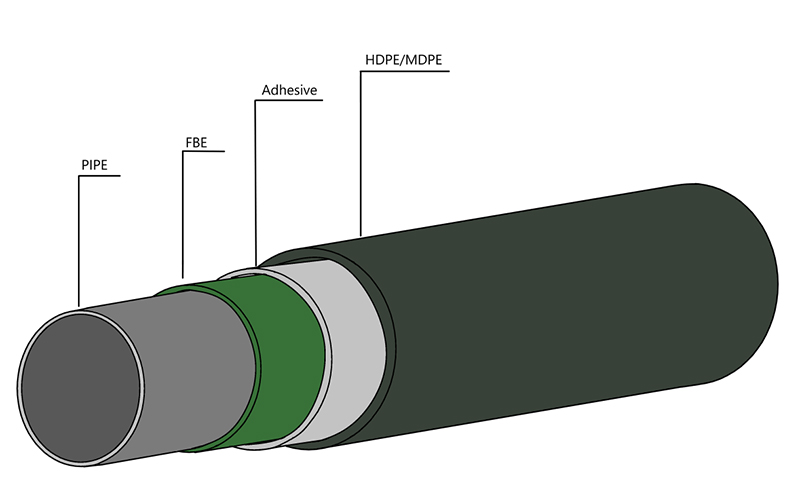
Tube d'acier revêtu de 3LPE : une barrière solide dans le domaine de la protection contre la corrosion industrielle
Dans l'environnement difficile du pétrole et du gaz, de l'industrie chimique, du réseau de canalisations urbaines, etc., la fiabilité à long terme et la résistance à la corrosion du système de canalisations...
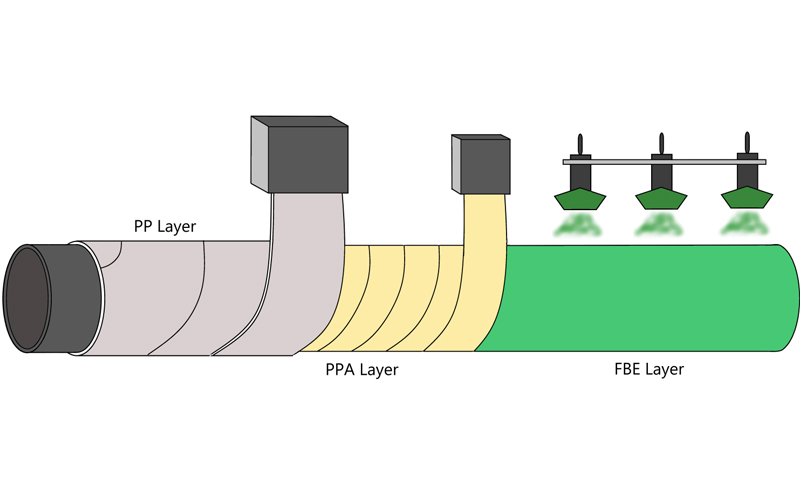
Tube revêtu de 3LPP : protection anticorrosion dans un environnement à haute température et à haute pression
Dans certains environnements spéciaux difficiles, tels que l'exploration pétrolière et gazière en eaux profondes et le transport de pétrole brut à haute température, les revêtements anticorrosion traditionnels sont confrontés à des défis importants,...
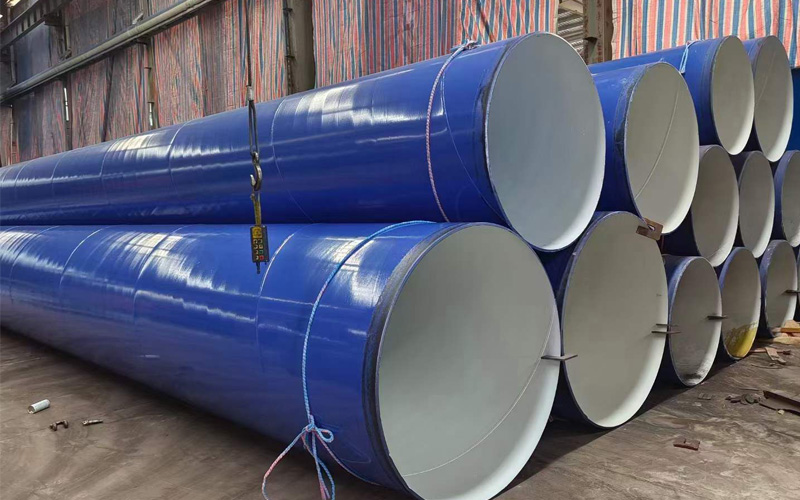
Tube d'acier FBE : l'armure technologique de la ligne de défense de l'acier
I Dans les eaux glacées du pipeline de la mer de Norvège, une section de tube en acier au carbone revêtu FBE est en service depuis 25...