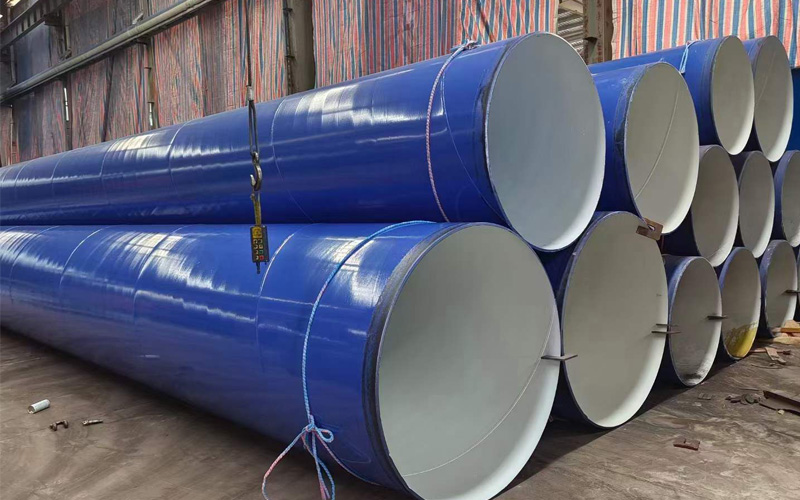
Les tubes en acier inoxydable comptent parmi les matériaux de tuyauterie les plus utilisés dans l'industrie moderne. Du transport du pétrole et du gaz aux installations de production chimique, en passant par les équipements de transformation alimentaire, les systèmes pharmaceutiques, l'ingénierie navale et les structures de construction, les tubes en acier inoxydable jouent un rôle essentiel dans un large éventail d'applications.
Que vous soyez entrepreneur en génie civil, spécialiste des achats pour des projets, fabricant d'équipements ou distributeur de tubes, cet article vous aidera à mieux comprendre les tubes en acier inoxydable et leur intérêt dans diverses applications.
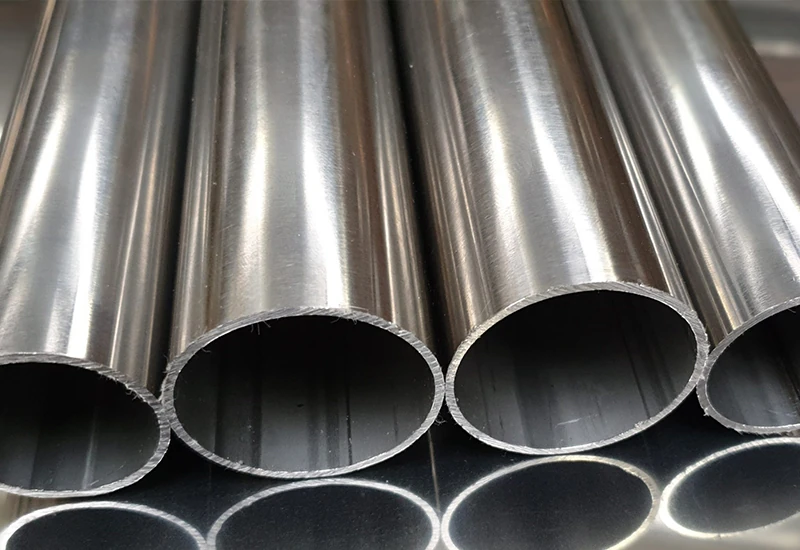
Tuyau en acier inoxydable Il s'agit d'un produit tubulaire creux fabriqué en acier inoxydable, principalement utilisé pour le transport de liquides, de gaz et de vapeur, ainsi que comme élément de structure.
Par rapport à l'acier au carbone ordinaire, l'acier inoxydable contient une certaine proportion de chrome (Chromium), dont la teneur est généralement d'au moins 10,5%. Lorsque le chrome entre en contact avec l'oxygène de l'air, il forme une couche passive dense à la surface de l'acier, empêchant ainsi efficacement toute oxydation et corrosion supplémentaires.
En fonction de leur composition chimique et de leur microstructure, les tubes en acier inoxydable peuvent être classés en plusieurs catégories, notamment les tubes en acier inoxydable austénitique, les tubes en acier inoxydable duplex et les tubes en acier inoxydable ferritique. Parmi ceux-ci, les séries 304 et 316 sont les tubes en acier inoxydable les plus largement utilisés à l'échelle mondiale.
Types de tubes en acier inoxydable
Tuyau sans soudure en acier inoxydable
Les tubes sans soudure en acier inoxydable sont fabriqués à partir de billettes d'acier massif percées, puis soumises à des procédés de laminage à chaud ou d'étirage à froid ; ils se caractérisent par l'absence totale de cordons de soudure sur toute la longueur du tube.
En l'absence de zones de soudure, les tubes sans soudure offrent une plus grande fiabilité dans les environnements à haute pression, à haute température et corrosifs, ce qui explique leur utilisation généralisée dans les systèmes industriels critiques.
Tuyau en acier inoxydable soudé
Les tubes en acier inoxydable soudés sont fabriqués en laminant des bobines ou des tôles d'acier inoxydable pour leur donner une forme tubulaire à l'aide d'équipements de formage, puis en les soudant entre eux à l'aide de procédés tels que le soudage TIG, le soudage au laser ou le soudage à haute fréquence.
Les tubes soudés peuvent être fabriqués en série à moindre coût et conviennent particulièrement au transport de fluides à moyenne et basse pression ainsi qu’aux applications structurelles dans le secteur du bâtiment.
Dans les applications techniques concrètes, telles que les usines de dessalement à grande échelle situées dans des pays côtiers comme l'Australie, les tuyaux en acier inoxydable soudés sont largement utilisés dans les systèmes de prise d'eau de mer, les unités de prétraitement et les canalisations du procédé d'osmose inverse (RO).
Nous fournissons depuis de nombreuses années des solutions de tuyauterie en acier inoxydable soudé pour des projets similaires de traitement de l'eau et de dessalement, dans le cadre desquels les nuances d'acier inoxydable 316L et duplex sont généralement prescrites afin de garantir une résistance à la corrosion à long terme.
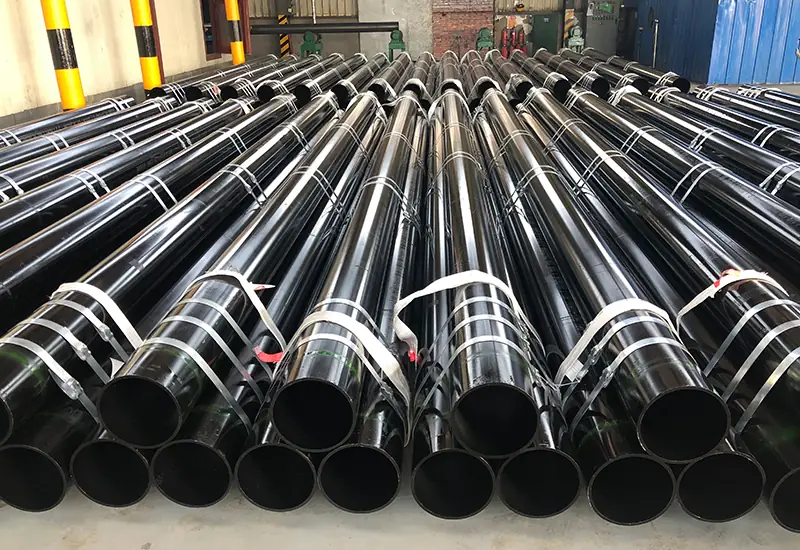
Infrastructures à grand diamètre : lorsque les réseaux d'adduction d'eau atteignent l'échelle des méga-réseaux municipaux ou des canaux de captage sous-marins, les exigences techniques s'orientent souvent vers des conduites soudées en acier au carbone de grand diamètre. Découvrez comment équilibrer ces budgets grâce à notre guide : Tubes LSAW et SSAW.
Tubes en acier inoxydable sans soudure et soudés
Article
Tuyau sans soudure en acier inoxydable
Tuyau en acier inoxydable soudé
Fabrication
Perçage et laminage
Formage et soudage
Résistance / Pression
Plus élevé
Modéré
Résistance à la corrosion
Excellent
Excellent
Gamme de tailles
Petit-Moyen
Large gamme (petit à grand)
Coût
Plus élevé
Plus bas
Principales applications
Pétrole et gaz, pétrochimie, énergie
Eau, alimentation, construction
Note technique : Le principe physique de perçage qui distingue les tubes en acier inoxydable sans soudure des modèles soudés s'inscrit dans la lignée de la fabrication de l'acier au carbone. Pour bien comprendre les marges de contrainte applicables dans divers secteurs industriels, consultez notre étude de référence : Tubes en acier sans soudure et tubes en acier soudés
Nuances courantes de tubes en acier inoxydable
Tuyau en acier inoxydable 304
La nuance la plus couramment utilisée
·Bonne résistance à la corrosion et bonne maniabilité
·Utilisé dans l'agroalimentaire, la décoration architecturale, les applications industrielles générales, ainsi que dans les réseaux d'alimentation en eau et d'assainissement
Tuyau en acier inoxydable 316
·Contient du molybdène (Mo), ce qui lui confère une meilleure résistance à la corrosion par les ions chlorure
·Adapté aux environnements marins et chimiques
·Couramment utilisé dans l'eau de mer, les milieux chimiques et l'industrie pharmaceutique
Tuyau en acier inoxydable 321
· Acier inoxydable stabilisé au titane
· Excellente résistance à l'oxydation à haute température
· Convient aux applications à haute température, telles que les chaudières et les systèmes d'échange thermique
Tuyau en acier inoxydable duplex
· Nuances courantes : 2205 / 2507
· Haute résistance mécanique + excellente résistance à la corrosion par piqûres
· Largement utilisé dans les secteurs de l'offshore et du pétrole et du gaz
Grade
Résistance à la corrosion
Résistance à la chaleur
Applications typiques
304
Haut
Moyen
Industrie générale
316
Très élevé
Moyen
Marine et chimie
321
Haut
Haut
Systèmes d'échappement
2205
Excellent
Haut
Pipelines offshore
Spécifications complètes des tubes en acier inoxydable
ASTM A312, ASTM A213, ASTM A269, ASTM A790, EN 10216-5
Dimensions standard
Taille standard
ASME B36.19M, ASME B36.10M
Pression nominale
Capacité de pression
Cela dépend de la nuance, du diamètre extérieur et de l'épaisseur de paroi
Plage de température
Température de fonctionnement
Jusqu'à 870 °C (selon la nuance)
Inspection et essais
Contrôle qualité
Essai hydrostatique, essai PMI, contrôle par ultrasons (UT), contrôle par rayons X (RT), contrôle par courants de Foucault
Certificat
Certificat d'inspection
EN 10204 3.1 / MTC
Applications
Secteurs d'activité typiques
Pétrole et gaz, industrie chimique, agroalimentaire, industrie pharmaceutique, traitement de l'eau, construction
Principales applications des tubes en acier inoxydable
1. Conduites de transport de pétrole et de gaz
Pour les environnements à haute température, haute pression ou corrosifs du secteur pétrolier et gazier, Allland Pipes fournit des tubes en acier inoxydable, tels que les modèles ASTM A312 TP316L et ASTM A790 Duplex 2205, destinés à des projets pétroliers et gaziers au Moyen-Orient, répondant ainsi aux exigences de résistance à la corrosion imposées par les conditions d'exploitation locales.
2. Industrie chimique et pétrochimique
3. Secteur agroalimentaire
La plupart des applications utilisent des tuyaux en acier inoxydable sanitaire de type 304 et 316L afin de garantir la propreté et la résistance à la corrosion.
4. Bâtiment et architecture
Nuances courantes d'acier inoxydable
• 201
• 304
• 316
Applications des tuyaux d'échappement en acier inoxydable
Les tuyaux d'échappement en acier inoxydable sont largement utilisés dans les systèmes d'échappement des véhicules automobiles, des engins de chantier et des installations industrielles, principalement pour évacuer les gaz d'échappement à haute température. Comparé à l'acier au carbone ordinaire, l'acier inoxydable offre une résistance supérieure à la chaleur et à l'oxydation, ainsi qu'une durée de vie plus longue.
Pourquoi utilise-t-on l'acier inoxydable pour les pots d'échappement ?
Les systèmes d'échappement sont constamment exposés à des températures élevées, à des vibrations et à des gaz corrosifs ; c'est pourquoi les matériaux utilisés doivent présenter les propriétés suivantes :
Résistance aux hautes températures
Résistance à l'oxydation
Résistance à la corrosion
Bonne résistance mécanique
C'est pourquoi l'acier inoxydable est désormais le matériau de prédilection, notamment dans le secteur automobile (milieu et haut de gamme) et dans celui des équipements industriels.
Matériaux couramment utilisés pour les tuyaux d'échappement
Matériau
Coût
Résistance à la chaleur
Durée de vie
409 SS
Faible
Bon
Moyen
304 SS
Moyen
Excellent
Longues
321 SS
Haut
Exceptionnel
Très long
Systèmes d'échappement pour l'automobile et l'industrie
Les tuyaux d'échappement en acier inoxydable sont principalement utilisés dans les domaines suivants :
1. Systèmes d'échappement automobiles
L'acier inoxydable 409 est couramment utilisé dans les véhicules d'entrée de gamme, tandis que les aciers inoxydables 304 et 321 sont plus fréquemment utilisés dans les systèmes d'échappement hautes performances et à longue durée de vie.
2. Systèmes d'évacuation industriels
Les environnements industriels sont généralement caractérisés par des températures plus élevées ; c'est pourquoi on privilégie les tuyaux d'échappement en acier inoxydable 304 ou 321 afin de garantir un fonctionnement stable et durable.
Comment cintrer un tuyau en acier inoxydable
Les tubes en acier inoxydable sont largement utilisés dans les applications structurelles et industrielles, où il est souvent nécessaire de les cintrer pour les adapter à des environnements d'installation complexes. Cependant, en raison de leurs propriétés mécaniques, il est essentiel d'utiliser des techniques de cintrage appropriées pour garantir leurs performances et leur durée de vie.
Pourquoi le cintrage des tubes en acier inoxydable est-il si important ?
Dans les applications techniques concrètes, les réseaux de tuyauterie doivent souvent contourner des équipements, changer de direction ou s'adapter à un espace restreint, ce qui fait du cintrage des tuyaux une étape incontournable du processus de fabrication.
Méthodes courantes de cintrage des tuyaux
Cintrage sur mandrin
Convient pour :
· Tuyau d'échappement
· Tubes de précision
Cintrage par rotation
Convient pour :
· Mains courantes
· Tubes pour meubles
· Structures architecturales
Cintrage au rouleau
· Réseaux de canalisations de grand diamètre
· Châssis structurels
· Cadres industriels
Demandez un devis pour des tuyaux en acier inoxydable
Si vous recherchez des tubes en acier inoxydable pour des projets dans les secteurs du pétrole et du gaz, de la chimie, du traitement de l'eau ou de la construction, il est essentiel de choisir un fournisseur stable et fiable.
Allland Pipes propose des tubes en acier inoxydable 304/304L, 316/316L et duplex conformes aux normes ASTM/ASME. Nous fournissons aussi bien des tubes sans soudure que des tubes soudés et pouvons proposer des dimensions sur mesure ainsi que des certificats d'essai des matériaux (MTC).
S'il vous plaît nous contacter pour obtenir une assistance technique et des devis de projet.
Obtenez dès aujourd'hui un devis pour vos tubes en acier sur mesure !
Fournissez-nous les détails de votre projet (comme l'application, les spécifications, la quantité). Notre équipe expérimentée vous proposera une solution sur mesure et un devis compétitif dans les 24 heures ouvrables.
Dans le domaine de la tuyauterie industrielle, l'ASTM A53 et l'API 5L sont deux normes clés largement utilisées, mais dont les positions sont très différentes. L'ASTM...
Dans le domaine du transport du pétrole et du gaz, des infrastructures municipales et d'autres projets majeurs, le choix raisonnable du processus de soudage des tuyaux en acier a une incidence directe sur le projet...
La densité de l'acier est l'un des paramètres clés qui déterminent ses propriétés physiques et ses applications industrielles. L'état théorique de la densité de l'acier...
Dans l'environnement difficile du pétrole et du gaz, de l'industrie chimique, du réseau de canalisations urbaines, etc., la fiabilité à long terme et la résistance à la corrosion du système de canalisations...
Dans certains environnements spéciaux difficiles, tels que l'exploration pétrolière et gazière en eaux profondes et le transport de pétrole brut à haute température, les revêtements anticorrosion traditionnels sont confrontés à des défis importants,...