






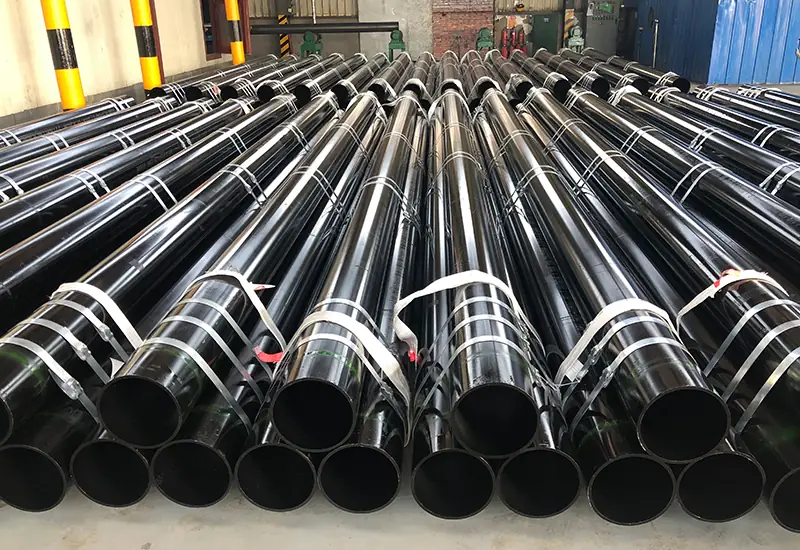
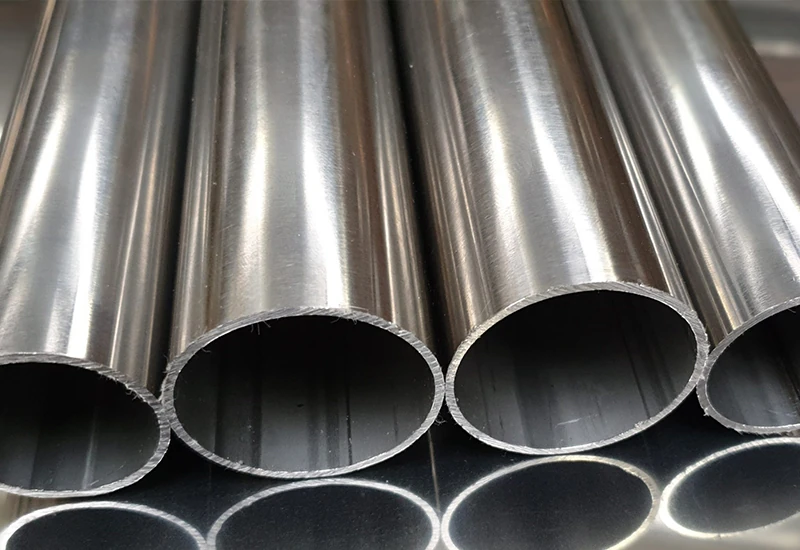

Onshore pipeline refers to a pipeline transportation system (buried or overhead) installed on land, which transports oil, natural gas or water from the wellhead to processing plants or end users. As the lifeline of the global energy industry, onshore pipeline operations relies on strict international standards, such as API 5L, to ensure safety, reliability and environmental protection. In an era when energy security is a top priority for all countries in the world, it is becoming more and more important for professionals, decision makers and even the general public to understand the basic principles of onshore pipeline systems.
According to the report of Pakistan Credit Rating Agency (PARA) on oil transportation and storage in 2025, onshore pipeline networks accounts for more than 68% of the total oil transportation capacity in the world, highlighting their irreplaceable role in the energy supply chain.
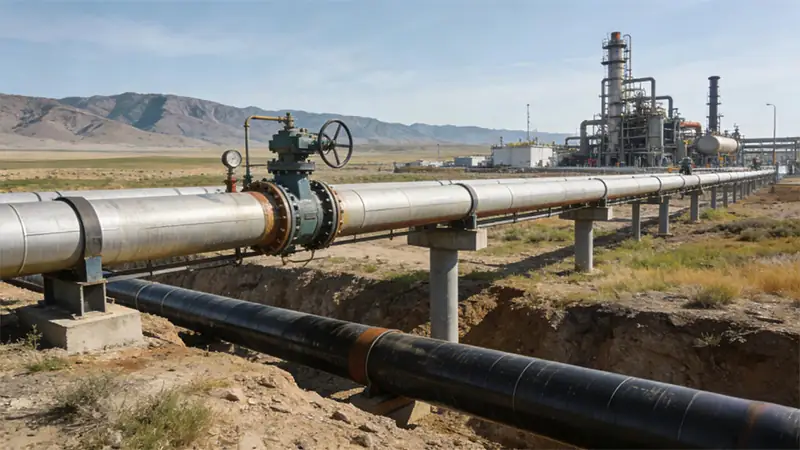
Three types of onshore pipeline
Gas gathering Pipelines
Gathering pipelines marks the starting point of landing pipeline system, and is responsible for collecting crude oil or natural gas directly from wellhead. These pipelines are characterized by small diameters, typically ranging from 4 to 12 inches, low operating pressures, and short distances—usually spanning just a few miles from the well site to a central collection facility or processing plant. Because it is close to the wellhead, gathering pipelines usually need to adapt to different flow velocities and fluid compositions. Although its structure is relatively simple, its design and material selection are very critical. Even at the initial stage, it is essential to follow the basic API 5L guidelines to prevent leakage and ensure effective liquid collection.
Transmission pipe
The transportation pipelines is the backbone of the land pipeline network, and it is often called the “expressway” of energy transportation. These pipelines are specially designed for long-distance and high-pressure operation, and transport a large amount of oil or natural gas from production area to the main processing center, storage facilities or trans-state or even trans-national distribution centers. Different from gathering and transportation pipelines, the working pressure of transportation pipelines is much higher, usually exceeding 1,000 psi, which requires a solid structure and high-quality materials to withstand this pressure.
A key feature of transmission pipelines is their large diameters, typically ranging from 24 to 48 inches, which allows for high-volume transportation and reduces energy losses during transit. The main materials used to build these pipelines are large-diameter LSAW (longitudinal submerged arc welding) or SSAW (spiral submerged arc welding) steel pipes, and most of them use advanced steel, such as API 5L X60/X70. These API 5L grades are chosen because they have excellent strength, ductility and fatigue resistance, which are very important for withstanding the long-term high-pressure conditions and potential environmental stresses (such as soil movement) encountered by pipelines. For these pipelines, it is non-negotiable to meet API 5L standards, because any failure could lead to disastrous environmental damage and significant economic losses.
Distribution piping
Distribution pipelines represents the “last mile” of the onshore pipeline system, and is responsible for transporting processed oil, natural gas or water from regional distribution centers to the end users, including residential, commercial and industrial users. These pipes are designed to have a small diameters (usually 2 to 12 inches) and low working pressures, because they only need to transport fluids for a short distances in cities or suburbs. The design of distribution pipelines usually gives priority to the flexibility of passing through complex urban landscapes, and its construction must comply with local laws and regulations to minimize the damage to communities. Although it operates under low pressures, distribution pipelines still needs to meet relevant standards, including API 5L for steel pipe materials, to ensure the safety of end users and prevent leakage in densely populated areas.
Key Materials: Why is API 5L important?
The majority of onshore pipeline systems are constructed using carbon steel, a material chosen for its high strength-to-weight ratio, durability, and cost-effectiveness. However, the performance and safety of these steel pipelines largely depend on whether they meet the international standards, among which API 5L (american petroleum institute Specification 5L) being the most widely recognized and adopted pipeline standard for oil and gas transportation in the world. API 5L specifies the technical requirements for seamless and welded steel pipes, including chemical composition, mechanical properties, manufacturing technology and test methods-all of which are essential to ensure the reliability and safety of onshore pipeline operations.
An important difference in API 5L standard is the difference between PSL 1 (product specification level 1) and PSL 2 (product specification level 2). PSL 1 is the basic code level, which is suitable for general onshore pipeline applications with less harsh operating conditions, such as low-pressure distribution pipelines. It sets minimum requirements for material performance and testing to ensure basic performance and safety. In contrast, PSL 2 is a stricter specification level, designed for high pressure and high stress applications, such as onshore pipeline transportation lines. The new PSL protocol puts forward more strict restrictions on chemical composition (to reduce the risk of material defects) and requires higher impact toughness (to prevent brittle fracture, especially in cold climates or high pressure environment). For onshore pipeline, it is usually necessary to use API 5L PSL grade 2 steel, because this can significantly reduces the risk of pipeline failure under extreme operating conditions. The update of API 2024 API 5L further emphasizes the importance of high-pressure onshore pipelines conforming to the new PSL protocol, and points out that the failure rate of PSL 2-class pipelines is 35% lower than that of PSL 1-class pipelines under similar operating environment.
Onshore Pipelines and offshore Pipelines
Although both onshore pipeline and offshore pipeline systems are designed for transporting oil and natural gas, they operate in totally different environments, resulting in significant differences in design, construction and material requirements. The following table compares the main differences between onshore and offshore pipeline in detail.
| Comparative Dimension | Onshore Pipeline | Offshore Pipeline |
| Work environment | Land-based (buried, overhead or in trenches); Exposed to varying terrain (mountains, deserts, plains), soil conditions, and weather. | Marine environment (shallow water to deep water); Exposure to high hydrostatic pressure, salt water, strong current and marine organisms. |
| Major Challenges | Terrain change (requiring slope stability design), third party damage (for example. Construction activities, excavation) and soil erosion. | Deepwater pressure (increasing with depth), seawater corrosion (more corrosive than soil corrosion), and installation complexity in harsh marine conditions. |
| Material demand | Mainly API 5L grade carbon steel (PSL 1 grade is used for low pressure and PSL 2 grade is used for high pressure); Emphasize ductility and soil corrosion resistance. | High strength API 5L steel (usually x 80 or higher) with enhanced corrosion resistance; Other materials of underwater connectors and fittings. |
| Corrosion Protection | Most commonly, it uses 3 LPE (3-Layer Polyethylene) coating or FBE (Fusion Bonded Epoxy) coating; Auxiliary with cathodic protection systems. | Uses special corrosion-resistant coatings (e.g., multi-layer polypropylene) and cathodic protection; Additional corrosion inhibitors may be needed. |
| Special design characteristic | The key point is to protect the buried depth (0.9-1.2 meters) to prevent the third party from destroying it; Measures for slope stability in hilly areas. | Concrete Weight Coating (CWC) is needed to counteract buoyancy in water; Flexible joints adapted to seabed motion and current-induced stress. |
| Installation Complexity | It is relatively straightforward; Uses of trenching, pipeline laying and backfilling equipment; Proper mitigation has the least impact on the environment. | It is very complicated; Need specialized marine vessels (pipe laying vessels and drilling vessels) and underwater robot technology; The risk of environmental damage during installation is relatively high. |
As emphasized in the table, onshore pipeline systems gives priority to soil corrosion and third party damage protection, which is why 3 LPE and FBE coatings are the most common anti-corrosion measures. Additionally, burial depth (typically 0.9 to 1.2 meters) is a critical design factor for onshore pipelines, as it reduces the risk of accidental damage from construction or other land-based activities. In contrast, offshore pipelines face the unique challenge of buoyancy, and Concrete Weight Coating (CWC) is needed to keep the pipeline anchored to the seabed. They also need to withstand high hydrostatic pressure, which demands thicker-walled or higher-grade steel pipes (often beyond standard API 5L X70/X80 grades for deepwater applications).
Frequently asked Questions
Q 1: What are the main standard of onshore pipelines?
A 1: The main standard for onshore pipelines is API 5L (American Petroleum Institute Specification 5L), which specifies the technical requirements for seamless and welded steel pipes for oil and gas transportation. In addition, ISO 3183 (International Organization for Standardization) is another widely recognized standard, which complements the shortcomings of API 5L in the application of onshore pipeline, especially in areas where ISO standards are preferred.
Q 2: What is the buried depth of onshore pipelines?
A 2: Usually, onshore pipelines are buried at a depth of 0.9 to 1.2 meters. However, the specific burial depth may vary due to local regulations, land use (such as, Agricultural land relative to industrial area) and topographic conditions. For example, in agricultural areas where heavy agricultural equipment is used, land pipelines may be buried deeper (up to 1.5m) to reduce the risk of damage caused by farming or other agricultural activities. In industrial areas with more complex underground infrastructure, the buried depth may be adjusted to avoid conflicts with other pipelines or public facilities.
Q 3: What coating is used for onshore pipelines?
A 3: The most commonly used coatings for onshore pipelines are 3 LPE (3-Layer Polyethylene) and FBE (Fusion Bonded Epoxy). These two kinds of coatings are aimed at providing good protection against soil corrosion, which is the main threats to buried land pipelines. LPE coatings consist of three layers (a fusion-bonded epoxy primer, an adhesive layer, and a polyethylene top layer) that provide superior mechanical protection and corrosion resistance. FBE coatings are a single-layer fusion-bonded epoxy that adheres tightly to the steel pipe surface, offering excellent chemical resistance and durability. 3 the choice between LPE and FBE usually depends on soil conditions, working temperature and project budget.
Q 4: How long is the service life of an onshore pipeline?
A 4: If properly maintained and equipped with an effective cathodic protection system, the design life of an onshore pipeline is usually 25 to 50 years, and many pipelines can exceed this time range under the condition of regular inspections and maintenance. Key factors affecting the life of an onshore pipeline include the quality of materials (such as. Comply with API 5L standards), anti-corrosion measures, operating conditions (pressure, temperature, fluid composition) and the frequency of maintenance and inspections. According to the 2024 report of the International Energy Agency, the average life of onshore pipelines that meet the API 5L standards and have regular maintenance plans is 42 years, while those that do not meet the standard are 20-25 years.
Summary
Onshore pipeline systems is the lifeline of the global energy industry and plays a key role in ensuring the reliable and efficient transportation of oil, natural gas and water from production sites to the end users. Every part of the onshore pipeline network depends on strict compliance with API 5L and other standards to ensure safety and reliability, from the small-diameter gathering and transportation pipelines at the wellhead to the large-diameter transportation pipelines across continents and the distribution pipelines for transporting energy to homes and enterprises. Different from offshore pipelines facing the challenges of deep water pressure and seawater corrosion, onshore pipelines are designed to overcome topographic changes, third-party damage and soil corrosion, which makes the three-layer LPE/FBE coatings and proper burial depth become key design considerations.
Looking forward to the future, the onshore pipeline industry will adopt several main trends, one of which is the increase in the use of high-strength steel (such as API 5L X80). As energy demand grows and the need for efficient transportation increases, API 5L X80 steel offers significant advantages: its higher strength allows for thinner pipe walls, reducing material and construction costs while maintaining the same or higher pressure-carrying capacity. This trend is supported by the 2024 report of the International Energy Agency, which predicts that by 2030, API 5L X80 grade steel will account for more than 60% of new onshore pipeline construction.For industry professionals involved in onshore pipeline projects, the importance of procurement can not be overemphasized. Selecting qualified manufacturers that comply with API 5L standards and requesting a Mill Test Certificate (MTC) for each batch of pipes is the first and most critical step in ensuring the long-term safety and performance of the pipeline system. MTC provides detailed information about the chemical composition, mechanical properties and test results of the pipeline to verify whether it meets the required API 5L specifications. By prioritizing procurement quality, complying with international standards and implementing effective maintenance plans, the onshore pipeline industry can continue to support global energy security, while minimizing environmental risks and ensuring the safety of communities and workers.

ASTM A53 vs. API 5L: A Guide to Selection and Application
In the field of industrial piping, ASTM A53 and API 5L are two key standards that are widely used, but have very different positions. ASTM...

Introduction:Technology differences determine success or failure, and selection needs to be “precise”
In oil and gas transmission, municipal infrastructure and other major projects, the reasonable choice of steel pipe welding process directly affects the project...
Steel Density Analysis: Core Differences between Mild and Medium Carbon Steels and Industrial Applications
The density of steel is one of the key parameters that determine its physical properties and industrial applications. Theoretical state of steel density...
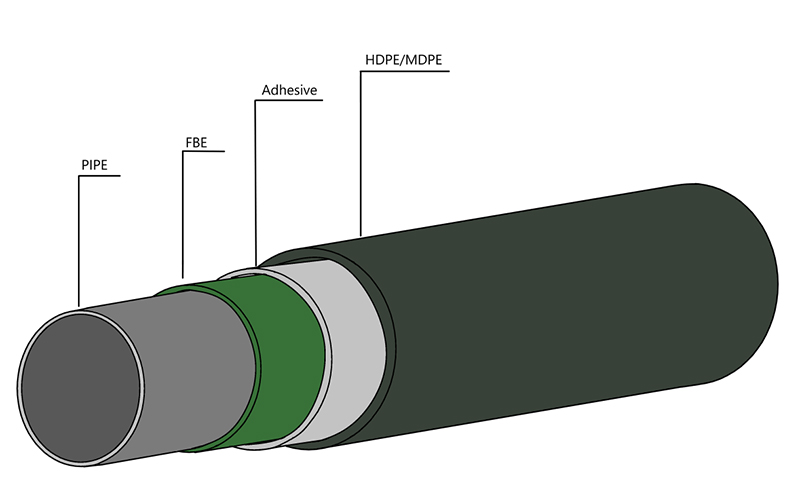
3LPE coated steel pipe: a solid barrier in the field of industrial corrosion protection
In the harsh environment of oil and gas, chemical industry, urban pipe network, etc., the long-term reliability and corrosion resistance of pipeline system...
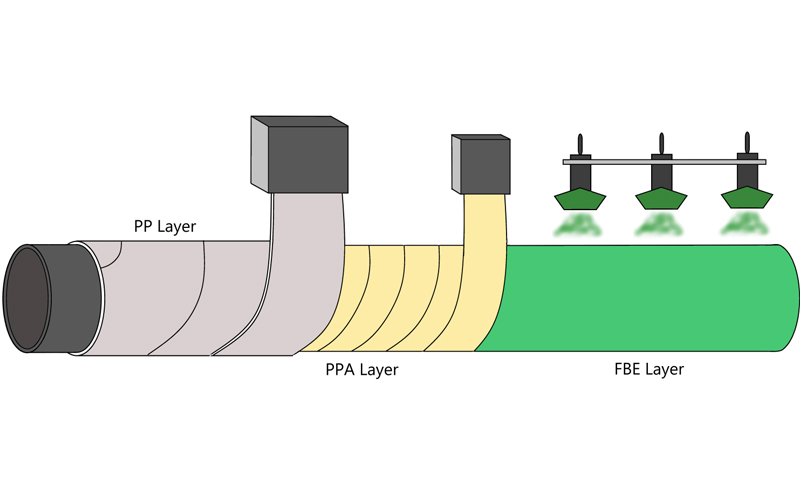
3LPP coated pipe: anti-corrosion guard in high temperature and high pressure environment
In some challenging special environments such as deep-sea oil and gas exploration and high-temperature crude oil transportation, traditional anti-corrosion coatings face significant challenges,...
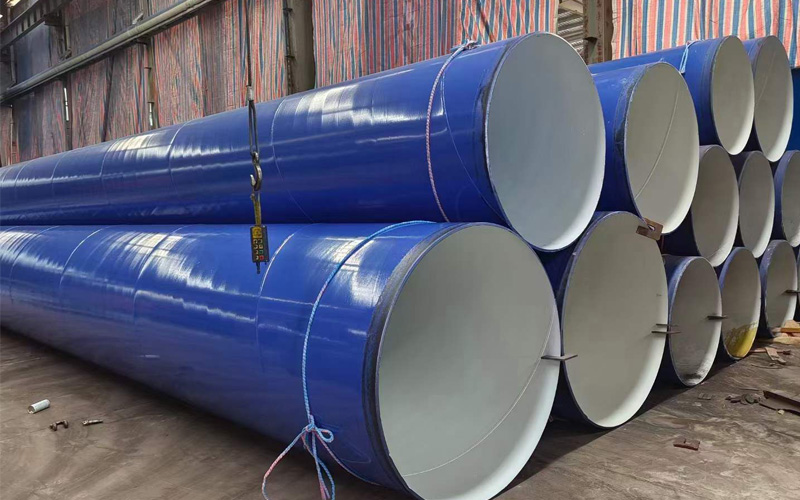
FBE steel pipe: the technological armor of the steel defense line
I In the icy waters beneath the Norwegian Sea pipeline, a section of FBE Lined Carbon Steel Pipe has been in service for 25...